With investor Charles Denton stepping into the role of Bodycare CEO, the retailer is betting that the future of discount shopping isn't lower prices, it's smarter, more localized, experience-led shopping.
"Retail isn't dead. Boring retail is." Denton delivered the line to BeautyMatter without hesitation. Days before officially taking the helm as CEO of Bodycare, the retail veteran isn't interested in telling another turnaround story. Administration, he argues, is merely the final chapter of one business model, not necessarily the end of a brand.
For Denton, the retailer's revival represents more than just the return of another familiar high street name from the brink of closure. It is an opportunity to redefine what value retail looks like at a time when consumers have become more informed, more selective, and less willing to equate affordability with compromise.
Denton brings decades of beauty and retail leadership to the role, having served as CEO of The Body Shop after spearheading its rescue from administration, during which he helped stabilize the business and return it to profitability within its first 100 days under new ownership. He previously led Molton Brown and Erno Laszlo, building a reputation for transforming heritage brands through customer-centric growth strategies. His appointment at Bodycare marks the latest chapter in a career focused on modernizing established retailers without losing sight of what made them successful in the first place.
It is a notable shift in leadership at a pivotal moment. Since being acquired out of administration in 2025 by a consortium led by Denton, Bodycare has moved quickly from survival mode to growth mode. New stores are opening, suppliers have returned, customers have followed, and the retailer has outlined plans for a measured expansion that could see its estate grow towards 200 stores in the next five years.
In a retail environment where aggressive expansion has often proved as dangerous as underinvestment, disciplined growth has become part of the strategy. Ahead of Bodycare’s first store opening on July 10 at The Moor, Sheffield, Denton sat down with BeautyMatter to discuss his plans as CEO for a carefully curated future.
Retail turnarounds often begin with operational fixes: renegotiated leases, improved buying terms, refreshed merchandising. Denton starts somewhere different.
"When I look at any heritage brand, I ask myself, 'What was the original intent behind that brand? And is that intent still valid today?’" His answer for Bodycare was immediate.
For more than five decades, the retailer built deep relationships within local communities by offering branded health, beauty, and personal care products at accessible prices. When news emerged that the chain had entered administration, the public response surprised even seasoned retail observers. Social media was filled with customers lamenting the potential loss of a retailer that, for many, had become part of everyday life.
"If consumers can finish the sentence, 'I love Bodycare because…,' then it still has a role to play," Denton said. "People were screaming for it to come back. They'd felt this void on the high street."
That emotional connection convinced him that the proposition remained relevant. What had become outdated wasn't the brand's purpose, but the way it was being delivered.
Bodycare had failed to evolve alongside its customers. It had not embraced digital engagement, invested meaningfully in store experience, or adapted to a beauty industry increasingly shaped by discovery, community, and social commerce. "The proposition was still valid," Denton said. "It just wasn't showing up for today's consumer."
That distinction underpins Bodycare's entire reinvention. Rather than replacing the retailer's heritage, Denton wants to modernize it. "We have a responsibility to respect the founders, the staff, and the customers who built this business over 50 years. But we also have a responsibility to ensure this becomes a sustainable, forward-looking business."
Perhaps the biggest departure from Bodycare's previous model isn't technological; it is organizational. "The fundamental change?" Denton questioned. "Hyperlocalization."
While most national retailers strive for consistency across their estates, Bodycare intends to make every store reflect the community it serves. Around 80% of the assortment will remain consistent nationally. The remaining 20% will be curated specifically for local demographics, cultural events, customer demand, and community trends.
"There is no retailer in the UK—or even globally, in my mind—that will curate in such a hyperlocalized way," Denton claimed.
The strategy extends beyond merchandising. Local store teams, customers, and hundreds of nano- and micro-creators will influence everything from product selection to brand activations and community events. Instead of headquarters dictating every decision, stores will continuously adapt based on real-time feedback.
"It isn't command and control," Denton explained. "It's a fully delegated hyperlocalized strategy."
The approach reflects a broader shift reshaping beauty retail. Consumers increasingly expect retailers to understand local preferences rather than simply replicate identical experiences nationwide. What succeeds in one neighborhood may have little relevance a few miles away, particularly in multicultural markets where beauty routines, ingredient preferences, and purchasing occasions differ dramatically.
For Bodycare, localization isn't simply a marketing initiative. Denton sees it as a competitive advantage that larger, more standardized retailers struggle to deliver.
Although Bodycare built its reputation on affordability, Denton is careful not to define its future by price alone. "I want to move the conversation away from cheapest to best value," he said.
It is a subtle distinction but one that reflects a broader shift taking place across the beauty industry. Consumers have become significantly more educated over the past decade, driven by ingredient transparency, social media, and brands that have challenged traditional pricing structures.
"The customer has been educated more and more," Denton said. "They'll say, 'Show me the efficacy.' If you want to command a premium over and above that, it's probably your values I'm going to buy into—not just your ingredient proposition."
That evolution has fundamentally changed the role of the value retailer. Competing simply by being the cheapest is no longer enough when price comparison takes seconds online. Instead, Denton believes retailers need to help customers feel they are making smarter purchasing decisions rather than simply spending less. "I want our customers to feel that they are smart—not cheap," he said. "They know where value is."
That philosophy places Bodycare somewhere between traditional discount chains and premium beauty retailers. Denton repeatedly references the gap he sees emerging in the market: warehouse-style retailers built almost entirely around low prices on one side, and increasingly premium beauty destinations such as Sephora, Boots, and Superdrug investing heavily in elevated experiences on the other.
His ambition is to occupy the space between them. "We focus on value," he said, "but we deliver entertainment and engagement."
That positioning could prove particularly relevant as beauty brands grapple with slowing consumer spending. While shoppers continue to spend on beauty, they are becoming increasingly selective about where and why they part with their money. Retailers that can combine affordability with education, discovery, and community may ultimately prove more resilient than those relying on promotions alone.
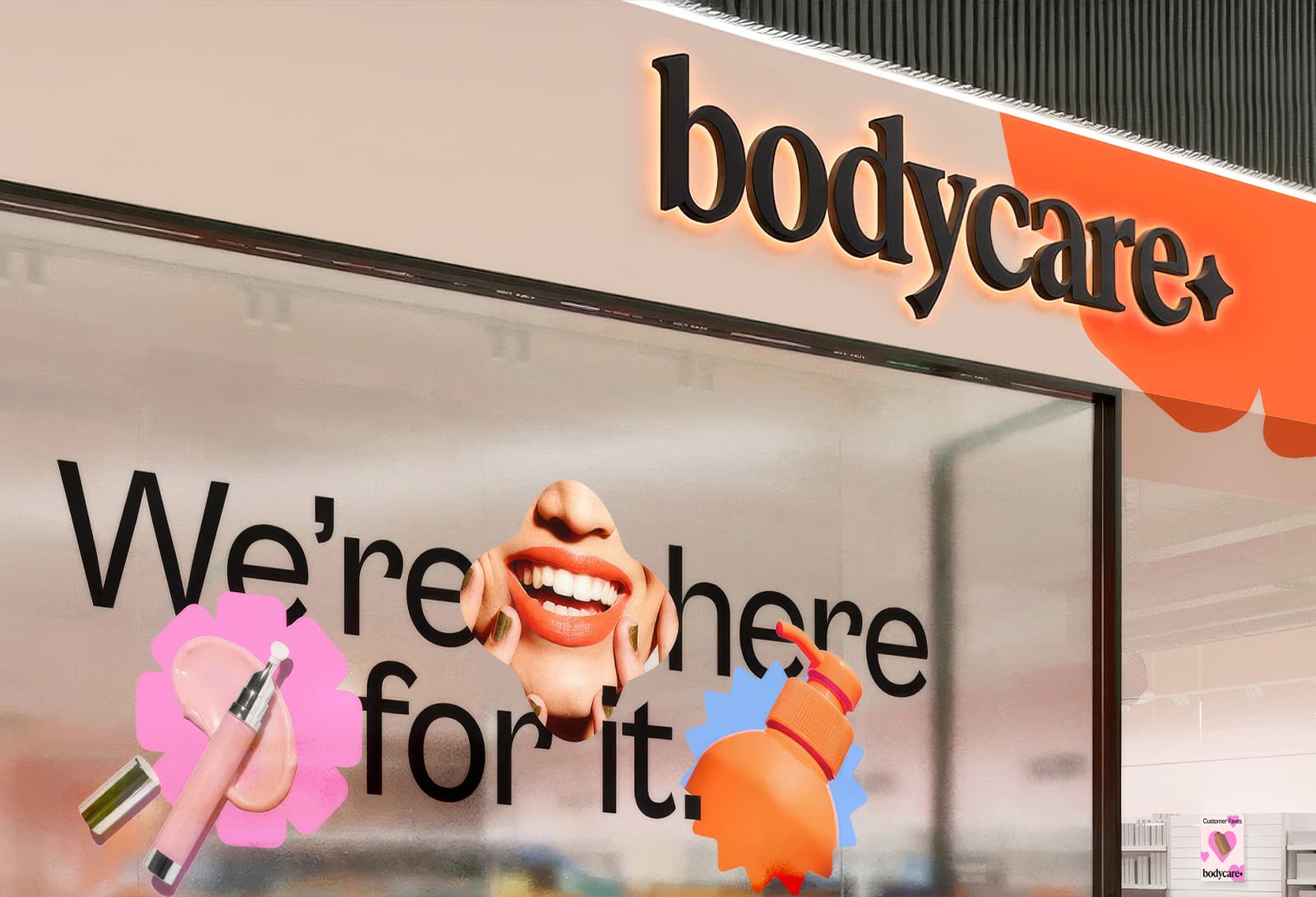
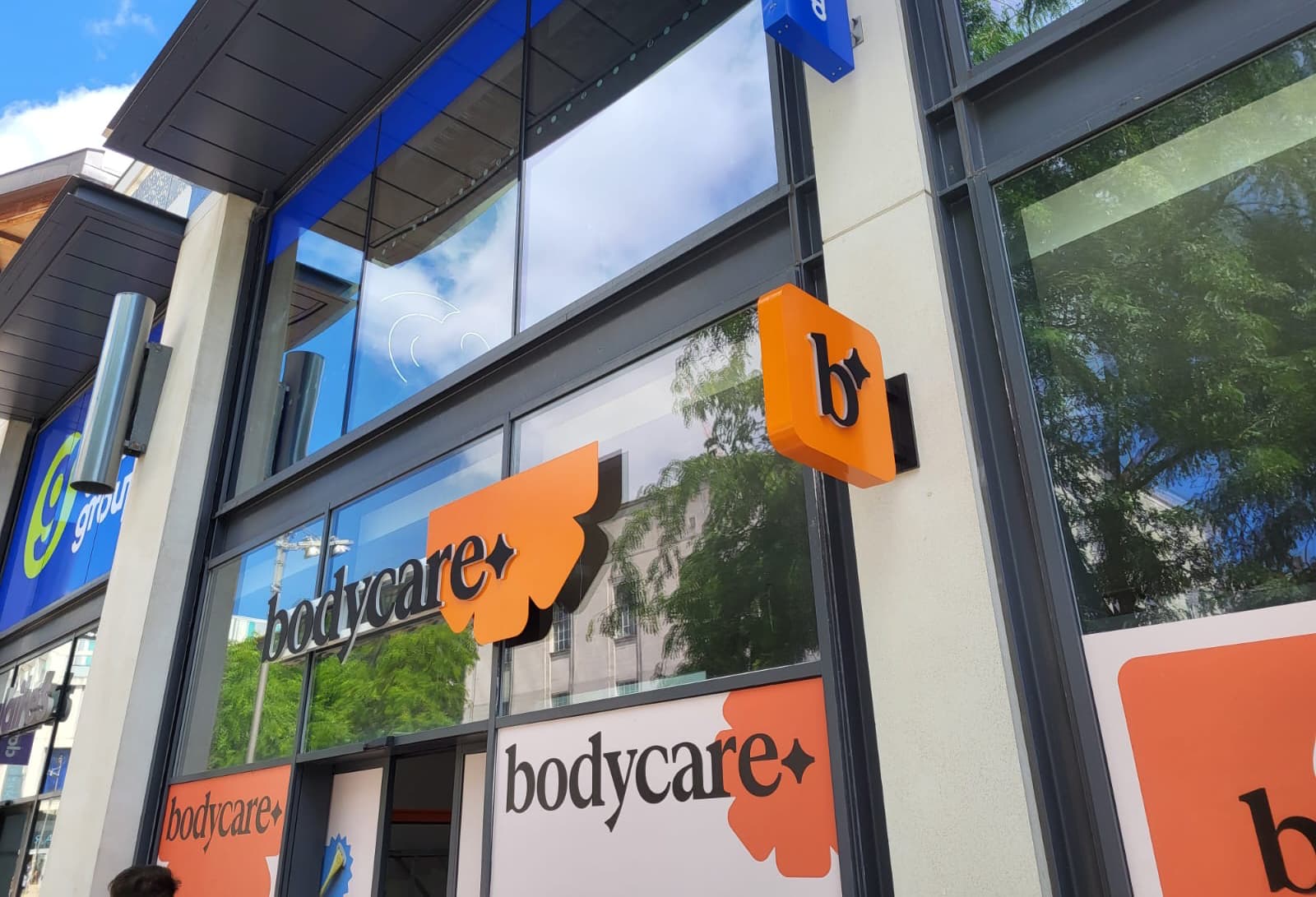
AI has become one of retail's most discussed technologies, often framed in terms of automation and labor reduction. Denton sees it differently. For him, AI's greatest value isn't replacing people; it is allowing more of them to spend time with customers.
"The other thing about AI," he said, "is that it enables us to have more people in the stores doing consumer-facing things." Rather than investing labor in forecasting, inventory planning, and administrative processes, Bodycare intends to use AI to manage many of those operational tasks, freeing store teams to focus on expertise and service.
The technology will help determine which products should be stocked in individual locations, anticipate local demand around seasonal and cultural events, and improve inventory accuracy across the estate. "If we know something like Diwali is coming, our AI intelligence layer helps us proactively prepare so that when we show up, we're entirely relevant to that consumer."
The goal is operational precision rather than technological novelty.
More significantly, those efficiencies allow Bodycare to invest where Denton believes customers notice the difference: knowledgeable people.
Dedicated fragrance specialists. Team members trained in K-beauty. Qualified nurses operating piercing studios. More staff available on the shop floor instead of behind office systems. "We're spending more money on more staff at a higher level," he said. "I'd rather have more people talking to customers, supporting customers, and guiding customers than doing everything manually."
That emphasis reflects an increasingly common reality across beauty retail. As AI becomes better at handling logistics and data analysis, human expertise may become even more valuable as a differentiator, particularly in categories where education, consultation, and trust influence purchasing decisions.
Perhaps the most ambitious aspect of Denton's vision is that he no longer sees Bodycare simply as a retailer. He sees it as a media platform. "If Bodycare succeeds, it becomes a platform where new brands and heritage brands want to engage with consumers."
The opportunity is significant. Before entering administration, Bodycare processed around 20 million customer transactions annually, providing brands with access to substantial footfall across communities that remain underserved by premium beauty retail.
Rather than relying solely on traditional shelf space, Denton imagines stores becoming immersive environments where brands can create theater around product launches.
He describes branded takeovers spanning thousands of square feet, TikTok studios broadcasting live from stores, educational demonstrations focused on skin, scalp, or fragrance, and rotating experiential installations that encourage consumers to spend time rather than simply complete transactions.
"We're an entertainment platform," he said. "But not entertainment for entertainment's sake. It has to be relevant." For beauty brands, particularly emerging ones seeking meaningful physical distribution, retailers that can combine high footfall with local community engagement could become increasingly valuable partners.
In that sense, Bodycare's transformation is about more than improving store economics. It is an attempt to redefine what value retail contributes to a modern beauty ecosystem.
For Denton, success won't simply be measured by store numbers or sales growth. It will be up to Bodycare to prove that physical retail still has the power to surprise consumers and become an essential partner for brands looking to build genuine connections offline.
"We're very aware of what's come before," he said. "But we have a responsibility to ensure this is a sustainable, forward-looking business. We're not going to please everybody, but if we get it right, we'll have a very exciting future ahead."
That future extends beyond Bodycare itself. At a time when beauty retail is increasingly polarized between premium experiences and transactional discount shopping, Denton's strategy suggests there may be room for a third path—one where value doesn't mean compromise, AI enhances rather than replaces human expertise, and local communities shape the retail experience as much as head office does.
If Bodycare succeeds, its biggest achievement may not be proving that heritage retailers can come back. It may be proving that the next generation of value retail looks fundamentally different from the last.