





Launch Date: November 2022
Geography: West Palm Beach, FL, US
Founders:
Advisor: Martin Okner, CEO, Fromm International
2026 Full Year Projected Revenue: $30M - $50M, according to industry estimates
Primary Category: Makeup
Funding: Friends and Family
Primary Distribution Channel: Mass
Other Distribution Channels:
Key Retail Partners:
Key Markets:
2026 Projected Offline Distribution Points: 3,000
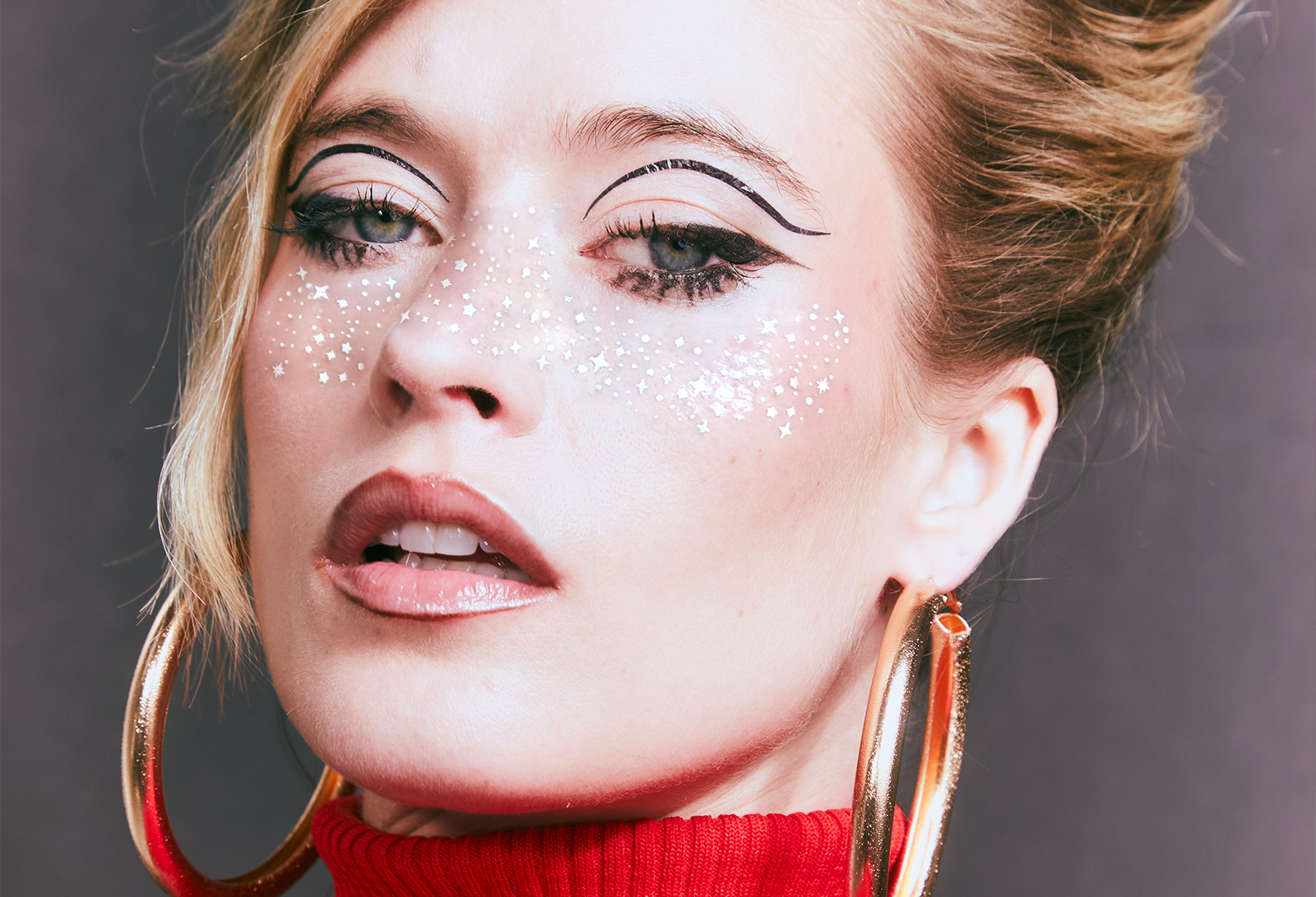
Fazit is a category-defying makeup brand that pioneered makeup patches and coined the term “glitter freckles,” transforming makeup into face accessories designed for moments that matter.
Born at the intersection of beauty, sports, and music fandom, Fazit reimagines cosmetics as wearable statements—maximalist, expressive, and effortless to apply. Our sweat-proof, waterproof, long-wear makeup patches are made to be worn where traditional makeup often fails: concerts, festivals, stadiums, dance floors, and cultural moments that live forever in photos and memory.
What began as a playful, expressive beauty accessory quickly became a cultural signal. Fazit has been worn by fans, athletes, and global icons alike, proving that makeup doesn’t have to be precious to be powerful. It can move with you, celebrate identity, and mark unforgettable experiences.
Fazit exists to turn emotion into adornment—where beauty meets fandom, self-expression meets performance, and makeup becomes part of the memory itself. We’re not just creating products; we’re creating a new way to wear beauty for the moments you’ll never forget.
Insights: Aliett Buttelman, Co-Founder
Why now and why you?
In less than a year, Fazit co-founders Aliett Buttelman and Nina LaBruna turned a viral moment into a global phenomenon—redefining the cultural zeitgeist at the intersection of beauty, sports, and pop culture. In April of 2024, Fazit invented the first-ever makeup patch and coined the term “glitter freckles,” instantly capturing social media’s imagination and creating an entirely new beauty category overnight.
Their catalyst came when Taylor Swift wore Fazit’s Gold Speckle Makeup Patches on national TV at a Kansas City Chiefs game—a completely organic, scrappy marketing play driven by co-founder Aliett. Within 48 hours, sales skyrocketed into the seven figures, and catapulted Fazit into the global spotlight. Suddenly, Glitter Freckles became the beauty accessory of the season, embraced by Swifities, female sports fans, athletes, and celebrities.
From that viral moment, the brand scaled at lightning speed despite being a two-woman team:
With 4,566.7% year-over-year growth from 2023 to 2024, and a projected 185.7% growth in 2025, Fazit has become more than a beauty brand; it’s a cultural movement. By sitting at the intersection of beauty, sports, and pop culture, Fazit isn’t just riding trends; it’s shaping them. What started as a scrappy indie brand is now redefining fandom, rewriting beauty playbooks, and proving how far a tiny, unstoppable team can go in under a year.
What fuels your competitive advantage?
Fazit’s competitive advantage is built on creating what has never existed—then delivering it at cultural speed. We combine trend forecasting with real-time cultural awareness to design beauty accessories for the moments people actually care about: concerts, sports fandom, festivals, and once-in-a-lifetime memories. As the creators of the makeup patch category and the term “glitter freckles,” innovation is embedded not just in our products, but in our packaging, placement, and storytelling.
Our advantage compounds through a flywheel:
• Category-creating innovation in product and packaging that transforms makeup into wearable accessories
• Speed to market, allowing us to design, produce, and launch products aligned with culturally relevant moments
• Organic, viral content that brings these moments to life authentically, fueling demand without reliance on paid media
• Community feedback loops that inform what we build next, faster and smarter
This system allows Fazit to stay ahead of trends rather than chase them, creating emotional relevance, cultural visibility, and sustained demand that competitors struggle to replicate.
What’s your proudest accomplishment to date?
The easy answer would be that Taylor Swift has worn Fazit organically—not once, but three times. That level of celebrity market fit and repeat adoption by the world’s biggest global icon is rare, and it speaks volumes about product stickiness and cultural relevance. But the accomplishment I’m most proud of goes far beyond a single (or even three) moments.
In the last 12 months, we’ve taken a viral spark and turned it into a sustainable, growing business—expanding categories, deepening community, and building infrastructure without losing cultural momentum. Many brands experience virality; very few convert it into longevity.
We’ve scaled thoughtfully while staying true to what made Fazit resonate in the first place: creating category-defining products that show up in real cultural moments. We’ve grown our team, strengthened our retail partnerships, and continued to innovate—proving that Fazit isn’t a moment in time but a movement with staying power.
Turning attention into trust and hype into durability is what I’m most proud of.
What is the one thing you wish someone had told you?
Never stop talking about it. I wish someone had told me how much repetition matters—especially in marketing. When you’re building something, it can feel uncomfortable or redundant to keep saying the same thing over and over. You worry people are tired of hearing it. They’re not.
What I’ve learned is that clarity comes from consistency. People need to hear your message many times, in many ways, before it clicks. The brands that break through aren’t louder—they’re clearer, and they stay present.
This is now the advice I give founders and entrepreneurs when they ask: keep posting, keep talking, keep telling the story. Say it again and again until it becomes undeniable. Momentum doesn’t come from a single moment. It comes from repetition with conviction.
What would you tell your past self before starting this journey?
Timing is everything. The “no’s” you hear aren’t always a rejection—they’re often a “not right now.” I wish I had trusted that more. Pushing things prematurely, whether a retail partnership, a launch, or taking on capital before fully understanding who you are as a company.
Growth feels urgent when you’re in it, but alignment matters more than speed. The right opportunities arrive when you’re ready to meet them with clarity, confidence, and conviction.
If I could tell my past self anything, it would be this: Trust the timing, stay patient, and let the business become what it needs to be before asking it to scale.
What does success look like in the next 3-5 years?
Success in the next 3-5 years looks like Fazit becoming a permanent fixture in the lives of our communities; not just a product they wear, but a ritual they return to for every meaningful moment. It means going deeper with female sports fandom and athletes and becoming the go-to beauty accessory for music artists to connect with their fans beyond traditional merch—something more personal than a concert t-shirt and more emotional than a souvenir. Success also means being the accessory people reach for at every holiday, celebration, and cultural moment, embedded in tradition, memory, and self-expression.
At the same time, it’s about continuing to innovate and break barriers in beauty: expanding categories, rewriting industry rules, and proving that cultural relevance and commercial success are not mutually exclusive. Ultimately, success is building a brand that leads culture, earns loyalty, and reshapes what beauty can be.
What's one industry trend that is overhyped, and what's being overlooked?
Overhyped: the idea that emerging beauty brands must choose a single retail lane—mass or prestige—to be credible. For years, we’ve been told there are only two paths to scale and that blending them dilutes brand equity. We’re already seeing that rule break down. Just as Amazon was once frowned upon for “prestige” beauty and now meaningfully takes share from traditional retailers, rigid channel definitions are losing relevance.
Overlooked: social commerce, especially live-stream shopping and affiliate-driven ecosystems like TikTok Shop. While brands continue to spin their wheels chasing mass retail expansion—often sacrificing profitability and control—TikTok Shop is quietly reshaping how consumers discover and purchase beauty. Its affiliate system allows brands to scale distribution through creators who already have trust, reach, and cultural relevance, without the same upfront risk or dependency on a single retail partner.
The future of beauty retail won’t be owned by one channel. It will be built by brands willing to invest in platforms they can actively influence, measure, and grow—rather than those they simply rent space from.
How do you think the industry needs to evolve?
The industry needs to shift from trend-following to true category leadership.
Beauty retailers have become overly cautious, often over-indexing on incremental versions of products that already exist instead of taking earlier bets on new categories. There’s a difference between spotting trends and riding the coattails of what’s already proven, and consumers can feel that hesitation.
If retailers adopted emerging brands and category-creating products sooner, they could reclaim their role as tastemakers rather than followers. Playing it safe may feel protective in the short term, but it’s how control of beauty consumerism is slowly lost to social platforms and direct-to-consumer discovery
Consumers still want to discover, touch, and feel products in real life. Retail has a powerful advantage there, but only if it’s willing to take creative risks, champion what’s next, and lead culture instead of reacting to it.
If you could wave a magic wand, what one wish would you make for your business?
I would wish for the industry to see category innovation sooner. The challenge of creating something entirely new is that it requires education—where the product lives on the shelf, how success is measured, how it speaks to a retailer’s customer, and why it reflects what consumers are already asking for on social media. As a category creator, you’re not just launching a product—you’re redefining language, benchmarks, and behavior.
We spend a lot of time painting a bigger vision of what’s possible together, knowing that momentum is building and culture is already responding. Often, it simply takes time—or a missed opportunity—for others to fully recognize it.
If I could wave a magic wand, I’d wish for more openness to new frameworks, new categories, and new ways of thinking. When the industry opens its mind earlier, innovation doesn’t just move faster—it becomes more meaningful.