





It’s clear that 2026 will be a landmark year for hormone intelligence. From women's health technology company Clair Health's $11.6 million to SPRIND and Ida Tin’s €40 million ($45.7 million) grant challenge, Apple’s expansion into menopause tracking, to Oura’s growing women’s-health functionality. Is hormone data the next major consumer health infrastructure layer?
The implications for the beauty industry are substantial. Hormonal fluctuations shape everything from inflammation and pigmentation to sleep, recovery, barrier function, and mood. This transforms hormone data into potentially valuable beauty data.
Brands are already positioning around cycle-synced routines, menopause skincare, metabolic health, and personalized supplementation, while wellness platforms compete to own the long-term behavioral relationship with consumers.
In the span of a few months, four very different players placed very different bets on the same idea: that hormones are the next thing worth measuring continuously.
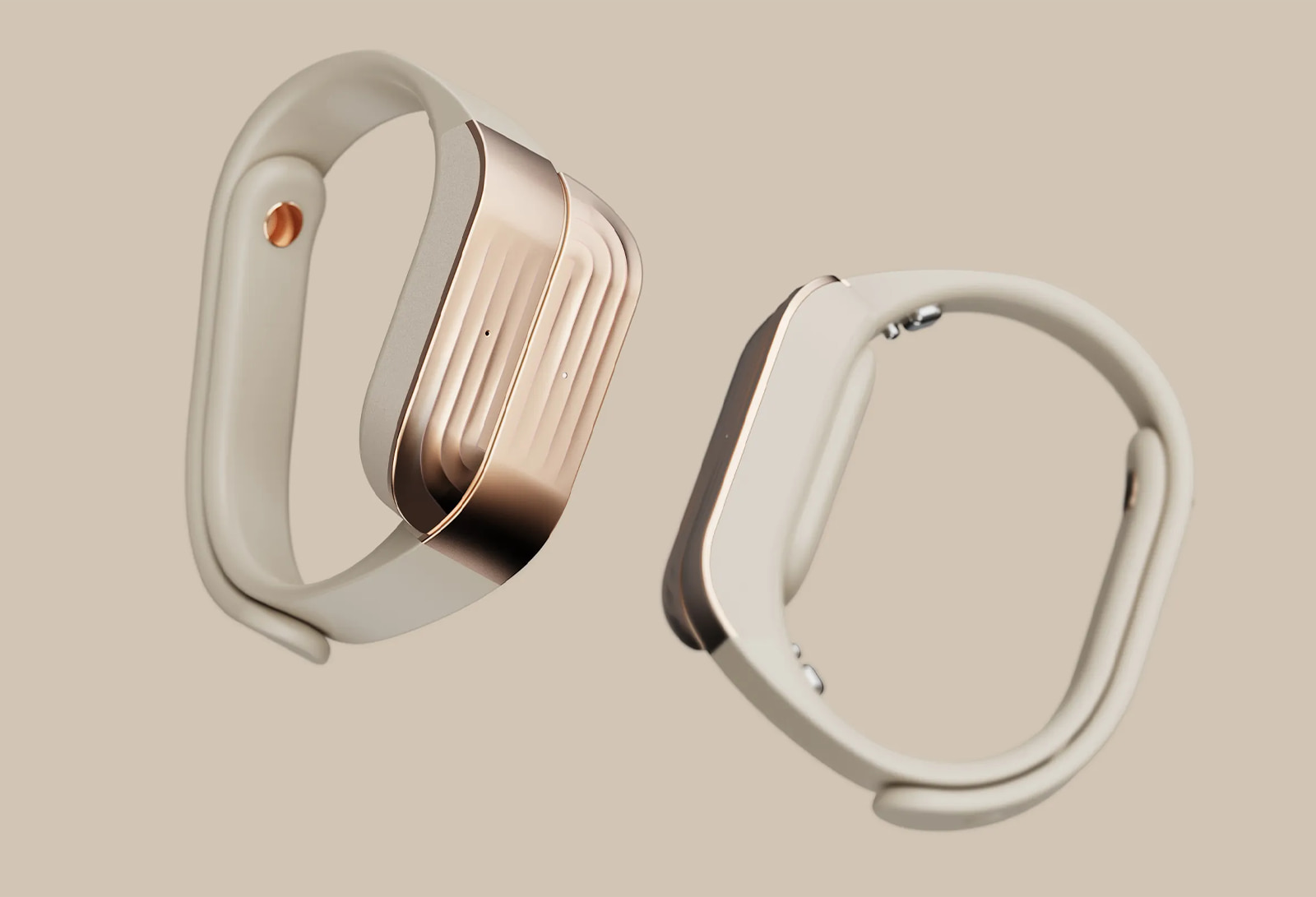
Launched in June 2026 with a release set for December 2026, Clair Health calls itself the world's first wearable for hormone-aware health. The company, founded by Jenny Duan and Abhinav Agarwal, has created a device worn on one’s wrist that continuously monitors estrogen, progesterone, LH (luteinizing hormone), and FSH (follicle-stimulating hormone), using multimodal physiological signals such as body temperature and heart rate, rather than measuring them directly.
“We invest in founders who are translating breakthrough science into solutions for problems that have been overlooked for far too long. Hormone health is one of those areas,” Roxana Daneshjou, founding partner at one of Clair Health’s investors, Treehub, told BeautyMatter. “What stood out about Clair Health was Jenny and Abhinav's ability to pair an unmet need with a new technological approach,” she said.
Positioning itself as a wellness device, not a diagnostic one, Clair Health also provides well-rounded wellness metrics, including sleep, recovery, daily activity, heart rate, heart rate variability (HRV), and performance, as these biometric signals help decode hormonal signals. “Clair uses a multimodal sensor stack, capturing the continuous signals the body naturally gives off to track hormonal patterns over time,” Duan, CEO of Clair Health, told BeautyMatter.
“Inference through proxy biometrics isn’t new, but the difference with Clair is the precision: Between Clair’s proprietary sensor stack and the algorithms informed by published literature on the relationship between hormonal levels and downstream physiological signals, the device can transform those patterns into informed insights,” she added.
But not everyone is convinced proxy measurement is the right approach. “We need to develop the sensing capabilities to measure hormones directly,” Ida Tin, co-founder and former CEO and Chairwoman of period-tracker Clue, told BeautyMatter. “We still have much to learn about how the endocrine system influences and is influenced by heart and brain conditions, our immune responses, mental health, and many other things. We [currently] don’t have a good understanding, and trying to deduce hormonal activity from proxy datasets would be too noisy and unknown.”
Back in 2016, Tin coined the term femtech to describe the nascent women’s health technology space. A decade later, she’s launching a €40 million ($45.7 million) hormone grant challenge with Germany's Federal Agency for Breakthrough Innovation, SPRIND; $1.7 to €1.5-2.5 million ($2.8 million) is available for teams designing direct hormone measurement over proxy inference.
Tin is also inviting the industry to participate in the ecosystem around this challenge: All startups and researchers involved will contribute to a collective dataset, rather than each one hoarding its proprietary data. Startups can spend years and millions building a large pool of clinically meaningful data, whereas this collective approach is faster, cheaper, and benefits anyone looking to build on top of it. “The potential is enormous,” she said, believing the payoff will extend beyond women’s health into the wider economy.
Duan also understands the power in the data. “Launching first as a wellness product enables us to build one of the largest longitudinal datasets on women's hormonal health and deepen our understanding of how hormones change across different life stages and experiences,” Duan said. Clair’s strategy has been to get the technology into women’s hands: The wellness approach has a faster route to market because it doesn't require FDA approval. At the same time, it continues to validate the platform through ongoing clinical research and build the evidence needed to support future FDA clearance.
In June 2026, Apple also announced its expansion into hormone health. The extension of the existing Apple Watch Cycle Tracking feature, set for release in the fall of 2026, allows users aged 40 and over to log perimenopause and menopause symptoms and provides educational content to help women learn about their bodies. The American tech company’s update at its Worldwide Developers Conference (WWDC) 2026 strengthens the broader hormone health landscape by bringing hormone-adjacent tracking into a mainstream consumer device, normalizing symptom logging, education, and cycle-aware health behavior at scale.
Where Apple is normalizing at scale, Oura is monetizing the category through its proxy-based Cycle Insights and a broader subscription health stack, following its $900 million Series E in October 2025. Meanwhile, general wellness wearables are growing: Health and fitness tracker Whoop raised $575 million at a $10.1 billion valuation in March 2026, signaling an IPO in its future.
Hormone monitoring generally takes two approaches: proxy inference, estimating hormone levels indirectly from other biometric signals, and direct measurement of the hormone molecules themselves, typically through blood, saliva, or other bodily fluid samples. These are different technical bets with distinct regulatory and credibility risk profiles.
SPRIND is also deftly designed as a countermodel to Clair Health's venture-backed approach: Publicly funded, non-dilutive, and built around a shared open dataset rather than proprietary IP—it’s laying the groundwork for shared, interoperable research infrastructure that can accelerate validation, reduce duplication, and lower the evidence barrier for clinical adoption and product development.
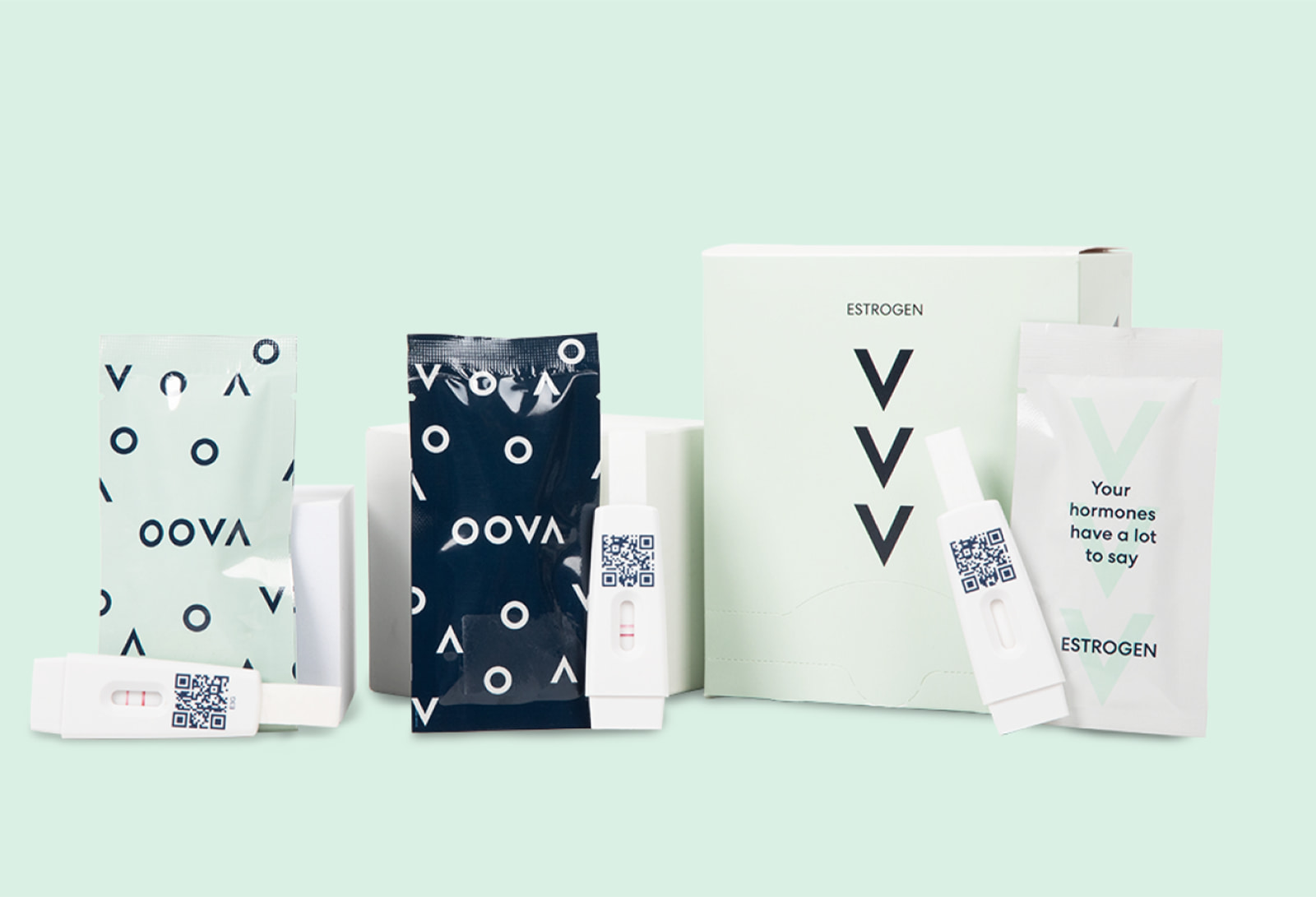
Tin explicitly frames SPRIND's model as a corrective to venture capital's (VC) failure to fund this category adequately. Femtech still receives approximately 2% of total healthcare VC. “It’s incredibly difficult technologically to turn [hormonal] molecules into a data stream, but with non-dilutive funding we can give very novel technologies a chance to be developed, which would usually be too high risk for the private sector to back,” Tin said.
A record $1.58 billion was invested in women's health in 2025, according to Silicon Valley Bank, which projects 2026 to be another record year, thanks in part to perimenopause and menopause care company Midi Health reaching unicorn status in Q1.
The global continuous hormone monitoring market, valued at $325.7 million in 2025, is projected to reach $716.2 million by 2035. The hormone health opportunity? $600 billion.
In the world of beauty, hormone-responsive skincare is already a well-defined, fast-growing category full of cycle-synced serums, menopause-specific treatments, and hormonal acne lines. The global market was valued at $2.58 billion in 2025 and is projected to increase from $2.81 billion in 2026 to $5.12 billion by 2034 at a CAGR of 7.8%. (Separate research predicts the category to grow at a 15.9% CAGR between 2025 and 2034.)
According to Duan, Clair Health has had early interest and conversations with people in the beauty space who recognize hormones as an important piece of the puzzle they are already marketing. “Estrogen and progesterone shifts affect things like collagen production, oil production, and skin barrier function, so rather than guessing why someone's skin is breaking out or why they're sleeping poorly, continuous hormonal trends could give brands meaningful context instead of a generalized recommendation,” she said.
“That said, our primary focus remains building a trusted health and wellness platform for women, and any future partnerships would need to align with that mission,” she added.
Blume is a clear example of growth in the hormone-conscious skincare market. Co-founder Bunny Ghatrora's own polyendocrine metabolic ovarian syndrome (PMOS) diagnosis shaped the brand's focus on acne and hyperpigmentation. Blume has since scaled to Sephora Canada, Ulta Beauty US, and amassed over 500,000 customers via blume.com, proof that hormonal skin claims can carry a brand well beyond a niche audience. Rael and Typology have developed cycle-synced serums and masks for everyday consumers, and Paula's Choice has developed Clinical Phytoestrogen Elasticity Renewal Serum, a phytoestrogen elasticity treatment for menopausal estrogen-depleted skin. Alloy has taken a different route to reach the same consumer. The brand's prescription-only M4 line is backed by two commissioned clinical studies, and the company has raised $21 million to date. That's a fraction of what its closest menopause-telehealth competitor, Midi Health, has raised: over $250 million, with a valuation past $1 billion. However, Alloy's co-founders told Forbes in June 2026 they'd rather stay profitable and lean than take on the pressure that comes with a mega-round.
"Cortisol face" and the wave of TikTok-driven cortisol-management products like ashwagandha gummies and magnesium soaks show how hormone language is already being commercialized in beauty and wellness well ahead of any continuous consumer hormone data existing to actually validate whether they work.
Daneshjou believes beauty brands are responding to a current shift in customer expectation. “Women are looking beyond surface-level solutions and want to understand the underlying biology that's influencing how they look and feel. From my perspective, the opportunity begins with building technology that can credibly deliver those insights. Once that foundation exists, I think we'll naturally see more investment across the beauty space, driven by a deeper understanding of hormone health,” she said.
Only time will tell whether the validated infrastructure closes that gap or dresses up old claims in new packaging.
Beauty isn’t tech-averse. L'Oréal's Cell BioPrint measures skin biomarkers via proteomics, and Shiseido has invested in AI-powered skin diagnostics. But none of that spending has gone toward hormone-tracking or hormone-data infrastructure specifically, raising the question of whether that’s about to change.
Looking to the future, Tin expects hormone data to become a core pillar for building treatment protocols and wellness interventions. “That’s why I think of this as an industry formation. The potential is huge; it could inform everything from personalized hormonal replacement therapy to early detection of preeclampsia, premature births, postnatal depression, heart disease prevention, to sport optimization. And probably many other things we don’t know yet,” she said.
Tin went on to explain that it all starts with hormone intelligence, describing how, until now, the industry has only taken “snapshots” of what is, in fact, a “movie.” Daneshjou expects beauty, as well as other industries such as fitness and wellness, to take notice. “All of these systems are connected, and as consumers expect more personalized experiences, it’s easy to imagine beauty and wellness brands building on these insights,” she said.
To Duan, there's potential for this kind of data to power a more personalized health ecosystem, but “only on the user's terms.”
With the hormone intelligence sector currently being built by health-tech VCs, public agencies, and Big Tech, is beauty a bystander to its own future data layer? “I think we will look back and think of the before and after we had continuous data on hormones,” Tin said, speaking to the inevitability of women finally getting the personalized health insights they need.