





From becoming one of Ulta Beauty Middle East’s top-ten performing brands in the skincare and haircare categories to launching on Ounass—the region’s most premium online retailer—and exceeding monthly targets within a week, AÏZA is proof that when you combine standout, high-performance, diligently formulated products with an authentic, heritage-driven story, customers naturally follow.
With more than $3 million in annual revenue, rapid month-on-month scaling, and 70% of consumers already familiar with the brand before entering a store or retail activation, AÏZA is witnessing one of the strongest growth trajectories in the Middle East. As returning customers spend significantly more than first-time buyers, loyalty is becoming one of the brand’s greatest assets—proving that customers in the region had been waiting for a brand like AÏZA to emerge but just didn’t know it yet.
BeautyMatter caught up with NEXT50 founder Shubham Poddar to understand how AÏZA has scaled so quickly and captured the attention of the region’s most competitive premium retailers, as well as what it takes to build one of the first A-beauty brands rooted in heritage and tradition backed by the expertise of the world’s leading global beauty markets.
Set to scale with Ulta Beauty across 80+ stores over the next four years—including 11 stores across Dubai, Abu Dhabi, Riyadh, Jeddah, Doha, and Kuwait City by the end of 2026—the brand now has its sights set on international expansion, alongside deeper GCC penetration. While the numbers and data speak for themselves, AÏZA is proving that the opportunity for A-beauty is undeniable, and the revolution is just getting started.
From day one, you said your vision was to put Arab beauty on the global beauty map. What does A-beauty mean to you, and why do you think it is especially important now for the world to understand and appreciate beauty brands from this region?
A-beauty isn't a category we're inventing; it's one we are finally naming. Arab beauty has existed for centuries. The ingredients, rituals, and beauty secrets passed down through generations have always been here. From hair oiling and fragrance layering to dates, black seed, rosewater, and frankincense, the region has an incredibly rich beauty culture. What was missing was a modern approach with the ambition to take it to the world.
The timing also feels incredibly important. The Middle East is having a moment globally, but within the region, there's also a new sense of confidence and pride in where we come from and what we can build here. We've watched Korean beauty, Brazilian beauty, and Ayurveda become global movements by confidently celebrating their roots. Why shouldn't Arab beauty do the same? That's why we built AÏZA. We want to help put Arab beauty on the global map, not as a regional novelty or an exotic trend, but as a serious beauty movement with incredible ingredients, high-performance products, and a point of view the world hasn't fully experienced yet.
AÏZA combines Arab ingredients with expertise from Korea, Japan, and Italy. Was this a deliberate move to reflect the cosmopolitan nature of the Middle East itself, or a belief that great beauty innovation comes from bringing together the best of multiple beauty traditions?
It was very deliberate. The Middle East is incredibly cosmopolitan, but there's also a simple reality: While the region has led fragrance and perfumery for centuries, it hasn't historically been at the forefront of modern skincare and haircare manufacturing.
Our consumers, however, are one of the world's most sophisticated. They already buy the best Korean, Japanese, French, and American brands. So we knew that if we wanted to build an Arab beauty brand they could be proud of, we couldn't ask them to compromise on innovation, efficacy, or sensoriality.
So the philosophy was simple: The inspiration is unequivocally Arab, but the innovation should be global. We start with ingredients and rituals deeply rooted in the region, from dates and black seed to frankincense and bakhoor, and then pair them with clinically proven actives by working with leading labs across Korea, Japan, and Italy to create the best possible formula.
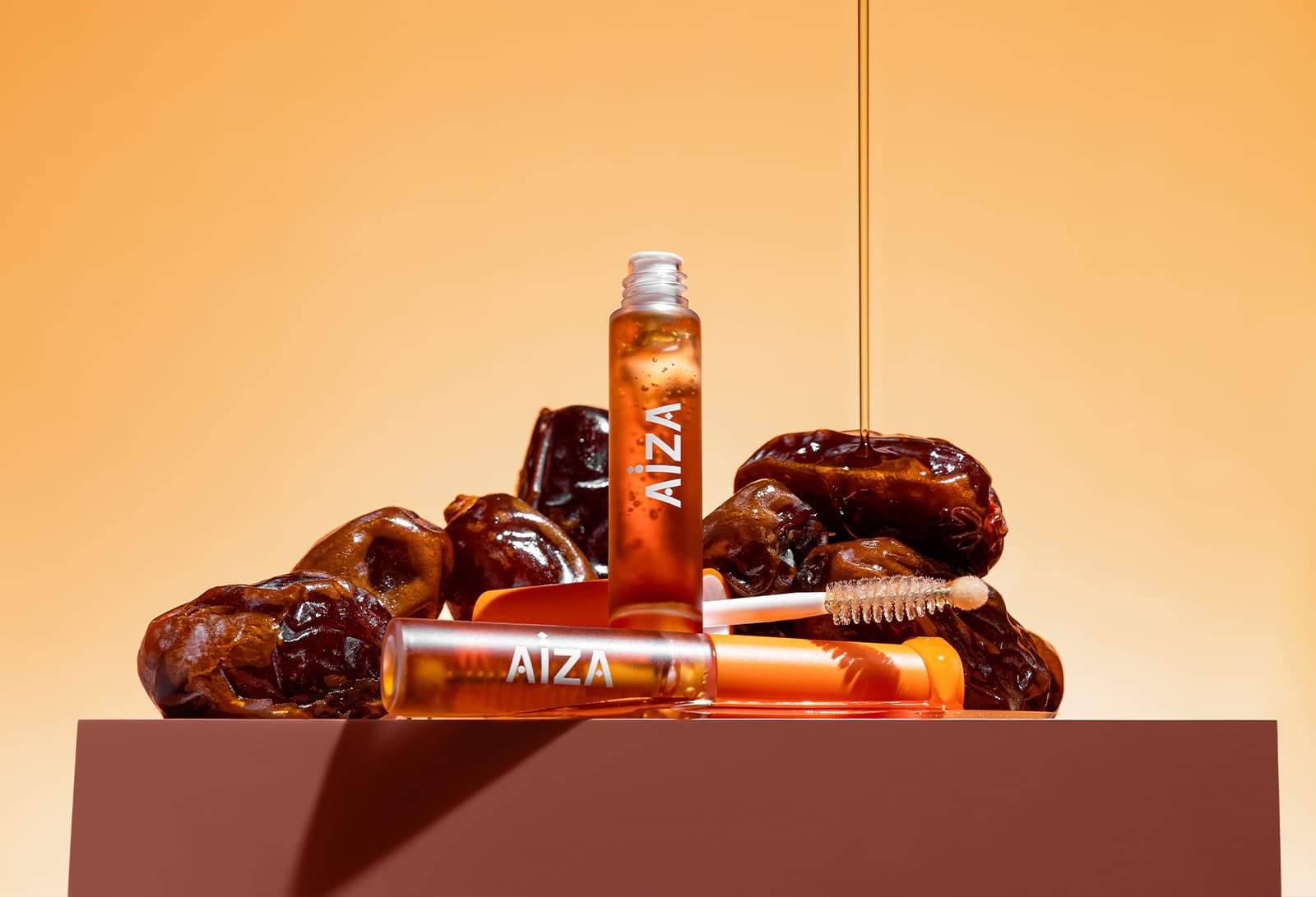
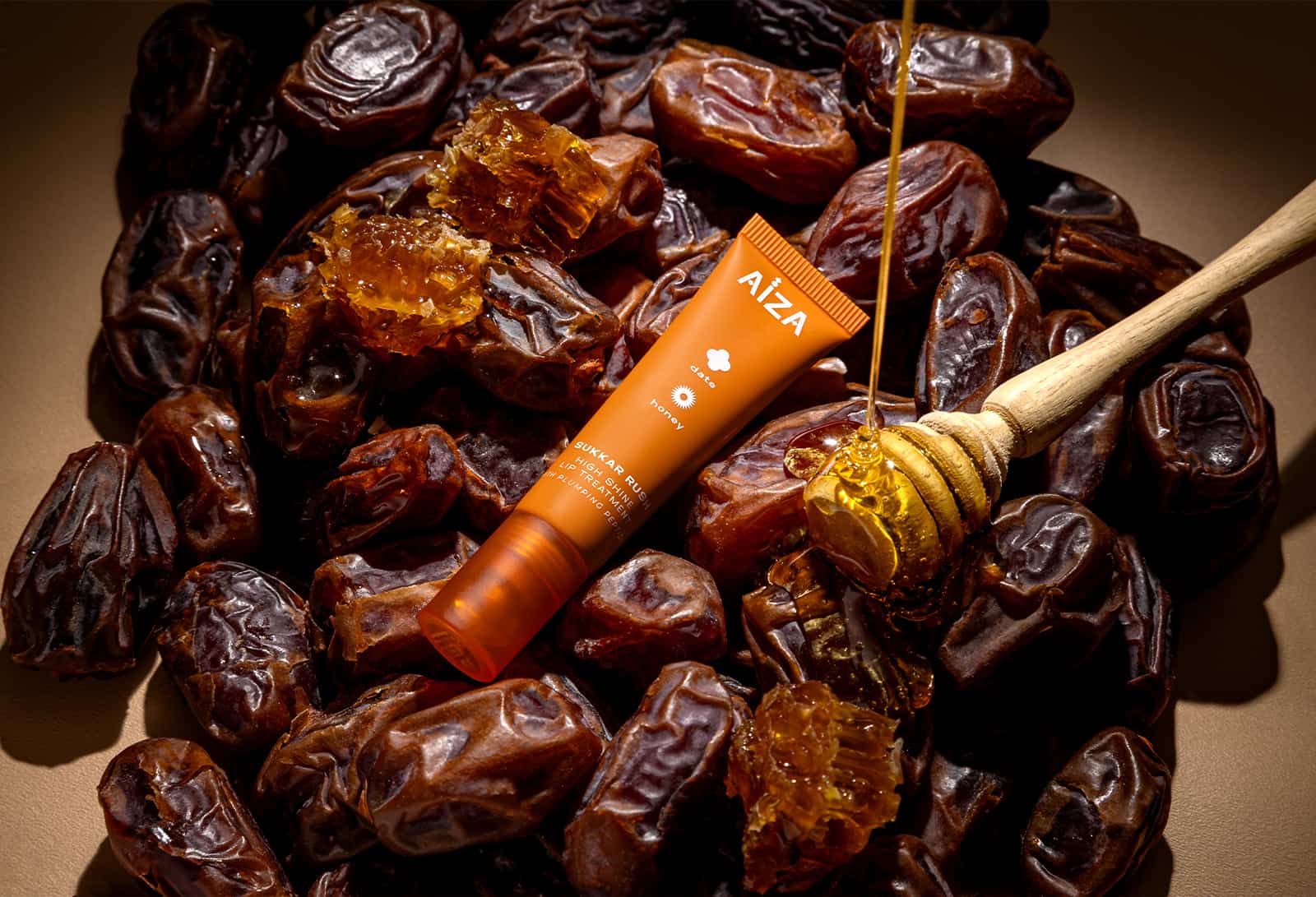
For instance, our best-selling Date Setter Brow & Lash Boosting Serum combines date extract and castor oil with biotin and volume peptides through an advanced Korean-developed formula. Similarly, our viral lip balm Sukkar Rush pairs dates and honey with plumping peptides and incredible shine through Italian advancements in texture and sensoriality.
The cultural intelligence is Arab. But the scientific execution draws on the best the world has to offer. To us, that's Modern Arabia—deeply rooted in where we come from but completely global in how we think.
Arab beauty brands have traditionally leaned heavily on heritage, ritual, and nostalgia. AÏZA takes those same cultural cues but repackages them in a way that feels luxurious, aspirational, and culturally relevant for the modern beauty consumer. How difficult was it to reinterpret Arab beauty in a way that feels modern and premium without losing its cultural identity?
The tension is very real. On one side, you can fall into cultural cosplay: Arabic calligraphy on the packaging, a hint of oud, but nothing genuinely rooted underneath. On the other hand, you can overexplain the heritage so much that the product starts to feel like a history lesson rather than something fun and desirable.
For us, the answer has always been to build incredible products first and let culture run naturally through them. We don't start with a heritage story and then find a product to attach it to. We start with something consumers genuinely want to use, then allow the ingredient, ritual, or cultural reference to make the experience richer. Heritage should add meaning to a great product, not just do marketing for an average one.
The other principle we strongly believe in is that modern doesn't mean Western. The young Arab consumer today is deeply rooted in her culture, but she's also fun, ambitious, globally minded, and incredibly modern. There's a beautiful dichotomy there, and AÏZA is designed to reflect it. Even our naming plays with that. Sukkar Rush, our Dates & Honey High Shine Lip Treatment, combines sukkar, the Arabic word for sugar, with the familiar feeling of a "sugar rush." It's playful and instantly relatable to a young woman in Riyadh, but equally understandable to someone in Paris or Los Angeles.
Why do you think now is the right time for a brand like AÏZA to gain mainstream attention? What has changed about the consumer here recently that perhaps wasn’t true a few years ago?
Three things have converged simultaneously that weren’t true a decade ago. First, the consumer has evolved; there's a generation today that has grown up between cultures. They're fluent in global beauty trends but equally proud of where they come from, and they're asking why a brand can't reflect both.
Secondly, the infrastructure has caught up. E-commerce has matured rapidly across the GCC, making it possible to build a digital-first beauty brand. Even behaviors like cash on delivery, which historically made DTC challenging in the region, have shifted significantly towards digital payments. This allowed us to launch AÏZA as a digital first brand, build a loyal consumer base, and then expand into retail from a position of strength.
And finally, the global beauty industry is now recognizing the importance of this region. Ulta Beauty’s choice of the Middle East as its first international expansion beyond North America is a huge signal. More importantly, it chose to put a handful of homegrown brands alongside the world's biggest beauty names. AÏZA entered retail less than a year after launch and has already become one of the leading brands in its category. In a region where malls remain central to how consumers discover and experience beauty, rolling out with a leading retailer in prime locations and high-visibility in-store placements has helped take us from a digital-first brand to a mainstream beauty name much faster than we could have done alone.
The consumer was ready. The infrastructure became ready. And now the global beauty industry is paying attention.
For decades, consumers in this region gravitated towards international beauty brands and viewed them as the benchmark of quality and innovation. Is there now a shift in how consumers in the Middle East perceive homegrown brands? What’s driving it?
Yes, and it's accelerating. For a long time, there was an implicit hierarchy where international meant better. A label that said Italy, France, or the United States automatically carried more weight than one from the UAE or Saudi Arabia, sometimes regardless of what was actually inside the bottle. What's changed is that the consumer's definition of quality has become far more sophisticated. Simply saying "Made in Italy" or "Made in France" is no longer enough. Consumers are reading ingredient lists, understanding actives, questioning efficacy, and becoming much more conscious of what they do and don't want in their formulas.
At AÏZA, we chose to build our own AÏZA Clean Standards around leading global benchmarks like Clean at Sephora and Ulta Beauty’s Conscious Beauty. Our products are alcohol-free, cruelty-free, and vegan-friendly except where we intentionally use regional ingredients such as honey. For us, quality is proven through the formula, not borrowed from a country of origin.
Consumers have also become more globally exposed, and that has made them more discerning rather than more deferential. They can increasingly tell the difference between a brand that genuinely understands their climate, rituals, and preferences and one that has simply adapted a global playbook for the region. That's exactly where our "Inspired by Arabia, Made in Korea/Japan/Italy" philosophy comes from. The shift isn't that consumers suddenly want to buy local. It's that homegrown brands are finally giving them products they don't have to compromise to buy.
Many brands today celebrate heritage and use it as the basis of storytelling, but AÏZA has invested heavily in formulation and performance. How important was it to prove that Arab beauty could compete with efficacy and performance and not just the story?
Non-negotiable from day one. The worst thing we could have done was build a beautiful brand with a powerful cultural story that didn't deliver. Heritage can get someone interested once, but performance is what earns their trust and brings them back.
We were also conscious that we weren't just building AÏZA. In many ways, we were building a proof of concept for what Arab beauty could be. That's why we work with leading labs across Korea, Japan, and Italy, pair Arab ingredients with clinically proven actives, and hold every formula to the highest global standards. Like our Scent Storm Hair Mist, inspired by the Arab ritual of scenting hair with bakhoor, but going much further, with a sleek biocomplex designed to protect hair from heat and humidity while leaving it softer, smoother, and shinier. We want A-beauty to be taken seriously because the products are exceptional. The cultural story makes that performance more meaningful, but it can never replace it.
Within such a short time, AÏZA has expanded from a fast-scaling DTC brand into Ulta Middle East and now Ounass. What do you think has fueled this rapid growth, and why have retailers been able to back AÏZA at such an early stage?
The DTC-first strategy was the foundation. In our first year, we invested heavily in understanding our consumer feedback, creating a customer acquisition engine, and building significant digital awareness. We quickly realized that digital marketing doesn't just convert on your own website; awareness travels. When consumers later see AÏZA at Ulta Beauty or Ounass, there's already familiarity and trust, and often an intent to try the products in person or repurchase.
Retailers also recognize the white space. The beauty consumers walking through their doors are increasingly proud of where they come from, yet the shelf still doesn't fully reflect them. When you combine that cultural relevance with real DTC data, strong repeat behavior, and proven sell-through, it gives retailers confidence to back a young brand early. The story may open the door, but performance is what expands the relationship.
Finally, we're a beauty brand, but we operate with the velocity of a well-funded technology startup. We're venture-backed, and my own experience investing in technology and consumer businesses at Sequoia Capital shaped how we build: high velocity, high productivity, constant learning, and the ambition to create a multi-hundred-million-dollar global brand from the Middle East. Retailers feel the intensity in how we work with them.
What have been your primary customer acquisition channels, and where have you seen the strongest return on investment as you’ve scaled the business?
We built the business primarily on paid social, with Meta as our largest channel, Snapchat performing exceptionally well given the regional audience, and TikTok becoming increasingly important for content discovery and consumption. But the channel itself is only half the answer. In a market where we're competing for attention against the world's largest beauty brands, we built a content engine designed specifically for this consumer. We mix Arabic and English, highly sensorial ingredient-led creative, celebrity content, and authentic product reviews. DTC beauty brands are still relatively new in the Middle East, so we had the opportunity to approach content differently: not just make ads people convert on but create content people actually want to consume.
Influencer marketing has been our second major engine. We decided early that AÏZA shouldn't be built around one face. Arab beauty is too broad for that. There are hundreds of stories, rituals, and perspectives across the region, and we want everyone to feel like AÏZA is home. So instead of finding the face of AÏZA, we're building the faces of AÏZA. We've partnered with leading names from Joelle Mardinian and Noor Stars to Loujain Adada and Diva Dee, while simultaneously building a large network of nano and micro-creators with deep trust from their own communities.
AÏZA has just been named one of the BeautyMatter NEXT50, a recognition that is reserved for the industry’s most promising emerging brands. What do you think this says about the growing recognition of Arab beauty on the global stage, and what role do you hope AÏZA will play in shaping its future?
It's a marker, not a destination. To me, the BeautyMatter NEXT50 recognition is external validation of something we've believed from day one: The next generation of globally relevant beauty brands won't all come from the industry's traditional centers of gravity. AÏZA is the first and only Middle Eastern brand selected for the NEXT50, and that's significant. Not because we should be the only one, but because it shows how early the global recognition of Arab beauty still is.
Our role is to turn that early recognition into proof. Proof that a brand born in the Middle East can compete on product, brand, retail performance, and eventually global scale. When AÏZA succeeds, I hope the next founder from this region spends a little less time explaining why a Middle Eastern beauty brand can travel and a lot more time building it.
Historically, the Middle East has been primarily an import heavy market for global beauty brands. Do you think we are now entering a new era where the region can become an exporter of brands that are global benchmarks in their own right?
I don't think the question is whether it will happen but how quickly. The Middle East has everything it needs: a rich culture of beauty, fragrance and sensoriality; ingredients with incredible potential; some of the world's most sophisticated and highest-spending beauty consumers; and now a generation of founders building with global ambition from day one. For decades, we were incredible consumers of the world's best brands. The next era is about becoming creators and exporters of them.
We're already seeing the proof points. Amouage is taking a distinctly regional approach to fragrance and sensoriality into incredible experiential retail from Los Angeles to Shanghai. The Kattan sisters have built Huda Beauty and Kayali into global names across color cosmetics and fragrance. These brands didn't become successful by hiding where they came from. Their roots became part of their strength.
That's the opportunity we see for AÏZA in skincare, haircare, and bodycare. We want to prove that Arab beauty can create products and brands that become global benchmarks in their own right. The ambition isn't to build a great Middle Eastern brand that eventually travels. It's to build one of the world's great beauty brands and for it to unmistakably come from the Middle East.
And finally, five years from now, what do you hope the world associates with Arab beauty that they don’t today? And what role do you think AÏZA will play in establishing A-beauty as a widely recognized and established beauty category?
Five years from now, I hope the world associates Arab beauty with efficacy and innovation. Today, the region is globally recognized for fragrance, oud, incense, and the art of scent layering, and that heritage is incredible, but it's only one chapter of the story. Arab beauty extends into skincare, haircare, and bodycare, with centuries of ingredient knowledge and rituals that the rest of the world has barely begun to explore.
I want people to recognize dates, black seed, or frankincense as powerful beauty ingredients, not exotic additions. In the same way consumers today understand why they use niacinamide or hyaluronic acid, I want the world to understand the role these ingredients can play in modern beauty. AÏZA's role is to bridge that heritage with modern science and build products strong enough to earn their place in routines around the world.
Five years from now, I don't want us to still be explaining what A-beauty is. I want it to be an established global beauty category, and I want AÏZA to be one of the brands that helped put it there.
