Six months after selling its first product, Wizard Wellness is making a major move into mass retail, bringing its nascent “nasal wellness” proposition to more than 3,100 Walmart and CVS doors across the US.
The San Francisco-based brand is rolling out to approximately 1,700 Walmart stores, securing endcap placement in around 1,500 locations, alongside a simultaneous expansion into approximately 1,400 CVS stores. The move gives the young company significant physical visibility within an allergy category that has historically been dominated by antihistamines, medicated nasal sprays, and other symptom-led products.
The scale of the rollout is particularly notable given Wizard Wellness’ early stage. According to industry estimates, projected full-year 2026 revenue is between $2 million and $5 million. Its rapid move into mass retail therefore gives the emerging brand a national footprint that considerably outpaces its short operating history.
But Wizard Wellness is approaching the category from a different direction. Founded by beauty industry veteran Lorne Lucree, the company is attempting to apply principles that have transformed skincare, from microbiome science and barrier health to sensorial formulations and daily preventative routines to nasal care.
Lucree spent two decades developing products across Procter & Gamble, L’Oréal, Estée Lauder, and Unilever Prestige, including work on One/size’s On ‘Til Dawn Setting Spray. The latter was ranked the #1 makeup SKU in the US by consumer spend during the first half of 2025, according to YipitData.
“Beauty taught us that people will not use something twice if it doesn't feel good," Lucree said in the press release. "The nose has never been held to that standard. We approached nasal wellness the way you would approach skincare, because that's what it should have been all along."
That beauty-to-wellness crossover sits at the center of Wizard Wellness’s proposition. Rather than positioning nasal care exclusively as something consumers reach for when symptoms appear, the company is attempting to establish it as a regular wellness ritual centered on the nasal barrier and microbiome.
Beauty’s fixation with the microbiome has already traveled well beyond facial skincare. Interest in maintaining microbial ecosystems has influenced everything from scalp and bodycare to intimate wellness and oral care, as brands increasingly position barrier support and microbiome health as part of preventative daily routines.
Lucree said watching microbiome science evolve within beauty, from formulations designed simply to be “microbiome friendly” toward more targeted applications, helped inspire the concept behind Wizard Wellness.
"The shift I was seeing from formulas just being 'microbiome friendly' to actually utilizing precision microbiome science to drive efficacious results is what inspired Wizard Wellness," he told BeautyMatter in an email. He has also been watching the development of oral wellness, pointing to Boka as an example of how long it can take for an emerging proposition to establish itself as a recognizable category. "It's not lost on me that that has taken five-plus years to become a fully fledged category unto its own, but I've been diligently taking notes," he said.
The difference, according to Lucree, is the amount of consumer education still required around nasal wellness. “With Wizard [Wellness], we are creating the category, which is a much tougher road, but one we think, with the support of our retail partners, is absolutely doable at scale.”
Wizard Wellness is extending that thinking to the nose. Its proprietary Nasalbiome Technology combines pre- and probiotics with skincare-grade hydrators, antioxidants, and biotech-derived ingredients. The company said it worked with two board-certified otolaryngologists (ear, nose, and throat specialists) on formulation and a microbiome research partner on its science, and has completed five consumer studies, a consumer clinical study supervised by board-certified otolaryngologists, and an IRB-reviewed clinical study.
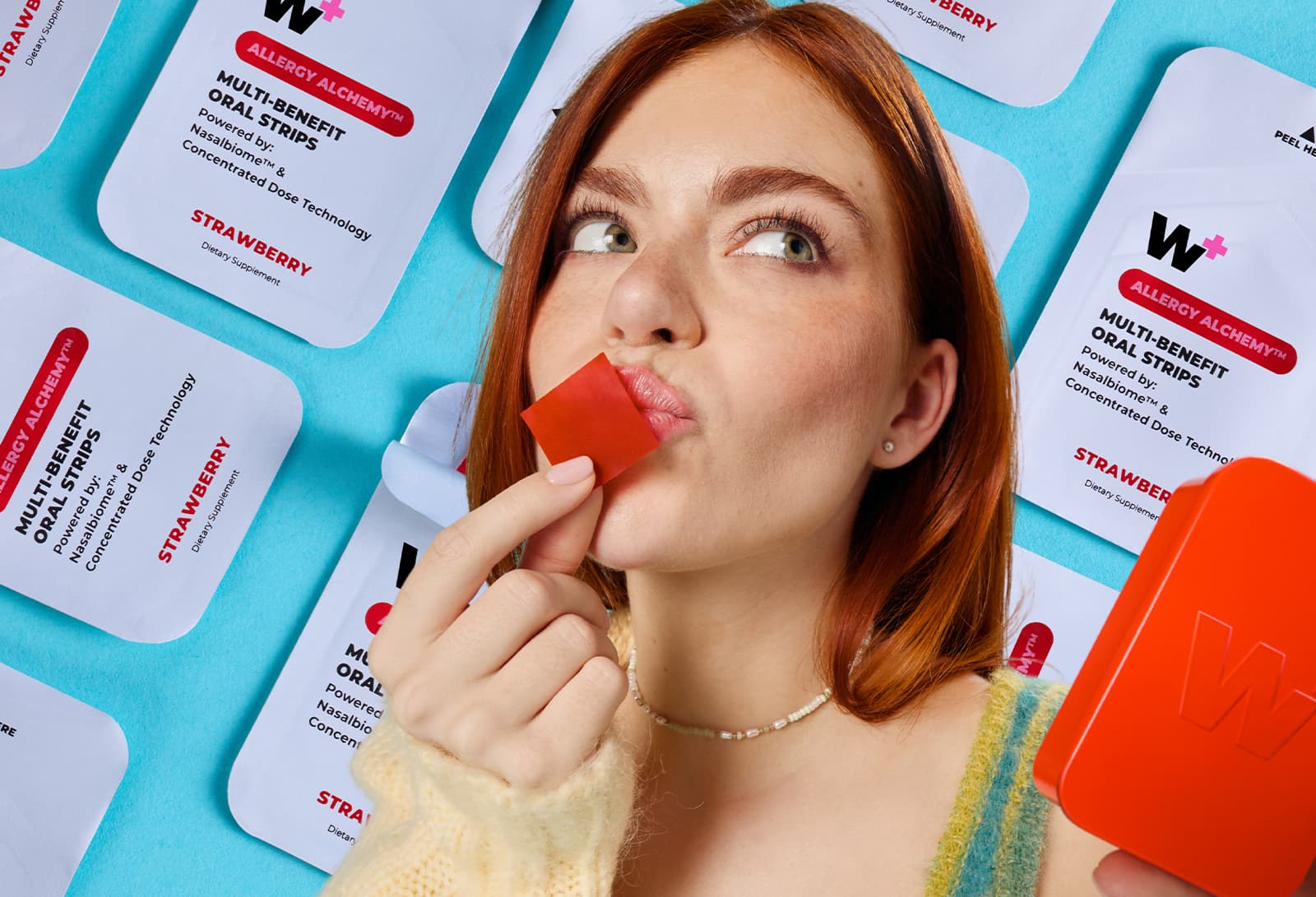
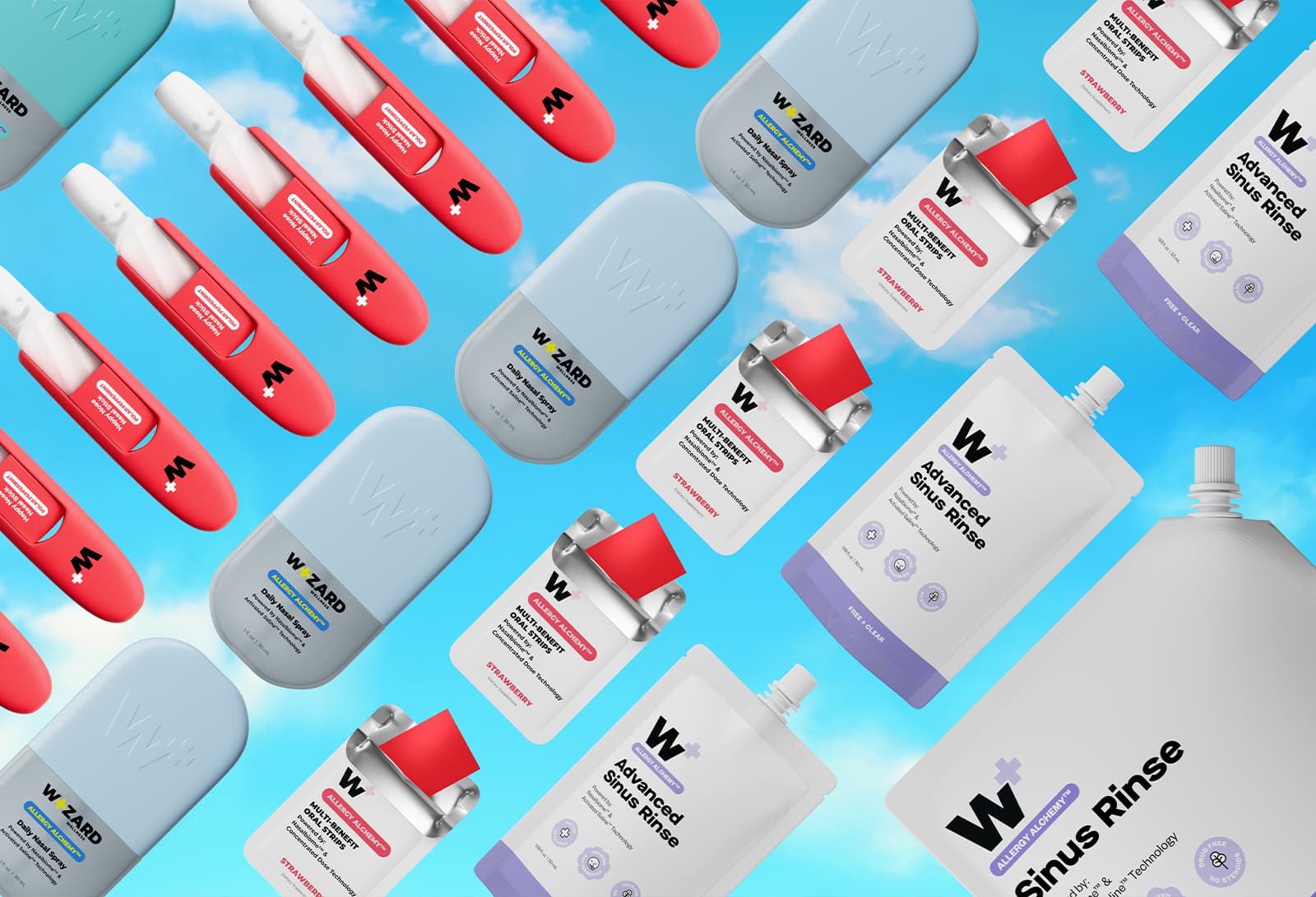
Its Walmart and CVS assortment includes a Daily Nasal Spray, a nonmedicated micro-mist formulated with quercetin; the Happy Nose Nasal Stick, which uses essential oils to create an on-the-go sensory experience; and Multi-Benefit Allergy Oral Strips. Walmart will additionally stock a second nasal spray and the brand’s pre-mixed Advanced Sinus Rinse.
The language is noticeably closer to modern skincare and wellness than conventional allergy medicine: barrier support, microbiome care, hydration, probiotic, and daily maintenance replace the symptom-and-treatment vocabulary consumers typically encounter in the aisle.
It reflects a much broader shift taking place across beauty and wellness. As consumers have become accustomed to increasingly specific routines for their skin, scalp, gut, sleep, and intimate health, brands have continued searching for previously overlooked parts of the body that can support their own product ecosystems.
Wizard Wellness is betting that the nose could be next.
Wizard Wellness only launched in January 2026. By April, its products had arrived on Walmart.com, with an in-store rollout planned for later in the year. The latest expansion dramatically increases that presence, putting the brand into thousands of physical retail locations. For Walmart, Wizard has secured endcap placement in approximately 1,500 stores, giving the emerging brand prominent space usually associated with considerably more established consumer businesses. CVS, meanwhile, is bringing the range into approximately 1,400 locations.
According to Lucree, getting mass retailers behind the proposition came down to three things: an underserved consumer need, product innovation, and a clear pipeline for what Wizard Wellness brings to the category next.
"This aisle hasn't been meaningfully disrupted since 2015 when Flonase switched from Rx [medical prescription] to OTC [over-the-counter]," he told BeautyMatter. "There was a lot of excitement that Wizard [Wellness] was accelerating nasal microbiome science—a real, credible area of science within allergy care—to the aisle, the true job of an agile disruptor brand."
Lucree pointed to new formats such as Wizard Wellness' fast-dissolving oral strips; patented nasal rinse packaging; ingredients more commonly associated with skincare, including resveratrol and licorice root extract; and a social-first marketing strategy informed by beauty as elements that helped differentiate the proposition.
The expansion follows a period of rapid growth for the company. Wizard Wellness said its DTC subscription base has increased 17-fold since launch, while July 2026 became its largest month for both revenue and customer acquisition, with new customers nearly tripling month over month.
The scale of the rollout also puts Wizard Wellness to the test to prove that consumer curiosity translates into sustained sales. Lucree said the brand will be measured against conventional retail metrics including velocity and movement on-shelf, but views its relationship with Walmart and CVS as longer-term category-building opportunities.
“We will hold ourselves accountable just like the big guys,” he said to BeautyMatter. “But the point of view is that these are long-term brand-building opportunities to truly make consumers’ lives better, so while the metrics will ground us, our North Star will be a collaborative growth mindset with our retail partners.”
The retail commitment is particularly notable because Wizard Wellness isn’t simply competing for share within an established product format. The company is asking retailers, and ultimately consumers, to recognize “nasal wellness” as a distinct proposition within an existing allergy and respiratory health aisle.
Whether consumers adopt that terminology remains to be seen. But securing thousands of doors gives Wizard Wellness something many category-creation attempts lack: the physical distribution required to introduce the idea at scale.
Wizard Wellness’s rapid expansion also speaks to the increasingly blurred boundary between beauty, wellness, and consumer health.
Beauty companies have spent years moving into categories once considered peripheral to the industry. Scalp health has adopted the language of skincare; menopause care moved into beauty retailers; ingestibles have brought nutrition into daily beauty routines; and devices have increasingly positioned longevity, recovery, and wellness alongside aesthetics.
Underlying that expansion is a consumer increasingly accustomed to taking a proactive approach to wellness. Lucree believes the proliferation of highly specific routines around sleep, gut health, skin, and other areas of well-being has created an environment in which nasal care can be repositioned in much the same way.
"Research shows consumers don't want to actually live longer; they just want to live better each day, and I believe building these intentional routines helps them take control of that," Lucree told BeautyMatter.
Allergies, he argues, are particularly ripe for the shift because consumers have traditionally approached the category reactively. Wizard Wellness’ challenge is to persuade them to think about their nose before symptoms appear.
Lucree returns to a simple analogy to explain the proposition: "The nose is the air filter for the body, and if you think about it that way—imagining pulling out a dirty air filter in your house and seeing all that mess—would you want to let that go uncleaned daily?"
That reframing, from treating a problem when it appears to maintaining nasal health as part of an everyday routine, is remarkably familiar to beauty. Take an established consumer concern, reposition it around proactive daily care, introduce more sensorial formats, and build a regimen around it. It is a playbook beauty has repeatedly used to expand the boundaries of what constitutes a beauty or wellness category.
For Lucree, the opportunity is to apply those lessons to a part of the body largely untouched by beauty’s routine-building machine. The scale of the Walmart and CVS rollout doesn’t yet prove that “nasal wellness” will become a category in its own right. It does, however, give Wizard Wellness an unusually large stage on which to find out, and offer another indication that beauty’s influence on consumer wellness is moving well beyond the bathroom cabinet.