Key Takeaways:
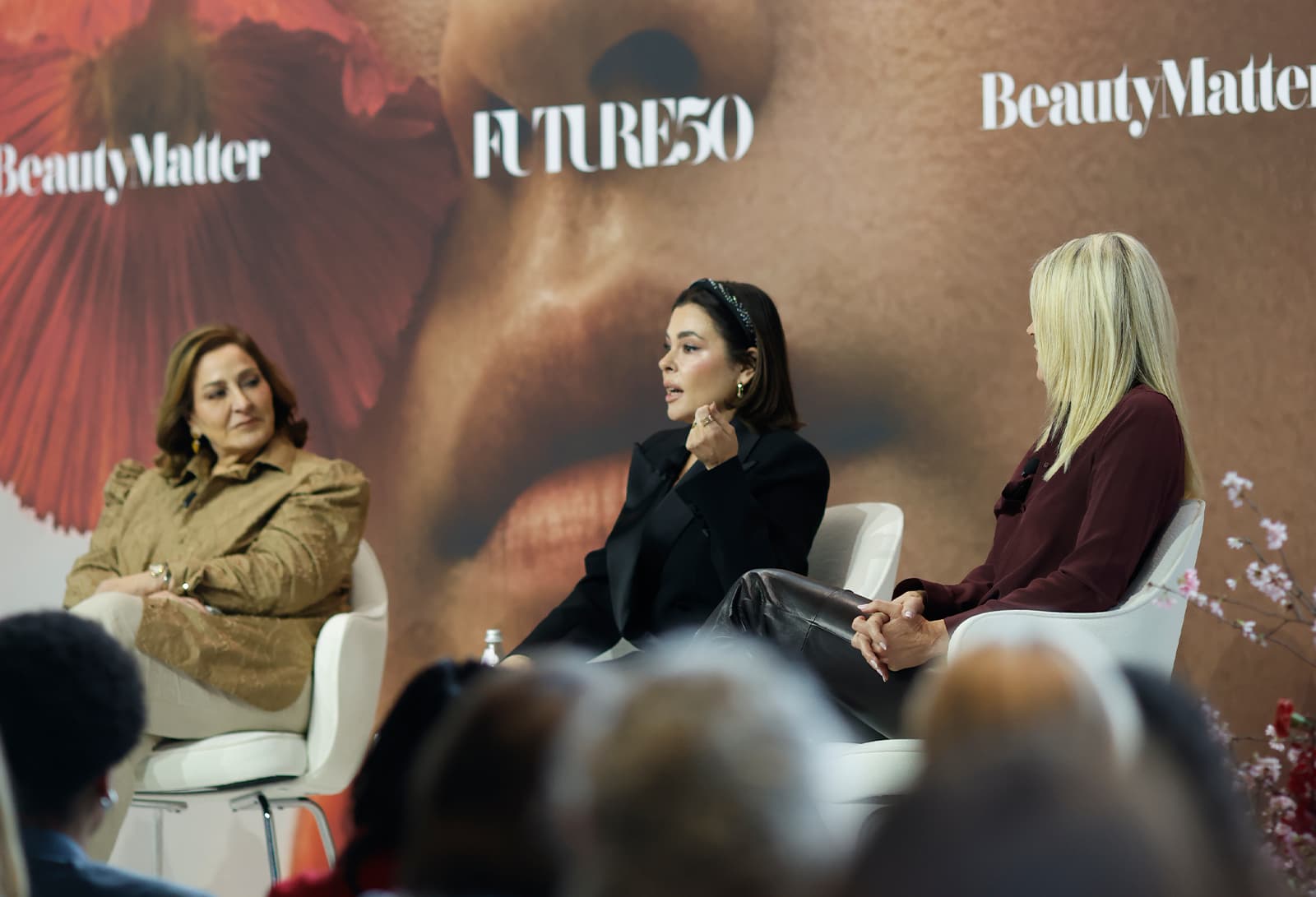
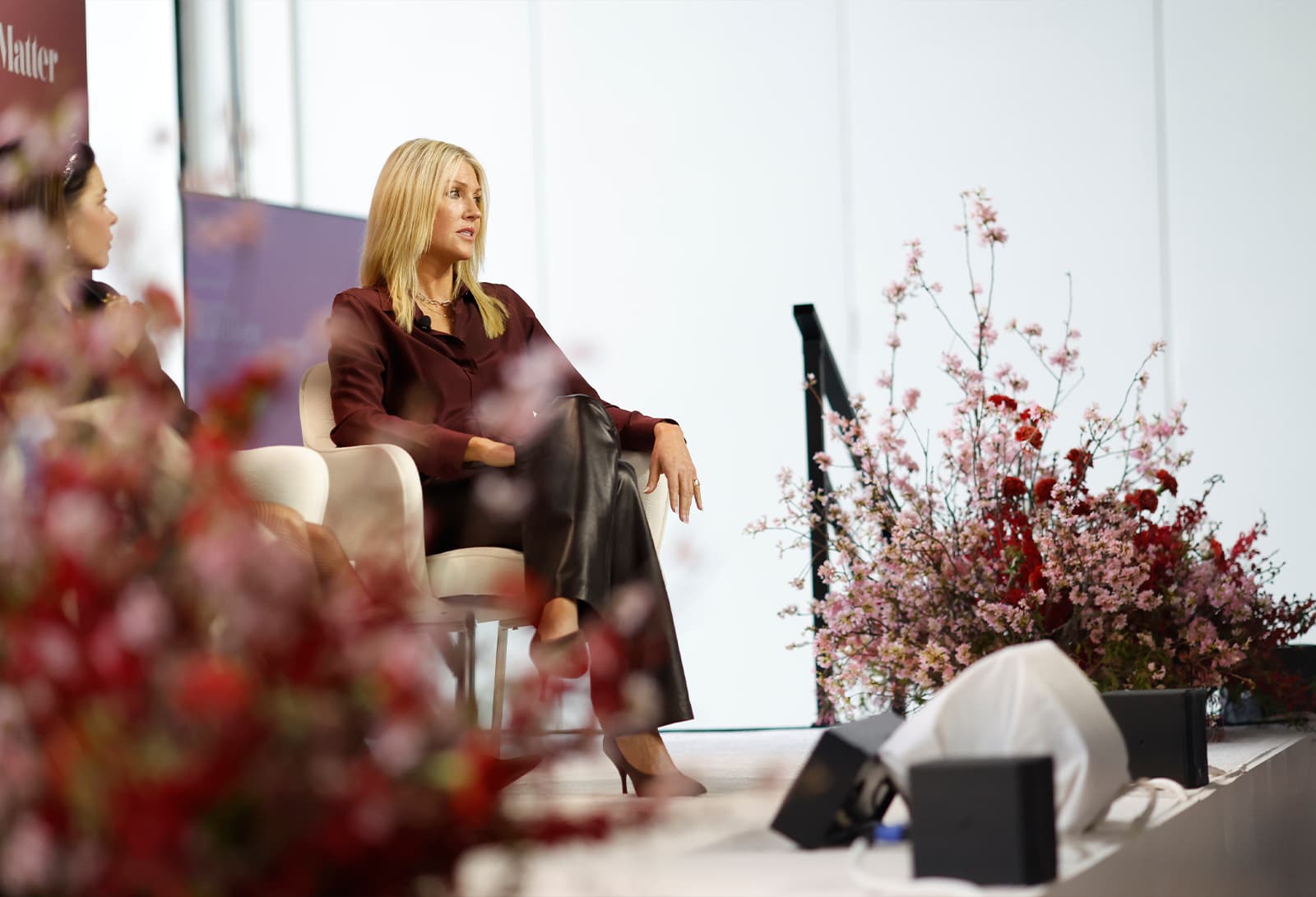
At a time when the beauty industry remains fixated on youth, chasing Gen Alpha trends and TikTok virality, a different narrative is gaining volume. On stage at BeautyMatter’s FUTURE50 Summit, BeautyMatter Editor Cristina Montemayor moderated the panel discussion on “Beauty’s Lost Generation: The Gen X Opportunity,” featuring Laura Geller (founder of Laura Geller Beauty), Sarah Creal (founder and CEO of Sarah Creal Beauty), and makeup artist, beauty educator, and creator Erica Taylor, who collectively made one thing clear: Women over 45 are not only being overlooked, they’re done being polite about it.
Montemayor set the stage with a reality check. Gen X alone spends $279 billion annually on beauty, projected to grow to $430 billion over the next decade, while boomer spending is expected to hit $8 billion between 2024 and 2034. These consumers have money, experience, and loyalty, but they’ve long been treated like an afterthought.
“The beauty industry has had an obsession with youth,” Montemayor said. But the current shift is revealing “the opportunity to garner the attention of two of the most powerful consumer groups in beauty … Gen X and boomers.” And if brands don’t get it? This cohort is more than willing to tell them.
Geller, who proudly identified herself as a baby boomer, wasted no time cutting through the noise. “We have been overlooked,” she said. But that invisibility is over. “Besides the disposable income, besides the fact that we know what we want, besides the fact that we lost our filter and we don’t give a shit … now we are represented, and we are spending the money.”
Her punchline landed with the room: “If you’re not on this gravy train, you’re crazy.”
If Geller delivered the mic drops, Taylor brought the cultural reframing. “We’re cool. We’re not going down without a fight,” she said. “I’m going to be 50,” she said, noting that the Golden Girls actresses “were my age. I’m not running around with bat wing sweaters.”
The joke hit because it exposed a deeper truth: The industry’s reference points for “older women” are wildly outdated. Today’s Gen X consumer still wants to experiment, still wants to feel aspirational, and still wants to have fun with beauty. But she wants it on her terms.
Taylor built a following of nearly 2 million on Instagram by doing what brands weren’t: teaching women how to adapt their beauty to their evolving faces. “Nobody was teaching us,” she said. “So now we’re doing the old makeup on a different face.”
Her content, equal parts tutorial and reality check, leans into humor and honesty. “I started the common mistakes that date the face,” she explained. “It was like, holy shit, that’s the same face looking modern. And I’m not saying younger, I’m just saying better. Enhanced.” The distinction matters. This consumer is not chasing youth; she’s chasing relevance. That disconnect between what brands think she wants and what she actually wants came up repeatedly, and often hilariously. Taylor summed up her audience’s expectations with blunt clarity: “Information. What are you doing? Where am I putting it? What is it fixing? And where do I buy it? The end.”
No fluff. No aspirational montages. Definitely no PR unboxings. “We don’t care,” she said. “That’s for the 20-year-olds.” Instead, this consumer wants problem solving. And she will call out brands that overpromise. “Don’t come to us just because you want the demographic,” Taylor warned. “Come to us with a product that really was made and works for us.”
Creal, who launched her brand specifically for women 40-plus, agreed, and aimed at the industry’s messaging misfires. “There’s a lot of lecturing going on,” she said. “I’m like, just shut up and make good stuff for them.”
Her critique of beauty’s “anti-aging” narrative was equally sharp. The issue isn’t the term itself—“women don’t care about the term,” she noted—but the reductive way brands approach this life stage. “It becomes so fricking sterile,” she said. “It’s like they turn 40 and suddenly they never want to have sex again. Who is that? I don’t know that person.” Instead, Creal is focused on portraying women in their full lives: aspirational, dynamic, and yes, still interested in beauty. “I’m just trying to create a brand that is showing her in her entirety,” she said.
That philosophy extends to product development, where the panelists agreed the industry often gets it wrong. Creal offered one of the most memorable analogies of the session: “When you’re formulating for somebody in their 20s, you’re basically making formulas for a rubber mat …. Now I’m formulating for 40s, 50s, 60s .… Think about formulating for tissue paper.” Translation: Everything, from texture to finish, needs to change.
Geller echoed that mindset but brought it back to practicality, and, as always, humor. “Who can’t see anymore in a regular mirror?” she asked, prompting a sea of raised hands. Her solution: magnification mirrors in compacts and larger labels on packaging. “So you don’t have to put magnification on your camera and zoom in on the lipstick to see what color it is.” It’s a small detail with big implications: designing for real life, not just marketing.
Geller’s approach to building her brand has always been rooted in that kind of intimacy with her customer. “I’m obsessed with my customer,” she said. “They’re my friends.” That means reading reviews repetitively, responding to DMs personally, and refusing to sell anything she wouldn’t wear herself. “If I’m not wearing it, I’m not selling it.”
It also means acknowledging the full spectrum of this consumer, not just the polished, affluent shopper. Through QVC, Geller has reached women who may not have access to Sephora or Ulta Beauty stores, or who are just beginning their beauty journey. “She may be at home and not doing anything, and really going through a rough time,” she said. “And I’m there.”
The emotional connection to beauty, something often overlooked in industry conversations, surfaced again when Taylor described her own community. “There are people who are lonely,” she said. “Social media … it's their outlet. It makes them feel like they have made some friends.” That sense of connection may be one of the most underappreciated drivers of loyalty among this demographic.
When it comes to where they shop, the answer is everywhere. This consumer is omnichannel, comfortable buying on TikTok Shop or Amazon while also wanting to touch and test in-store. “I like to play,” Taylor said. “I like to go in. I like to see things.”
Creal pointed out that this behavior will only intensify as millennials age into the category. “Fifty percent of millennials will be 40 in 2028,” she said. “It’s coming, people.” In other words, this is not a niche. It’s the future.
The panel closed with advice for brands, and more than a few laughs. Geller’s guidance was simple: “Start with a product that delivers … and not a bunch of fluff.” Taylor added a warning against inflated claims: “Don’t overpromise and underdeliver. That is some bullshit.” And if all else fails? Geller offered one final, tongue-in-cheek tip on resilience: “Some medication. Not going to lie. It helps.”
Beneath the humor, the message was serious. This consumer is informed, engaged, and ready to spend, but only with brands that respect her. Or, as Creal put it, the solution isn’t complicated: “Make good stuff that works.”