





Beauty's next frontier isn't a trend: it's a technology shift. Hydrinity has been named by research and consultancy firm Kline + Company the fastest-growing professional skincare brand in the US two years running, while Plated Skin Science responded to triple-digit demand growth by opening the US's largest cosmetic exosome manufacturing facility in 2025. From brands like Debut to Mother Science, the biotech skincare category is no longer niche.
Beauty’s biotechnology-driven skincare market was valued at $5.8 billion in 2025 and is projected to reach $8.6 billion by 2032. Beauty M&A is concentrating around science-first IP, with strategic acquirers targeting proprietary molecules and delivery technologies rather than simply pursuing scale, demonstrating biotech’s hold on the industry’s future.
But "innovation is moving faster than understanding,” Alisa Lask, CEO of Plated Skin Science and founder of Rion Aesthetics, told BeautyMatter.
That gap between demand and understanding is visible across the market, driven by multiple directions at once. Clinical channels, mass retail, and a consumer base increasingly primed by GLP-1 culture to view injectable and biological solutions as normal are all converging on the same category simultaneously.
According to McKinsey, 63% of patients seeking facial aesthetic products or procedures following GLP-1 use were not previously active users of medical aesthetics services—roughly half had never considered aesthetics before their weight loss—and 61% of GLP-1 patients seeking aesthetic treatment had lost 11% to 30% of their body weight, with skin laxity on the face and neck the primary concern. The global consultancy company also discovered that GLP-1 agonist prescriptions grew at roughly 38% annually between 2022 and 2024, with sales forecast to reach $100 billion by 2030.
The rise in GLP-1s has created downstream demand for topical biotech, positioned as the answer to the “Ozempic face” and the subsequent hair loss that accompanies a gaunt or aged appearance, characterized by sagging skin, sunken eyes, and prominent wrinkles.
Maxwell Stock, CEO of Epicutis, is seeing a similar pattern. "There's a rapidly growing segment of patients coming out of procedures or medical weight-loss journeys who need products that support skin recovery, resilience, and long-term health. This convergence is accelerating the shift toward performance-driven skincare that bridges clinical and consumer spaces,” he told BeautyMatter.
In April 2026, the UK’s #1 (mass-market) skincare brand, No7, launched its Prime Forever collection, a patent-pending antioxidant peptide range developed using spatial transcriptomics research with the University of Manchester, with whom the brand has a 20-year research partnership to advance skin science. Available at Boots nationwide with a starting cost of roughly $33.50 (£24.95), No7’s range signals biotech ingredients crossing from professional prestige into accessible retail.
The brands building to meet the demand are already moving fast. Some are pulling ahead.
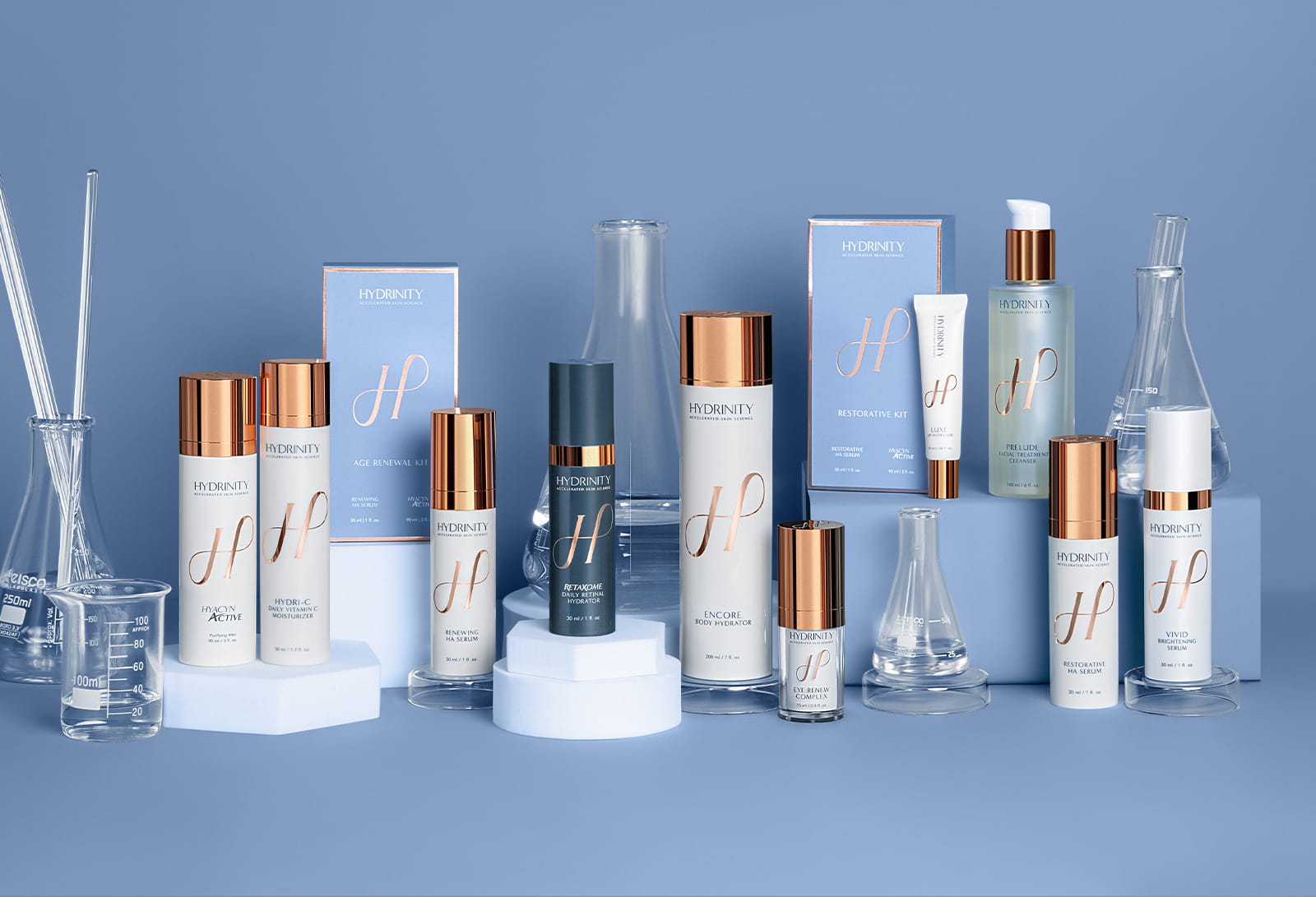
Founded in 2022 by Keith O'Briant, Hydrinity is built on a biomimetic exosome-delivery technology. The Louisiana-based company focuses on advanced wound care, regenerative therapies, and drug delivery systems for oncology and hematology patients. The company went on to partner with scientists and physicians to create a line of skincare products, including its hyaluronic acid formulas.
Hydrinity’s newest innovation, RetaXome Daily Retinal Hydrator, uses biomimetic exosome technology to improve retinal delivery and tolerability, mitigating the irritation that has long limited retinoid use, according to the company.
In four years, Hydrinity has been named the fastest-growing professional skincare brand in the US two years running by global market research and consulting firm Kline + Company, with 77.3% year-on-year growth and a presence in 40 countries, highlighting the speed at which clinical-grade biotech is converting professional credibility into commercial scale. "Science always wins," O'Briant told BeautyMatter. "When you build on a real scientific foundation, you don't have to change your story. The results speak for themselves."
"The category didn't suddenly appear; it was built. What you're seeing now is the result of bringing true scientific validation into a space that previously relied more on potential than proof,” Lask said.
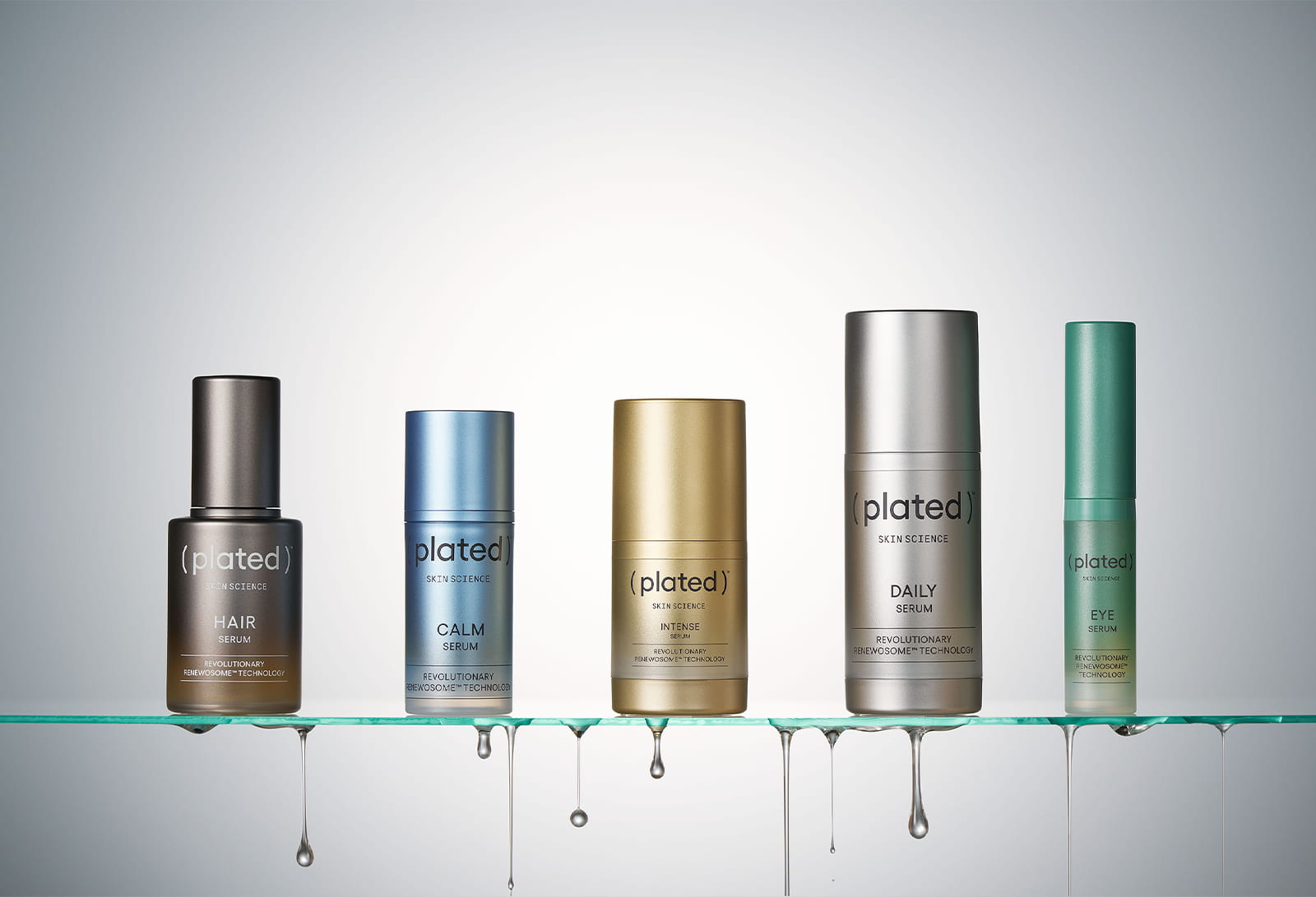
Launched commercially in 2022, after 15 years of research, Plated Skin Science responded to what the brand describes as triple-digit demand growth by opening a 14,000-square-foot manufacturing facility in Rochester, Minnesota, in 2025—the largest cosmetic exosome production facility in the US—built exclusively to produce its proprietary Renewosome technology.
One of BeautyMatter’s FUTURE50 2026 winners, Epicutis, is seeing similar growth. The professional skincare brand is projected to reach $50- $75 million in revenue in 2026, following a $10 million investment in June 2025. Its formulations center on proprietary molecules developed at Princeton University's Signum Biosciences, including Hyvia, a moisturizing agent derived from non-GMO chia seed developed using a two-step extraction process that enriches omega-3 and omega-6 fatty acids five to six times over standard extraction. In a study published in the Journal of Cosmetic Dermatology, Hyvia cream delivered 58% greater improvement in skin hydration versus vehicle at 24 hours.
"It doesn't deliver hydration topically," Stock explained. "It activates the skin's own hydration machinery at the gene expression level."
In haircare, UK brand Ruka developed the first protein-based, biodegradable, and biomimetic synthetic hair fiber, Synths. Made with no PVC or endocrine disruptors, the hair extensions are now stocked at Selfridges. Meanwhile, US-based KeraFactor holds three patents covering its biomimetic growth factor technology, including the first synthesis of Follistatin for haircare applications. Its actives are nanoencapsulated into liposomes under 200 nanometers for targeted scalp delivery.
The brands at the forefront of biotech beauty are only as strong as the science behind them.
Behind the breakout brands, the more consequential shift is happening upstream. The ingredient and technology companies powering biotech beauty's next wave are separating genuine innovation from trend-led marketing speak.
"Real biotech starts with a defined molecule," Stock told BeautyMatter. "Not a complex extract where the 'active' is inferred, but a characterized compound with a known structure and a measurable mechanism of action. Molecule-level IP is defensible. Formulation narratives are not."
The bar for what constitutes real biotech innovation is rising. "The unlock wasn't a single moment," Lask explained. "It was the convergence of purification, characterization, and stabilization." Translating regenerative medicine into a cosmetic-grade formulation required solving for all three simultaneously, a level of scientific infrastructure that most brands claiming biotech credentials simply don't have.
"We invested over seven million dollars in just doing the research to find this new peptide that is the core of our products," Carolina Reis, co-founder of OneSkin, said at the BeautyMatter FUTURE50 Summit in 2026. That figure underscores the gap between brands built on proprietary science and those built on licensed or off-the-shelf ingredients dressed up in biotech language.
Mibelle Biochemistry, the Swiss pioneers of biotech beauty, and the Robertet and Aethera Biotech joint venture represent an older guard of ingredient innovation now being joined by a new wave of regionally specific developers.
"Not all exosomes are created equal," O'Briant noted. "We're seeing brands group together what were previously referred to as growth factors or stem cells under the 'exosome' umbrella, which can create confusion for consumers." A point that applies equally to peptides, growth factors, and biomimetic claims.
As the market scales, the pipeline builders with peer-reviewed data, defined mechanisms, and composition-of-matter IP will increasingly separate from those with a compelling deck and a licensed extract.
And the financial world is paying attention.
When Plated Skin Science presented at the TD Cowen Glowing Ahead Summit in February 2026, it marked a quiet but significant moment: a skincare brand making its case not to beauty editors, but to Wall Street.
According to DC Advisory, skincare is the most active beauty M&A subsector globally, with 10 of 27 deals completed in 2025, driven by demand for science-based, results-led solutions. Strategic acquirers are no longer simply pursuing scale; they are targeting proprietary molecules and delivery platforms. "The shift toward proprietary biology and delivery platforms is real," Lask added. "Value is moving upstream from brand to the underlying science."
Stock is more direct about what investors are actually backing. "What investors and strategics pay for is uncopyable science: a novel chemical entity, a clear and testable mechanism, composition-of-matter IP, and clinical data that holds up under scrutiny," he said. "The real shift underway is from hero products to platforms. Sophisticated buyers aren't looking for a single molecule with a single claim—they're underwriting discovery engines that can produce a pipeline of compounds with tunable properties and expanding indications."
Epicutis raised $10 million in June 2025. Iris Ventures took a multimillion-dollar minority stake in Goddess Maintenance Co., a biotech haircare brand, in October 2025. Veradermics, a hair loss biotech, raised $256 million in an IPO. C16 Biosciences, which produces precision-fermented palm oil alternatives for personal care under its Palmless platform, raised $36.3 million in equity funding backed by Breakthrough Energy Ventures and the Bill and Melinda Gates Foundation.
"Capital is concentrating at the intersection of three things,” Stock pointed out. “Defensible molecule-level science, an extensible platform, and disciplined distribution. Miss any one of those, and you fall into a lower multiple category. The bar is rising quickly. Investors are no longer buying narratives. They're buying systems that can repeatedly produce validated results."
The question of where biotech beauty goes from here depends on who you ask.
For Lask, the next frontier is still exosomes. "True innovation isn't about adding another ingredient," she said. "It's about finding better ways to improve how skin looks and feels over time." Plated's pipeline focuses on how skin ages and how to better support the skin barrier, as biological pathways remain underfunded relative to their clinical significance.
O'Briant believes the shift is systemic. "The future of skincare is not more steps but better systems. When you build on a real scientific foundation, you don't have to change your story. The results speak for themselves,” he added.
As clinical validation becomes a commercial prerequisite rather than a differentiator, the gap between brands with genuine science and those with compelling storytelling will widen rapidly.
The most pointed perspective? "Biotech in beauty is often positioned as the future,” Mary Ekanem, founder and Chief Scientific Officer of Inveo Laboratories, a Lagos-based cosmetic R&D lab building Africa's first biotech ingredient platform rooted in African feedstocks and optimized for melanin-rich skin and climate-stressed environments. “I disagree. Biotech is not the future of beauty;, it’s the correction and optimization of what we have in the present,” she told BeautyMatter.
That may be the most important signal of all: that biotech beauty's frontier isn't just a technology story. It's a question of who gets to define what the science is for.