
China is far from just a consumer market. From advanced R&D to social-first storytelling, the country is exporting new consumption mindsets, product ideas, and content models, becoming a louder voice in the global beauty conversation.
Cosmoprof Worldwide Bologna was proof of this. At this year’s event, held in March, Chinese beauty brands weren’t just showcasing products; they were highlighting R&D achievements, unpacking Chinese consumer trends, and laying the foundation for stronger global cooperation.
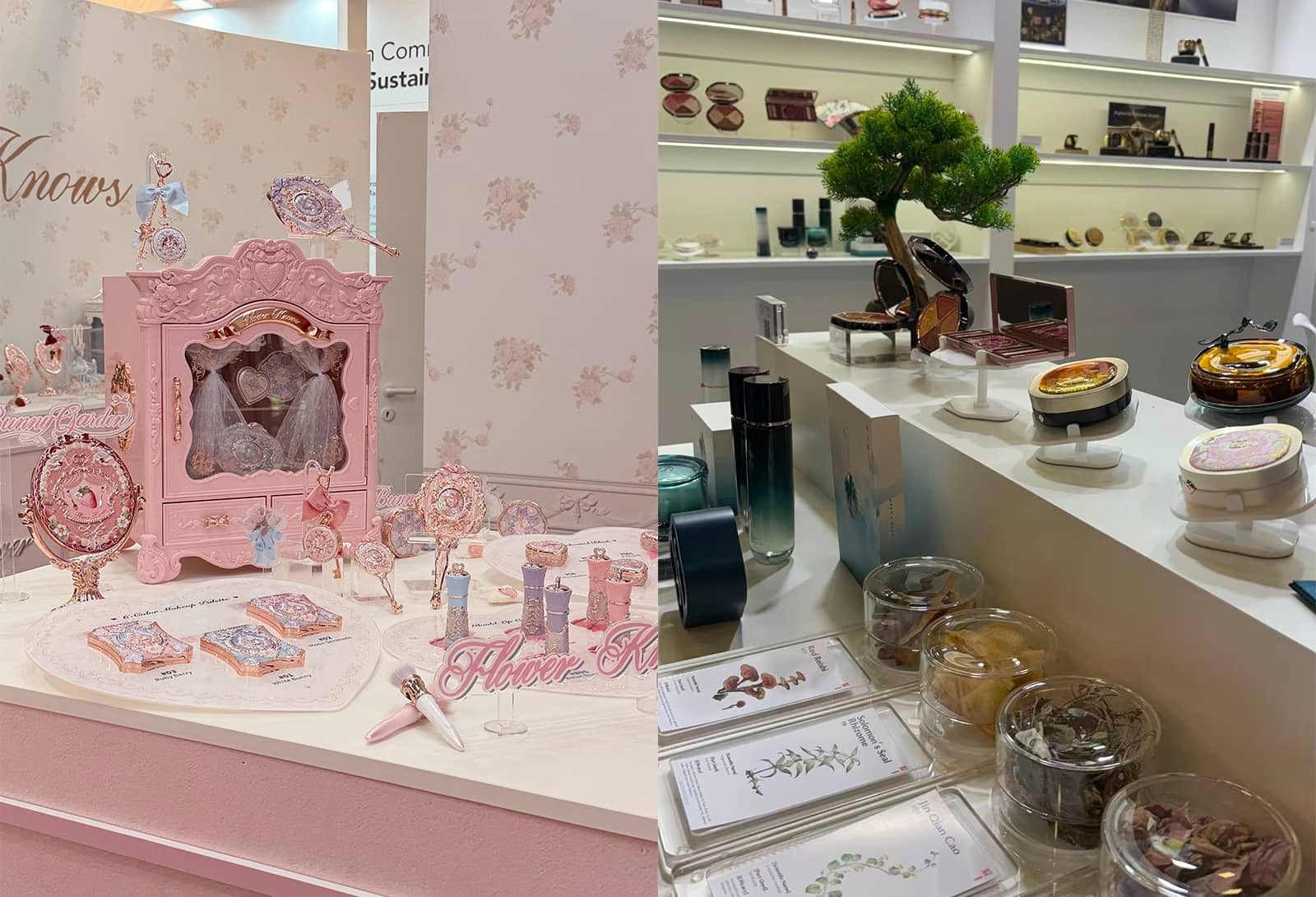
Skincare giant Proya Cosmetics made its debut at the trade fair, presenting its R&D logic across functional skincare, oriental aesthetic makeup, and scalp care. Cosmetics conglomerate Joy Group brought its leading makeup brands Judydoll and Joocyee, aiming to boost overseas visibility and establish more regional partnerships. Cosmetics brand Flower Knows, best known for its fairytale aesthetic, joined to deepen its understanding of the European market, particularly evolving retail expectations, following its March launch with UK retailer Boots.
Meanwhile, cosmetic brand Florasis was at Cosmoprof Worldwide Bologna not only to exhibit but to strategically observe, Gabby Chen, Florasis President for Global Markets, told BeautyMatter. The brand was seeking to understand “how buyers are thinking, which countries’ brands are moving up, and where growth is already starting to show structural weakness, she said.”
Together, C-beauty’s growing presence at Cosmoprof Worldwide Bologna signals a clear global ambition. Following the event, BeautyMatter caught up with the four companies to find out which trends they’re tracking in 2026 and which strategies they’re deploying to succeed.
According to Dr. Lieve Declercq, Chief Scientific Advisor of Proya Cosmetics and Vice President of Proya’s Europe Innovation Center, the most obvious change with Chinese consumers in 2026 is that they are approaching skincare in a more long-term, rational, and proactive way.
“Chinese consumers’ criteria for judging good products are shifting from emotional recommendation to rational verification. They pay more attention to product efficacy, safety, ingredient rationality, and whether the brand has strong R&D capabilities,” he told BeautyMatter.
At the same time, Chinese consumers’ skincare logic is evolving from “solving problems after they arise” to long-term management, encompassing prevention, repair, and maintenance. “This forward-looking trend is particularly prominent in skin anti-aging, with more and more young consumers starting preventive skincare at an early age, showing a clear younger trend in skin anti-aging awareness,” he added.
To meet growing demand for product efficacy, more C-beauty players are advancing their R&D capabilities. Proya Cosmetics aims to build a complete R&D chain spanning dermatological research and raw material development to product application. After unveiling R&D centers in Hangzhou, Shanghai, and Paris, the company is now opening joint laboratories with Chinese hospitals and universities, turning clinical research into implementable skincare solutions.
While Proya stresses the need for rational proof, that doesn’t mean emotional value is irrelevant. Flower Knows—whose core strategy can be summarized as “product as content, and content as growth”—designs cosmetic items not only for usage but specifically for “emotional engagement and shareability,” allowing them to naturally exist within social ecosystems.
“Consumers today are not just buying products. They are choosing brands that reflect their personal narratives and aspirations,” Gongyiliu Fang, Chief Marketing Officer, Flower Knows, told BeautyMatter. “To stay ahead, brands need to remain extremely close to their communities, continuously listen, and act quickly.”
As such, leading C-beauty names are scaling content creation into a community growth engine. With in-house, end-to-end production capabilities, Joy Group produced over 100,000 original short videos in 2025, accumulating more than 8 billion views across Chinese and global social and e-commerce platforms, including Douyin, TikTok, and Instagram. Rather than traditional, standardized brand content, the Judydoll owner focuses on user-centric content to foster more interactive, emotionally resonant communication.
“Instead of one-way product messaging, the brand prioritizes users’ real feelings, aesthetic expression, and emotional needs across daily scenarios, creating supportive, relatable, and shareable content to strengthen bonds with consumers,” Tang Yue, Senior Director of Public Relations and Communications, Joy Group, told BeautyMatter. “This strategy boosts user engagement and identification while enhancing brand affinity and long-term influence.”
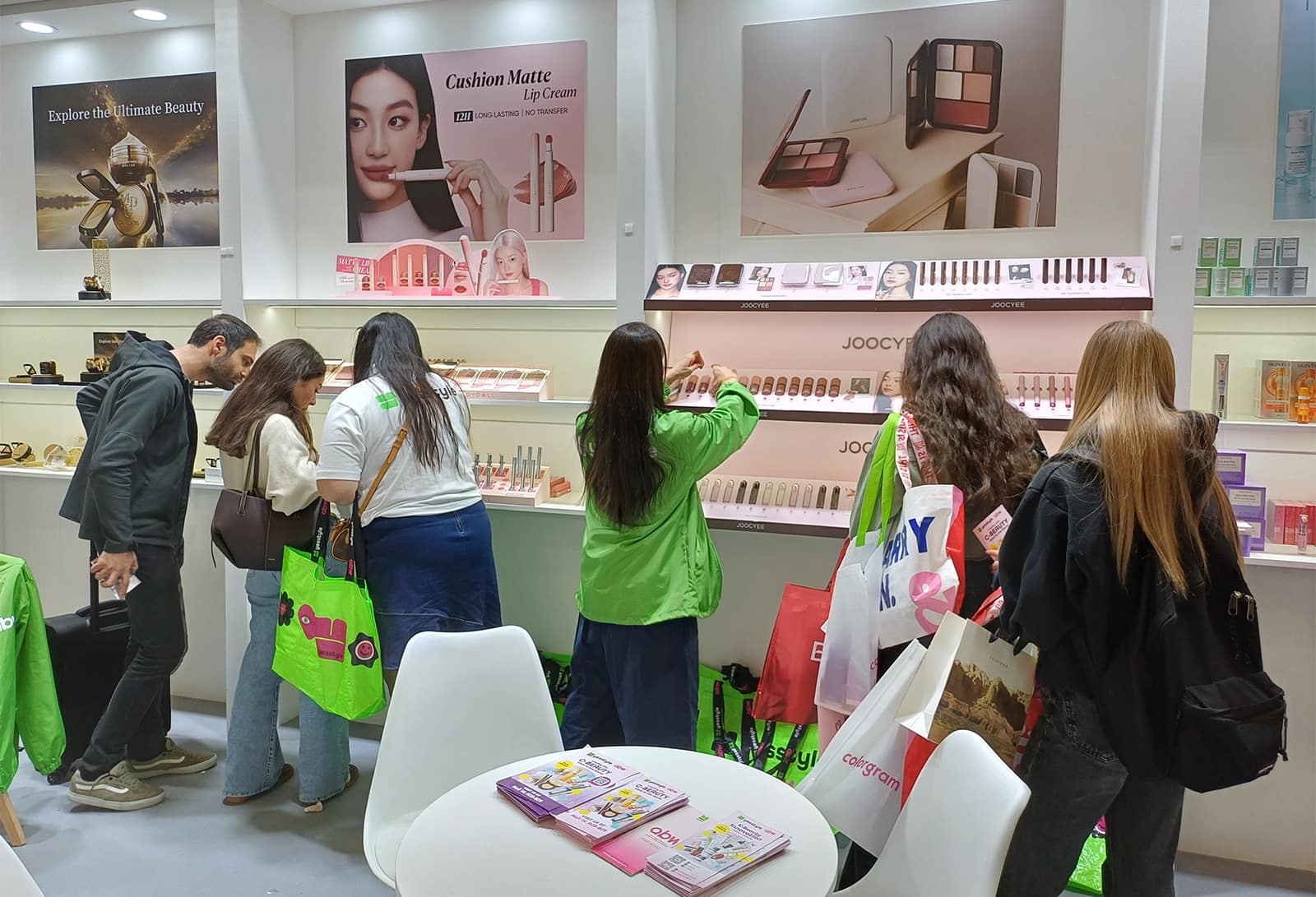
Another observable trend at Cosmoprof Worldwide Bologna was K-beauty’s dominance, with the Korean pavilion presenting a record 279 K-beauty brands, reflecting the industry’s impressive global reach. However, Chen pointed out a growing risk of homogenization as similar brands, products, and narratives proliferate across distributors.
“Growth does not automatically mean defensibility,” she said. “A category can be booming, while many of the brands inside it are becoming more substitutable over time.”
While K-beauty largely gained success through its clean design, affordable pricing, and clear efficacy communication, C-beauty will not win by replicating this formula. Rather its advantage lies in “China speed,” the ability to launch, test, iterate, and connect with consumers rapidly, she added.
Still, speed alone is not enough. The Chinese brands that will ultimately win overseas and avoid becoming easily substitutable are those that can build brand meaning over time.
As Chen explained, “Brand meaning is not there from day one; it is built through the journey. The channels you enter, the consumers you win, the retail stages you stand on, the credibility you build over time—all of that becomes part of the brand’s meaning.”
As more C-beauty brands expand abroad, they’re penning a new playbook on what it means to localize effectively. Beyond understanding local culture, regulations, and channels, “truly effective globalization is not exporting the brand but letting it take root and grow locally,” Declercq defined.
For Flower Knows, globalization starts with building community before scaling distribution, including investing in localized content and creator collaborations. “This allows us to validate demand and establish cultural relevance before expanding into physical channels,” said Fang, noting that retail partnerships with Ulta Beauty, Boots, and Urban Outfitters were built on a strong community foundation.
Joy Group also localizes content, supported by teams across Southeast Asia and the Middle East but goes one step further, prioritizing “brand globalization” over simple product exports.
“Localized content alone is insufficient without products developed for local consumers,” Tang argued. She noted that Judydoll launches new products and exclusive shades tailored to skin tones, makeup preferences, usage habits, and aesthetic trends in each market, such as a full line of sun cushions and pressed powders for Southeast Asian consumers.
Florasis takes a different approach, focusing on demonstrating the unique value of Chinese beauty beyond its origin. This looks like spotlighting strong product and supply chain capabilities, rapid response speed, a distinct aesthetic language, and a compelling story that global consumers can understand and believe in.
“I believe C-beauty will have its moment in the next three to five years. The product quality is already there. What will determine who truly breaks through is not who is cheaper, but who can tell the C-beauty story well and build real brand meaning over time,” Chen concluded.




