





The Product That Built the Brand is BeautyMatter’s ongoing series spotlighting the single hero products behind beauty’s biggest cult followings. Each installment sits down with the founder, CEO, or executive of a brand with a genuine following to unpack the origin, formulation, and business strategy behind the one product (or product family) that defined it commercially and culturally.
In 2003, executives from Elemis walked away from a finished ad campaign. The product wasn’t right, so the brand pulled it, sent the formula back to the lab, and waited. That decision, as described to BeautyMatter by co-founder and CEO Noella Gabriel as a refusal to compromise, produced Pro-Collagen Marine Cream, the “gel-cream” that anchored what is now Elemis’ largest and most lauded franchise: 35 SKUs, more than 300 global awards, and, by the brand’s own count, a Pro-Collagen Cleansing Balm sold every 10 seconds worldwide and a Pro-Collagen Marine Cream sold every 13 seconds.
For BeautyMatter’s debut installment of The Product that Built the Brand, a series examining how single hero products come to define billion-dollar beauty companies, we sat down with Gabriel to unpack the franchise’s 23-year run. What we learned was a case study in disruption at launch, discipline in formulation, and a distribution strategy built strictly around where the consumer already is.
In the UK, Pro Collagen's Cleansing Balm holds the #1 position among prestige facial cleansers by both value and unit sales, according to Circana UK data. It is a franchise built within the anti-aging market, which is itself accelerating.
The global anti-aging products category was valued at roughly $59.3 billion in 2026 and is forecast to reach $107.6 billion by 2033, growing at an 8.9% CAGR, according to Grand View Research. Pro-Collagen, Gabriel said, is growing faster than that baseline, posting double-digit year-over-year growth across retail and travel retail globally.
Elemis entered anti-aging in 2003 with a category-inverting bet. At a time when the industry’s assumption was that aging skin needed thicker, richer creams, Elemis launched a gel-cream instead, arguing the skin’s absorption capacity is finite, and that much of a heavy night cream sits unused on the pillow. “We took the whole functioning of the skin and said we want to get into anti-aging ... no gimmicks, no copying,” said Gabriel. “We want to come into this space really seriously, designing a product that mimics the skin’s function.”
Getting the texture right took discipline. That approach resulted in 52 formulations and two clinical trials before sign-off, per Elemis’ own account, and that canceled ad campaign. “We are not going to compromise,” Gabriel recalled telling her team. “We’ve canceled the campaign, and we put [the product] back in for innovation.” The result launched with Padina pavonica, a unicellular brown alga prized for its skin compatibility and polysaccharide content, targeted at fine lines, according to the brand. Today the Pro-Collagen range draws on up to 26 different algae in total.
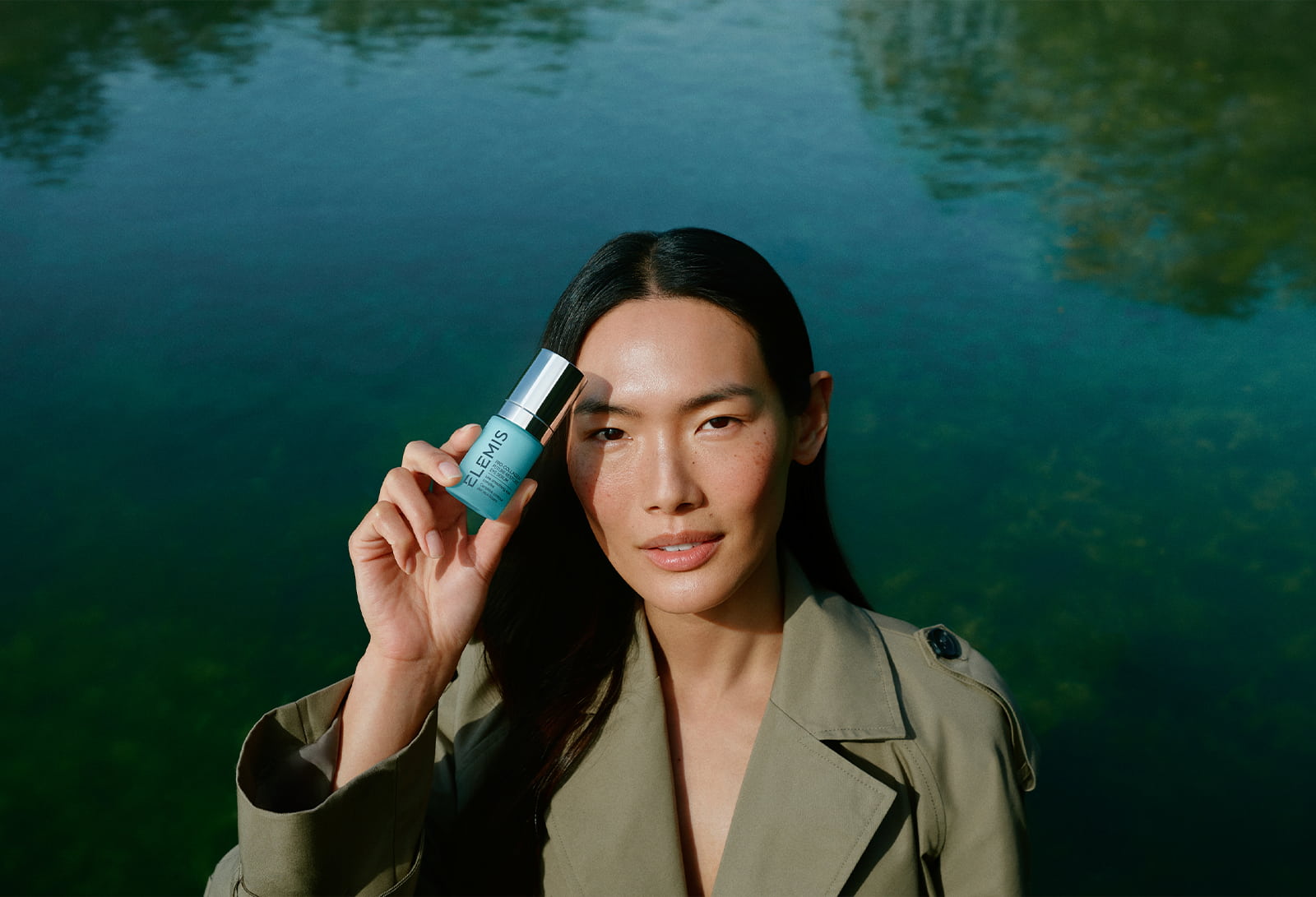
The franchise has since moved from marine extraction into biotechnology, replicating actives in a lab rather than harvesting them at volume. “Biotechnology is where nature lets go and science takes over,” Gabriel said, pointing to the Future Restore Eye Serum’s fermentation-derived complex and three microalgae diatoms, one sourced exclusively off the English coast. Clinical benchmarks have compressed accordingly, with the product claiming a 46% improvement in skin firmness within four days. “The consumer is getting impatient,” Gabriel said. “They want to see the results.”
Asked what sustains repeat purchase beyond efficacy, Gabriel pointed to sensory performance over ingredients, using the Pro-Collagen moisturizer as a reference case. “One function a [customer] buys the moisturizer for is to make sure her makeup sits just absolutely beautiful,” she said. “It doesn’t move all over the face. It doesn’t sweat [off].” Consistency across climates, from humid Singapore to dry London, is what Gabriel called the product’s real differentiator. “I talk about the after-feel more sometimes than anything else.” The same texture discipline extends to layering.
That reliability, she argued, translates into loyalty that resists brand switching. “Once you’re hooked on Pro-Collagen, and you see your makeup sits beautifully, you don’t change that ever,” she said. “That’s a trust and a loyalty that I think the brand has delivered.” Elemis positions itself as what Gabriel called a treatment-led product brand, built around hands-on demonstration rather than shelf-talk—a model reinforced by the brand’s spa heritage across its 111-country footprint.
The franchise also spans an unusually wide demographic and gender range without reformulation. Gabriel cited her own household as a proof point. She uses the SPF formula, her immediate family uses the same range for early signs of aging, and the line is marketed to men without adjustment. “It’s very broad,” she said. “There’s no one shy about using it, whatever gender they are.” The Cleansing Balm functions as the entry point for that demographic spread. Gabriel said the data shows that customers who enter through the balm, often in their late teens, later convert to full Pro-Collagen skincare around age 23. “Once we get you in,” she said, “you will become a die-hard Elemis consumer.”
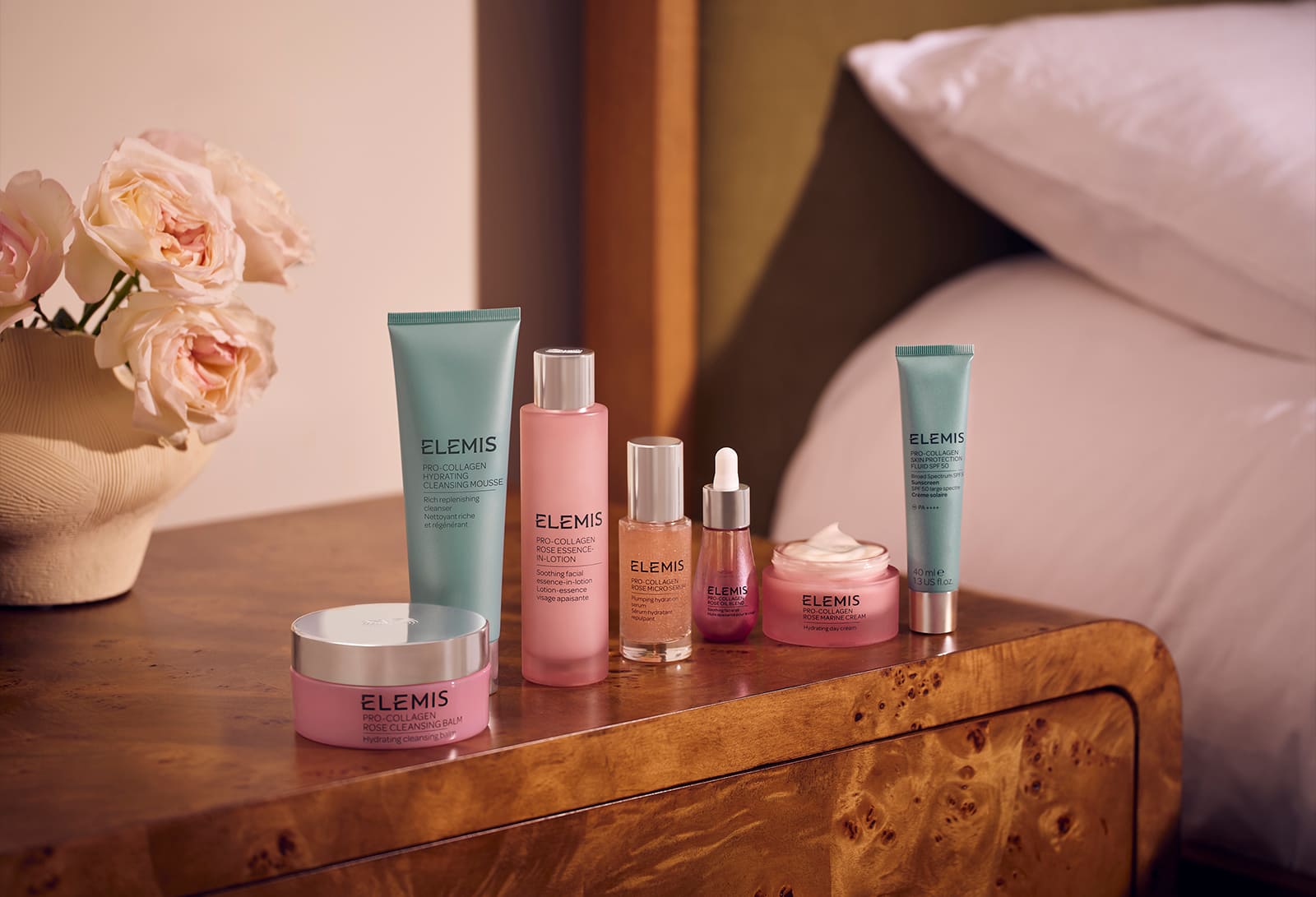
Elemis’ Pro-Collagen distribution strategy is built on channel-specific behavior rather than a single brand voice. In the US, that means Amazon and Sephora simultaneously, despite the retailers’ very different shopper intent. “I know that [a large percentage] of the US population shop on Amazon. I am never going to change that,” Gabriel said, adding that Elemis controls its own content and storytelling on the platform rather than ceding it to marketplace defaults. Sephora, by contrast, is treated as a discovery channel for a beauty-first, not skincare-first, Gen Z shopper. “They’re not going in there for skincare; suddenly they see Elemis Pro-Collagen Cleansing Balm, which links beautifully into their makeup routine.”
The Cleansing Balm’s virality has been organic as much as engineered. Gabriel pointed to a Halloween makeup video posted mid-pandemic, in which an influencer used the balm to remove face paint on one side only, which drew roughly 40,000 impressions and went viral on TikTok. The balm now comes in five aromatic variants, including Rose, Green Fig, and Black Cherry, alongside the original and fragrance-free formulas, and, per Gabriel, is Sephora’s current #1 selling facial cleanser in the US market.
Underpinning the retail strategy is a repositioning of Elemis’ spa heritage as commercial authority. “We’ve leaned into being this authority in skincare because we have a very strong spa treatment background,” Gabriel said. She also framed the wider opportunity, and risk, in terms of consumer sophistication rather than competitor activity. “We are today working with a very savvy consumer. They don’t want gimmicks, and they won’t come back if you fool them. You’ve got one shot only.” Product development, she said, starts from that same discipline—a blank sheet of paper per product, no ingredient-first briefs, and an 18-month to 2 ½–year development cycle. “Our DNA is: we do what we say on the tin,” Gabriel says. “We will never disappoint.”