





Less than a decade ago, Asian beauty was still largely absent from the North American retail landscape. While Korean and Japanese skincare innovations were already shaping global routines, access for consumers across the Americas remained fragmented and largely limited to overseas e-commerce orders and niche online forums. For Linda Dang, co-founder and Chief Executive Officer of Sukoshi, that disconnect between innovation and accessibility highlighted a clear opportunity.
“When we started Sukoshi eight years ago, the landscape was completely different, and Asian beauty was incredibly underrepresented in North America,” Dang told BeautyMatter. “You couldn’t walk into a major retailer and see it properly showcased, and it definitely wasn’t easily accessible online the way it is today,” she continued, adding that customers seeking certain products were often ordering from overseas with long shipping times and very little context or education.
The category’s absence from mainstream retail stood in contrast to its influence on global beauty innovation. “What stood out to me was that the innovation was already there, but the representation and infrastructure weren’t,” Dang explained. “These brands were shaping formulation standards and skincare routines globally, yet here they were treated as niche or trend-driven rather than category-defining.”
Sukoshi, which was originally self-funded and later took on a minority investment from Silicon2 in December 2023 to support its growth, launched in 2018 with the goal of closing that gap. From the outset, the company was designed not simply as a retailer in the greater Toronto Canada area, but as an ecosystem capable of introducing Asian beauty brands to North American consumers while providing the education and context needed to understand them.
As Asian beauty gained global attention fueled by TikTok trends and viral products, the challenge for retailers has been distinguishing lasting brands from short-term hype. The company was among the first to introduce the now popular mainstays like Celimax, Abib, and Torriden to North America. For Sukoshi, Dang said brand selection has always focused on long-term potential. “For us, it’s never just one factor,” she said when describing the company’s onboarding process.
“Virality can create awareness, but we don’t onboard a brand just because it’s trending. We look at long-term vision first. Is there real product integrity, strong formulation, or a founder or team that wants to build something sustainable in North America?”
The retailer spends significant time evaluating formulation efficacy and innovation, particularly in skincare, where Asian beauty brands have historically led ingredient and texture advancements.
Cultural perspective also plays an important role in Sukoshi’s merchandising philosophy. “[It’s] relevance is key. We look for brands that are pushing the category forward, whether that’s through texture innovation, shade inclusivity, ingredient philosophy, or a distinct point of view,” she said. “They need to fit into the broader Sukoshi ecosystem, not feel like a one-off.”
While margin structure inevitably factors into retail decisions, Dang emphasized that financial considerations rarely lead the process. “We think in terms of long-term brand building and whether we can accelerate that brand meaningfully through our platform.”
“The vast majority of the brands we carry align across efficacy, innovation, and strategic fit,” Dang said. “Virality might get our attention, but alignment and long-term potential are what ultimately matter.”

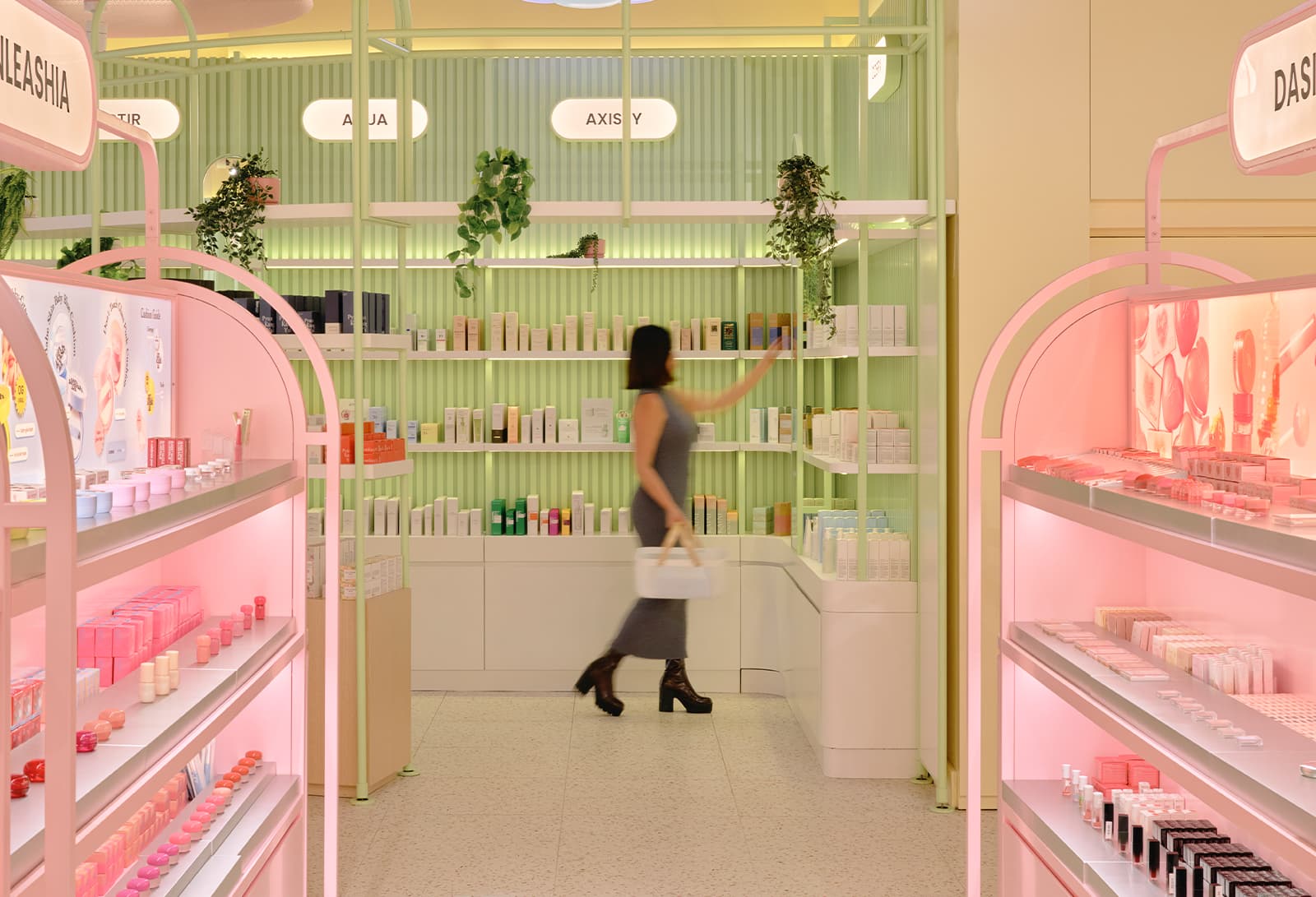
Despite launching as an e-commerce platform, Sukoshi eventually expanded into brick-and-mortar. For Dang, the tactile nature of Asian beauty routines made physical retail essential. “Beauty, especially Asian beauty, is inherently experiential,” she explained. “It involves textures, shade matching, routines, and education, and you cannot fully translate that through a screen.”
Across North America, Sukoshi has established twenty stores. In Canada, stores are present in cities like Toronto, Ottawa, Mississauga, and Calgary, while in the US, they’re present in New York, Miami, Atlanta, among many others. Come March 21, Sukoshi will officially open its first New Jersey location at Westfield Garden State Plaza. Physical stores allow Sukoshi to provide consultation and education that digital retail cannot replicate. “[It] allows us to build trust, offer real education, and create a sense of community in a way digital alone cannot,” Dang said.
Localization is an important part of the strategy. Rather than replicating identical store formats, Sukoshi adjusts merchandising and engagement based on each market. “Each market behaves differently,” Dang noted. “Assortment, merchandising focus, and even community engagement can shift based on the customer base in that center or city. We study local demographics and shopping patterns closely so the store feels relevant to its neighborhood.”
“From a KPI standpoint, our stores are strong in routine-building and discovery,” Dang said. “When a beauty consultant walks a customer through a full regimen, units per transaction naturally increase because the experience is personal and consultative rather than transactional.”
E-commerce, by contrast, supports convenience and replenishment. “Online supports convenience and replenishment. In-store is where we deepen education, engagement, and emotional connection. Together, they create a more complete ecosystem for the customer.”
Behind the scenes, building a North American retail platform for Asian beauty brands involves operational complexity. Regulatory differences between Asian markets and North America present one of the biggest challenges. Beauty regulations in North America are not always aligned with those in the products’ home markets. “Ingredient restrictions, labeling requirements, bilingual packaging, documentation standards, and claims language all need to be carefully reviewed,” Dang said.
Products that perform successfully in their domestic markets often require adjustments before entering the Americas. Long-distance supply chains add further hurdles. “Lead times are another major factor,” Dang said. “Many of the brands we work with are scaling quickly, and forecasting across continents requires precision.”
Production cycles, freight schedules, port congestion, and customs clearance can influence launch timelines and inventory levels. To mitigate these risks, Sukoshi invests heavily in planning, maintains buffer inventory for key SKUs, and strengthens communication with manufacturing partners.
The company has also shifted toward a more direct sourcing model. “Over time, we have built a more direct supply chain model, working closely with founders and manufacturers rather than relying on layers of intermediaries,” Dang explained. “That gives us better visibility, better control, and stronger long-term partnerships.”
Competition in Asian beauty retail is intensifying as the category gains momentum in North America. Retail giants such as Sephora and Ulta Beauty have expanded their K-beauty assortments in recent years, while South Korea’s leading beauty retailer, Olive Young, recently announced plans to open its first US store in Los Angeles. Dang, however, views the broader attention as beneficial. “The growing interest in K-beauty has absolutely helped fuel Sukoshi’s growth,” she said. “Increased awareness of K-beauty and Asian beauty more broadly continues to bring more customers into our stores, and we see that momentum as a positive for the category overall rather than a threat.”
Dang argued the category’s complexity is often overlooked as it enters mass retail. “Asian beauty is incredibly broad, and K-beauty itself goes far beyond the narrow ‘trend’ positioning it sometimes receives in mass retail,” she said. “Unlike retailers that may still approach it as a niche or temporary category, Sukoshi has always treated Asian beauty as a core, long-term space with real depth, innovation, and community.” Today, the retailer carries more than 500 brands, with consistent customer favorites including Medicube, Dr. Althea, and Purito Seoul in K-beauty, alongside C-beauty brands such as Girlcult and Red Chamber.
Looking back, Dang believes the company could have accelerated certain investments earlier. “If I were launching Sukoshi in 2026 instead of eight years ago, I would move faster and invest earlier in data, personalization tools, and deeper direct founder partnerships,” she said. “I would think about vertical integration from the start.” However, the company’s core philosophy would remain unchanged. “What I would not change is our focus on education and community,” Dang argued, describing it as the core to Sukoshi since day one. “That foundation remains just as important today as it was at inception,” she said.
Sukoshi is now focused on expanding its retail footprint across North America while maintaining its position as a discovery destination for emerging brands. The company’s stores are designed to feel “bright, welcoming, and discovery-driven,” Dang said, encouraging customers to explore new products while making Asian beauty approachable. “Our focus is on continuing to grow our retail footprint, expanding access to Asian beauty across North America, and further strengthening our role as a discovery destination for both emerging and established brands.”