
Key Takeaways:
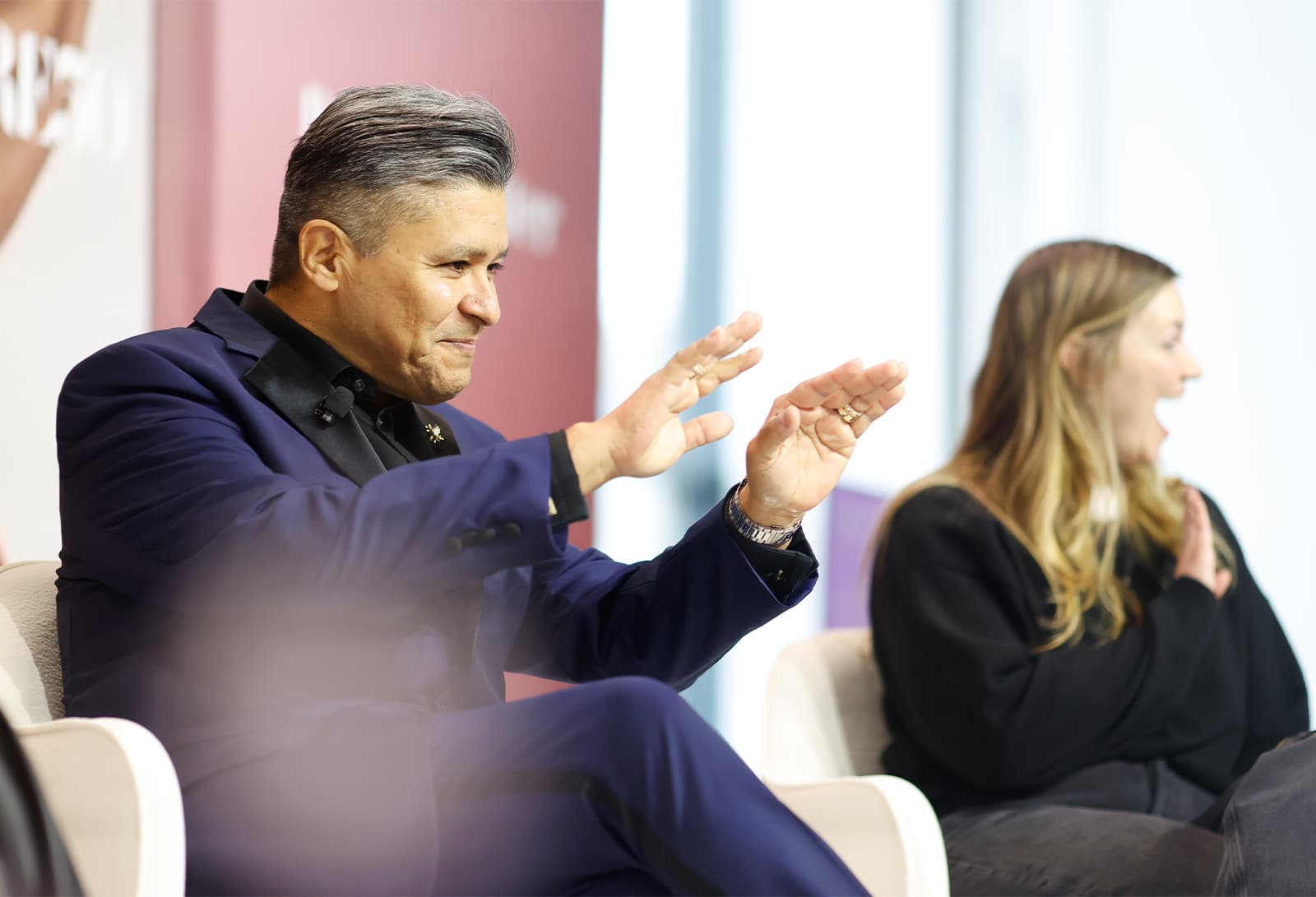
At a time when beauty brands are under pressure to be everywhere at once, the BeautyMatter FUTURE50 panel "Moving Beyond Omnichannel: Scaling When Discovery, Retail, and Channels Collide,” made the case that scale today is not about quickly expanding across every channel; it is about building a system that reflects how consumers actually shop. Moderated by Janna Mandell, Senior Editor at BeautyMatter, the conversation brought together Rina Yashayeva, SVP Brand Strategy, Front Row Group; Reuben Carranza, Executive Chairman, Bansk Beauty; and Genevieve Head-Gordon, VP, Digital, OUAI.
Mandell opened by reframing omnichannel, arguing that brands too often prioritize conversion over the journey that leads to it. “If you’re only focused on the moment when she’s actually buying, you’re putting the destination before the journey,” she said. Instead, she pointed to what Front Row calls connected commerce: “recognizing that today’s customer journey is layered … non-linear … and it’s happening everywhere, all at once.” When those moments are not connected, she warned, “growth stalls.”
Carranza emphasized the importance of building strength before expansion, urging brands to establish a clear “home base.” Moving too quickly across channels can dilute traction and strain resources. “The P&L never lies,” he said, pointing to weak productivity, poor turns, and rising costs as signs that a brand has more work to do before scaling. Without that foundation, brands risk entering a “death spiral” by chasing distribution without first earning demand.
That discipline around growth was echoed by Head-Gordon, who shared how OUAI has evolved beyond siloed channel thinking. “We looked at the profitability of Amazon, the profitability of DTC, the profitability of Sephora … and that became a problem as we grew,” she explained.
The brand has since shifted to a streamlined P&L, evaluating not only where conversion occurs but also which channels drive awareness and validation. This shift has enabled more strategic investment and reduced internal competition between channels. The biggest misconception, she added, is assuming the funnel is linear. “The funnel is messy. It’s fluid.” A consumer may discover in-store, validate on Amazon, and purchase elsewhere—often all within the same journey.
Yashayeva reinforced how much more complex—and expensive—the landscape has become, particularly on Amazon. “It has never been easier to launch, but it has never been harder to succeed,” she said. According to Front Row’s data, it is now roughly 20% more expensive to run a beauty brand on Amazon than it was two years ago, meaning brands are “spending 20% more just to keep up in the same space.” As competition intensifies, success requires sharper category understanding, stronger execution, and a clear view of the competitive set.

Across the panel, Amazon emerged as both a critical growth driver and a strategic challenge. Head-Gordon cautioned against viewing it too narrowly. “It’s thinking about Amazon just as a conversion engine … [but] we look at it as part of our entire media ecosystem.” At OUAI, Amazon serves as a validation layer, where consumers read reviews, compare prices, and build confidence before purchase—while also increasingly playing a role earlier in the discovery phase.
Carranza added that Amazon has fundamentally reset expectations around speed and convenience. “If I’m going to choose to buy outside of a retail environment, I expect it the next day … sometimes I expect it that afternoon,” he said, noting that these expectations now shape how consumers judge every channel. When brands or retailers fail to meet them—through out-of-stocks or slow fulfillment—shoppers move on.
At the same time, Carranza raised concerns about marketplaces, particularly around counterfeits. “That barrier to entry … is also the bane of a brand’s existence,” he said, highlighting the risks to both brand equity and consumer trust when imitation products appear alongside legitimate ones.
A central tension throughout the discussion was the disconnect between how brands and retailers operate and how consumers behave. Carranza pointed to exclusivity pressures as one example, arguing that retailers often ignore the reality of a multitouch journey. “The consumer isn’t thinking the way we are,” he said. “They’re discovering you in one place … going to another place … they want to get it when they want it, how they want it.”
Timing, the panel agreed, is one of the most critical—and most overlooked—factors in scaling. Expanding too early can stretch teams, inventory, and capital. Carranza compared it to taking on a second mortgage before stabilizing the first. Head-Gordon added that brands often fail to define the role of a new channel before entering it. “Is this channel actually incremental to me?” Without that clarity, short-term growth can mask long-term inefficiency or cannibalization.
Yashayeva emphasized that execution fundamentals must come first. “When we’re moving fast without having that foundation, all we’re doing is just creating more work,” she said. Before investing in traffic and media, brands need to ensure their digital shelf is optimized—content, inventory, and mobile experience included—otherwise they are “spending time cleaning it up … rather than spending that time scaling growth.”
As the conversation turned to what it takes to outperform, Yashayeva distilled the answer into three Cs: “connected commerce, consumer centricity, and consistency.” Connected commerce reflects the integration of discovery, validation, and conversion across channels. Consumer centricity means designing strategies around real behavior, not internal silos. And consistency ensures that the brand experience builds trust, no matter where the consumer engages.
Ultimately, the panel made clear that omnichannel is no longer enough. The next phase of growth belongs to brands that can align channels around the consumer, not the other way around—meeting her wherever she is, with a seamless, credible, and connected experience at every touchpoint.




