“Everything was born in New York,” famed hair artist Mustafa Yanaz exclaimed to BeautyMatter as he teased his models’ extravagantly voluminous locks backstage at the Diane von Furstenberg show. New York has long been synonymous with rebellion, and this season’s runway beauty pulled from decades that challenged convention: ’60s cross-dressing, ’70s disco, ’90s grunge, and aughts-era crimped hair. But NYFW SS27 staged its own rebellion, taking those trends and pushing them somewhere stranger, bolder, and more extreme.
In open defiance of the past decade of absolutely no-makeup looks and sleek, classic bobs and buns seen on the runways, this year marked a return to bold beauty: shocking pops of color, nails adorned with hair extensions, multi-textured hair, and graphic, unexpected pigment placement. Even when skin remained subtle and glowing, something else was turned up, giving hair and makeup as much presence as the clothes.
The disco party girl came alive and got a 2026 update at DVF. Lead hair stylist Yanaz channeled von Furstenberg’s Studio 54 days with his own twist on party-girl chic. Using Bumble and bumble, Yanaz’s uptown-meets-downtown girl focused on “structured but messy” blowouts, as if “she’d been out dancing all night,” he said. “But the front is still sexy.”
Lead makeup artist Emi Kaneko applied Estée Lauder’s Pure Color Eyeshadow Quads and Essential Cream Eyeshadow Stick with touches of glitter to create five party looks. She paired 2026’s “fresh, alive skin” with elements of the ’70s Studio 54 scene, from messy, blurred matte shadows to bronze goddess looks and a blue, glittery eye with cool-toned red lips. “You can’t go wrong with blue,” Kaneko told BeautyMatter, proving why some archival looks stay relevant through the decades. “It’s fun without trying too hard; it’s accessible, and it’s universal. It’s the eye’s equivalent of a red lip—it’s never going to go out.”
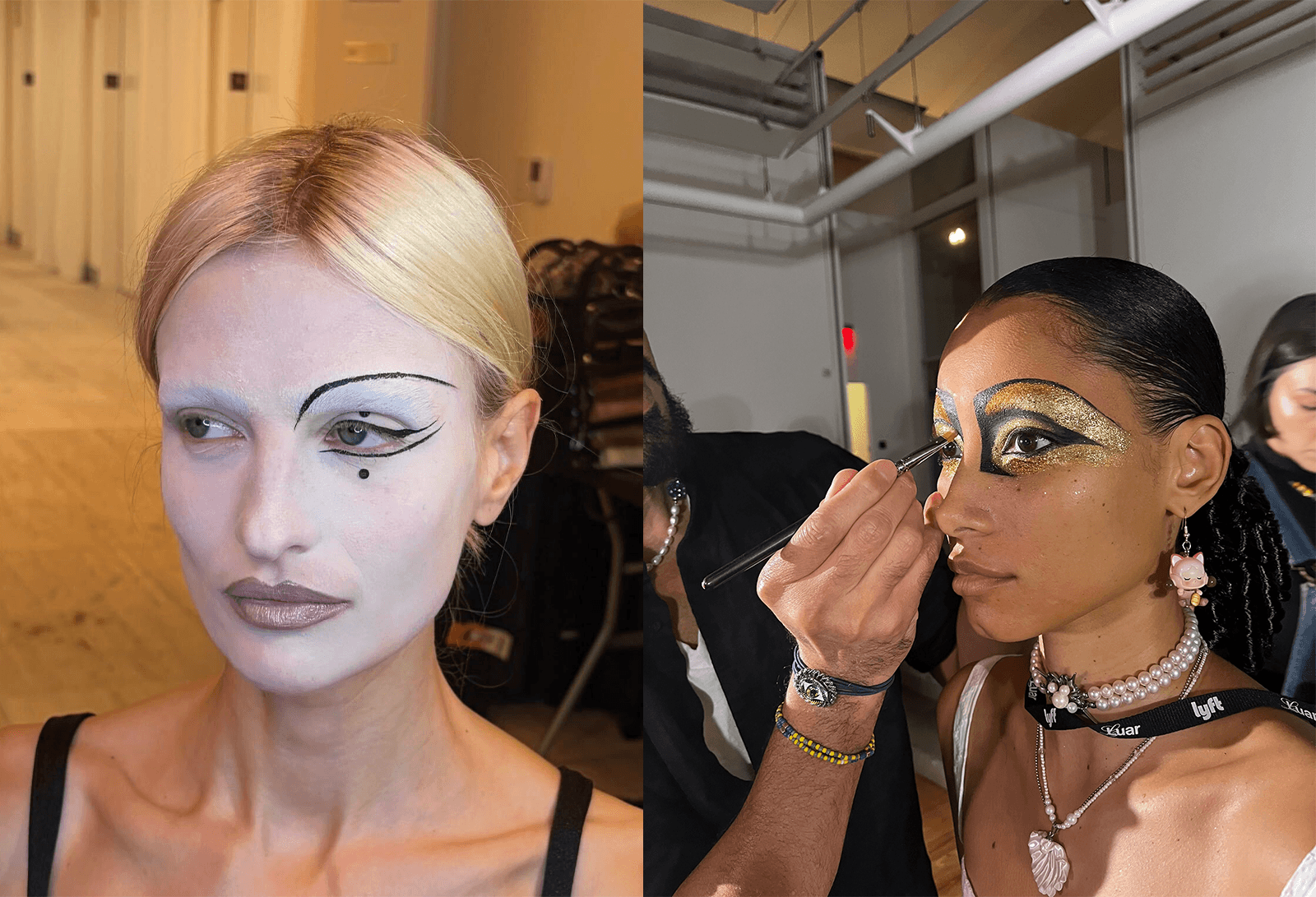
Altuzarra flipped old-school glamour on its head with references to Casa Susanna, a famous resort in the Catskills in the ’50s and ’60s where cross-dressers and trans women could safely gather. Deconstructing the classic ’60s look, Bobbi Brown’s Global Artistic Director Hannah Murray balanced a heavy brow with a metallic eyelid in shimmering silver, gold, or bright purple, replacing the era’s painted-black liner. The looks were finished with a wet, clumpy lash. “It needed to be tough, deep, and a little abstract,” she told BeautyMatter, mirroring hairstylist James Pecis’ tight French twists and modern quiffs. “It’s all borderline ugly,” continued Murray.
Adding to the deconstructed glamour was Connor Ives, whose mood board comprised icons ranging from Meryl Streep to Annie Lennox. Diffused smoky eyes, burgundy-painted lips, and vintage curls and quiffs pulled straight from the Billy Idol days created a moodier vibe. Meanwhile, Wiederhoeft channeled the OG supermodels with “intergalactic, fluffy, and touchable hair,” according to hair stylist Bobby Michael, whose looks featured mega-volume blowouts.
The ’90s came back in full spectrum, from grunge-like smudged liner to the polished mauve-brown palette that defined the decade’s more minimalist side. At Tibi, Cassandra Garcia gave the era an American Western spin, diffusing terra-cotta-cocoa pigment across the eyes and warming up the cheeks with mocha hues, evocative of the color palettes of Arizona and New Mexico. A similar matte shade was applied to the lips for a monochromatic flush.
Romy Soleimani, working with Counter at TWP, took a similarly Western approach, pairing a pale, glossy lip with taupe around the eyes. “There’s an ease to it,” she told BeautyMatter. “But there’s an extra sexiness and a focus on the skin. That’s what the modern woman wants.” The result pointed towards the decade's stripped-back, effortless side.
At Khaite and Kallmeyer, a grittier version of the '90s was on display. Khaite leaned into the undone “cool girl,” sending models out with teased, just-rolled-out-of-bed hair and a pouty lip. At Kallmeyer, a smudged, lived-in liner made it feel like “the morning after.” Each look was slept-in and seductive.
At Proenza Schouler, Jin Soon Choi lacquered models’ nails in a deep jelly blood red, nodding to 90s vamps with a hint of glitter. Retrofête’s nails were equally dark in a rich Bordeaux.
At Anna Sui, Garren with R+Co Bleu channeled the early 2000s with a “scrambled” take on vintage waves, drawing from paintings by Howard Gardiner Cushing and the textures of lace and fringe featured in the collection's clothing. And his unexpected modern muse? Norwegian soccer star Erling Haaland and his signature scrunchie bun. “He’s our little secret,” Garren said, as one hair look features a sparkling scrunchie half-up do. “It’s kind of grunge. It’s kind of flat. It’s kind of everything,” he told BeautyMatter.
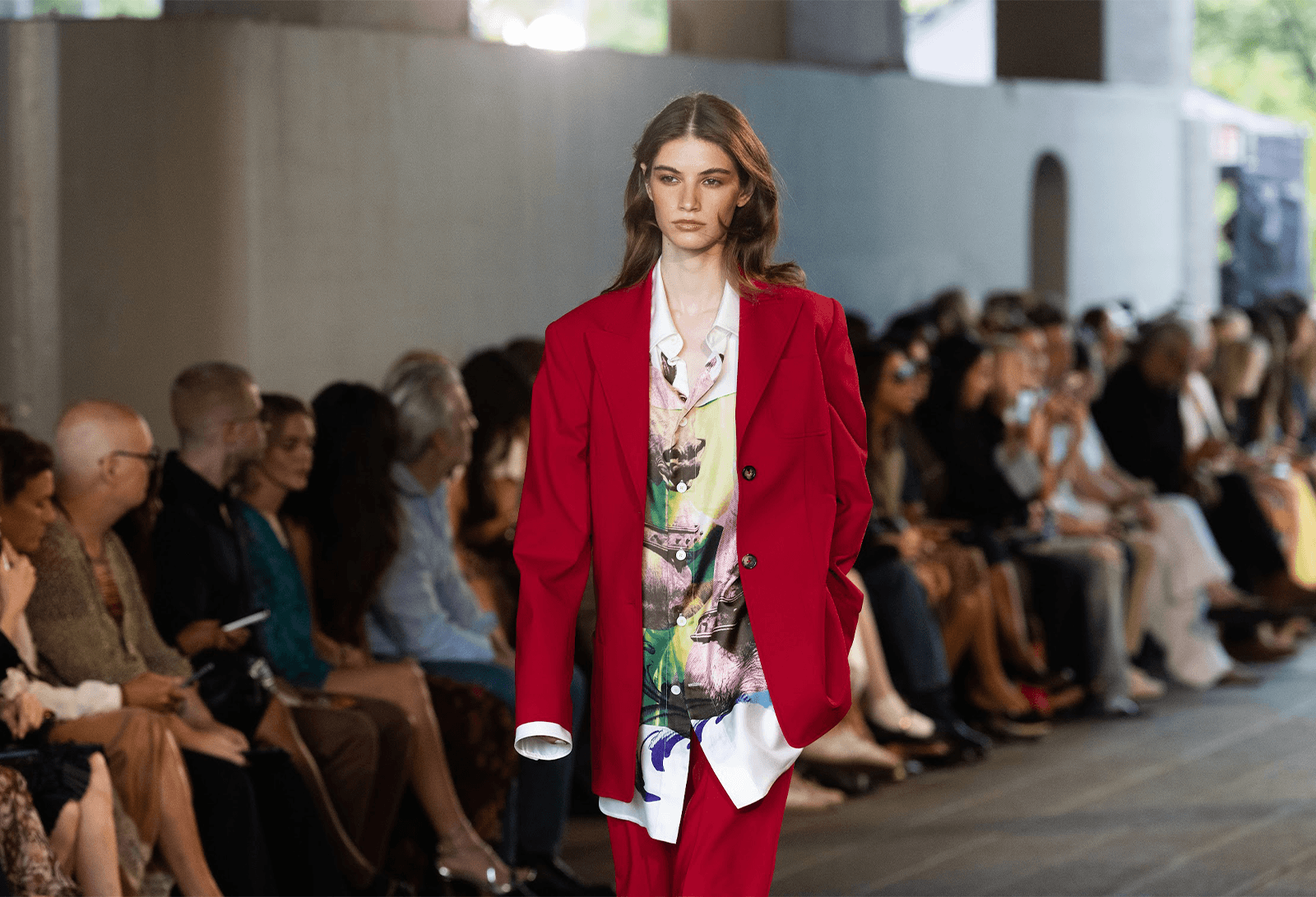
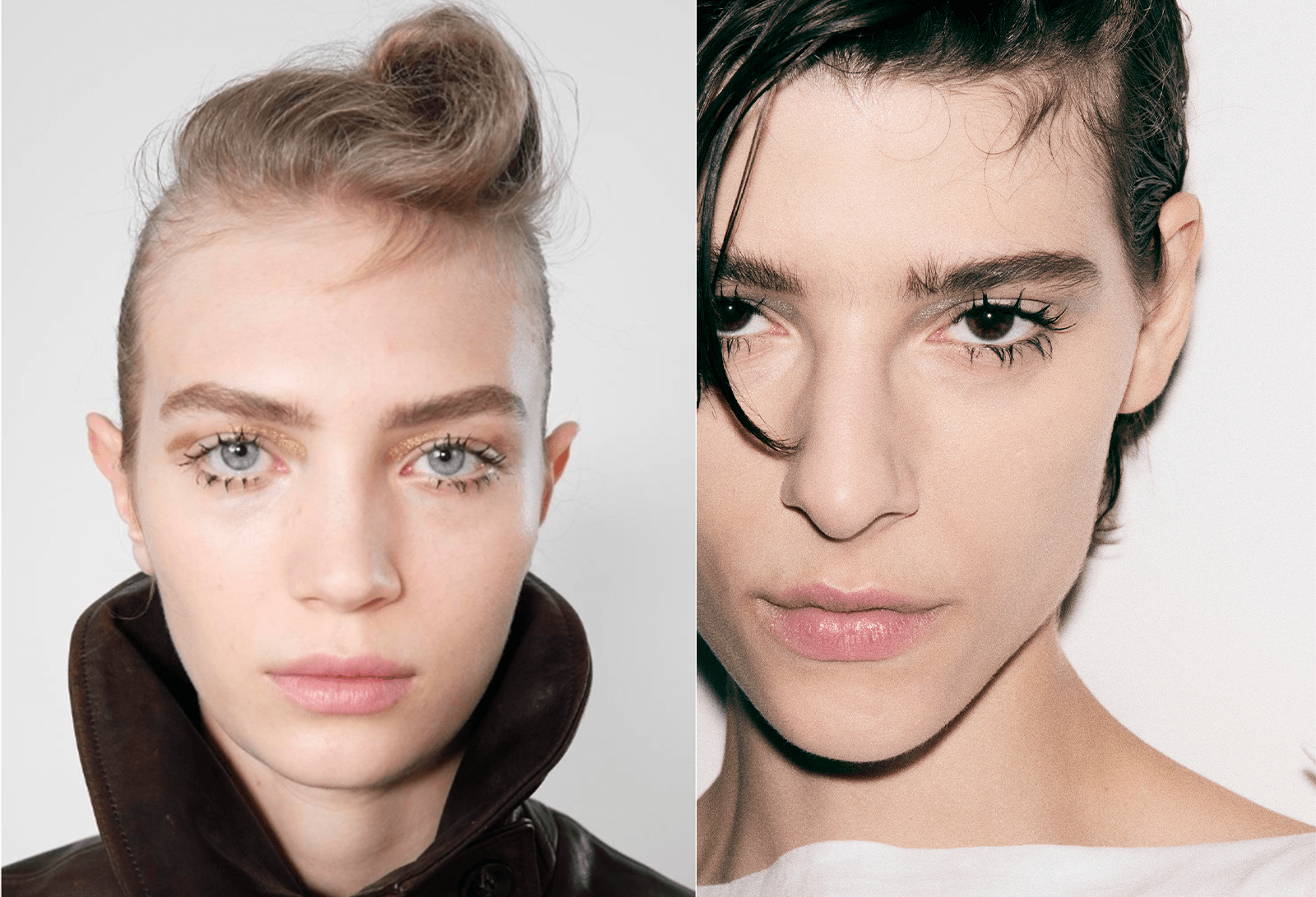
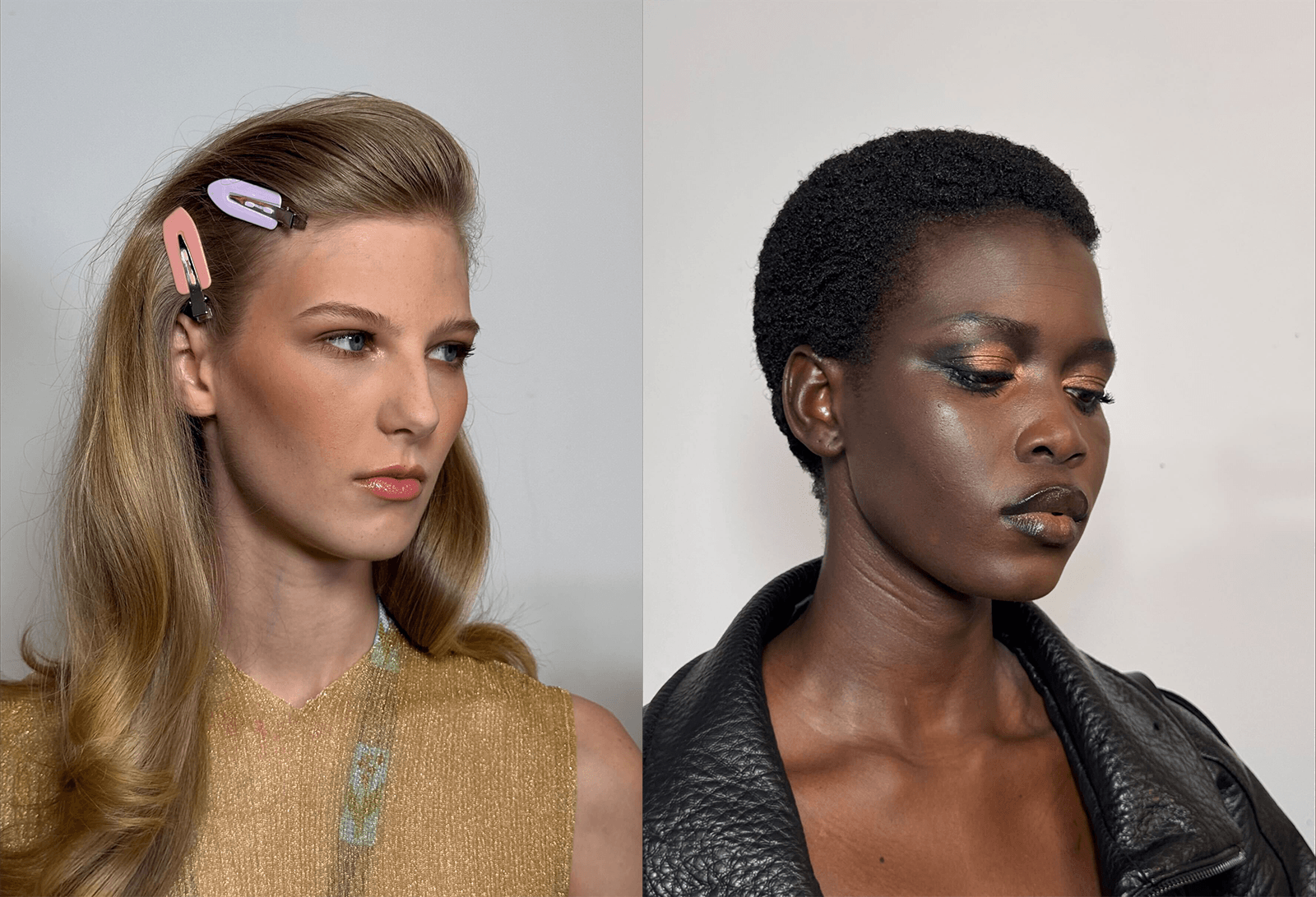
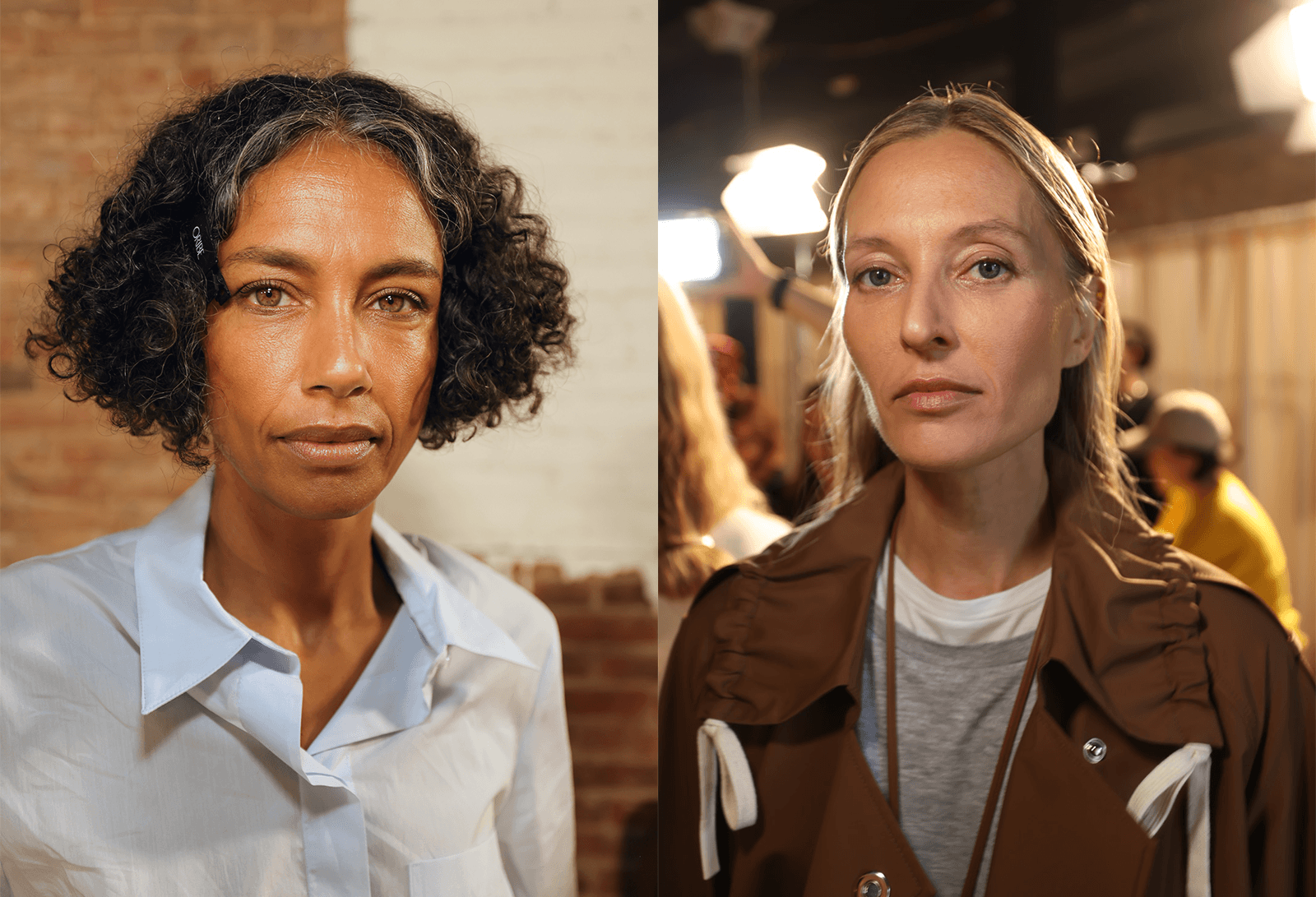
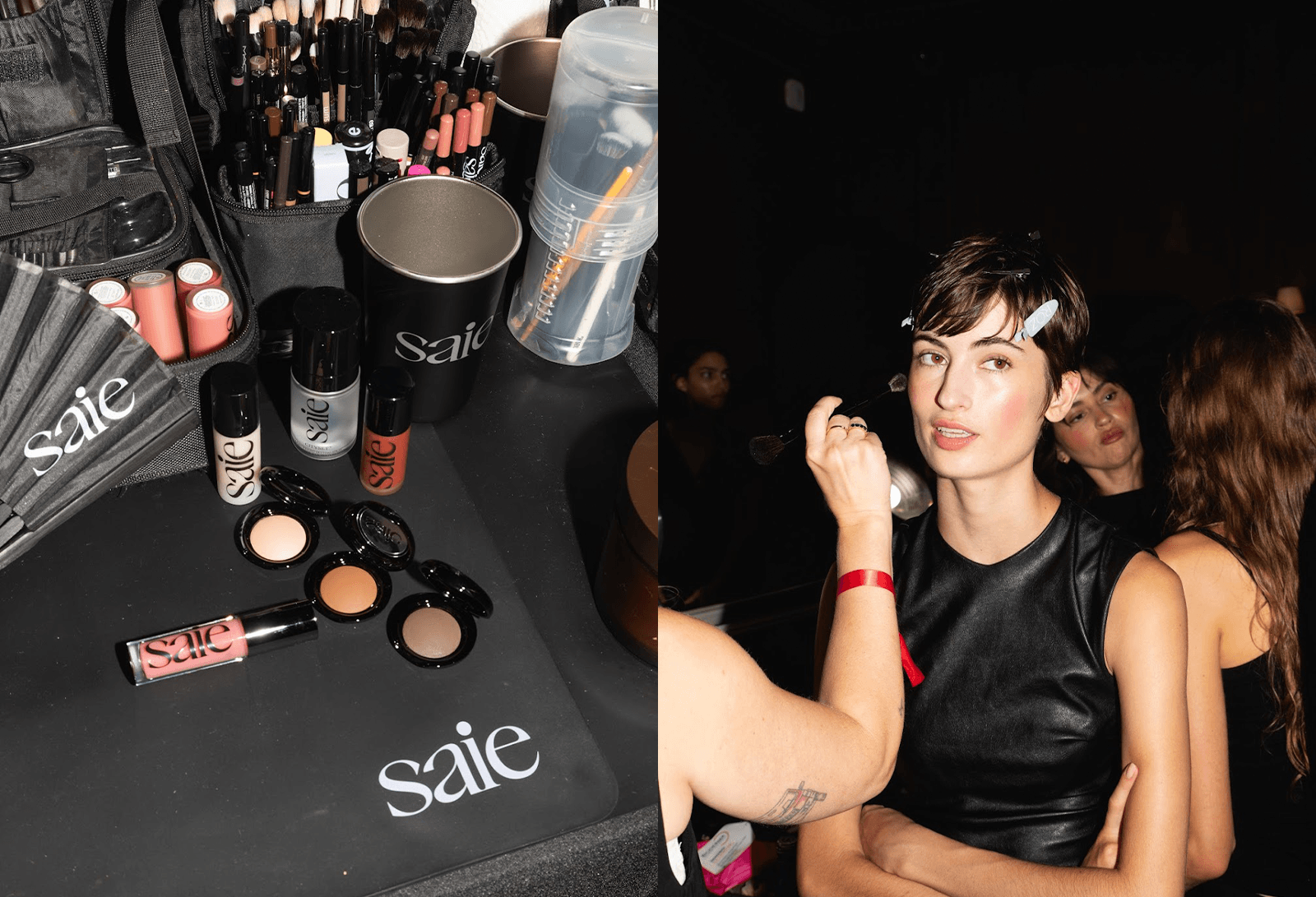
Perfectionism is starting to look a little passé. On the runway, the clean girl loosened the grip of her claw clip, and in her place came someone more rumpled, and far less interested in looking like she had spent the morning optimizing herself.
Minimalism remained, but its old discipline eased out of historical control. The slick bun was coming undone; skin looked flushed rather than filtered, and freckles returned. Sheer manicures gleamed with shimmer, texture, and unexpected color, moving beauty from clean girl to evidence-of-life girl.
At Cult Gaia, that woman had already been somewhere. Lead hairstylist Karim Belghiran’s infinity knot was wispy, finger-combed, and deliberately imperfect, designed for “a dream girl in a dream scenario, where everything is mad; everything is a mess,” he told BeautyMatter. Makeup artist Raoul Alejandro completed the fantasy with skin that looked “natural, raw, unfinished”—slightly sunburnt, slightly tanned, and scattered with faux freckles. It was less fresh-out-the-chair than fresh-out-of-somewhere: beauty with an implied backstory.
Tory Burch carried that idea into something more utilitarian. Guido Palau’s low ponytails appeared to be loose, with hair bobbles looking like they'd slip from strands onto the runway. At TWP, Joey George looked to Georgia O’Keeffe’s pared-back, practical personal style, folding hair up and pinning it with a metallic bar; in both cases, polish came from restraint, not precision. The woman looked put together because she had somewhere to be, not because every strand had been disciplined into place.
Even sleekness came with something slightly off-kilter. At Proenza Schouler, Cyndia Harvey explored the “relationship between wet and dry, messy and pulled together,” slicking the front of the hair into a semi-wet finish before letting it grow rougher and drier through the ends. It captured the season’s contradiction neatly: control was still there, but artists increasingly wanted to show where it broke down.
At Ella Mae, makeup artist Shaylee Nicole imagined a woman who had “taken a nap and stayed a little too long on the beach,” placing blush and red undertones high across the face and adding faux freckles. Rather than treating those signs as flaws to conceal, she created them deliberately, describing the look as “mimicking a real-life skin situation.” At Jane Wade, the character existed somewhere between the corporate world and the wilderness, making heavy glam feel almost beside the point.
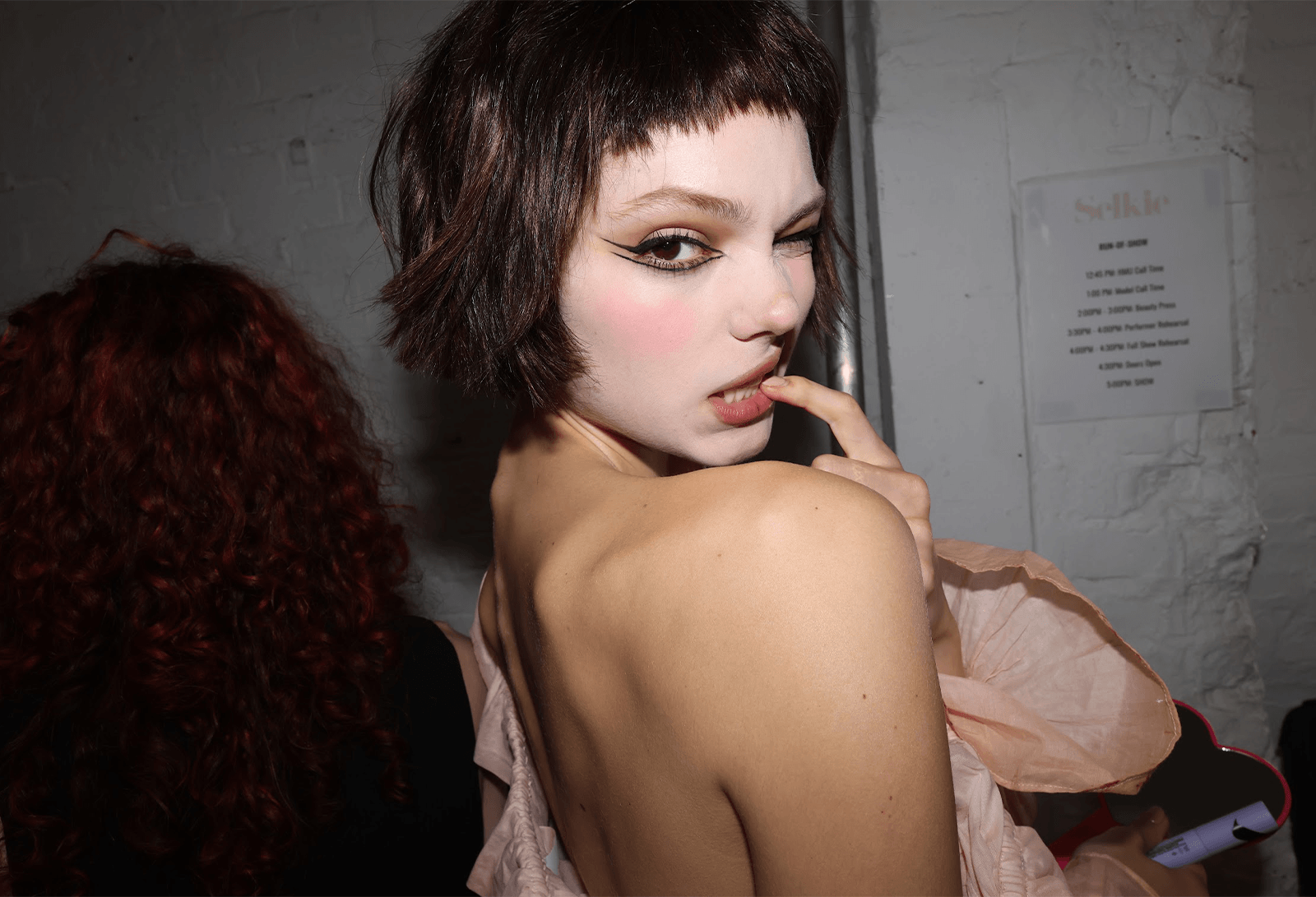
But moving away from polished minimalism didn't always mean looking more natural. At Luar and Selkie, perfection tipped into something stranger. Both shows paired pale, porcelain-like complexions with graphic black liner, turning the face into something almost doll-like. At Luar, Andrew Dahling distorted the traditional wing into metallic, sculptural shapes and asymmetric floating lines; at Selkie, Alexandra French drew from ghost ships, clowns, crime, and dolls to create harsh black eyes against deliberately whitened skin. If clean-girl beauty aimed to make perfection look believable, these looks seemed more interested in exposing just how constructed a face could become.
Even nails were losing their obsession with anonymity. Diane von Furstenberg’s pearlescent “sunglass nails” kept the sheer base but added shimmer; Alice + Olivia’s Pattie Yankee brought velvet and matte texture into the equation; Ella Mae’s Erica De Los Santos called her approach the “clean girl of color.”
The shift is less a rejection of minimalism than a rejection of sterility. Beauty is still pared back, but now it can look touched, lived in, and slightly disturbed. In 2026, that may be the more interesting kind of luxury. Not looking flawless, but looking like life got to you first.
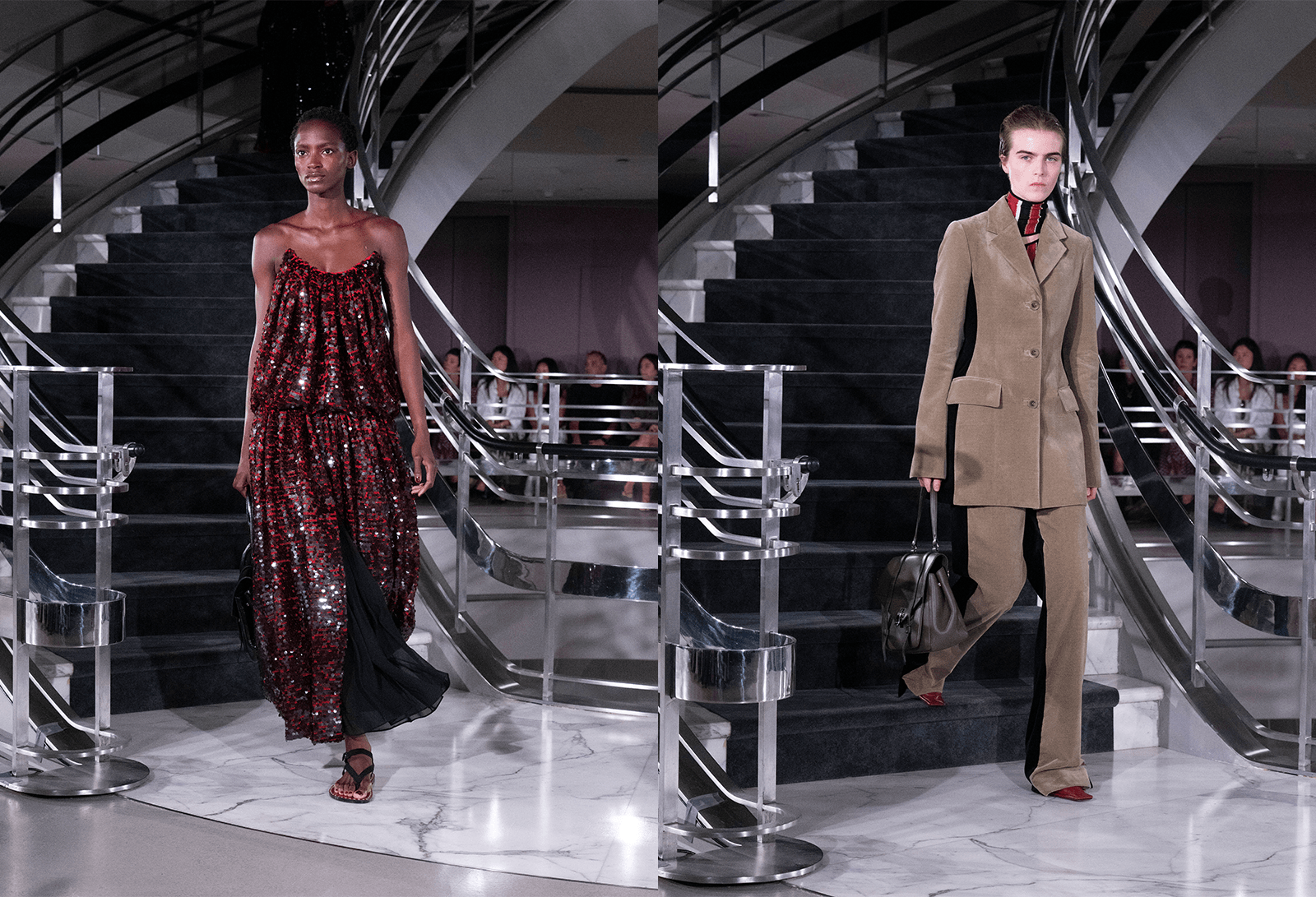
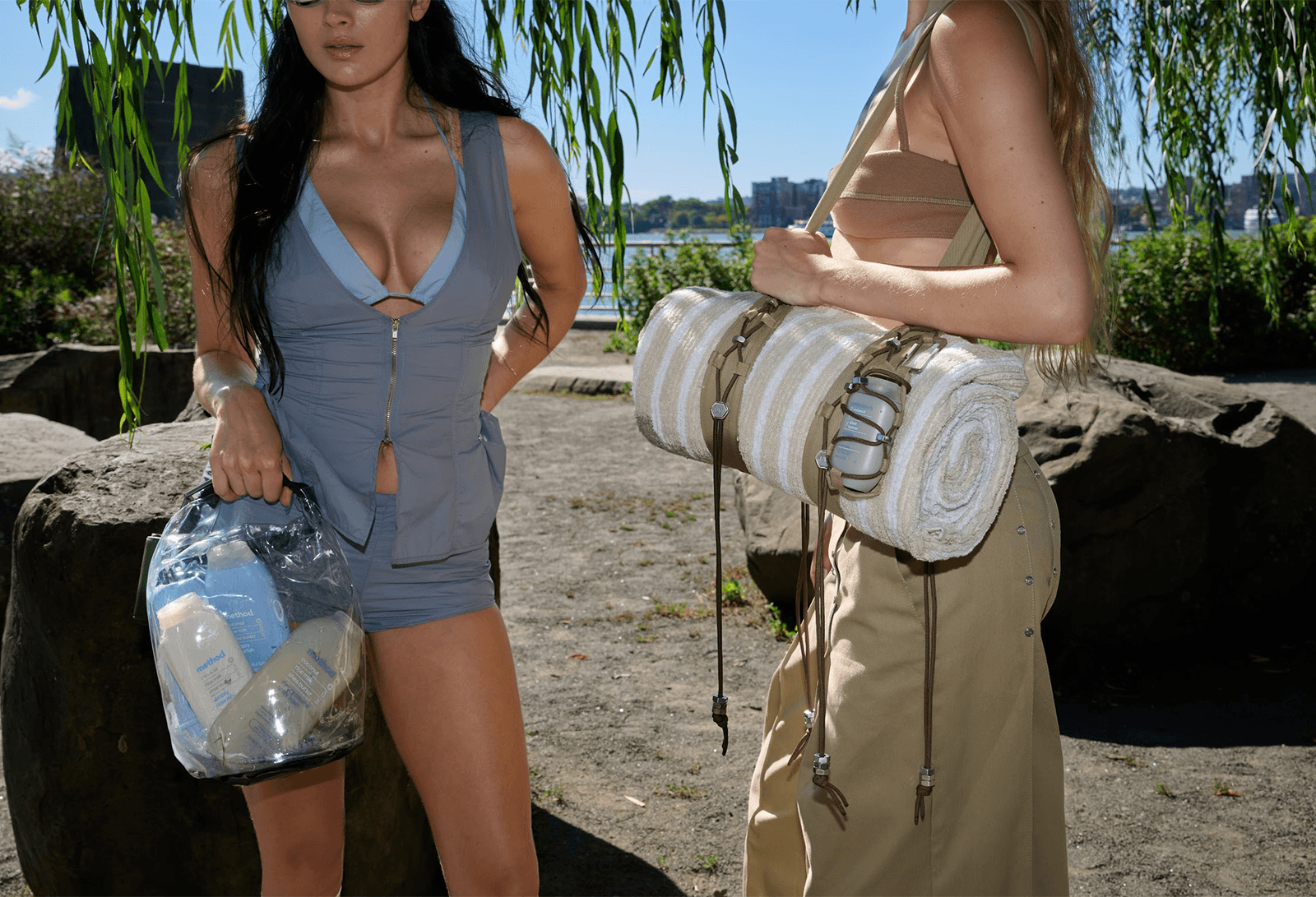
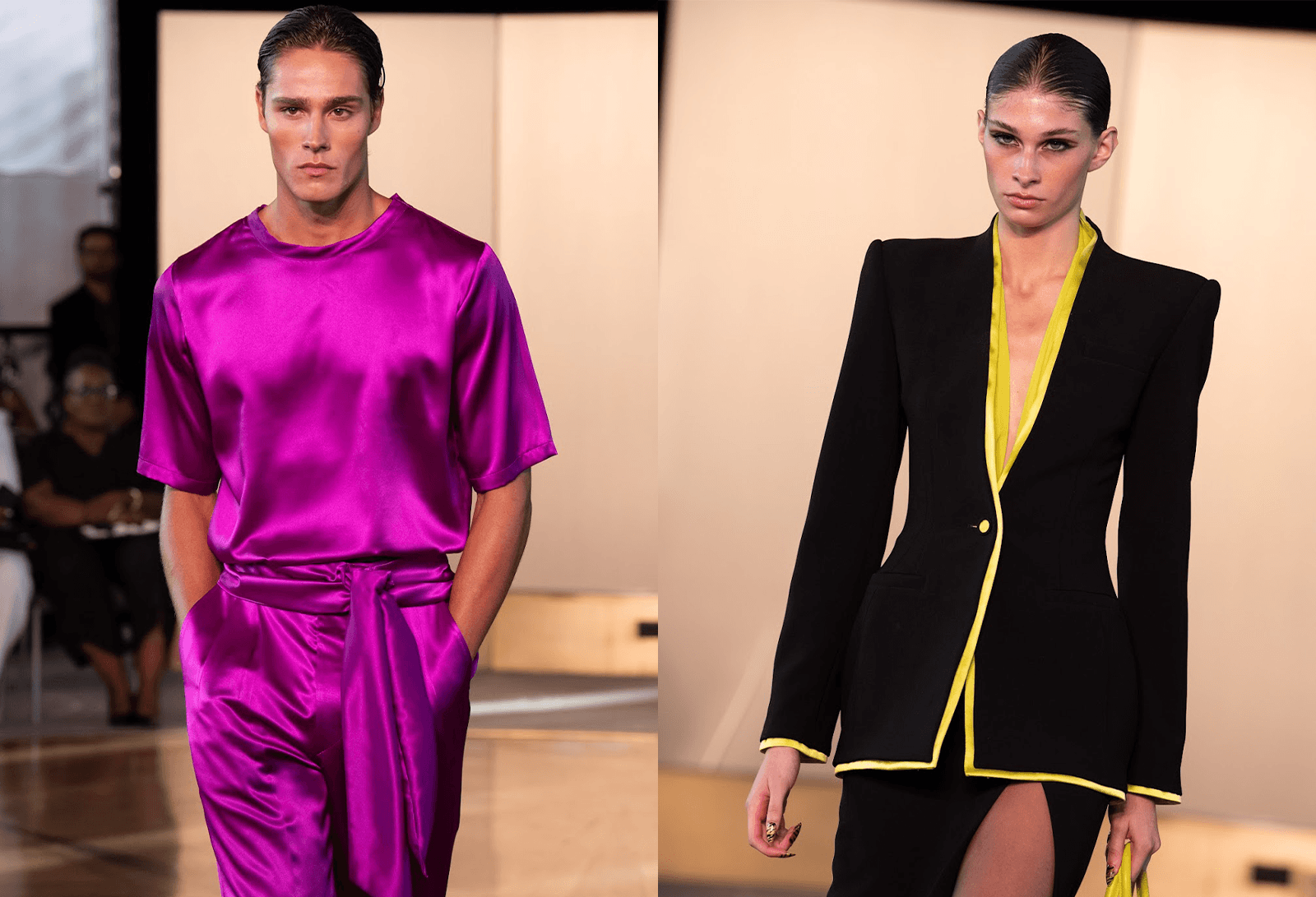
In the digital age, trends appear through oversaturation: Consumers are flooded with new content, endless doomscrolling, and now the growing uncertainty of what’s real and what’s not with the rise of artificial intelligence. Designers and artists alike challenged this absurd normalcy, calling for an escape from the black hole of social media feeds. Brands embraced fantastical, otherworldly themes throughout collections that invited audiences to reconnect with an inner sense of wonder and joy. Wild hair and caricature-esque makeup became complete works of art, far from anything AI could have dreamt up. Muses included aliens, ponies, and even bugs.
Bad Binch TongTong brought an extraterrestrial invasion to the runway. Antoinette Beenders, Aveda’s SVP of Global Artistry, created a highly structured, cone-headed updo that mimicked an intergalactic silhouette: “really a glorified French twist,” she told BeautyMatter. This sense of escape continued at Showpony, where iridescent skin set the stage for Evanie Frausto’s fantastical wig designs that channeled the brand’s namesake. The fantasy extended to the fingertips, too, with pony-hair extensions trickling down the nails. Kim Shui similarly experimented with unexpected embellishments, gluing wispy white feathers onto models’ nails for a delicate yet absurd finish.
Then came Thom Browne, whose insect-inspired universe closed out NYFW with spectacular beauty looks exploring the various stages of a bug’s life. For hair, James Pecis created glossy, jet-black bowl-cut wigs inspired by a “beetle shell” perched on top of the head. The looks featured exaggerated bangs that fell past the models’ eyes for an insect-like, shelled effect. The makeup was just as theatrical. Aaron de Mey created two distinct looks: a butterfly-esque eyelid, complete with a rainbow cat eye and bright pink cheekbones for models dressed in wicker hats, and a matte-skin look with sharp cheekbones and shockingly bright red or teal lips for those in the wigs.
Makeup was the medium through which escapism came to life, and statement eyes led the way; Dame Pat McGrath brought an enchanted beauty to Anna Sui’s Wonderment collection, with iridescent makeup inspired by mother-of-pearl and abalone shells. Metallic blue shadow was lightly brushed across models’ eyes, accented with shimmering inner corners and plenty of glitter.
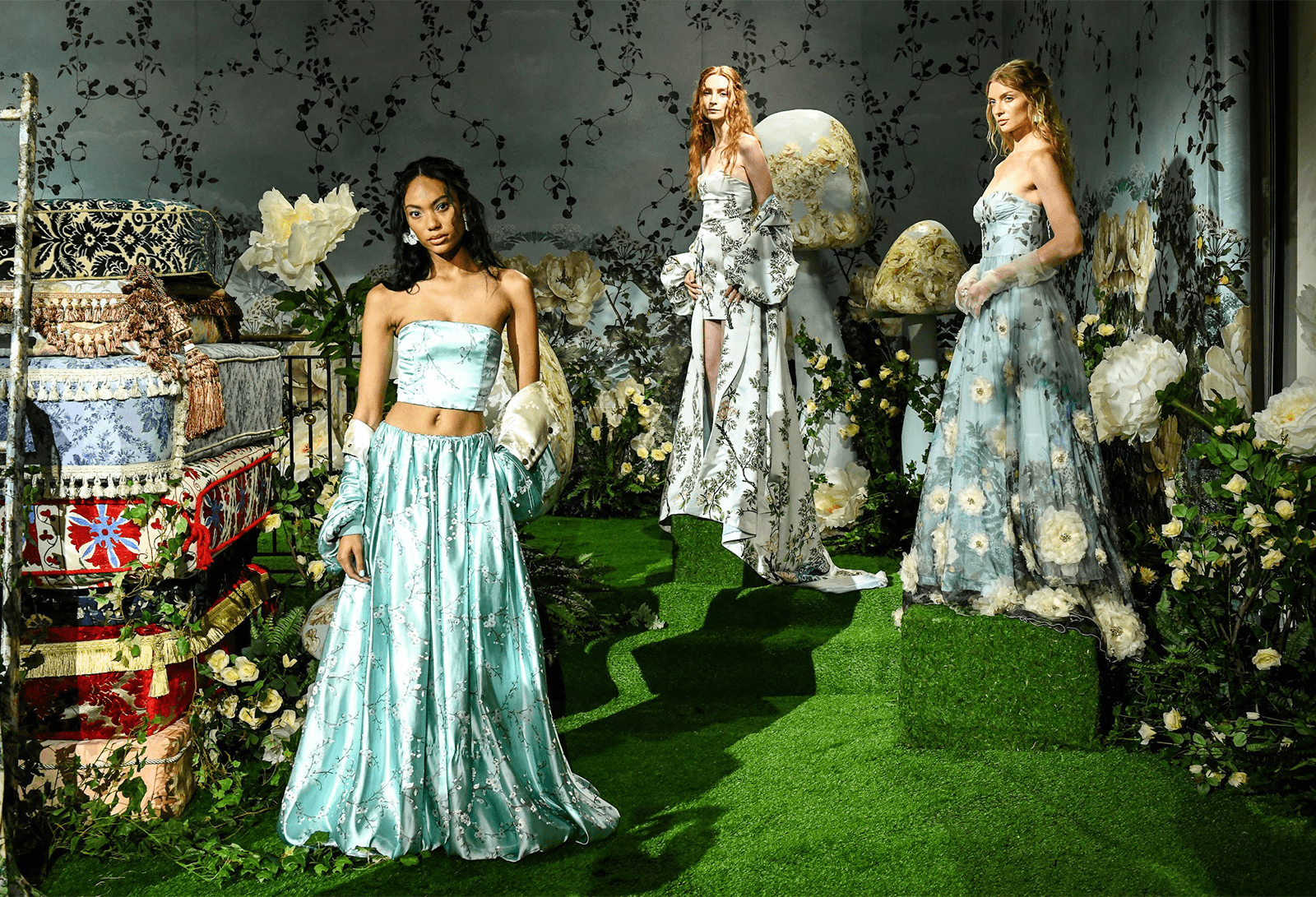
For Eckhaus Latta, Fara Homidi also leaned into iridescence, dusting the forehead, eyes, and cheeks with luminous pink and green powder for an ethereal glow. Alice + Olivia went full fairytale at its Wonderland-themed presentation, with makeup lead Carly Giglio using Youngblood Cosmetics’ Weekender I Palette and Pro Glow Creme Highlighter Stick to create two shining looks: Gilded Glow, featuring a warm golden sheen, and Celestial Romance, a softer pearlescent finish.
Frosted eyes also appeared at Kim Shui, who transported audiences to a more operatic universe. Romero Jennings paired matte stark white shadow and mascara with giant lashes, an homage to the theatrics of Beijing Opera. At Kim Shui, these handmade paper lashes echoed the feathers woven throughout the designer’s collection, turning the eyes into a statement in their own right. Jennings transformed paper lashes from “something one-dimensional” into a three-dimensional effect. “Everyone’s getting this faux lash where we’re doing a trompe l’oeil on the eyelashes. We’re painting against the skin—it’s looking almost AI-like,” Jennings told BeautyMatter.
The Blonds had a punchier explanation for their dramatic falsies: “The inspiration is always cunty," lead makeup artist Deney Adam told BeautyMatter. “It’s cunty, but classic—almost classic meets now.” Blue, purple, and green shimmer met dramatic liner and false lashes, amplified with long black strands of burned peacock hair. “It gives you that little thing that you can’t put your finger on,” said Adam.
This embrace of whimsy and theatricality points to a growing desire for beauty that feels unmistakably human. These were looks born from human hands and imagination: strange, excessive, imperfect, and so creatively absurd they resist easy replication. Rather than simply recycling the past, the artists showed the value of making something unpredictable—beauty that feels instinctive, idiosyncratic, and hard to reproduce algorithmically.
What emerged at NYFW SS27 wasn’t nostalgia for nostalgia’s sake. Artists took the beauty codes of decades defined by rebellion and made them rebellious again—not through literal recreation, but through their own interpretation. The references were familiar; the execution was anything but. After years of restraint, beauty wasn’t looking backward. It was using the past to push forward.