





For years the Middle East was a market the beauty industry sold to. It has quietly become one the industry answers to. You can see it most clearly not in a forecast, but in who walks through the door. The traffic used to run one way: International brands came to sell into the region. Now it runs both ways. Every year, more buyers arrive from the US, the UK, and Europe—markets that used to expect the region to come to them—and by 2026, the US and UK had risen into Beautyworld Dubai's top-ten visitor markets. They aren't coming to sell in. They're coming because the brands worth buying are increasingly the ones based here. In 2024, the question Ravi Ramchandani, Event Director of Beautyworld Dubai, heard most from international brands was whether the Gulf Cooperation Council (GCC) was worth the complexity. By 2026, the more honest question is whether they can keep pace with it. L'Oréal took a stake in a Gulf fragrance house. Coty built an Arabian collection from scratch. The world didn't just discover this market. It started following it.
The numbers underneath are just as telling. The UAE is now among the world's top-ten perfume exporters by value, with fragrance exports up nearly seven-fold over the past decade per UN trade data. Seven of the top-ten globally traded Middle Eastern fragrance brands exhibit at Beautyworld Dubai. In 2024, the question was whether GCC fragrance houses could travel.
By 2026, it's how to keep up with the demand they're generating outside the region.
The mass and ultra-luxury tiers are now commercially validated. The tier the trade hasn't yet built infrastructure around is the one between them: niche, artisanal, founder-led houses where story, brand world, and founder voice matter more than price or distribution. Contract manufacturing has lowered the barrier to entry, which means narrative, not scale, separates one niche house from another. And the demand is already here: The Gulf has one of the world's highest per-capita fragrance spends, and international niche houses are increasingly looking at the region.
Messe Frankfurt has been watching that demand build for a decade. Quintessence, a dedicated niche zone within Beautyworld Dubai, launched ten years ago with around 15 brands and reached 100 by 2025. "It became clear the category had outgrown the room we'd given it," Ramchandani said. "It was structurally important enough to need its own event." The result is Notes Dubai, launching in January 2027 at Dubai Mall Exhibition Centre, a global niche fragrance platform built for founder-led houses, with curation and story as the basis for who shows. The format has already been proven internationally through Notes Shanghai. Dubai's connectivity, retail infrastructure, and consumer base make it the natural home for a global niche perfumery event on the scale of Milan's Esxence.
Saudi Arabia is where the international beauty industry is now doing what it did in Dubai a decade ago: working out how to get in. The difference is scale. With more than three times the UAE's population and the largest economy in the region, Saudi isn't a hub to route through; it's a domestic market to build inside. And it rewards that distinction more than any market in the Gulf.
When speaking about Saudi Arabia, Ramchandani offered what he called the most useful framing for any brand assessing the market. "The brands getting it right have stopped treating Saudi as a market they sell into and started treating it as a market they build inside," he said. "That means a Saudi-based team in Riyadh, not a regional manager who flies in from Dubai once a quarter and calls it coverage."
The runway rewards that commitment. Per-capita beauty spending in Saudi Arabia has reached $164.90, ahead of most Western European markets on that measure, and global companies have taken notice. In May 2026, L'Oréal opened its fifth professional hairdressing academy in the Kingdom, inside a new Jeddah office, certifying 150 women at a 70% immediate employment rate and targeting more than 1,000 by 2029. The group also said it would double its Saudi workforce by the end of 2026. Ramchandani reads that workforce investment as its own form of localization: not selling into the market but building capacity inside it.
The Kingdom is also building its own brands and its own routes to shelf. Nahdi, Saudi Arabia's largest pharmacy chain with more than 1,150 stores reaching almost the entire population, has opened dedicated "Made in Saudi" shelves in partnership with the Saudi Exports Development Authority, explicitly to promote homegrown products inside the Kingdom and push them toward export. When the country's biggest health-and-beauty retailer builds a shelf for local brands designed to travel, the direction of the market is clear.
None of this means Western playbooks transfer. Saudi has its own regulatory environment, cultural codes, retail rhythm, and halal certification requirements. What lands in New York, Paris, or London often doesn't land in Riyadh. "When a brand is flat in Saudi while growing elsewhere in the region, the cause is almost always organizational, not market-driven," Ramchandani said. The brands that got Saudi wrong the first time are coming back for a second attempt.
For brands that want to test the ground before committing, Beautyworld Riyadh is where the Kingdom's trade audience meets on its own terms, a first step before building the in-market team the Kingdom rewards.
TikTok Shop has driven explosive beauty sales, and many of its biggest winners, in fragrance and beyond, have been brands participating at Beautyworld Dubai. But Ramchandani sees the show as having built the groundwork TikTok later harvested. "The brands winning on TikTok today spent a decade at Beautyworld, building US supply chains, securing distributor partnerships, getting onto Amazon. TikTok sells the volume. The decade of trade-show work built the machine behind it."
The sequence is now familiar. International brands test the GCC through e-commerce platforms like Amazon first, establish product-market fit, then arrive at the show with months of regional sales data behind them. Distributors take them more seriously for it.
The clearest signal isn't the size of the floor; it's who's on it. At the 2025 edition, buyers from the US and UK entered the top-ten visitor markets for the first time. Their budgets tell the story: The average annual purchasing budget ran to $704,000 for buyers from the Americas, $664,000 for distributors, and $538,000 for Europe. "That's the buyer who used to fly to Europe for the big beauty shows," Ramchandani said. "They're flying to Dubai now."
The most visible shift on the floor is the creator. A brand launches in the morning and creators stream it live to global audiences within hours. Armaf launched Club De Nuit Bling with Dubai Bling's Ebraheem Al Samadi at the 2025 edition, drawing 300 creators from 100 cities to its pre-show event. "Creators haven't replaced distributors," Ramchandani said. "They've made the distributor's job easier. The route still runs brand to distributor to retailer to consumer. What's changed is who creates the demand at the end."
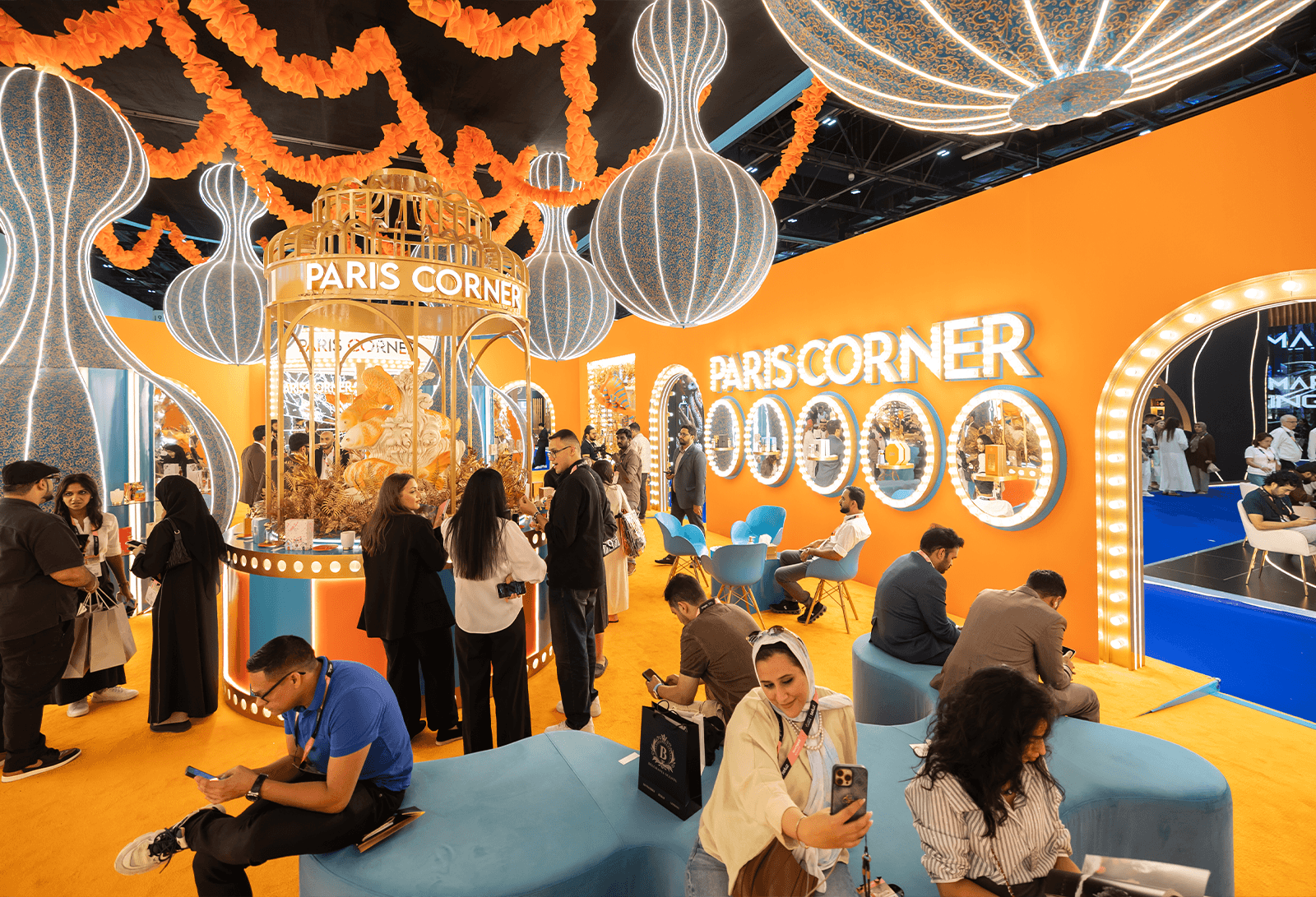
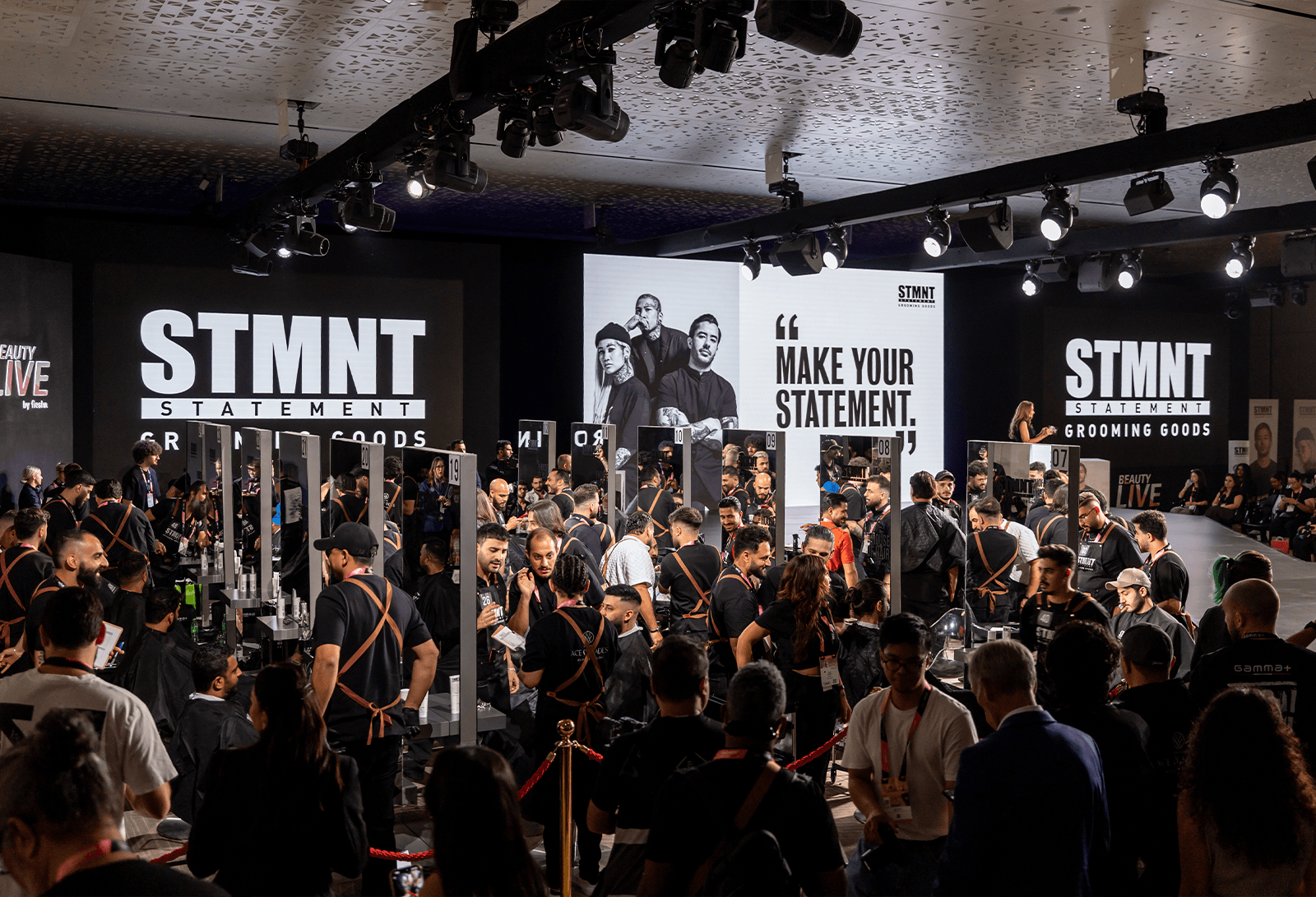
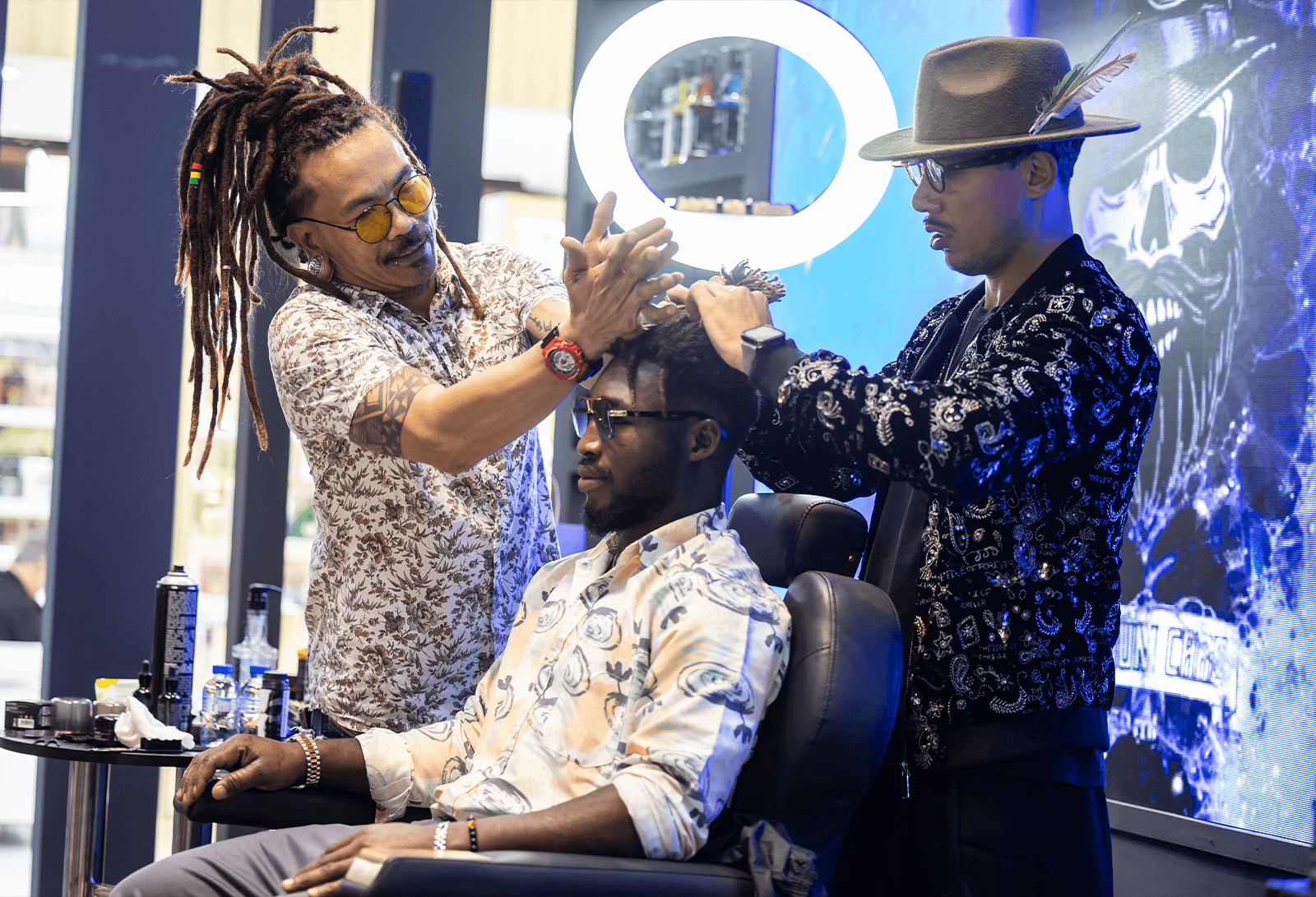
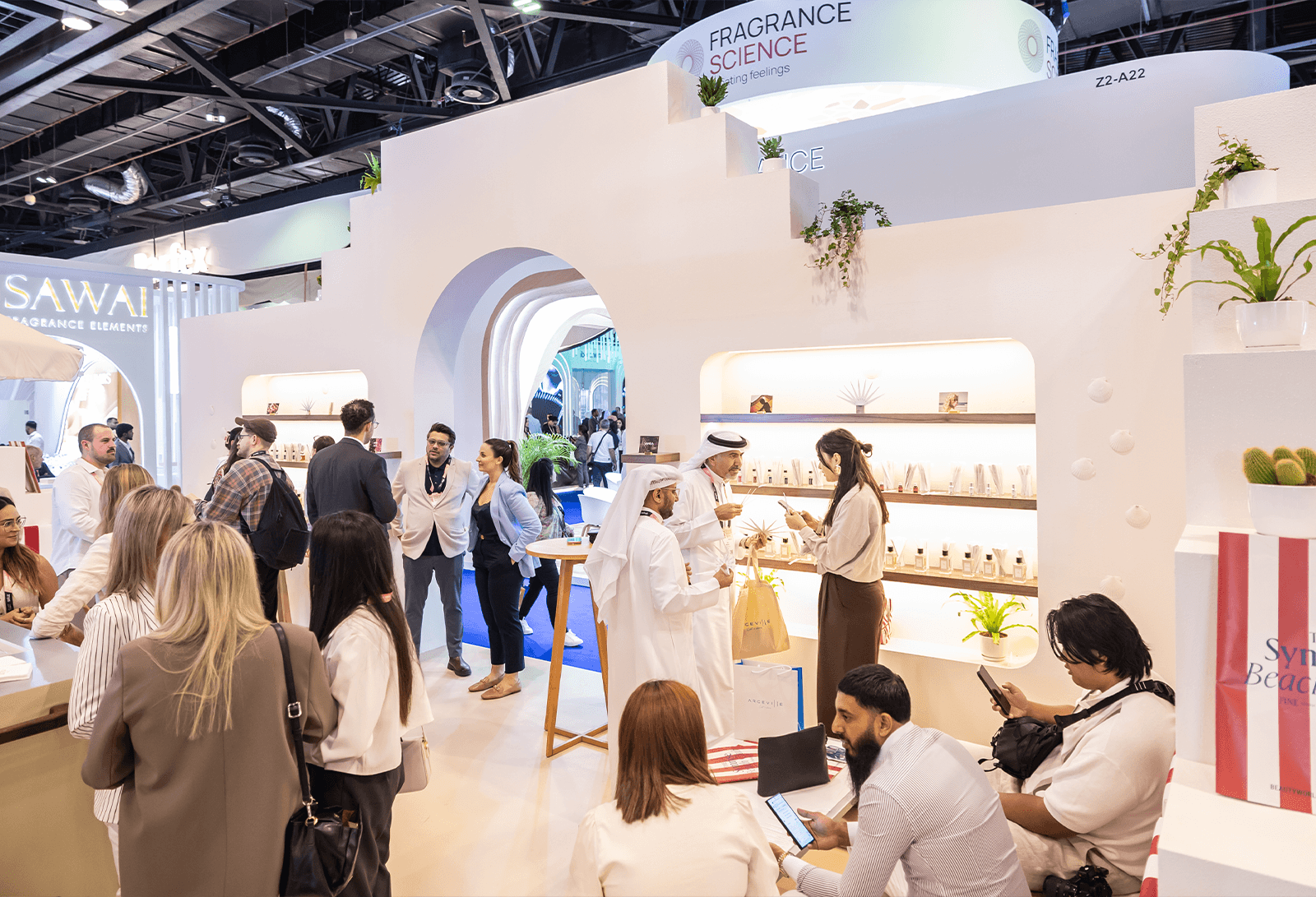
Wellness and longevity aren't a borrowed trend in the Gulf. The Global Wellness Institute ranks the UAE and Saudi Arabia first and second in the world for wellness-market growth over the past five years, with the UAE's market nearly doubling since 2019. In June 2026, Dubai went further and wrote the category into law, issuing Law No. 17 to establish the Dubai Longevity Authority, with Crown Prince Sheikh Hamdan bin Mohammed as its President and the stated aim of making the city the world's leading hub for longevity and advanced healthcare. When a city legislates longevity, it stops being a trend and becomes infrastructure.
That build-out is also a distribution channel. Alongside the clinics and recovery hotels, the region's pharmacy groups have turned into wellness retailers: Life Pharmacy runs more than 600 outlets in the UAE, Aster more than 300 across the GCC, and GMG's Supercare and Good Health concepts more than 100, all leaning hard into vitamins, supplements, and beauty-from-within. For a brand entering the GCC, wellness isn't only a trend to market against. It's shelf space at a density that barely exists elsewhere, backed by pharmacists who now sell well-being, not just medicine.
But the consumer here demands proof. WHOOP is treating the UAE as a priority market, opening a local office, localizing in Arabic, and making the country the first outside the US to offer its full biomarker testing, anchored by a $75 million Mubadala investment. Consumers measuring their own sleep, recovery, and biological age expect the same rigor from what they buy. "When your customer is already tracking their biomarkers, they can tell whether a product works," Ramchandani said. "The ones that win here are the ones that can show their work, efficacy data, clinical backing, measurable results."
That same shift has reset what "clean" means. Clean at Sephora now spans thousands of products screened against 50+ banned ingredients. At that scale the label is table stakes, not a position. "Clean is the floor now, not the ceiling," Ramchandani said. The brands building real equity are the ones combining clean with proof.
Longevity tells consumers what's in the bottle, with peer-reviewed data behind it. The next wave is going to be defined by what's proven, not by what's left out.
The fundamentals of the GCC retail market are stronger today than they were in 2024, and Ramchandani sees the behavior of global retail entrants as the clearest proof. "Global players didn't arrive, test the market, and pull back. They arrived and accelerated."
Ulta Beauty, the largest specialty beauty retailer in the US, entered the region through franchise partner Alshaya Group, opening first in Kuwait in November 2025, then Mall of the Emirates in January 2026 and Dubai Mall in March 2026, with a Saudi opening planned for 2026. What stood out was the launch itself: Ulta built its opening program around regional founders, with Nadine Njeim of Nadine Njeim Beauty, Balqees Fathi of Bex Beauty, and Sara Alrashed of Asteri among those given in-store moments alongside a US and global lineup. A retailer platforming local founders as the centerpiece of its market entry is signaling commitment, not running a trial.
Chemist Warehouse opened in Dubai in late 2024 and added a second UAE store within months, part of a stated plan to use the country as a base for wider Middle East expansion. Etoile Group opened 11 luxury stores across the GCC in the first half of 2024 alone. Dubai Mall is delivering its $408 million expansion, adding 240 luxury and dining outlets, and in December 2025 Emaar unveiled Dubai Square, a new development it bills as the world's largest mall, with a retail footprint roughly double Dubai Mall. "While Western beauty retail debates which stores to close, Dubai is announcing the next mall after the world's biggest mall."
Dubai Duty Free closed 2025 with record revenue of $2.36 billion, with fragrance remaining the single largest category and growing 13.29% year over year in November. Al Maktoum International is being built to a capacity of 260 million annual passengers, with a retail footprint twice the size of the current Dubai International. "For beauty brands, GCC airports are no longer a single shelf-space competition. They're a doubling of the addressable surface."
When asked what a well-informed beauty executive might still be underestimating about the region, Ramchandani's answer focused on direction, not scale. "Most still think of the GCC as a destination market and track inbound flows. They're not tracking the outbound flows that have started to matter more."
The strongest evidence is in fragrance. Lattafa, Armaf, Rasasi, Riffs, Afnan, and the wider UAE fragrance economy now compete directly with mainstream Western brands on Amazon and through US retail, on price and on scent profile. These aren't boutique exporters. They're vertically integrated manufacturing and distribution operations that built their US supply chains over a decade and are now selling at scale.
In prestige and mass-prestige beauty, Huda Beauty remains the category-defining Emirati export, and the next wave is following. Kayali, founded by Mona Kattan, was the top trending fragrance brand at Sephora US in 2025. Moonglaze became the first Saudi beauty brand at Selfridges London in late 2024 and the first Saudi brand at Sephora Middle East in February 2026.
The capital is following the same direction. Saudi and UAE startups raised $3.13 billion in venture capital in 2025, and while most of that went to fintech, beauty is starting to draw capital of its own. Peak XV Partners chose Amaani, the Dubai company behind Arab beauty brand AÏZA, for its first consumer seed investment in the region, drawn by a brand built from day one for a global audience. AÏZA hit $2 million in annualized revenue within three months of launch. The signal matters more than the sum: The money is arriving because these brands are seen as exportable, not because the region is a market to sell into.
Ramchandani sees the supply side as the next chapter the trade has yet to fully map. The compounds still come from outside the region. The major fragrance houses, Givaudan, DSM-Firmenich, Symrise, IFF, Mane, and Robertet, produce them elsewhere, with one exception: CPL Aromas opened the region's first compound manufacturing site from an international fragrance house at Jebel Ali in 2015. That picture isn't changing. What is shifting is everything that happens after the compound arrives.
"The UAE has built a finished fragrance ecosystem at a scale and quality the market underestimates," Ramchandani said. "Bottling, blending, filling, packaging, certification, export. Lattafa, Armaf, and the wider regional houses aren't just brands. They're vertically integrated operations that take European compounds and turn them into finished product moving to more than 100 countries."
The UAE is home to an estimated 800 perfume manufacturing units. Jebel Ali Port connects to more than 150 ports worldwide, moving finished product to Africa, Asia, Europe, and the Americas at a speed and cost few other locations can match. One assumption Western executives often arrive with is that Gulf fragrance is high-volume but loose on standards. The opposite is true. Several Lattafa products carry SkinSafe certification, the Mayo Clinic-developed sensitive-skin database, and its bestseller Khamrah rates 91% free of the most common allergens. Kayali was built phthalate-free, paraben-free, sulfate-free, and vegan from launch. The same Western consumer who found Gulf fragrance by blind-buying on TikTok also reads the ingredient list, and the Gulf houses already meet that bar.
“In 2024, the question for international brands was: How do we enter the GCC?” Ramchandani said. “In 2026, the more useful question is: What do we do when the GCC starts entering us? Dubai isn’t a market anymore. It’s a node.”
