





Pureseoul, one of the UK’s first retailers dedicated to K-beauty, began not as a calculated business opportunity but as a response to a deeply personal frustration. Founders Leslie Tang, Wing-Sze Tang, and Gracie Tullio were immersed in Korean culture before the category became mainstream in Britain, but struggled to find authentic products, trustworthy retailers, and category expertise within the UK market.
“We are our customer,” Tullio told BeautyMatter. “That’s why the business started in the first place. It was just K-beauty customers who couldn’t buy K-beauty.”
This customer-first outlook continues to underpin the business’s mindset today, across the team of 300+ employees. What started as an online retailer launched just before the pandemic has evolved into one of the UK beauty industry’s most closely watched retail success stories. Pureseoul now operates 25 stores nationwide, just three years after opening its first, and is rapidly expanding, targeting a total of 30 stores by the end of the year. “We would love to reach more than 30 [stores] this year if we could, but I’m not sure the landlords could keep up,” joked Tullio.
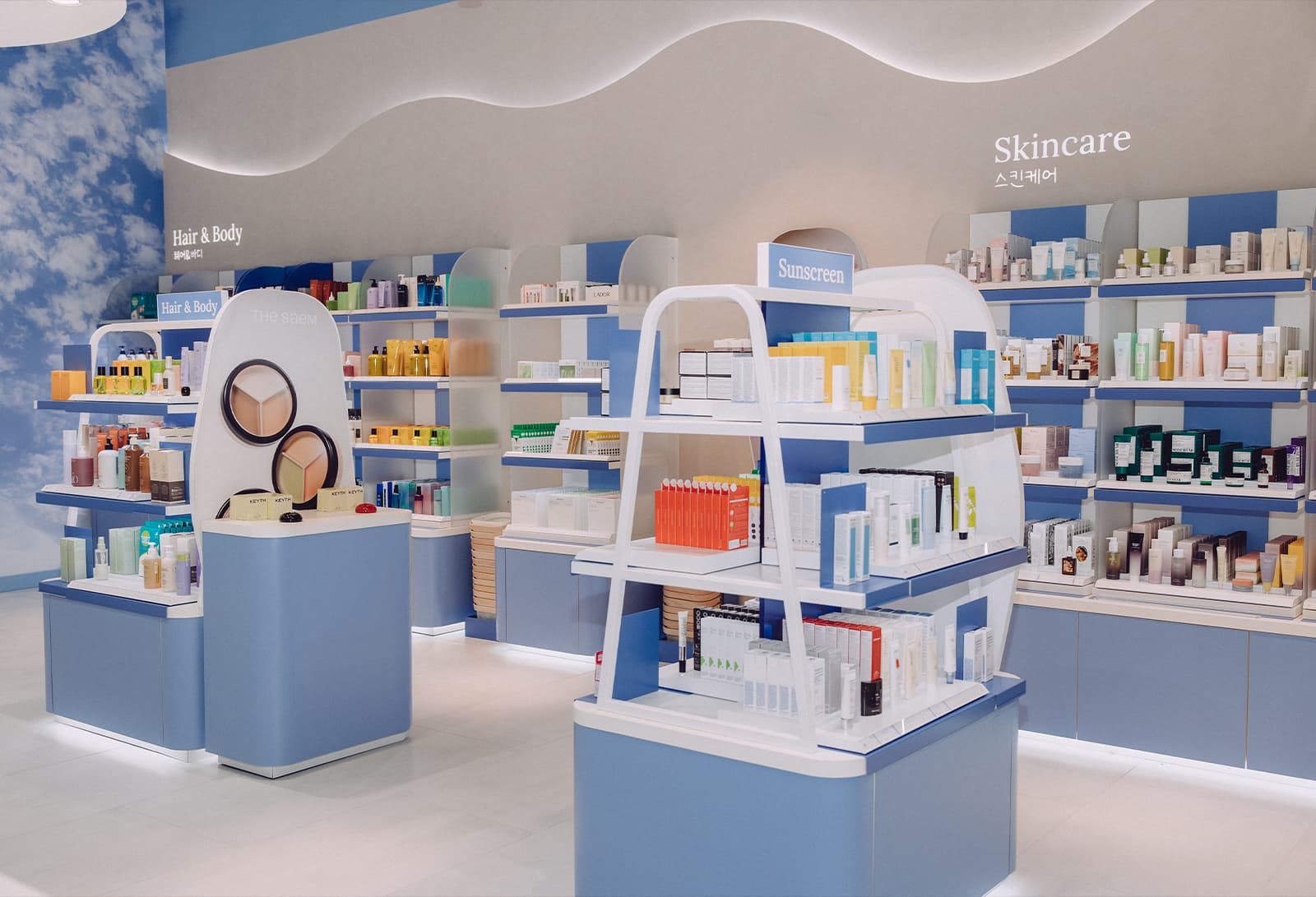
Its latest opening in Bath, the retailer's first South West location, represents more than another regional expansion. It reflects Pureseoul’s broader belief that physical retail still matters profoundly in beauty, particularly for a category as culturally layered and fast-moving as K-beauty.
At a time when many retailers are consolidating physical footprints, Pureseoul is passionately investing in stores. Tullio believes that the modern beauty customer is becoming increasingly exhausted by algorithm-led discovery and endless social media recommendations.
“There’s just too much noise,” she said. “Customers come in and say, ‘I’ve been seeing all this stuff online, I don’t know if I trust it anymore, can you just help me pick something?’”
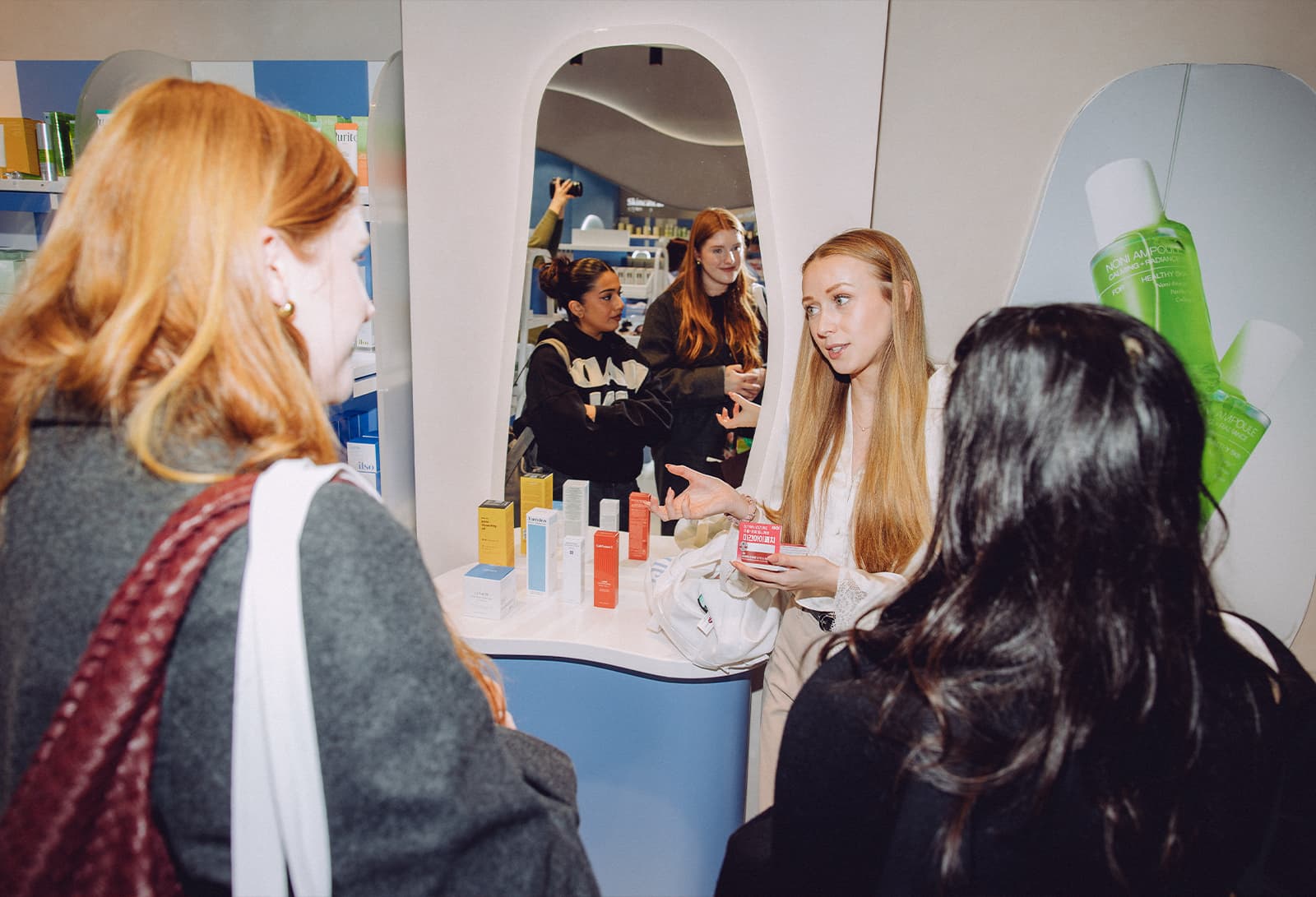
That “algorithm fatigue” has become one of the company’s strongest arguments for brick-and-mortar retail. In-store, customers can test textures, compare finishes, ask detailed skincare questions, and speak to teams who are themselves genuine K-beauty consumers.“No one wants to be sold to,” Tullio said. “They just want to be guided.”
Unlike traditional beauty retail environments, Pureseoul staff are not paid on commission, a deliberate choice Tullio believes fundamentally changes the tone of the customer experience. Consultations are conversational rather than transactional, and product education is prioritized over upselling. “You can’t train someone to be culturally sensitive to this category if they don’t already have that interest,” she explains. “Our team members are K-beauty customers themselves.”
Tullio and her co-founders believe this shared interest in K-beauty leads customers to have a more authentic experience and to be more open and honest in their opinions of the store and its products. Tullio shared that this feedback is so important that she and the other founders often act as staff members without revealing themselves as the business's leaders to gain honest, open feedback.
The retailer’s emphasis on physical interaction is particularly important within K-beauty, where texture and sensorial experience are often central to product performance. “I have never blind-bought a skincare item in my life,” Tullio said. “I need to feel the texture. Is it going to make me sweat? Is it actually going to work for my skin? You can only really do that in a shop.”
Bath quickly emerged as a natural fit for the brand’s human touch philosophy. Tullio said Pureseoul’s retail expansion strategy is shaped as much by local culture and community behavior as by commercial opportunity. Before signing leases, the team often spends hours sitting outside prospective locations simply observing foot traffic and customer demographics.
“We literally go and sit outside potential stores and watch who walks past,” she said. “We ask ourselves: ‘Can I see my customer here?’”
For Bath, the answer was immediate.
“There’s a real sense of escape and wellness in Bath,” Tullio explained. “It already has that self-care mindset built into the city, and we felt the customer there was really open-minded.”
The city’s strong student population also aligned with Pureseoul’s existing customer base. Tullio pointed to university cities such as Cambridge and Oxford as some of the retailer’s highest-performing locations, describing younger K-beauty consumers as particularly engaged and loyal.
That loyalty has helped fuel an extraordinary period of growth. The company remains fully independent and self-funded by its founders, something Tullio speaks about with obvious pride. However, Pureseoul’s rapid expansion has also been supported by a major funding relationship with HSBC UK, which has backed the business through multiple lending rounds, granting £4.1 million ($5.5 million) as of August 2025.
“We don’t have any external shareholders,” Tullio said. “We’re still completely independent.” That independence, she believes, has allowed Pureseoul to move faster than many larger retailers entering the category. The company opened nearly half of its current store estate last year alone, including five stores in five weeks during one particularly intense period.
Yet Tullio argues the company’s biggest differentiator is not simply speed, but expertise. As larger beauty retailers increasingly rush into K-beauty, Pureseoul positions itself less as a stockist and more as a cultural translator between Korea and the UK market.
“The trends happening in Korea are not always the trends happening here,” she said. “Our job is to decide what will actually work for the UK customer.”
That localization process has become one of the retailer’s defining strengths. Tullio noted that many Korean brands initially misunderstand British consumer behavior, often assuming strategies that work in Seoul or the US will automatically translate to the UK.
“The UK market is not the US market,” she said bluntly. “Just because something sells in America doesn’t mean the UK customer is going to buy it.”
The retailer frequently advises Korean brands on everything from textures and pigmentation to marketing and product naming. Tullio recalled instances where brands expected ultra-sheer blush shades, which are hugely successful in Asia, to perform equally well in Britain, only for Pureseoul’s team to explain that UK consumers expected significantly more color payoff.
That deep involvement with Korean brands is unusual within UK retail. Unlike many mainstream retailers sourcing through wholesalers, Pureseoul works directly with brands, collaborating on launches, exclusive products, and even product development.
“We’re not just slapping the word ‘curation’ on an assortment,” Tullio said. “We’re involved in NPD, exclusive launches, and product renaming. We’re almost like a launchpad for brands.”
Those relationships also give Pureseoul unique visibility into emerging Korean beauty trends before they hit the Western mainstream. Tullio pointed to ingredients like PDRN as examples of trends that arrived in the UK years after they had peaked in Korea.“People think this is the peak, but Korea has already gone through eight or ten trends since then,” she said.
For Tullio, that constant cycle of innovation is precisely why Korean beauty will continue to dominate globally. “Korean beauty cannot slow down,” she said. “The industry is too competitive. There’s always going to be something next.”
Crucially, Tullio believes Pureseoul’s customer differs significantly from the mass-market consumer who are now discovering K-beauty through TikTok and mainstream retail chains.
“Our customer is hyper-engaged,” she explained. “They’re following Korean brand accounts, they know what launches in Seoul before it lands here, and they want to know what’s next. They’re not just buying whatever’s gone viral that week.”
That distinction became impossible for the wider beauty industry to ignore during the opening of Pureseoul’s Westfield White City store in 2023. Long before K-beauty became a staple at major UK retailers, customers began gathering from 2 a.m. outside the shopping center for the launch.
“1,200 people were lining up in the middle of the night for this tiny Korean beauty store,” Tullio recalled. “I think that was the moment big retail had to stop and pay attention.”
According to Tullio, the crowds revealed something larger than a passing skincare trend. Rather than casual consumers chasing a single viral product, Pureseoul had cultivated a deeply invested community interested in Korean beauty as a culture, category, and evolving retail experience.
“We’re not just a retailer that happens to have K-beauty on the shelf,” she said. “It’s an immersion in the cultural aspect, everything that goes beyond just the beauty.”
As Pureseoul enters what Tullio described as a “hyper-growth phase”, the company is now investing heavily in retail training, loyalty programs, and immersive experiential concepts inspired directly by Seoul’s retail culture.
But even amid that rapid growth, Tullio insists the company’s core mission remains unchanged from the day it launched. “You can have the best website in the world,” she says, “but real brand connection happens when people walk into a store.”