





Sexual wellness may be having its mainstream moment, but its subcategory, sexual technology, is still surrounded by stigma.
The market for sexual technology (or “sextech”) is projected to more than double in the next five years, growing from $48 billion in 2025 to $110 billion by 2030, per Mordor Intelligence. But take a closer look, and you’ll find a category fragmented by geography, censorship, and definition.
According to the Institute for Health Metrics and Evaluation’s (IHME)’s 2023 Global Burden of Disease Study, over 40% of women and nearly 30% of men globally experience some form of sexual dysfunction, underscoring the unmet need for comprehensive sexual wellness.
But sexual dysfunction isn’t the only reason for seeking sexual solutions: The LGBTQ+ cohort is the fastest-growing consumer demographic in sexual wellness, growing at a 9.51% CAGR through 2031, with the sapphic segment at the forefront. The mainstreaming of sexual health as self-care is also coming into play. Gen Z is redefining sexual wellness, viewing it as essential to overall health and mental well-being, prioritizing it far more than previous generations, according to McKinsey.
In July 2025, Harry Styles' Pleasing Yourself double-sided vibrator and silicone lubricant, approved by the Food and Drug Administration (FDA), was conceived with sexologist Zoë Ligon, sold out in minutes, and its viral reception prompted an urgent restock in early 2026 to meet high demand. At the same time, Singapore-based company Lovense released Emily, an AI-powered companion doll, during CES 2026—the first from a sextech company—demonstrating a possible path for the category’s next decade.
“The impact of technology in relationships and daily existence cannot be overstated,” Luka Matutinovic, Chief Marketing Officer at luxury pleasure brand Lelo, told BeautyMatter. “We find ourselves in an era where technology intertwines with every facet of our lives, and understanding its impact on intimacy and sexual wellness is crucial.”
Sexual wellness is piquing the interest of investors, startups, and wellness and beauty brands alike. However, the market remains culturally uneven, chronically underfunded outside the West, and definitively complex.
The definitional messiness of “sextech” and “sexual wellness” as business categories often sees the terms used interchangeably; however, market valuations range wildly from $819 million to $43 billion in 2025, while predictions vary from $4,743.7 million to $250 billion by 2035, depending on whether you include things like VR porn and sex robots, or simply wellness products.
Mordor cites sextech as the fastest-growing vertical (increasing at a CAGR of 18% from 2025-2030) in the wider sexual wellness market, due to technology-driven innovation in intimacy: from app-connected devices to AI-enabled toys to VR experiences. (The sex toy segment made up 45% of the market share in 2025.) The sexual wellness market was separately estimated at $43 billion in 2025 and is projected to surpass $62 billion by 2030.
While North America dominated with 35% of the global market in 2025, Asia-Pacific (APAC) is the fastest-growing region, with a CAGR of 8.79% (from 2025 to 2034), due to its large consumer base. Additionally, urbanization and rising disposable incomes are elevating purchasing power, while growing awareness and acceptance of new products further drive market demand.
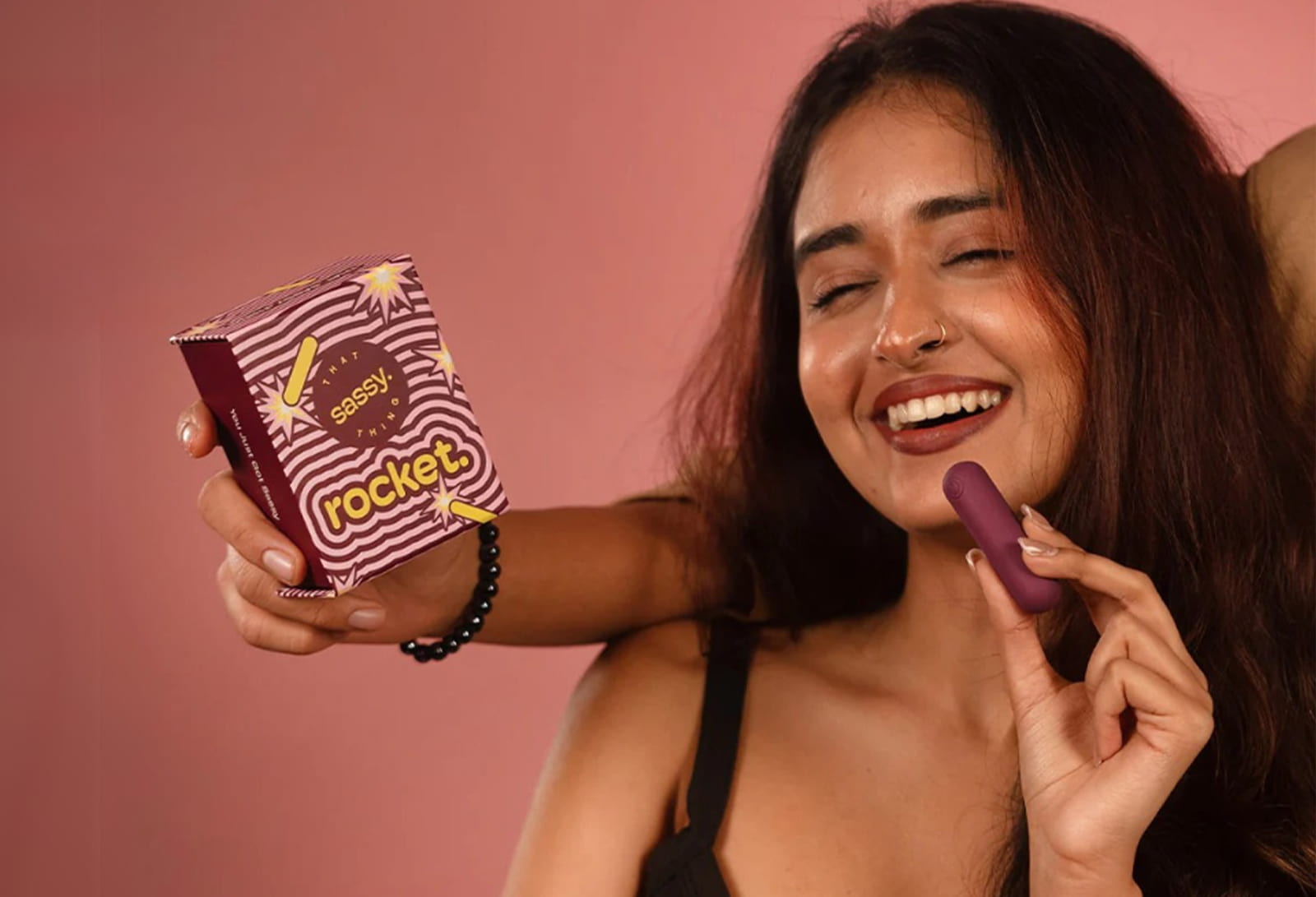
Sachee Malhotra, founder and CEO of That Sassy Thing, India's first female-founded sexual wellness brand, states that roughly 80%-90% of its customers are buying their very first sex toy. “The category is still overwhelmingly first-time buyers. That means the real opportunity isn’t in fighting over the same consumer in Delhi, Mumbai, and Bangalore. It’s in reaching women who haven’t yet been reached, in Tier 2 and Tier 3 India, and speaking to them in the language they understand,” she told BeautyMatter.
In Europe, Germany is emerging as a key region for prevention-focused sexual solutions in the market, valued at $6.61 billion in 2025 and projected to reach $7.12 billion in 2026. The continent as a whole is seeing growth in the sector due to the fact that Europeans have seen considerable increases in STI case numbers.
Meanwhile, in the Middle East, shifting societal attitudes towards sexual wellness and an increase in sexual health awareness are driving demand for self-care products, with the market expected to grow from a revenue of $181.7 million in 2023 to $297.1 million in 2030. Saudi Arabia alone is projected to reach $307.3 million by 2034, demonstrating its key-player status in a region previously overlooked.
Around the world, sexual health and wellness products demonstrate a clear opportunity for brands. But when it comes to financing capital or product innovation, a different picture emerges.
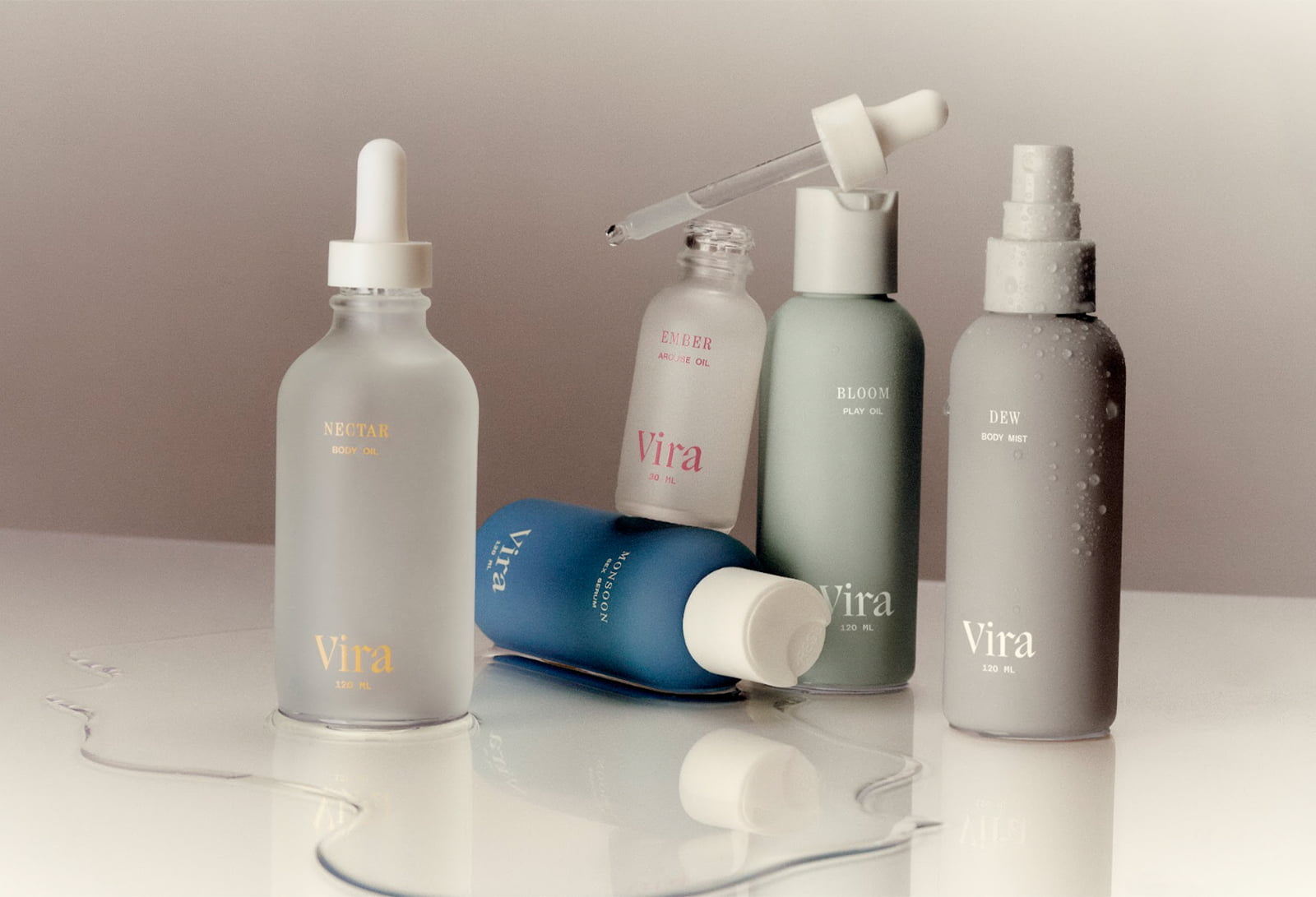
From Mauj, the first sexual wellness brand for Arab women, created to destigmatize female sexuality in the region, to newly launched Vira, which brings Ayurvedic sensuality to the US market, the most interesting entrants are rooting intimacy in cultural heritage rather than universalizing Western aesthetics.
“Ayurveda doesn’t separate sexual wellness from overall well-being,” Shruti Viradia, Vira’s founder, told BeautyMatter. “It treats pleasure, vitality, and emotional connection as essential to health.”
For a US audience, “ancient sensual practice” isn’t about rigid ritual or spiritual prescription, Viradia continued. “It’s about reintroducing slowness, embodiment, and connection into experiences that have become overly clinical or commodified. Vira makes that accessible through texture, scent, and formulation without necessarily requiring any prior knowledge of Ayurveda.” With interest in holistic options driving a global Ayurvedic sexual wellness market towards an estimated $2.9 billion by the end of 2034, natural and herbal-based sexual wellness solutions like Vira are positioned for future-proof success.
Mauj, on the other hand, built its sexual wellness brand to destigmatize sexual and menstrual health through its product line and education in the region. Its success is the emerging Middle Eastern market’s proof point: at the end of 2023, just three years after its launch, the brand secured $500,000 in investment to continue developing products that facilitate body exploration. Similarly, Motherbeing—the Egyptian femtech online destination that started as an Arabic-only sex education platform before expanding into more areas of women’s health with Daleela, its AI-powered health assistant—secured a $200,000 investment in 2025.
“Now, building for Indian women means designing around a reality where discretion is not a preference. It’s a survival strategy,” Malhotra said. Founded in 2021, That Sassy Thing raised roughly $720,000 in a 2025 seed round led by Inflection Point Ventures, having seen 200% year-over-year growth and over 50,000 customers served across India, according to the startup. That Sassy Thing’s strategy is working: its vibrators don’t look like phalluses, nor does the packaging say “vibrator” anywhere. “When a product doesn’t mimic genitals, it quietly removes a layer of shame,” she added. “Discreet Shipping is the second most viewed page on our website, right after the product pages. That single statistic tells you everything.”
While Eastern brands across the international landscape focus on cultural discretion, localized heritage, and first-time buyer needs, their Western counterparts have been mainstreaming through beauty retail, celebrity crossover moments, and luxury design normalization.
Lelo was founded in Sweden in 2003 and was the first brand to reframe sex toys as premium objects. "There were no premium or luxury pleasure objects at all on the market, and we wanted to use our design and engineering experience to change that. We wanted to offer something better and saw it as an opportunity to make a difference, blending beautiful form with pleasurable function," Matutinovic said.
Fast-forward to today. Lelo’s sleek, sumptuous products, along with distribution in 160 countries, demonstrate what it takes to have longevity in the category. Similarly, Maude utilizes elevated minimalism as well as inclusivity as the mainstream entry point. Founded by Éva Goicochea in 2018, the Brooklyn-based brand (with Dakota Johnson joining as an investor and Co-Creative Director in 2020) has raised over $10 million since it launched.
Following a similar trajectory, Dame was founded in 2014 by a Columbia-University–educated sex therapist, Alexandra Fine, and MIT-trained engineer Janet Lieberman, before building a strong foundation through a total investment of $13 million, with 109% year-over-year e-commerce growth and messaging that sexual pleasure is a critical part of overall well-being. This growth paved the way for strategic acquisitions—Emojibator in February 2024 and Chakrubs, a crystal sex toy brand, in March 2025, which cemented its place as a market leader—alongside its Planned Parenthood partnership.
While Western brands like Dame and Maude have collectively raised tens of millions across multiple institutional rounds, their counterparts in the Middle East and South Asia are operating on rounds rarely exceeding a million dollars. The funding infrastructure, like the market itself, remains heavily skewed toward the West, and until that changes, the most culturally necessary innovation will arguably continue to be underfinanced.
But even as these brands scale globally, they confront persistent structural barriers that the category has yet to close.
Women's sexual pleasure remains dramatically underserved in relation to men's. In the United States, roughly 10% of women never achieve orgasm (due to factors like medication, surgery, chronic illnesses, physical pain, anatomical barriers, or trauma), while 81.6% of women don’t orgasm from intercourse alone.
Suzannah Weiss, resident sexologist for sex toy brand Fleshy and author of Eve's Blessing: Uncovering the Lost Pleasure Behind Female Pain,told BeautyMatter that society is stuck in a mindset “where it's okay to talk about reproduction but not sex for the sake of pleasure.... Patriarchy deems it natural and normal for men to desire sex but taboo for women to desire sex beyond simply responding to men's desire."
Companies like Dame, Maude, and Rosy Wellness are all founded or co-founded by women who identified gaps in products and services designed for female pleasure and health. But the pleasure gap is an international issue that continues to shape who this industry is actually built for.
India may have given the world the Kama Sutra, yet it was never really about women’s pleasure. “It was a text largely written for men, about how men might navigate desire. Women in it are discussed as objects of pursuit, strategy, and conquest. So, India being the birthplace of the world’s most famous erotic text while women’s sexuality remains suppressed is not a paradox. It’s a continuation.” Malhotra explained.
In fact, the male segment of the global sexual wellness market accounted for 62.5% of revenue in 2025, driven by higher VR porn and hardware adoption rates. In India specifically, condoms for men dominated the market share with 42.5% in 2025, demonstrating how the category still skews towards male pleasure; however, women represent a rapidly growing segment (a CAGR of 7.72%) that’s driven by the increasing global awareness of sexual health and empowerment.
The South Korean company SAIB (which took its name from the backward spelling of “bias”) decided to create condoms specifically for women, as most products in the category have been designed by and for men. Its toxin-free, ingredient-transparent design is packaged to be carried without shame. Two million have been sold worldwide.
“Indian women have been told for generations not to ask for what they want. In bed. At work. At home. The orgasm gap won’t close until more women start reclaiming that space,” Malhotra continued.
“The orgasm gap stems from a lack of education and care for female pleasure, not a lack of products," Weiss said. Malhotra agrees; the category cannot exist without an underlying education layer.
That education deficit points to a deeper institutional problem: sexual wellness has yet to secure its place within mainstream healthcare infrastructure. Rosy Wellness, a platform focused specifically on women's sexual health, counts more than 8% of US OB-GYNs as referring partners, and that this is treated as a milestone rather than a baseline reflects a medical establishment that has historically treated female sexual dysfunction as peripheral, not pathological.
Further complicating things is the persistent advertising censorship that still hampers the category globally. From Mumbai to Madrid to Mexico City, social media platforms restrict sexual wellness brands from advertising, even when the products are clinical or therapeutic.
"Getting organic content to work is basically a shot in the dark because algorithms block so much, and brands end up having to take out anything that even hints at sex just to fly under the radar," Matutinovic explained.
Fine, Dame’s CEO, believes social media is still the main barrier. “Women's health has been increasingly reframed as a political issue, and I think that gives platforms cover to restrict content that was already barely tolerated," she said.
The American brand’s lawsuit victory over New York’s Metropolitan Transportation Authority remains a rare win against discriminatory advertising policies: 95% of women's health organizations surveyed by the campaign group CensHERship in 2024 reported censorship on platforms such as Instagram and TikTok, often for anatomical terms like “vagina” or “clitoris,” while women's sexual wellness products have historically faced higher rejection rates than equivalent men's products. CensHERship's 2026 research extends the picture further: misclassification and cultural discomfort within financial services are creating the same structural barriers for women's health businesses that ad censorship creates on platforms.
Barriers persist, but sexual wellness is breaking into mainstream beauty channels and pioneering AI frontiers that could redefine the category.
Sexual wellness brands once confined to “adult” stores now sit alongside serums as legitimate self-care, and the beauty-to-sextech pipeline describes this convergence. Case in point: Maude’s intimacy-as-self-care strategy and clean-lined aesthetic led to its products being stocked at retailers such as Sephora and Bloomingdale's in the US and Selfridges and Unfabled in the UK.
"When you see sex toys in CVS, Target, and Sephora, this sends the message that this is a normal type of product to use or seek out,” Weiss said. “The only problematic element is when masturbation becomes a way to improve one's beauty or well-being rather than an enjoyable activity for its own sake. This can paradoxically increase stigma."
"When sexual wellness enters through beauty, it often gets framed around monetization, aesthetics, and surface-level self-care,” Viradia noted. “Our approach is to establish meaning before scale."
Lelo’s Emily in Paris placement in December 2025 made the pipeline visible, while its F1S V3 “pleasure console” launched an AI interactive mode, translating movement into encrypted feedback with auto-adjusted vibrations. "AI is also becoming an integral part of our daily lives and relationships ... a staggering one-third of people—36%—turn to AI for advice and guidance, 28% look for a confidence booster, with 22% using it as a source of inspiration for fantasies/scenarios/role-play ideas," Matutinovic said.
The American company Arya, founded in 2022, is an AI intimacy coaching platform that raised $21 million in 2026, while Swedish female-founded Pirr serves 200,000 users with AI-cowritten erotica from a female perspective after a $430,000 angel round.
Sextech isn't beauty's next trend. It's the test of whether beauty can deliver outcomes for humanity's most universal need.
Beauty businesses entering sextech and sexual wellness must operationalize intimacy as infrastructure, not as just another self-care category.
The younger generations already see sexual wellness as essential healthcare; the brands that come out on top will meet them there.
Retailers can organize by need (libido versus lubrication) rather than vague "wellness" aisles, and pair clinical backing with in-store diagnostics or partner consultations to turn shelf space into healthspan touchpoints. For brands, the opportunity lies in licensing biotech actives for pleasure-focused formulations, commissioning third-party clinicals that validate outcomes beyond aesthetics, and building subscription protocols that treat intimacy as longitudinal care.
The question for beauty is whether to help sextech scale as health or keep it as novelty. "Our job is to keep closing that distance,” Malhotra said. “Not by being the loudest voice in the room, but by building things that quietly tell women: you are allowed to feel good."