





Beauty brands have long positioned overnight repair as a skincare strategy. But now, with the growth of sleep technology, companies are building biological infrastructure around a similar promise.
In June 2026, FDA-cleared period-tracking app Natural Cycles embedded sleep insights into its features, while Oura partnered with hormone intelligence platform Oova to integrate hormone data, sleep metrics, and symptom tracking.
The boundary between menstrual cycle tracking and sleep tech is dissolving, and the convergence signals a broader shift: sleep is increasingly being reframed as a beauty, recovery, and longevity category rather than a passive wellness metric.
Meanwhile, sleep optimization is becoming ambient infrastructure rather than a discrete product category, embedded into rings, beds, earbuds, lighting systems, and increasingly, entire environments. Also in June, Kimba launched to target sleep quality through its olfactory-sleep interface, signaling that the category may be on the verge of transitioning from passive measurement to active improvement.
Will the next generation of beauty-adjacent platforms be built around bedtime optimization and biometric insight rather than topical products alone?
By 2035, the sleep tech market overall is projected to nearly quadruple from $18.7 billion to $67.4 billion, at a CAGR of approximately 13.7%. The device segment of the market is growing at a similar rate: from $27.26 billion in 2026 to $69.57 billion by 2033, at a CAGR of 16.9%.
North America dominates the device-only market with a 39.8% share, as US-based businesses continue to innovate in the wearables and diagnostic device space. The same market research indicates that technological advancements are driving greater demand by enabling higher-quality personalization.
Initially, Fitbit’s sleep-tracking capabilities were treated as a nice-to-have addition; now, sleep intelligence is central to the value proposition of devices like Oura and Whoop. Smartwatches and fitness wearables designed with built-in sleep tracking offer richer insights by tracking biometrics such as heart rate variability, sleep stages, and movement overnight.
In the category, female-focused sleep tech is finally coming to the forefront. In June 2026, Femtech Insider noted a wave of releases focused on women's sleep—from menstrual cycle–linked temperature regulation to menopause-specific sleep disruption—framed against the historical treatment of sleep as gender-neutral.
In fact, the femtech market is also seeing billion-dollar growth, valued at $52.74 billion in 2025 and projected to reach $155.81 billion by 2035 at a 11.4% CAGR. The digital segment alone generated $4.36 billion in 2025, according to industry analysis—a growth attributed to companies like Natural Cycles, among others.
Wearable devices that integrate cycle-informed sleep tracking shift femtech from reproductive care to hormonal health management, enabling more personalized, insightful data that can tell you far more than simple sleep analytics.
The apps closing this gap fastest, like Natural Cycles and Oura, didn’t set out to track sleep, yet they take up space in the nascent market. They are also the ones offering genuinely personalized, clinically grounded insights that bridge casual self-tracking with something closer to real preventive care.
Natural Cycles was founded back in 2013 by physicists Dr. Elina Berglund Scherwitzl and Dr. Raoul Scherwitzl, launching as the first FDA-cleared birth control app before expanding into postpartum and perimenopause tracking to decode hormonal shifts. The new Sleep Insights feature allows the NC° Band (the app’s first wearable, launched in January 2026, which collects heart rate and hormone-driven temperature data) and the Oura Ring to track overnight data.
In February 2026, Oura released its first proprietary women's health AI model, featuring insights into menstrual cycles, fertility, pregnancy, and menopause. Since then, the Finnish health tech company—which also launched in 2013—has added hormonal birth control tracking and menopause insights, including the research-supported Menopause Impact Scale (MIS), a questionnaire that measures daily functioning and quality of life across 22 symptoms.
A 2024 study led by Dr. Rebecca Robbins with Brigham and Women's Hospital and Harvard Medical School compared the Oura Ring, Fitbit Sense 2, and Apple Watch Series 8 and found that the Oura Ring showed the highest sleep-stage sensitivity of the three devices and was not statistically different from polysomnography (PSG), the clinical standard for wake, light, deep, or REM sleep detection.
Sleep neuroscientist Laura Bojarskaite told BeautyMatter that hormonal changes can shift the physiological signals wearables rely on, meaning a bad sleep score may actually reflect biometric signs of that shift.
"A wearable measures signals associated with sleep—not sleep itself. Your brain doesn't produce a sleep score,” she said.
In July 2026, hormone intelligence platform Oova integrated with Oura to sync sleep and recovery, merging hormone data, sleep metrics, and symptoms into a single timeline rather than three separate streams.
The partnership builds on Oova's own clinical research, published in Obstetrics & Gynecology, that found significant relationships between estrogen patterns, sleep duration, and anxiety in women navigating perimenopause.
The first half of 2026 demonstrates that hormone-aware wearables are becoming the expected standard rather than a differentiator. For people going through menopause, they offer a long-awaited lifeline.
It’s part of the beauty/wellness/longevity collision: hormonal cycles, sleep quality, stress markers, heart rate variability (HRV), recovery, skin health, mood, and metabolic performance are increasingly integrated into optimized health and wellness ecosystems.
Simultaneously, the menopause market is developing solutions to manage symptoms such as hot flashes, night sweats, and mood swings; apps that focus on sleep and mood tracking are uniquely positioned to help women navigate this life stage more easily, while sleep platforms designed around female physiology reveal unmet personalization needs.
Sleep disturbance is one of the most disruptive and under-addressed symptoms of menopause, with hormonal fluctuations linked not only to insomnia and night sweats but also to measurable neurological and mental-health changes.
Sleep disturbances affect 16%-47% of perimenopausal women, rising to 35%-60% in postmenopause. Researchers at Cambridge also discovered a loss of grey matter in regions of the brain associated with cognition and emotional processing, reinforcing the rationale for menopause becoming a major target for sleep-tech platforms.
"Sleep trackers can help women understand patterns in their sleep, but they cannot tell you why you're sleeping poorly or diagnose a sleep disorder,” Bojarskaite added. Awareness tools and medical assessment remain distinct, particularly for conditions like insomnia that disproportionately affect women, from puberty to postmenopause.
Sleep tech may offer insights, but new launches are more focused on intervention.
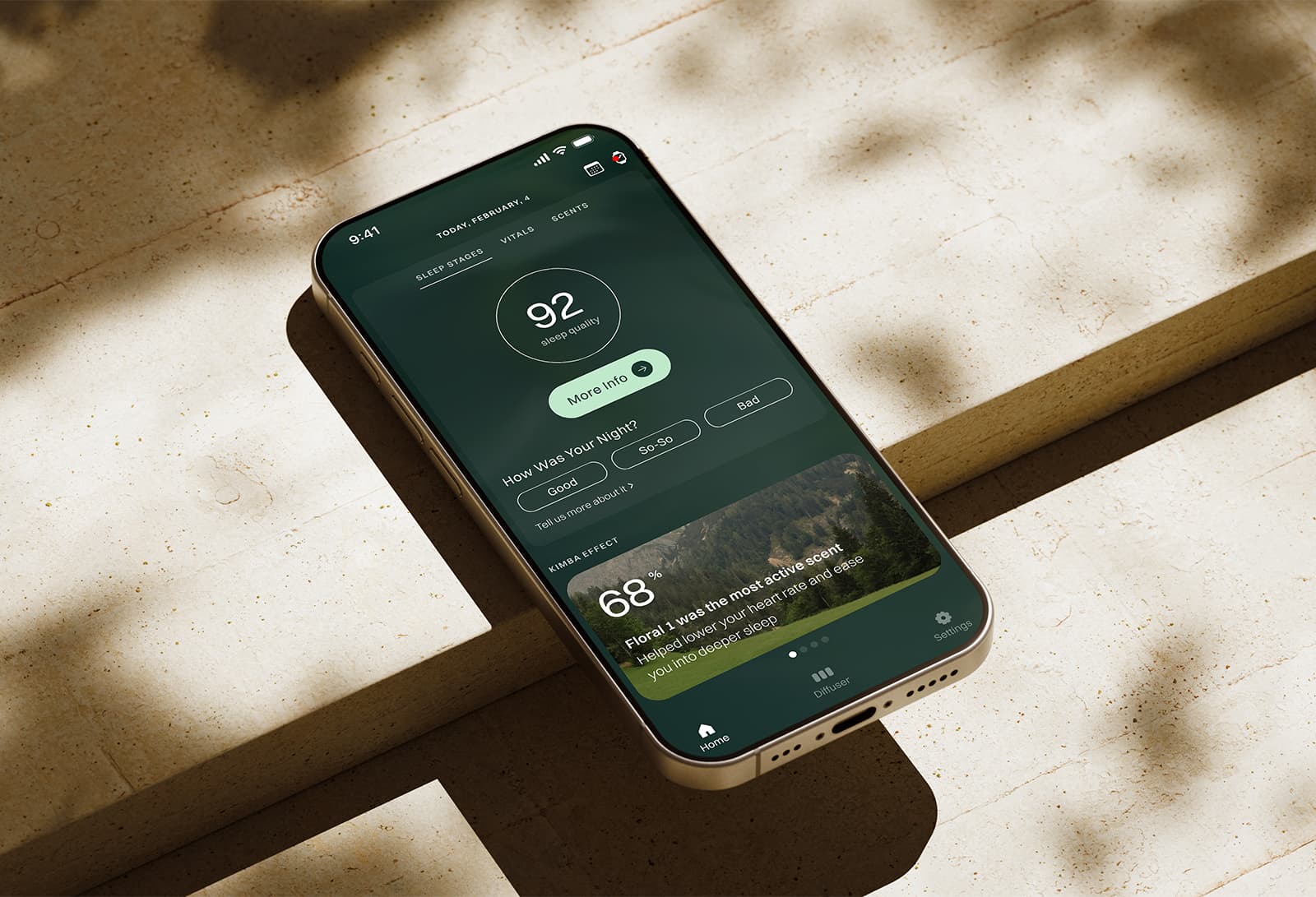
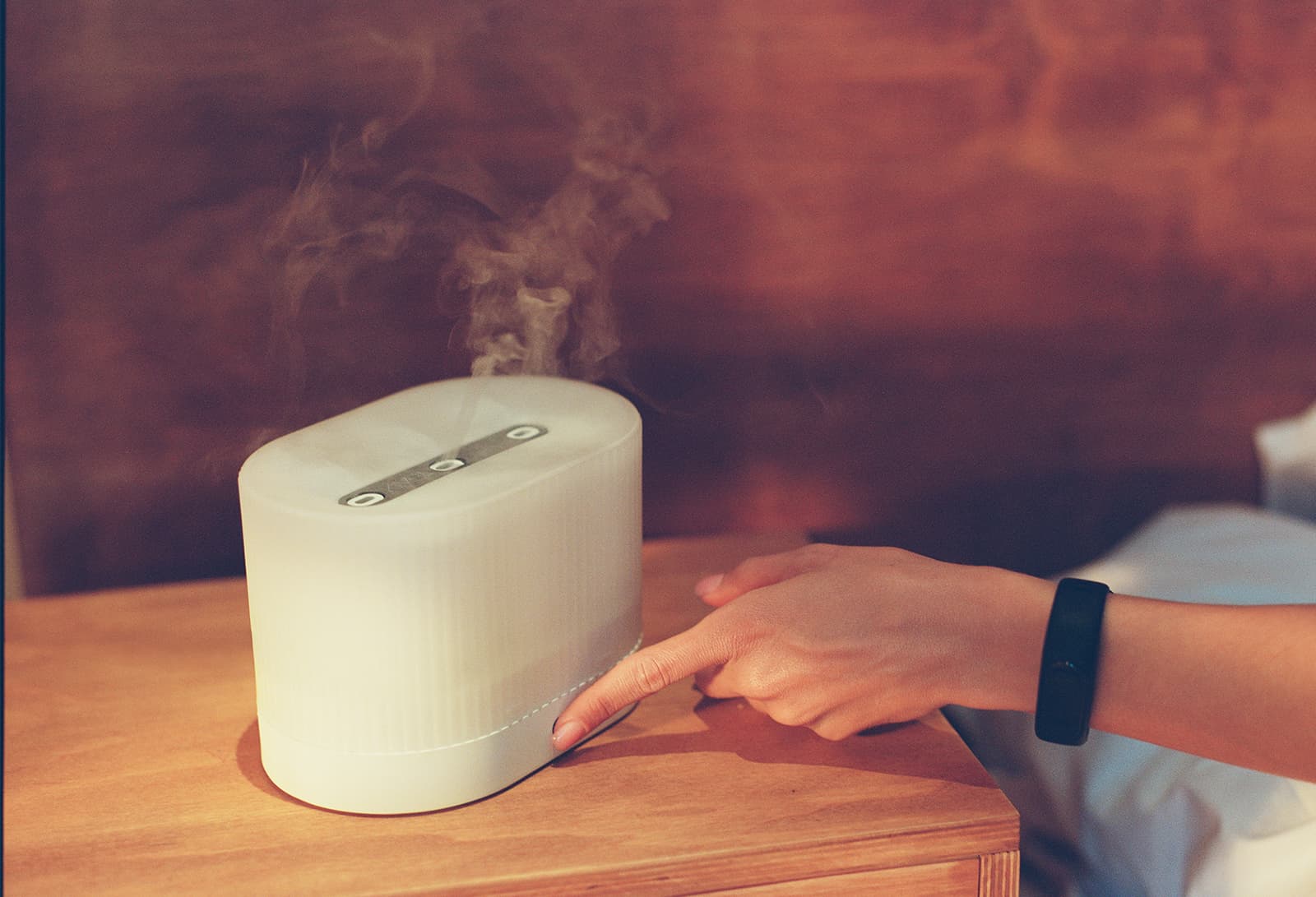
Sleep tech company Kimba launched with an AI-powered approach to improving sleep through adaptive scent therapy. According to the company, the clinically validated system tracks biometric signals overnight through its own sensors and integrations with wearables, using that data to time the release of scent formulations to specific moments in the sleep cycle. It delivers the fragrances through the olfactory pathway—the one sensory channel that can reach the brain during sleep without causing wakefulness. It is positioned as a way to shape sleep in real time rather than just report on it afterward.
The New York–based business also announced its $6.5 million funding led by Selva Ventures, a leading consumer health and wellness investor whose portfolio includes brands such as OneSkin.
Kiva Dickinson, founder of Selva Ventures, told BeautyMatter that investment has almost entirely gone to tracking sleep rather than improving it. “That's what made Kimba compelling,” he said. “It's fast-acting, non-pharmacological, and easy to build into a nightly routine, which gives it a credible path to the mass-market adoption most sleep interventions never reach.”
Bojarskaite explained that the brain continues to process smells during sleep, yet whether commercial scent-delivery systems can meaningfully improve sleep remains unproven. "The mechanism is scientifically plausible, but the claims are currently ahead of the evidence,” she said.
Even so, the emerging category continues to position sleep as a controllable performance variable. Products like Orion Sleep’s water-based cooling system and Eight Sleep’s Autopilot 4.0 are reframing mattresses as “sleep operating systems,” integrating thermal regulation, recovery analytics, and automated adjustments based on the sleeper’s behavior and biometrics.
In Japan, one of the world’s most sleep-deprived countries, companies are building sleep-optimized housing, biometric capsule hotels, smart beds, and neuro-assisted nap systems designed to regulate lighting, temperature, humidity, and sleep timing.
SOND, founded by Bose’s former head of sleep products, acquired $7 million to build closed-loop “sleep intervention” earbuds that monitor 12 physiological signals, including HRV, respiration, snoring, sleep staging, and body position, and respond in real time with AI-generated audio programs. The release also highlights how major audio and consumer-electronics talent is migrating into sleep optimization, suggesting sleep is becoming a strategic frontier for sensory-interface design, ambient computing, and AI-driven wellness experiences.
Dickinson also sees the wider convergence playing out across his portfolio. “We think categories like sleep tech and femtech are innovating to meet this increased desire from the consumer to learn about the problems and spend their hard-earned money to solve them,” he said.
“We think the same longevity-focused consumer that buys OneSkin will see the appeal in Kimba's novel approach and product efficacy,” he added.
Long before rings, bands, and scent-based interventions existed, the beauty industry tied sleep to skin, but its overnight repair claims rested on ingredient efficacy rather than sleep data. Now that sleep data exists, can it actually test the other half of the claim?
Skincare brands have long marketed overnight repair as a category based primarily on the efficacy of their formulation.
Michelle McFarland, a family nurse practitioner specializing in dermatology, told BeautyMatter that the skin doesn't switch off overnight, but rather, that's when some of its most important maintenance work actually happens. The body shifts into a restorative state during sleep, supporting barrier recovery, tissue repair, and the regulation of inflammation, while hormonal and immune changes simultaneously create ideal conditions for the skin to heal.
"One of the biggest misconceptions I hear is that tired-looking skin can be 'fixed' with a new serum or expensive cream,” she said. “Quality skincare absolutely matters, but healthy skin starts with healthy physiology,” she explained. "Sleep is probably the most underrated skincare habit because it's one of the few lifestyle factors that support nearly every aspect of skin health. It's free, accessible, and benefits far more than just your complexion."
Dr. Annette Czernik, dermatologist and assistant professor at Yale New Haven Medical Center, spoke to BeautyMatter about the specific mechanism: "During sleep, the skin shifts into repair mode by increasing cell turnover and supporting collagen production. Blood flow to the skin also rises overnight, helping deliver oxygen and nutrients needed for recovery. Poor sleep can disrupt this process, contributing to dullness, slower healing, and a weakened skin barrier."
Now that wearables capture precise sleep-architecture data (time to sleep onset, slow-wave sleep duration, and timing), the convergence signals a model shift toward recurring-revenue beauty ecosystems rather than one-time product sales. Sleep can now transform beauty from a twice-daily consumer ritual into a continuously monitored biological state.
And products within premium sleep-tech ecosystems are increasingly overlapping with recovery, nervous system regulation, and beauty-adjacent wellness, including temperature-regulating mattresses, vagus nerve stimulation devices, infrared heat systems, and biometric recovery platforms.
Handing over normal human experiences to platforms for packaging and selling may be nothing new. But this is arguably one of the most invasive. Bojarskaite also mentioned orthosomnia, the term used to describe anxiety over attaining a perfect sleep score. It occurs when optimizing tracker data takes precedence over the body's own signals, worsening the very problem the tracker was meant to solve. "Healthy sleep isn't about having a perfect sleep score every night. It's about giving your brain enough opportunity to recover consistently over time,” she said.
If rest and recovery become the goal, the future of beauty, wellness, and longevity may move beyond what people apply before bed, shifting its focus toward who controls the environment, data, and interventions that shape the eight hours that follow.
Sounds stressful.