At AAD’s (American Academy of Dermatology) Annual Meeting 2026 in Denver earlier this year, the Exhibit Hall was like a Sephoria event and Ulta Beauty World meets clinical dermatology. Attendees could move from a session on emerging treatments for skin disease to a repurposed Sephoria booth, collect branded merchandise, interact with social media–famous skincare brands, and hear discussions of clinical testing—all within the same space.
The AAD Annual Meeting has long served as one of dermatology’s most influential gatherings, bringing together physicians, researchers, pharmaceutical companies, and device manufacturers to shape the future of skin health. But as skincare has become one of beauty's fastest-growing and most culturally relevant categories, the meeting itself has gone through a transformation.
Consumer brands are showing up in greater numbers. Activations are becoming more experiential. Dermatologists are increasingly becoming influencers. And brands that once relied solely on Sephora shelves and TikTok virality are seeking a different kind of validation: medical credibility.
The shift has sparked a growing debate within the dermatology community. Is AAD simply evolving to reflect how patients engage with skin health today? Or is the industry's most important scientific meeting becoming another stage for the beauty economy?
For decades, the AAD Exhibit Hall was dominated by pharmaceutical companies, device manufacturers, and mass-market dermacosmetic skincare brands with longstanding ties to dermatology. Brands like Neutrogena, CeraVe, Cetaphil, Eucerin, and L'Oréal invested heavily in clinical research, physician education, and product development, making their presence at dermatology conferences feel like a natural extension of the scientific conversation.
Today's exhibition floor looks noticeably different. Booths are larger. Activations are more experiential. The marketing playbook looks increasingly familiar to anyone who has attended a beauty trade show or consumer event.
"I can remember the collective 'WTH' when Bubble had its first activation [in 2025] on the AAD exhibit hall floor," said Dr. Corey Hartman. "Legacy brands that have demonstrated a commitment to dermatology, like Neutrogena and L'Oréal, make sense because they have engaged dermatologists and invested in research and development for decades. It was a marked and noticeable departure from the norm when brands popularized in Sephora entered the scene."
But Bubble’s founder and CEO Shai Eisenman argues that perception doesn't reflect reality.
Eisenman told BeautyMatter last year that Bubble has always been a dermatologist-developed brand. The company works with ten dermatologists on its advisory board, conducts clinical testing on every product, and spends between two and three years developing each formulation.
"The AAD allowed us to bring that science to life for the derm community," Eisenman said. According to the company, Bubble engaged with more than 9,000 health care professionals during the 2025 meeting. "Even though Bubble looks very cute, that doesn't mean it's not clinical," said Eisenman. "We broke a lot of barriers in people's minds about what clinical science can look like."
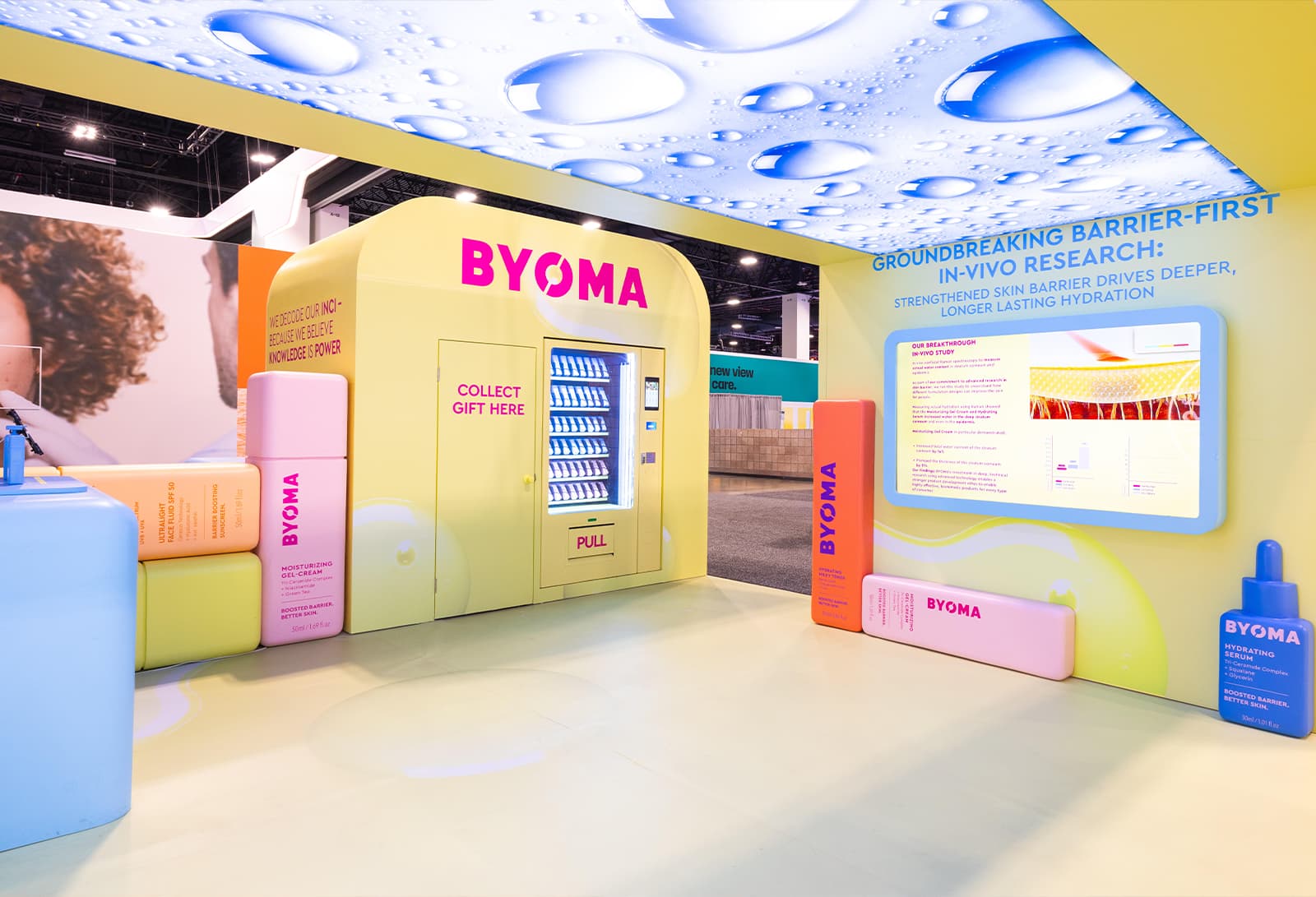
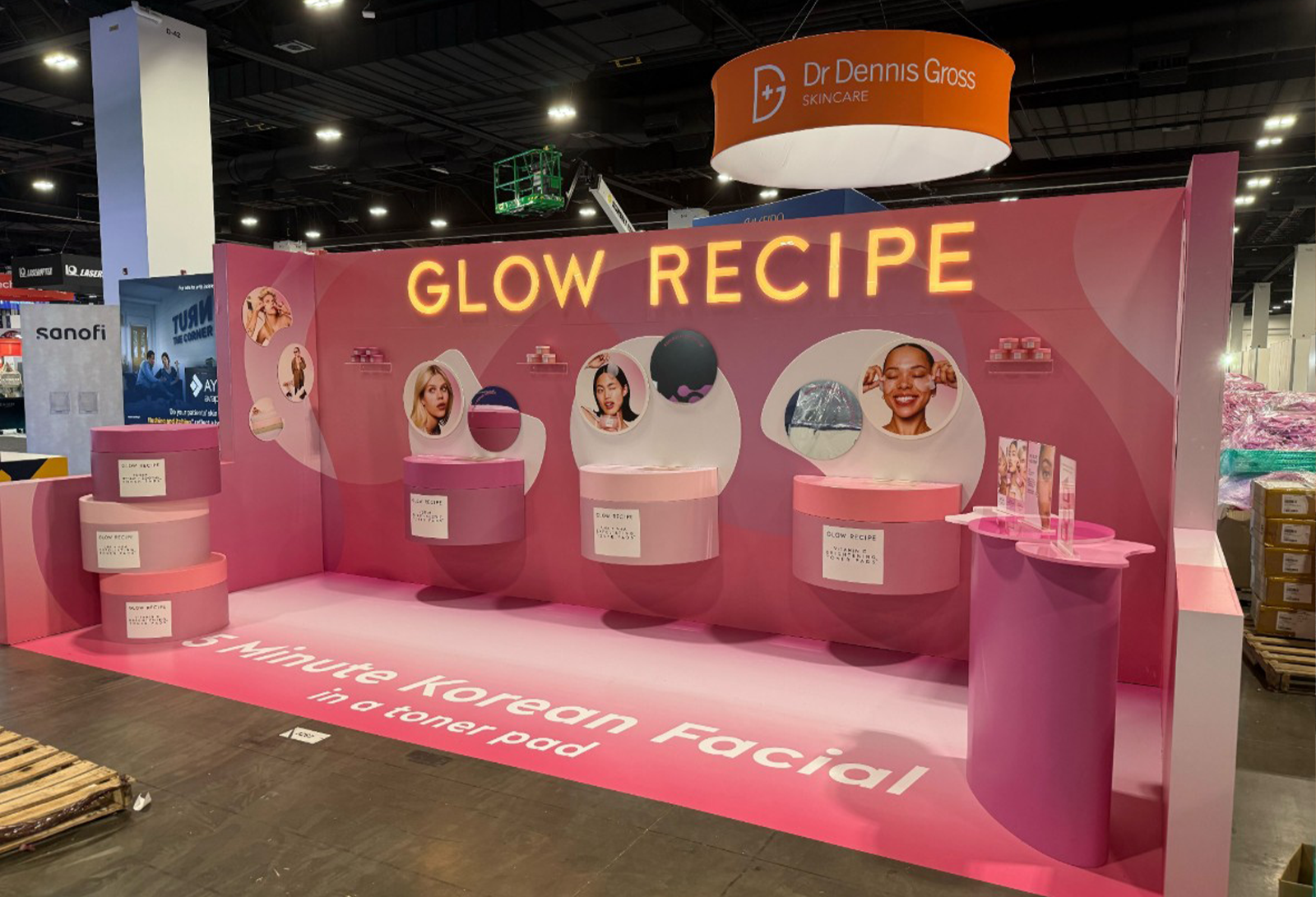
That tension sits at the center of AAD's evolving identity. For some dermatologists, consumer-first brands represent the commercialization of a historically scientific space. For newer skincare companies, participation in AAD is an opportunity to challenge assumptions about what clinically backed skincare should look like. The debuts of Glow Recipe and Byoma at AAD offered another example of that evolution.
Glow Recipe’s activation repurposed elements from its Sephoria booth just days earlier, bringing a distinctly consumer-oriented aesthetic to dermatology's largest gathering. Glow Recipe co-CEO and co-founders, Sarah Lee and Christine Chang, told BeautyMatter that their appearance at AAD was in response to “many dermatologists reaching out to get to know more about the brand.”
The duo explained that their presence was well received, despite the ongoing narrative that many dermatologists are unhappy with the conference's commercialization, with long lines leading up to the Glow Recipe booth. Similarly, Byoma’s founder and CEO Marc Elrick championed his brand's consumer aesthetic, taking selfies with long lines of visitors at their booth, which one attendee described as “one of the top five booths hands down, so fun to see.”
While the brands used the platform to showcase clinical testing and engage directly with physicians, the visual overlap between a beauty festival and a medical conference underscored how closely consumer and professional skincare worlds have become intertwined.
Elrick explained to BeautyMatter that it was Byoma’s intention to bring some fun to the conference, while balancing the brand’s clinical validation with a showcase of hero SKUs. “At AAD, we didn’t just show up within the traditional clinical framework; we challenged it. Historically, this category has been defined by a sterile, black-and-white aesthetic. We’ve reimagined that. Byoma created a space that reflects our brand DNA: culturally relevant, design-led, and rooted in real science.”
Lee and Chang agreed, reiterating Elrick’s point that creatively designed booths and clinical authority can go hand in hand. “Clinical credibility and colorful, exciting visual expression are not in opposition. It’s central to our brand ethos that, in addition to clinically validated formulas, being thoughtful about moments of joy and sensoriality within the skincare routine creates customer consistency and ultimately real results,” they said.
The consumer skincare market has never been more saturated. Social media has democratized influence, allowing new brands to achieve massive scale almost overnight. But as consumers become more skeptical of influencer recommendations, and skincare content grows increasingly saturated, brands are looking for new signals of trust.
"The skincare market has become so incredibly crowded and competitive that brands are doing whatever they can to get a leg up over competitors," said a dermatologist and industry advisor who requested anonymity. "What we're seeing more and more are these direct-to-consumer brands displaying at major dermatology meetings because they're looking for approval from dermatologists themselves."
For brands, AAD increasingly represents something more valuable than exhibition space: access to one of the last remaining sources of trust in skincare. "Brands absolutely benefit from being near physicians, because credibility is contagious," said Dr. Adam Friedman. "The key question is whether that proximity is being used to elevate patient understanding or simply to borrow the white coat glow."
According to the anonymous source, many of the newer consumer brands entering dermatology spaces are attempting to create scientific narratives around products that may not have the same research investment as traditional dermatology brands. "They don't have the same science and rigor," the source said, contrasting some direct-to-consumer brands with legacy players that invest heavily in proprietary ingredients and clinical research. "Yet they want to create a scientific narrative for their products."
Consumers, meanwhile, are increasingly confronted with marketing language that can be difficult to evaluate. Terms like "dermatologist-approved" and "dermatologist-recommended" carry significant weight but remain largely unregulated.
The result is a marketplace where this alleged scientific credibility has become one of the industry's most valuable marketing tools.
Complicating the conversation is the rise of dermatologist influencers. Social media has transformed physicians into content creators, public educators, and increasingly, brand partners. For skincare companies, dermatologists offer something traditional influencers cannot: medical credentials.
"There is the same group of dermatologists who are working with all of the brands," said the anonymous source. "They tend to be very young dermatologists who developed large followings on social media."
The source argued that social media success is increasingly mistaken for expertise. "There's a big difference between a board-certified dermatologist who barely sees any patients because he or she is making hundreds of thousands of dollars in brand partnerships versus a dermatologist who's been in practice for 20 years and has experience seeing patients."
Veteran dermatologist Dr. Ellen Gendler sees the same tension. "It changes how our whole specialty appears to the world," Gendler said. "[Promotional dermatology] is so prominently displayed on social media in ways that I find upsetting."
Gendler described today's AAD Annual Meeting exhibition floor as "out of control," pointing to merchandise giveaways, long lines for samples, and an increasing emphasis on visibility rather than education. She worries that dermatology's image is becoming increasingly tied to consumer culture and social media presence.
Hartman also shared concerns about maintaining professional standards. "This one is on us," he said. "We have to maintain credibility and respect. In the end, all we have is our reputation."
But not everyone believes dermatologist influencers are inherently problematic. Friedman argues that physicians cannot afford to avoid from the platforms where consumers are already seeking information. "Patients do benefit when dermatologists engage in the spaces where skin health is being discussed, especially because misinformation thrives in silence," he said.
The challenge, he argues, is maintaining transparency and evidence-based recommendations. "If I wouldn't make the same recommendation in a windowless exam room with no cameras, no booth, and no sponsorship in sight, then I shouldn't be making it at all."
AAD's shift reflects a broader transformation occurring across dermatology itself. Consumers no longer think about skin exclusively through a medical lens.
As skincare increasingly becomes part of lifestyle culture, brands have learned to market aspiration alongside efficacy. Clinical claims now coexist with storytelling, aesthetics, and community-building.
For consumers, this evolution has made skincare more accessible and engaging. But it has also made it more difficult to distinguish education from marketing.
"Dermatologists are the cultural authority in skincare and skin health because we are the scientific experts," Hartman said. "With the democratization—and even demonization—of expertise, it may be harder for the average consumer to tell the difference between a board-certified dermatologist educated for twelve years and an influencer with no credentials but millions of followers."
Few observers expect consumer brands to disappear from AAD. If anything, their presence is likely to grow.
The meeting has become an increasingly important venue for brands seeking physician engagement, social validation, and scientific credibility. At the same time, dermatologists recognize that patients are consuming skincare information in fundamentally different ways than they did even five years ago.
The challenge moving forward will be maintaining clear distinctions between evidence, expertise, and marketing as those worlds become increasingly intertwined.
"We do ourselves and our specialty a disservice when we lower those standards," Hartman said. "It's harmful for our patients and reduces us to the level of an influencer."
For Gendler, preserving credibility remains paramount. Dermatology's authority, she argues, comes not from social media reach or brand partnerships, but from education, experience, and patient care.
The AAD may never return to the exhibition halls of decades past. The skincare industry has changed, consumer behavior has changed, and the definition of influence has changed with it.
The bigger question is whether dermatology can continue to serve as skincare's scientific authority while increasingly sharing the stage with the brands competing for consumers' attention. The answer may determine not only the future of the AAD, but who consumers trust when medicine and marketing start to look the same. With the global skincare market projected to value between $200 billion and $400 billion by the mid-2030s, the stakes extend far beyond conference halls, touching the future of an industry where credibility has become one of the most valuable currencies of all.