What happens when China’s biggest beauty livestreamer, two actresses, an actor, and two chart-topping musicians are handed the keys to a London beauty store, where they try to make the $143 billion Chinese beauty market go global in front of millions of viewers?
That is the premise behind Partner Season II, a reality docuseries co-produced by Hunan Satellite TV and Mango TV. The show follows six celebrity partners—beauty e-commerce livestreamer Austin Li, actresses Zhang Yuxi and Zhao Zhaoyi, actor Yan An, and singers Shang Wenjie and Mika Hashizume—as they launch and operate YanLab, a temporary multi-brand C-beauty store in London’s Fitzrovia neighborhood.
The celebrities are not simply endorsing products. Cameras follow them as they prepare the store, learn the assortment, speak with customers, recommend products, and collect real-time feedback for the 14 participating Chinese beauty and personal care brands. Every question, purchase, and hesitation becomes part entertainment, part consumer research.
Wenjie, who serves as the store’s Operations Director, described the project to BeautyMatter as a reality show, but also a documentary and global business project.
“We’re gathering authentic information from the international market while helping Chinese brands understand what consumers overseas actually want,” she told BeautyMatter. “It’s a cultural experiment, but it’s also an entrepreneurship project.”
No participant embodies that commercial ambition more than Austin Li. Dubbed China’s “Lipstick King,” the former L’Oréal beauty advisor rose to become the country’s most influential livestream e-commerce host. He now reaches more than 170 million followers across Chinese social platforms, and his Singles’ Day broadcasts generate billions of dollars in merchandise sales each year; his current record sits at $1.75 billion in a single 12-hour stream.
For Li, however, London is not simply another stage for his selling power. It represents the next phase of C-beauty’s evolution. “What I personally hope to achieve,” he told BeautyMatter, “is to turn ‘Made in China’ into ‘Brand[ed] in China.’”
The first season of Partner Season took Chinese beauty to Paris. London was not designed as a copy-and-paste follow-up. From the preparation stage through to the store opening, Li’s team conducted local market research and commissioned a third-party agency to study how London shoppers discover, evaluate, and repurchase beauty products. The research examined whether consumers prioritized packaging, efficacy, natural ingredients, advertising, physical trials, or samples before making a purchase.
“We did a lot of homework,” Li said. The findings influenced both the product mix and the way brands were presented. While Li observed that Paris shoppers often gravitated towards efficacy-led ingredients such as retinol, niacinamide, and Pro-Xylane, he believed London consumers had a stronger interest in botanical formulations, “clean” beauty, aromatherapy, and what he described as a more inward-looking approach to well-being.
That informed the inclusion of AromeManpo, an essential oil–led lifestyle brand spanning facial skincare and body oils. The store also featured more technology-driven propositions, including Komfymed’s recombinant collagen skincare and Bixdo’s blue-light whitening electric toothbrush.
The objective was not to strip the products of their Chinese identity, but to make them palatable to a different consumer. “If Chinese brands truly want to succeed overseas, they cannot simply take the Chinese playbook and apply it abroad,” Li said. “Every region has different cultural habits, lifestyles, and consumer needs. We have to preserve a product’s DNA while adapting it for London, Paris, or wherever we go next.”
For Wenjie, localization also means translating the thinking behind the products. “We’re not simply bringing products overseas,” she said. “We’re bringing the stories behind them, the culture, the ingredients, and the thinking that shaped them. We want overseas consumers to understand why these brands exist, not just what they sell.”
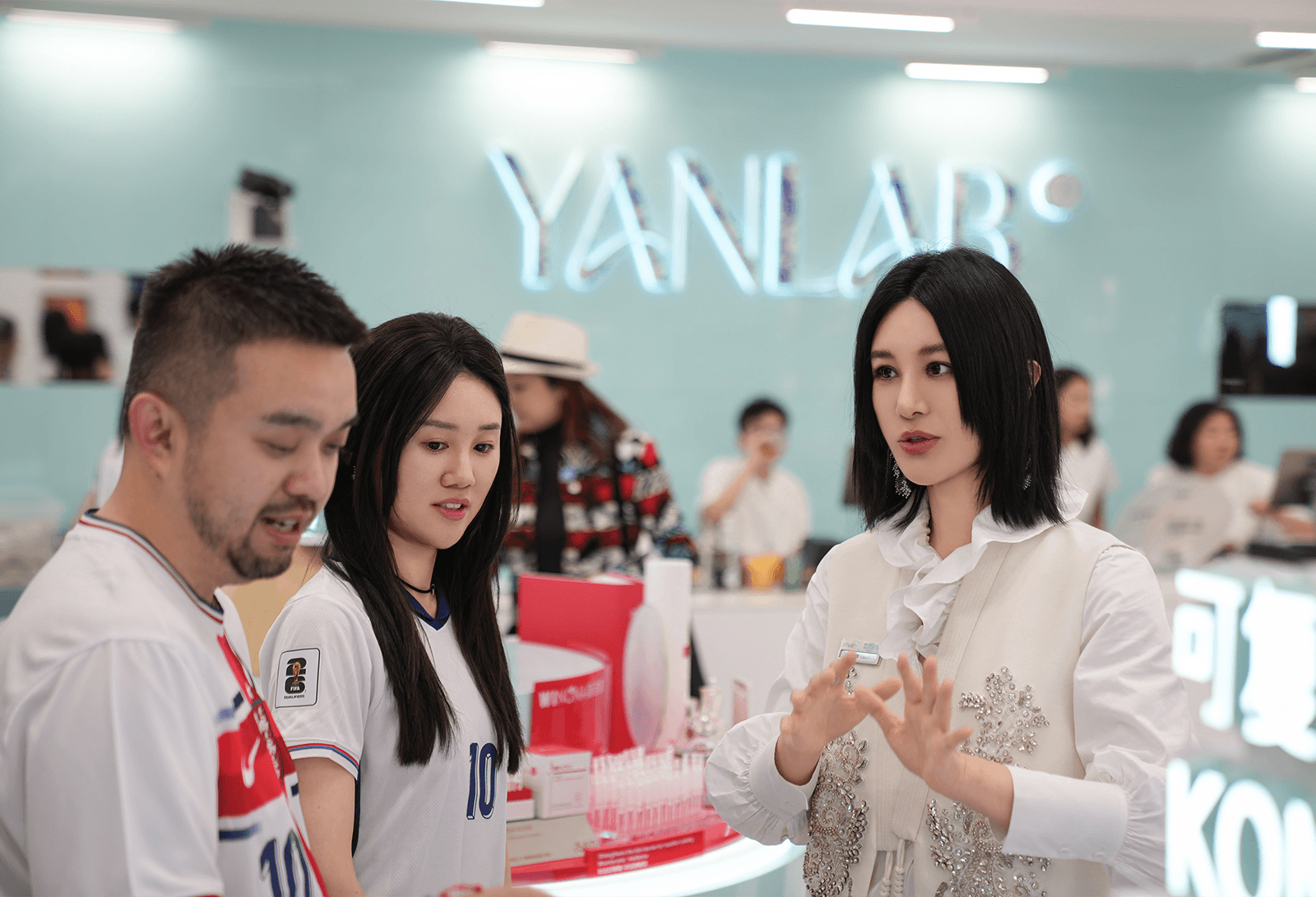
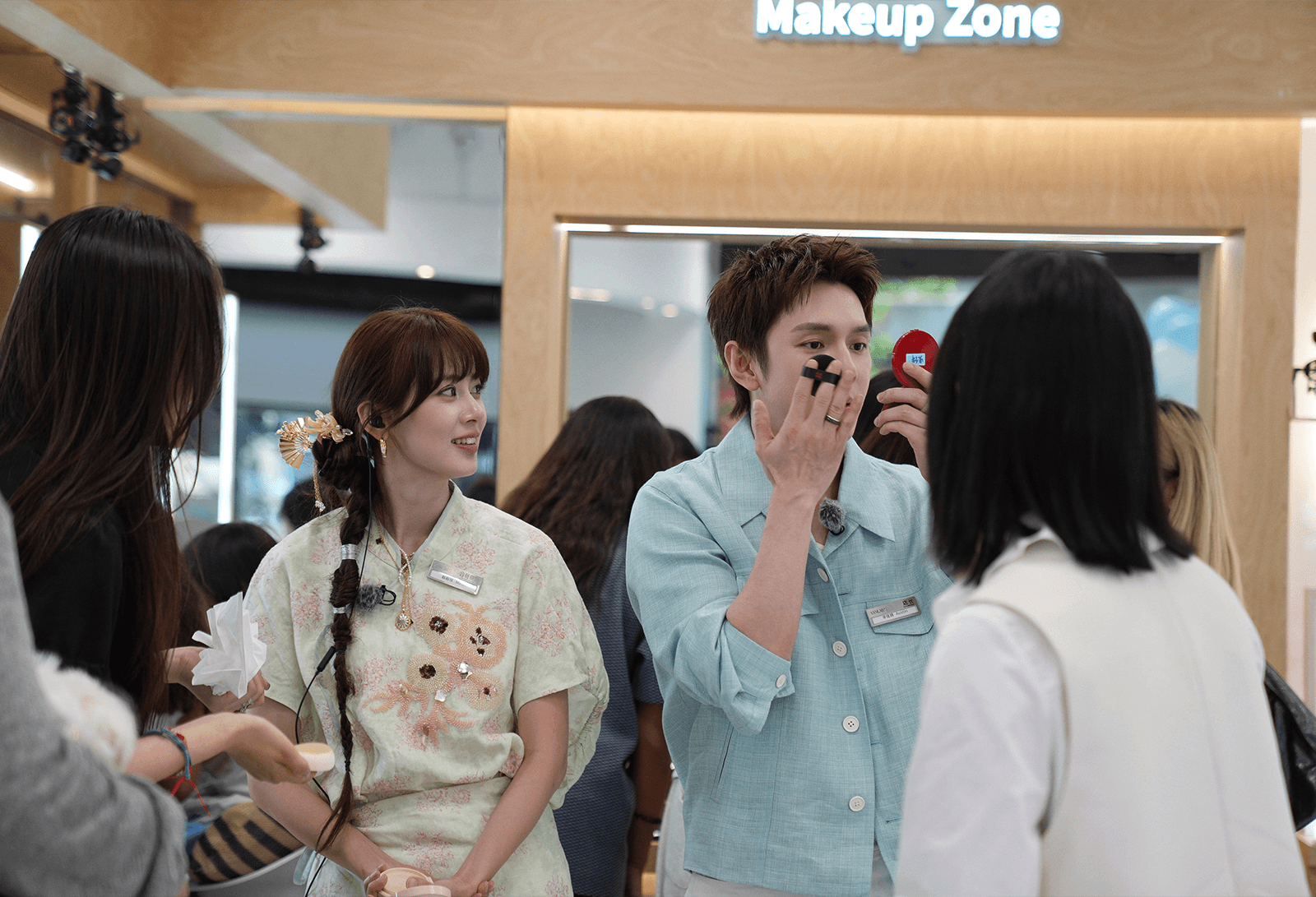
China’s manufacturing capabilities are already embedded throughout the global beauty industry. Multinational companies rely on supply chains and production hubs across cities including Shanghai, Hangzhou, and Guangzhou. Yet comparatively few Chinese beauty brands have achieved the international cultural recognition associated with French beauty, J-beauty, or K-beauty.
Li believes the gap is no longer primarily about product performance. “What Chinese brands need to learn from international brands is how to tell a brand story and build a strong brand image,” he said. “That is something we’re still developing.”
YanLab’s answer is to place commerce within a wider narrative. The store includes an exhibition titled Origin of Beauty, which presents C-beauty through its history, botanical heritage, scientific research, and manufacturing capabilities. “We want European consumers to understand the history of Chinese beauty, our exploration of botanical ingredients, and our technological capabilities,” Li said. “Chinese products have strong hard power in all three areas.”
The phrase “hard power” is revealing. Chinese brands have become highly skilled at rapid product development, advanced formulations, manufacturing scale, and digitally driven sales. What many still lack overseas is the softer infrastructure of global brand building: emotional resonance, recognizable visual codes, cultural storytelling, and consistent market positioning.
That is why Partner Season II brings multiple companies together rather than focusing on a single hero brand. The project attempts to present C-beauty as a category with shared capabilities, rather than a scattered collection of unfamiliar products.
Li repeatedly pointed to K-beauty's success in Europe and the US as proof that an Asian beauty category can move from niche interest to mainstream influence. His admiration, however, comes with an implicit warning. Korean beauty benefited from a broader cultural ecosystem that made its products easier to understand, desire, and share. Chinese beauty cannot assume manufacturing excellence will automatically create the same effect.
He also rejects the idea that advertising investment alone can solve the recognition problem. “I don’t believe a single brand can go global simply by spending money,” he said. “It requires the combined effort of an entire industry.”
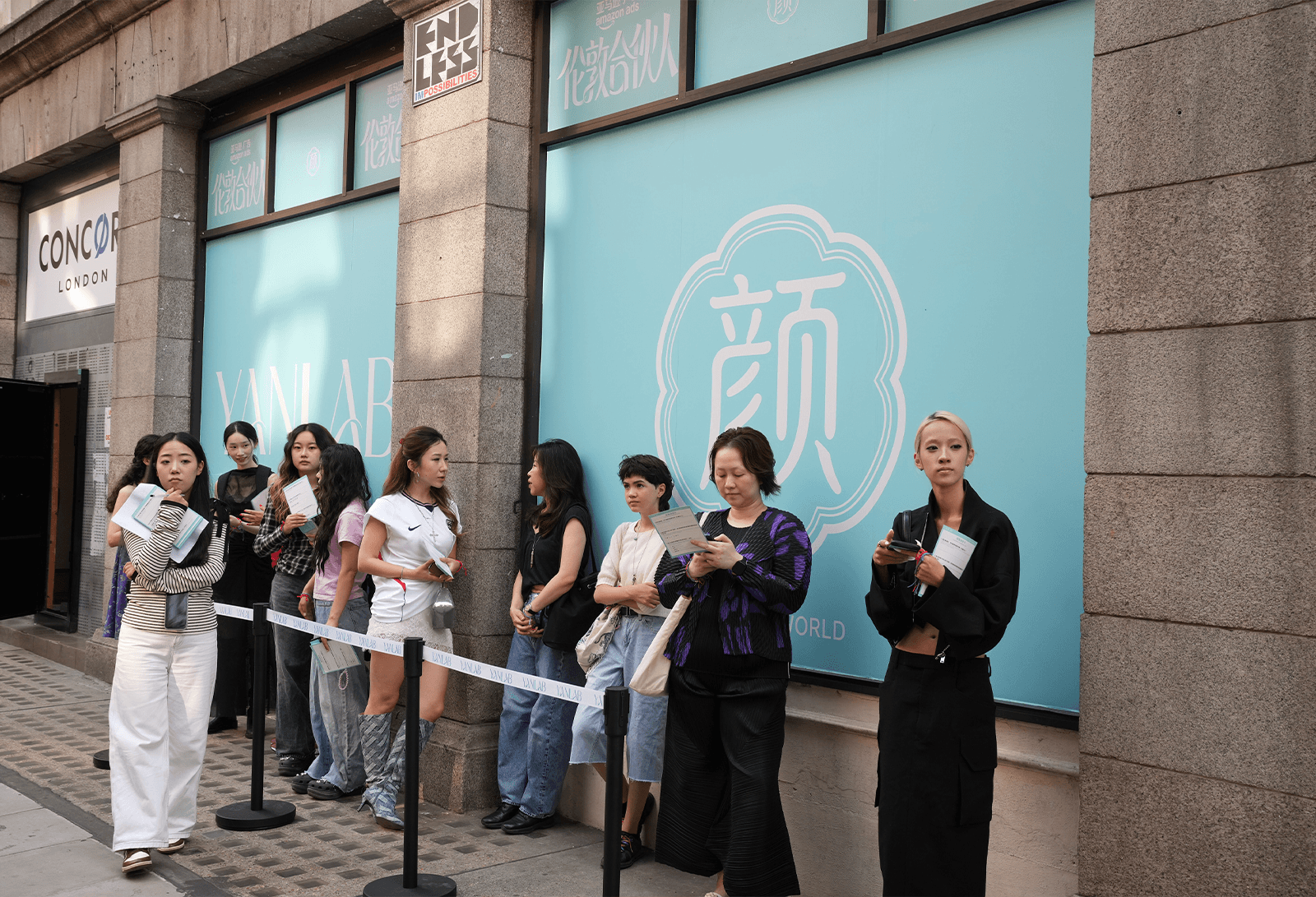
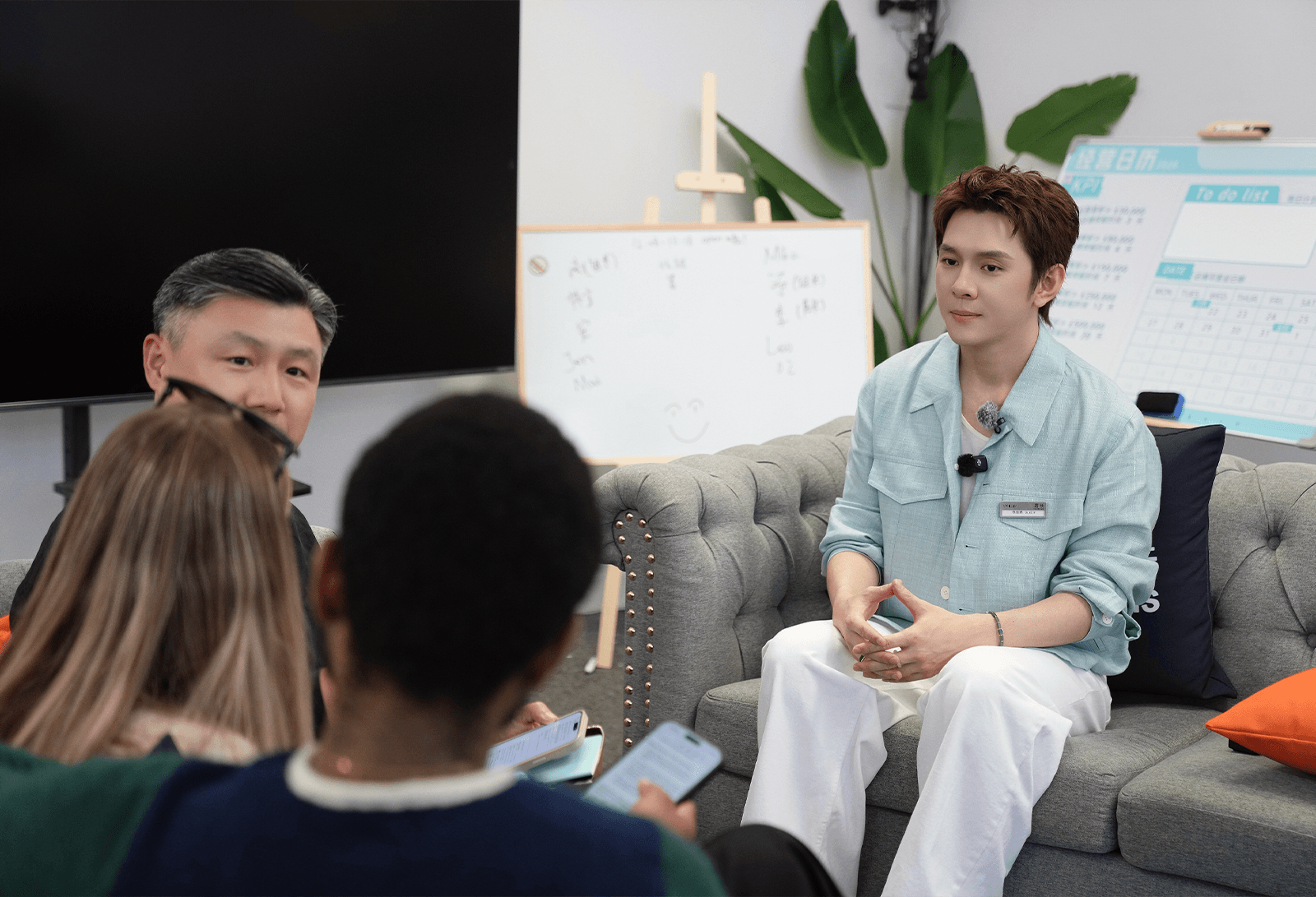
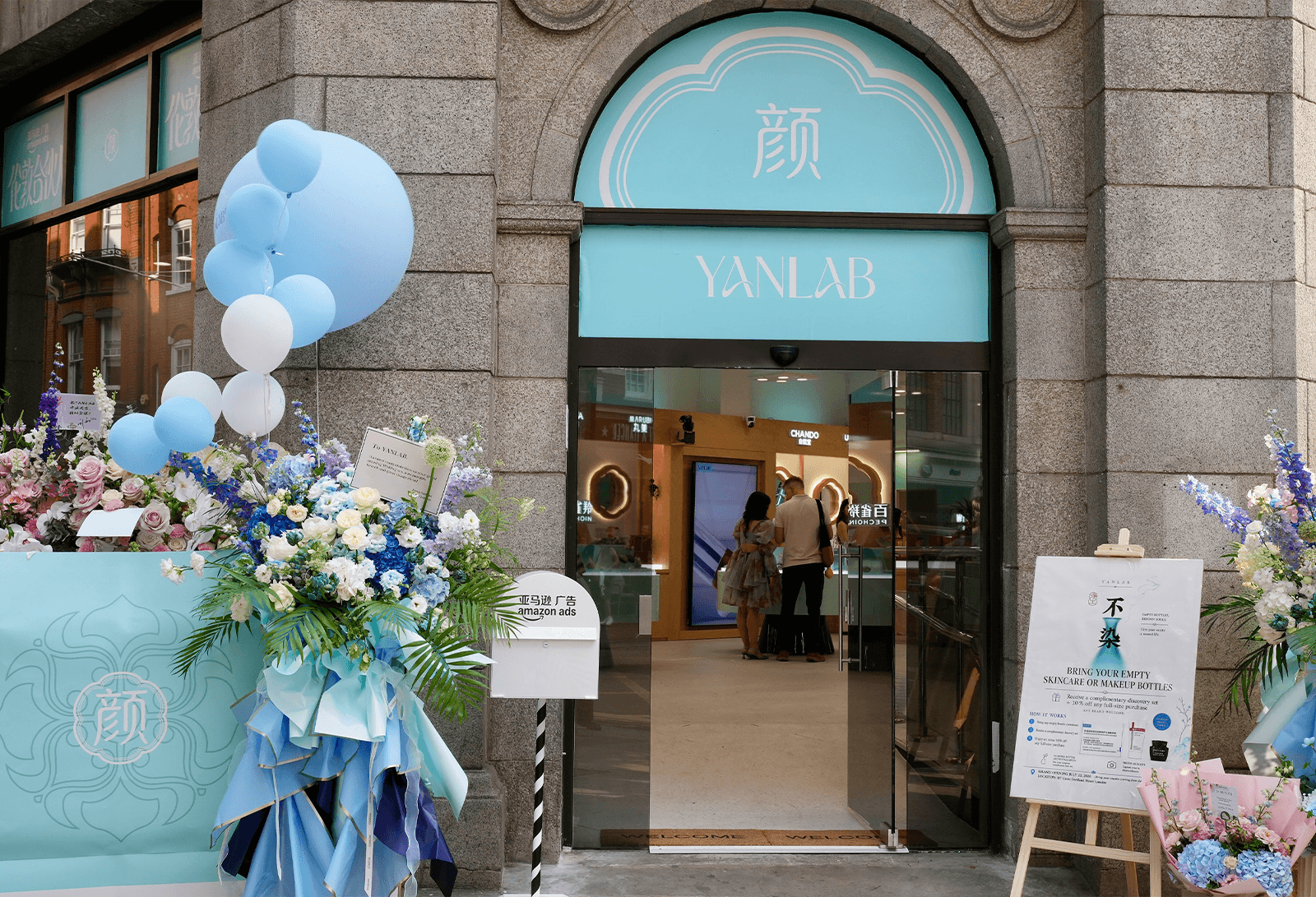
For all the research conducted before opening, some of the clearest insights arrived once the celebrity partners began serving customers.
Li said London consumers demonstrated a higher level of interest and beauty knowledge than he had expected. Before the store opened, shoppers lingered outside, asking what was being built. Once inside, they asked specific questions about botanical ingredients, formulations, and Chinese skincare practices. “I expected people to be interested,” Li said. “I didn’t expect them to be so knowledgeable.”
The response also challenged the assumption that Chinese aesthetics need to be softened for Western consumers. Li said products with overtly Chinese packaging attracted considerable attention, particularly Pechoin, a 95-year-old heritage skincare brand whose jade-inspired bottles stood out among shoppers.
But for Wenjie, visual identity is only the starting point. She describes the tendency as the "fridge magnet effect": brands presenting instantly recognizable cultural symbols that spark curiosity but ultimately remain surface-level expressions of identity. "Symbols can knock on the door," she said. "But when consumers open that door, they need to find something deeper."
That, she argues, is where Chinese beauty's next challenge lies. Distinctive packaging may attract attention, but lasting global brands are built through the stories, heritage, and product performance that follow. The response in London suggested consumers were eager to engage with that deeper narrative, showing as much interest in Chinese botanical ingredients and beauty philosophies as they did in the products themselves.
Technology created a different entry point. Bixdo’s blue-light whitening toothbrush became one of the store’s most discussed products. One London-based customer bought one, then returned the following day to purchase five more as gifts. Other customers asked how long the store would remain open so they could return and learn more.
Those responses suggest that C-beauty's lack of familiarity may be both its greatest weakness and its biggest opportunity. Consumers may not yet recognize many of the brand names, but distinctive packaging, ingredients, and technology can create curiosity where conventional positioning cannot.
For Wenjie, physical interaction was central to changing perceptions. “When they touch the products, smell the fragrances, and hear the stories behind the brands, they begin to understand that Chinese beauty has its own identity,” she said.
A temporary store and a television series will not turn C-beauty into a global category overnight. But Partner Season II offers a public demonstration of what international expansion increasingly requires: local market research, cultural translation, differentiated products, physical discovery, and patient brand building.
The celebrity cast wasn’t simply there to cut ribbons or pose for photographs. Cameras followed them as they cycled through London's streets to promote the store, renovated the space, served customers, and navigated the day-to-day realities of running a retail business, turning the challenges of launching a beauty concept overseas into entertainment for millions of viewers.
The ambition behind YanLab is clearly larger than selling 14 brands in London. By combining celebrity influence, experiential retail, and real-time consumer insight, Partner Season II attempts to accelerate something far more difficult than product discovery: building international recognition for C-beauty as a category. It is an effort to shift the conversation from what China can produce to what Chinese brands can represent globally.