Key Takeaways:
Interactive, Instagrammable, and sometimes scrappy: immersive marketing has become table stakes in beauty. From luxury skincare brand Tata Harper staging sensorial experiences on New York City’s High Line, start-ups like Blueland experimenting with low-budget, guerrilla-style viral stunts in Target stores, and multi-brand collectives like K-Beauty World bringing Korean beauty’s most popular products together in pop-up marketplaces, consumers are lining up for more than products these days. They’re buying into a moment, a story, and the brand’s universe.
It’s no surprise then that brands are doubling down on experiential strategies. According to Gradient’s 2024 State of Experiential Marketing report, 84% of beauty and skincare brands have increased their experiential budgets over the last three years, with two-thirds now dedicating 10%–30% of total marketing spend to immersive activations. For most, the goal isn’t just driving sales anymore, it's creating content, testing ideas, building out the brand’s world and connecting with their community in real life.
But as growth softens and budgets tighten across the beauty industry, the question is no longer whether immersive marketing matters—it’s how to make it meaningful. When does it make sense to create a splashy moment, and when do smaller, repeatable experiences drive deeper connection? In an era when consumers expect more authenticity and measurable value, beauty brands are learning to rethink what impact really looks like.
The Wins—and Pitfalls—of Going Big
For much of the past decade, beauty’s go-to marketing strategy has been to show up big. That has meant shutting down busy blocks in New York’s SoHo shopping district to launch new products, staging exclusive pop-ups at festivals like Coachella or high-frequented international airports, and even massive college campus tours traveling from coast to coast.
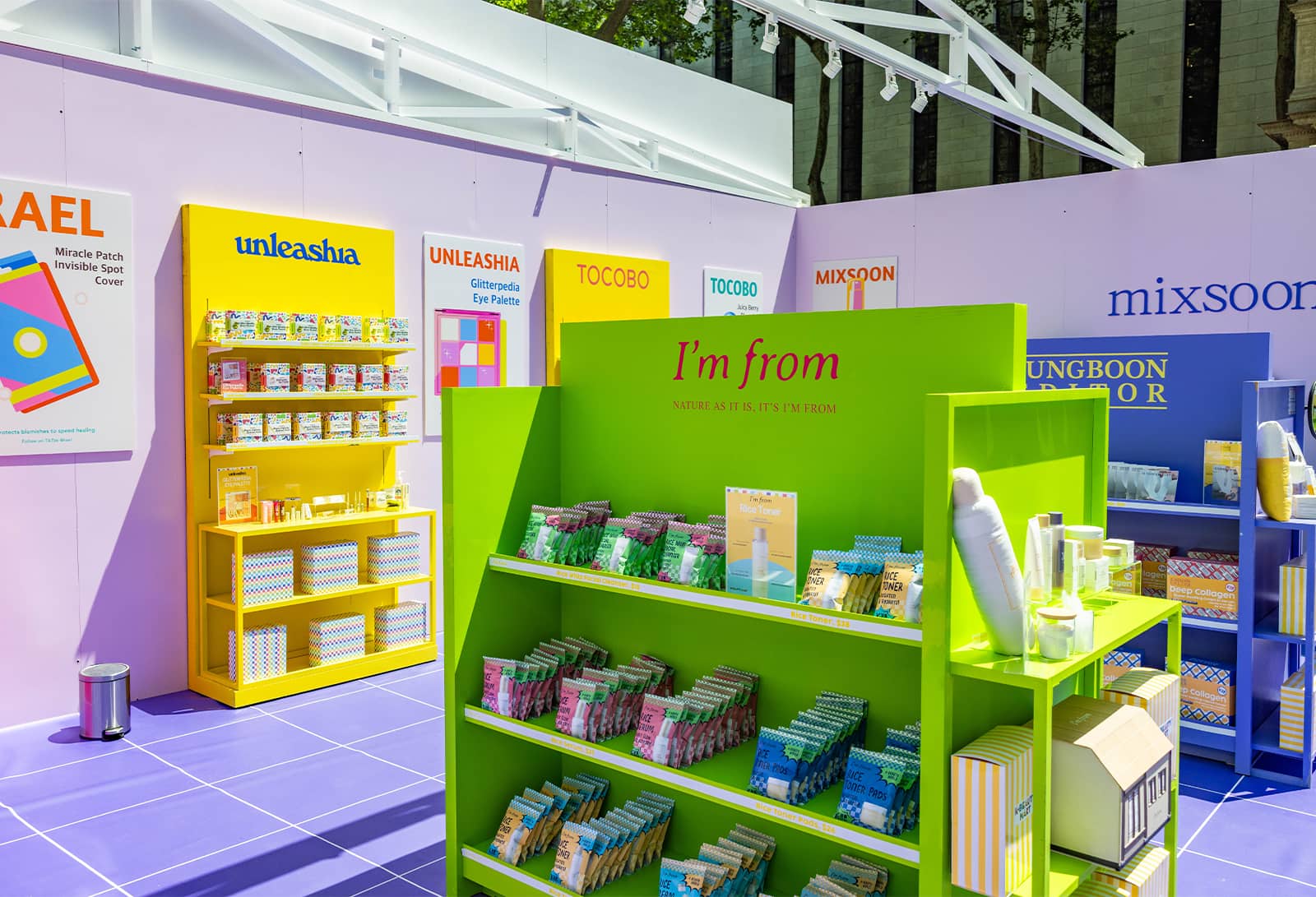
That’s exactly what K-Beauty World set out to do with its K-Beauty Mart Tour, a pop-up experience inspired by Korea’s now TikTok-famous convenience stores that offer a range of beauty products from the hottest skincare and makeup brands straight from Seoul.
To start, the brand brought its experiential concept to five major US markets: Los Angeles’s Westfield Century City; SXSW in Austin; Chicago’s Lollapalooza; RevolveFest at Coachella; and New York City at Bryant Park.
Founder and CEO Sarah Chung Park says the strategy was about “meeting consumers where they are,” not just on the shelves but also at cultural moments like festivals, malls, and events that mirror K-beauty’s lifestyle aspirations. It also aimed to connect with consumers who might not be familiar with Korean beauty products or the large-scale retail concept itself.
“We wanted it to be the building of a conversation, not the end. It kind of feels like pop-ups are like speed dating. You don't have a lot of time to deeply connect with anybody … so what’s important is what comes after that,” Park told BeautyMatter.
Park admits that big, splashy moments do come at a hefty cost—and while they may capture an audience in real time, the true return on investment typically comes with strategic follow-ups post-event.
“Brands are still spending a lot of money [on experiential moments], because it's more meaningful to reach a lot of consumers one to one than to have an influencer endorse you,” she said. “Brands are not seeing the ROI of experiences because they're not connecting it post-event.”
To that point, she explained the two pivotal actions the brand takes in its events that have proven successful. One is surveying, Park explains.
“'It gives us a lot of insights into what consumers think about the K-Beauty category,” she added.
The second is through collecting contact information, such as emails and phone numbers, which the brand stores for future coupon offerings and more intimate direct-to-consumer marketing initiatives, including texting and personalized emails.
“Most brands are connecting with their community through borrowed platforms like TikTok and Instagram, so I think it's very important to have a direct relationship,” said Park.
The strategy paid off. According to the brand, over 13,000 attendees showed up across the five cities; 120,000 units of product were distributed throughout the entire tour. Brands present included Mixsoon, Sungboon Editor, I'm From, Some By Mi, Rael, NuTexture, Unleashia, Tocobo, Javin De Seoul, and Entropy Makeup.
The tour also delivered over 989.4 million in social reach, resulting in an estimated $4- $5.9 million in earned media value.
Building on the momentum of the brand’s pop-up success, K-Beauty World is launching a Latin America Tour to celebrate its launch into Ulta Beauty Mexico. Its first stop was in Mexico City at the Formula 1 Grand Prix from October 24 to 26, with brands including Mixsoon, I’m From, Neogen, Unleashia, Some by Mi, and Rael participating.
Why Scrappy Can Be Strategic
In today’s climate, not every beauty brand has the capital to invest significant financial resources on a single experiential activation. And because of that, as of late, some of beauty’s most creative marketing efforts have come from the opposite end of the spectrum.
For example, Blueland, the sustainable cleaning brand, is rewriting the playbook on what experiential can look like. Instead of flashy takeovers or Instagram-worthy activations, the team has taken a more guerrilla-style approach to immersive marketing.
A few months after launching at Target in May, co-founder and CEO Sarah Paiji Yoo brought trash cans into the retailer to “throw away” harmful cleaning products and also sent consumers home with free Blueland products. Yoo also cleaned Target bathrooms with Blueland products in-store.
This is a part of a larger stunt marketing strategy that Blueland introduced in 2022 when Yoo cleaned Costco’s bathroom to introduce the launch of its bathroom collection.
“Between our CEO cleaning the Costco toilets and our fake cake of our Costco Toilet Bowl Cleaner, we got more than three million views [across social platforms] and spent a total of $1,500 all in,” Chapman said, adding that the total cost of the campaign was just on the cake alone.
Blueland’s approach reflects a growing shift in how brands define “experiential.” It doesn’t have to mean large-scale installations or long lines—it can be quick, authentic moments that bring a brand’s values to life in unexpected places.
“Our overarching and guiding philosophy is to break through the noise instead of creating more noise,” said Hannah Chapman, Head of Brand at Blueland. “We have extremely limited budgets … so everything we do should be social first. If we are considering a pop-up, the first question we ask ourselves is, ‘How is this going to translate onto social? And how is someone who's not in [the city of the pop-up] going to consume the pop-up in their own way?’”
Chapman adds that as a smaller brand, social metrics are key to defining success from its campaigns. Branded search on Google Trends and Amazon-branded search, outside of traditional earned media value, are benchmarks the brand looks to measure consumer engagement.
In total, Blueland has garnered over five million views on various videos of Yoo cleaning toilets in retailers.
For Luxury, Curated and Beautiful Moments Still Reign
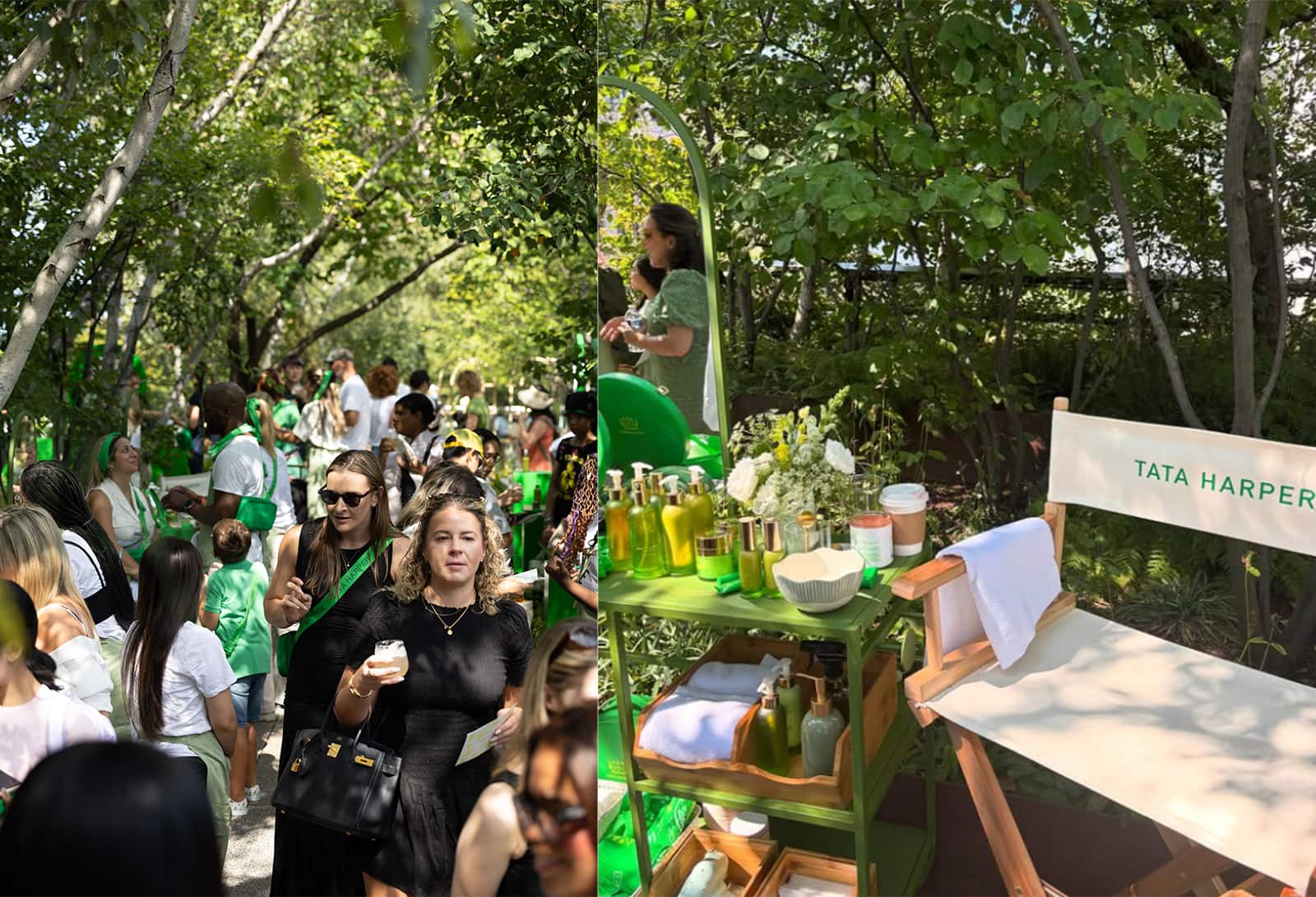
Even in the luxury sector, experiential marketing is evolving—but the focus on storytelling, infusing the brand’s ethos and beautiful aesthetics still remains a throughline. During New York Fashion Week in September, Tata Harper transformed the well-known High Line landmark into a “Radiance Runway” for its first-ever experiential activation, offering express facials and makeup touch-ups.
For a brand that has built its reputation on clean, high-performance skincare, the activation was about bringing Tata Harper’s radiant story and point of view, inviting consumers to experience the textures, nature-inspired rituals, and restorative, sensorial details that make the brand unique.
“Luxury consumers expect a level of craft, care, and immersion that goes beyond scrappy,” said Shay Bennaim, Global Brand President. “That doesn't mean everything and every activation has to be huge, but it does mean that details matter. Every touch point should feel intentional, beautiful, and true to our brand and what we do.”
The event was designed to appeal to all the senses—from lush greenery that mirrored the brand’s farm-to-face origins to elevated design details that naturally lent themselves to social sharing. But for Tata Harper, Instagrammability wasn’t the goal—it was the outcome of creating something authentically aligned with the brand’s ethos.
“Luxury today is about cultural relevancy and cultural currency—and being part of the right conversations,” Bennaim said. “This activation allowed us to meet consumers where they are and give something that's an unforgettable experience to talk about.”
When it comes to return on investment, Bennaim shared that it’s less about short-term metrics or even sales, and more about learnings and insights to inform future strategy. “What’s important to us is understanding what resonated with our guests, which touch points drove the most engagement, and what translated online,” to help design future experiences, said Bennaim.
Rethinking Experiential Strategy
Creative isn’t the only shift shaping the beauty industry’s experiential landscape; it’s also operations. With economic headwinds and a slowdown in spending, brands are rethinking in-house vs. agency events and experiential planning.
Bringing experiential planning in-house gives brands more control and agility, allowing them to experiment frequently, refine their approach, and create repeatable models without reinventing the wheel each time. It also opens opportunities for strategic partnerships with retailers, other brands, and cultural institutions, extending reach while maintaining brand consistency.
Ultimately, Paula Floyd, founder of retail agency Headkount, which helps brands increase performance through education and experiential activations said, it boils down to “creating experiences at the right time,” which is what drives meaningful return on investment. Brands that combine careful planning, operational efficiency, and smart collaborations are better positioned to deliver activations that resonate with consumers—and translate buzz into measurable impact.
Delilah Owens, CEO and co-founder of DripComm, an integrated marketing and creative communications agency, agreed that operational strategy matters as much as creativity, which is why she says the role of agencies has fundamentally shifted. “The brand-agency relationship is evolving because [brands] need more than just someone who can execute. [They] need someone who can think strategically,” she said, noting that experiential marketing only works when it’s tied to a broader brand strategy. DripComm has created experiential and strategic stunts for brands like Orly, Smashbox, and DND Gel.
She added that brands are increasingly looking for partners who understand culture, storytelling, and integrated marketing—not just event production. “When you go to a partner who is only a one-trick pony … that doesn’t help the brand move forward. That’s when you spend a lot of money on a splashy event and you don’t see an ROI from it.”
When deciding between keeping experiential efforts in-house or outsourcing them, Owens said the choice often comes down to scale and ambition. “If they’re looking to connect with culture, it’s probably best to connect with an agency … but if you have somebody in-house who can do smaller events, then do that, save the money. But if you’re looking to do something larger—something that actually is 360—it’s probably a good idea to get a partner.”
Where Experiential Marketing Goes Next
A hybrid approach where brands invest in collaboration or large-scale experiences—think Sephoria or Ulta Beauty World’s immersive events—and those embracing repeatable experiences that build consumer loyalty and brand authenticity seems to be a growing approach to experiential marketing strategies.
“Anchor events [like Sephoria and Ulta Beauty World] are great for reaching a huge, broad audience quickly,” Bennaim said. “We value those partnerships, but independent experiences allow us to tell our story in a highly curated, intimate way.”
To Bennaim’s point, large-scale partnerships offer visibility and an opportunity to be introduced to demographics, but they can also limit how deeply a brand can express its true identity or lean into its unique storytelling. Owned activations and experiences, on the other hand, give brands full creative control and allow for more meaningful, story-driven connections with their audiences.
Like Bennaim, Chapman and Park agree that a hybrid—balancing major tentpole moments with ongoing, brand-led experiences will define the next phase of experiential marketing.
Owens echoed this shift, explaining that experiential marketing is being shaped by both cultural burnout and consumers’ hunger for real-world connection. “We are in an attention recession. We are so inundated and distracted with just so much content.”
Because of that, she expects the next era of experiential marketing to prioritize intimacy and depth. “People are searching for these IRL connections. ‘Where can I go to touch grass, where can I be next to a human?’”
Looking ahead, Owens predicts brands will increasingly tap into niche communities, hybrid digital-IRL formats, and new technologies. “Digital and AI-enabled experiences … and these community-first activations—experiences for subcultures and not masses—that’s what I would watch out for.”