What makes one beauty ad quietly scale for over a year, while another burns out in less than a week?
In an environment reshaped by algorithmic shifts, rising creative fatigue, and the collapse of old targeting tactics, beauty performance marketing is being redefined. Ad longevity—not virality—is emerging as the new metric of success.
To better understand this shift, Evolut analyzed 500 top-performing beauty ads from 50 international brands, from trending Gen Z companies to trusted clean skincare leaders. What we found is that creative strategy, not just spend, separates the brands scaling with consistency from those chasing one-off wins.
Here are the most important signals that shaped performance creative in 2025.
The Return of the Hero Format
Despite ongoing hype around fast-cut TikTok trends and raw creator content, the most resilient ads in the dataset shared a common trait: they were structured.
These were not random UGC clips or aesthetic product shots, they were modular, message-driven assets built around proven creative frameworks. The most effective format? A blend of problem-solution storytelling, real-time demos, and visual proof, often delivered in 20–30 seconds or less.
This type of structured, intent-driven creative is exactly what Meta’s Andromeda delivery engine favors—content with a clear value arc that can be mapped to specific user intent, not just aesthetic or trend relevance.
Brands like Youthforia, Naturium, and Topicals consistently reused this framework with minor iterations, generating ad lifespans exceeding 600 days in some cases.
Why UGC Still Wins
UGC continues to dominate performance creative, but the winning ads didn’t just feel authentic. They were designed to convert.
Across the dataset:
The takeaway? UGC works, but only when guided by a clear narrative and performance structure, not just vibes.
Offers Convert, Stories Scale
Across the dataset, the majority of short-lived ads (under 90 days) were offer-driven, anchored in urgency or time-sensitive messaging.
These creatives did exactly what they were designed to do: drive immediate action. But while effective, they also tended to fade fast. Offer-based ads typically lacked the depth or modularity to extend beyond the campaign window. Their average lifespan was significantly shorter compared to storytelling or education-led creatives.
Offer-based ads are powerful short-term levers, driving urgency, and capitalizing on seasonal momentum; they’re essential tools in the performance mix. But if you want to build creative ad longevity, pair them with deeper, narrative-driven campaigns that can scale over time.
This aligns with how Meta’s new algorithm evaluates creative performance: urgency-led ads spike quickly but provide limited signal depth, while narrative- and education-driven creatives generate richer engagement signals that allow the system to sustain delivery over longer periods.
Landing Pages Matter More Than Funnels
In this study, 61% of top-performing ads drove traffic directly to PDPs (product detail pages), not quizzes or multi-step editorial flows. This means that most of the best ads didn’t rely on complex pre-purchase journeys or personalization flows. Instead, they took users straight to a clear, conversion-ready page where the product was front and center.
High-performing beauty brands are simplifying the post-click experience. The most successful brands made sure that the PDP closed the loop:
Beauty brands that approached the PDP as an extension of their ad creative, not just the final step in a sales funnel, consistently performed better.
Creative Structures Behind the Top Performers
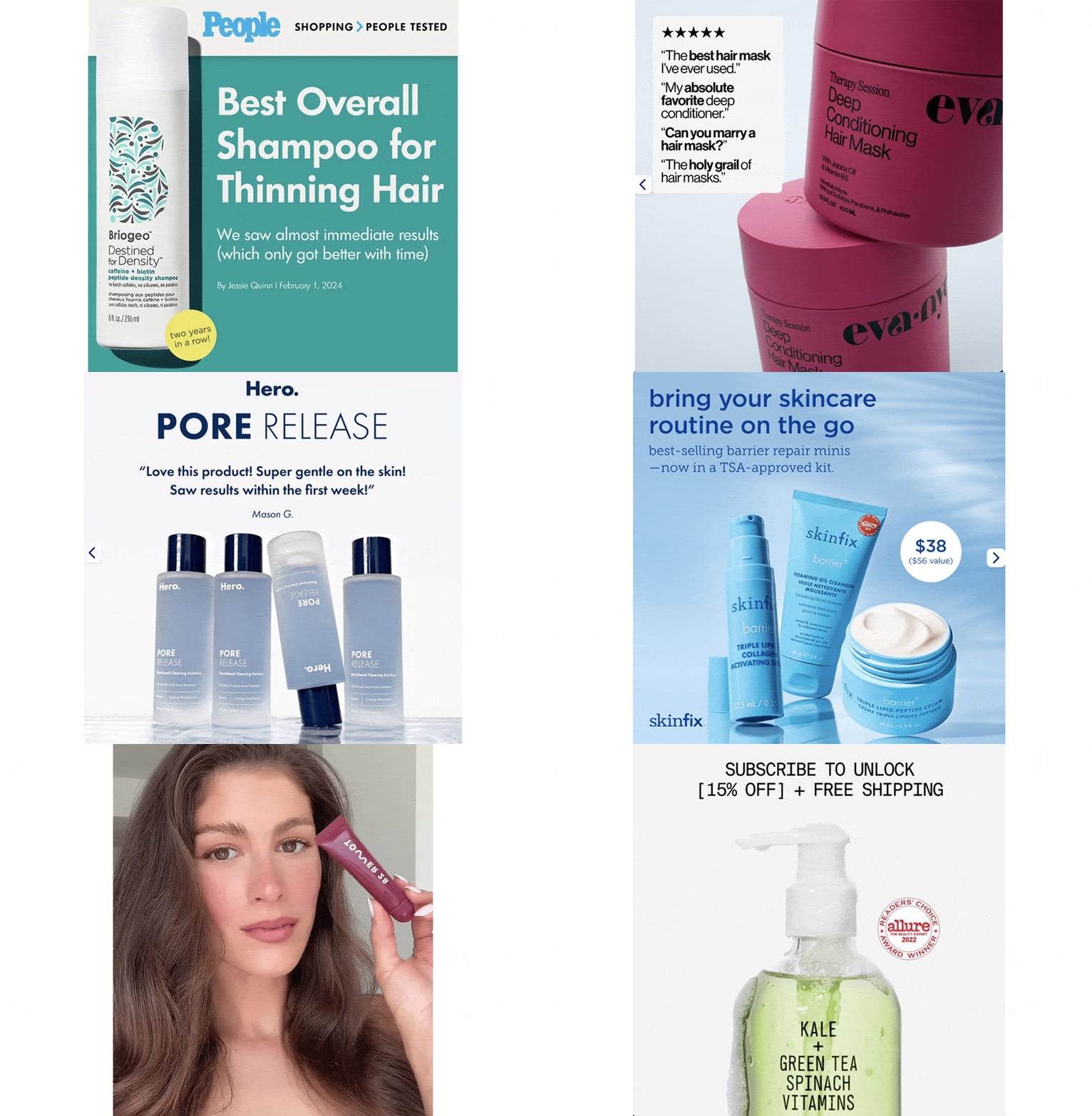
Among the 500+ top-performing ads analyzed, three creative type + format combinations stood out across categories and platforms:
1. Demonstration in UGC format
With nearly 39% of all winning ads falling into this category, this was the clear frontrunner. A creator or user shows how the product works—often within the first few seconds—using real-time application or transformation.
2. Lifestyle in video format
While not always product-focused, lifestyle creative made up 17% of top ads and played a key role in longer-lasting campaigns. Typically captured in natural light with minimal production, these ads presented the product as part of a daily ritual—a bathroom shelf, a glow-up moment, a no-makeup routine. Whether image-based or lo-fi video, their strength was mood.
3. CTA-heavy messaging in single-image format
Often overlooked in favor of storytelling, direct-response ads still held their ground, particularly in time-sensitive launches or promotional pushes. They performed well in bursts and showed up most often around key retail moments.
Across every category, the most successful ads in 2025 weren’t reinventing the wheel, they were repeating proven creative structures with precision.
What This Means for Beauty Marketers
Performance marketing in beauty is maturing. If 2025 was the year of “creativity meets conversion,” 2026 will be defined by intentional differentiation, both in what you say and how you say it.
Meta’s Andromeda engine has made one thing clear: creative inputs are now the primary lever of scale. Not targeting. Not structure. Your success on paid platforms hinges on feeding the algorithm-diverse, message-driven assets, each designed to match a distinct customer motivation, not a demographic guess.
To grow in 2026, beauty marketers must stop thinking in funnels and start thinking in frameworks. Creative is your strategy now.