Miranda Priestly doesn’t raise her voice. She doesn’t have to. Somewhere between a withering glance and a perfectly timed “That’s all,” an entire ecosystem moves: designers, editors, assistants, and now, beauty brands.
Because in 2026, if you want to understand the business of beauty, you could do worse than imagine yourself standing in the Runway closet, being told—calmly, devastatingly—that your product isn’t just a product. It’s a cultural artifact. It needs to mean something.
Enter The Devil Wears Prada 2. The sequel to The Devil Wears Prada from 2006 isn’t just revisiting a fashion fantasy; it is quietly rewriting the rules of brand collaboration. What was once about proximity to Hollywood has evolved into full narrative participation. This time around, beauty brands aren’t waiting in the wings. They’re in the script.
The original Devil Wears Prada defined aspiration through transformation, before-and-afters, gloss, and glamour. The sequel, however, is about endurance: power that compounds, relevance that evolves. That thematic shift has given beauty brands a richer narrative to plug into, and they’re taking full advantage.
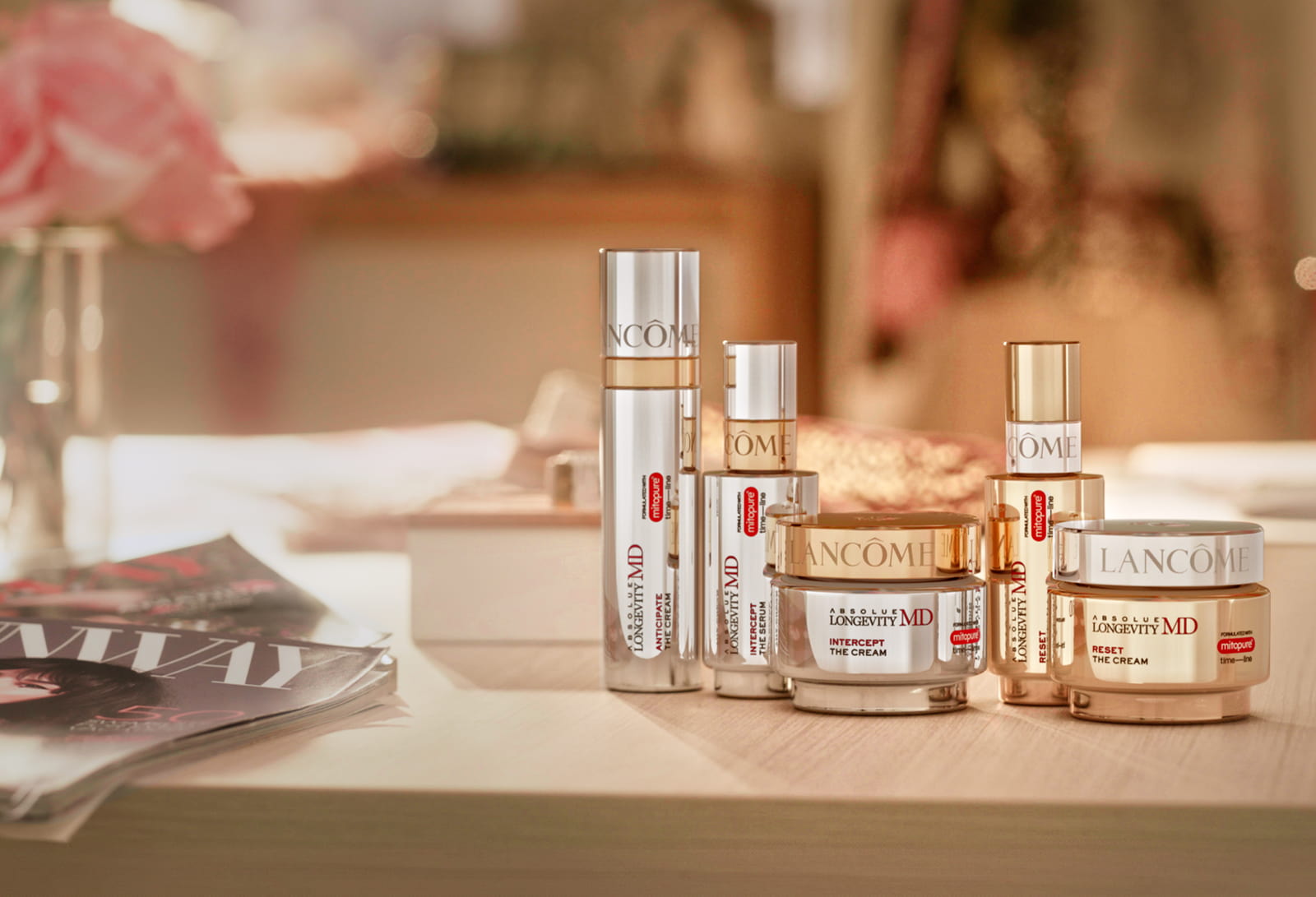
At Lancôme, the alignment is almost too perfect. “While the first film was about a makeover and immediate glamour, the sequel focuses on how icons elevate their power, relevance, and vitality over decades,” Ramzy Burns, General Manager of Lancôme USA, told BeautyMatter. That framing underpins the launch of Absolue Longevity MD, a skincare line rooted in cellular longevity science, positioned not as a quick fix but as a long-term strategy—mirroring the arc of Miranda herself.
Rather than sitting adjacent to the film, the product is conceptually embedded within it. In a behind-the-scenes–style clip, Pauline Chalamet, who plays the latest magazine underling, faces a chaotic day at Runway magazine; the clip captures the heightened pressure, speed, and absurd precision that define the film’s world. Chalamet’s character is tasked with an “impossible” request to find the Absolue Longevity range for Miranda—echoing the original film’s iconic Harry Potter manuscript hunt, but updated for a more frantic, hyperaware media landscape.
What’s important is what isn’t happening: the clip isn’t a polished trailer or a traditional ad. It feels like content—shareable, character driven, almost native to social feeds. And in doing so, it expands the film beyond a single narrative into an ongoing universe of moments, tone, and texture.
For beauty brands, this shift is critical as it creates a living, breathing context where products don’t need to be formally “placed” to feel relevant. Instead, they can align with the franchise's energy: high performance, detail obsessed, always under scrutiny. The clip reinforces that Runway isn’t just about how things look; it’s about how quickly and flawlessly they come together under pressure.
Rather than treating the film as a marketing moment, Lancôme uses it as a narrative device. The product becomes symbolic, positioned as skincare for every stage of ambition, from intern to editor-in-chief. “It’s not just a product launch; it’s a new approach to skincare,” Burns claimed. In other words: less placement, more plotline.
L'Oréal Paris took a similarly immersive approach to a branded campaign, but with blockbuster scale. The brand launched its collaboration with the film in a campaign rollout during the Oscars. The campaign reconstructed the Runway office, featuring Kendall Jenner and Simone Ashley in a scripted narrative that mirrors the film’s tone. L'Oréal Paris Brand President Laura Branik said in a statement that she saw the collaboration as “a meaningful way to reinforce what L'Oréal Paris stands for: celebrating women who set the standard, on screen and in real life." The result is less an advertisement and more an extension of the cinematic universe.
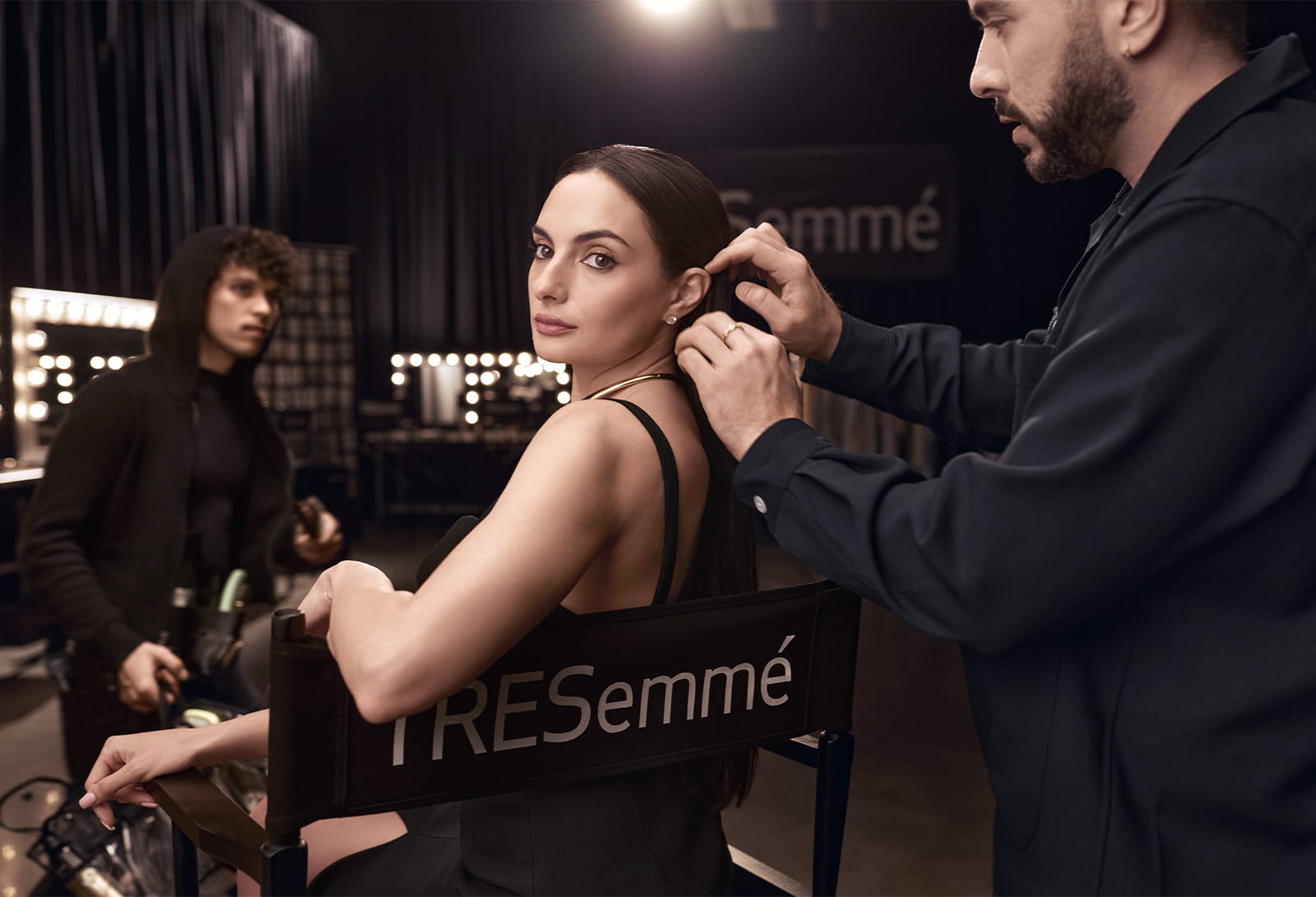
Alongside L’Oréal, a broader ecosystem of brands is building texture into that world. TRESemmé tapped into backstage urgency, aligning with the film’s pace and polish. Tweezerman leaned into precision, suggesting that in this universe, details aren’t optional—they’re everything.
For TRESemmé, the partnership goes beyond aesthetic alignment; it’s a continuation of the brand’s long-standing role behind the scenes of fashion’s most high-pressure moments. “TRESemmé has always shown up behind the industry’s biggest runway and red-carpet moments, including decades backstage at New York Fashion Week,” Yoni Klein, Head of Marketing, TRESemmé North America, told BeautyMatter. “Partnering with The Devil Wears Prada 2 as the film's signature hair brand is a natural extension of that legacy.”
The collaboration anchors the brand’s broader “Get Your Hair on the A-List” campaign, tied to the launch of its prestige-inspired A-List Collection. Rather than a single campaign spike, TRESemmé has built a multi-touchpoint rollout—from an Oscars broadcast debut featuring Paige DeSorbo and Christian Siriano to Today show integrations translating red-carpet looks into everyday styling. Premiere-week activations, including in-theater vending machines and special-edition product drops, extend the narrative from screen to shelf.
Crucially, the creative approach avoids leaning purely on nostalgia. Instead, it reframes the film’s authority through “A-List energy”—a modern bridge between Runway’s fashion hierarchy and TRESemmé’s positioning around accessible prestige. “A-List hair should feel attainable, not exclusive,” Klein added, reinforcing the brand’s role in translating editorial influence into everyday consumer behavior.
Meanwhile, Tangle Teezer translates the film into a tactile experience. Its limited-edition brush—rendered in a metallic, high-gloss red with black teeth—captures the Prada palette in a way that feels both collectible and usable. “This collaboration is truly a moment where nostalgia, fashion, and beauty collide,” Senior Brand Manager Kirsten Garlitos told BeautyMatter. “It is a way for consumers to celebrate something so ingrained in culture, through a product they use every day.” The common thread: These aren’t products placed into a film; they’re products designed to exist within its logic.
What’s unfolding around The Devil Wears Prada 2 reflects a broader recalibration in the industry. Entertainment IP is no longer a spike in the marketing calendar—it’s a system. For Tangle Teezer, the partnership builds on prior collaborations with Mattel and SKIMS, forming a pattern of culturally timed drops. Each one expands reach while reinforcing brand identity. “Each of these partnerships has helped us reach new audiences, while remaining true to our core products,” Garlitos noted.
Lancôme frames it even more explicitly: “Entertainment IP has become a strategic pillar… not just a momentary amplification tool.” The value lies in tapping into stories consumers already care about, leveraging emotional equity rather than building it from scratch.
As these partnerships evolve, so too does the definition of ROI. Tangle Teezer is tracking “organic engagement, earned conversation, and cultural resonance,” from sentiment to share of voice. The early signals are strong: within six days of launch, its Prada-inspired brush hit #4 on Amazon’s Hot New Releases list.
Lancôme, meanwhile, is thinking in longer timelines. “There is no perfect measure for share of heart,” the CEO admits. Traditional metrics like Media Impact Value remain relevant, but the real goal is cultural longevity, being part of a conversation that extends beyond launch.
In the context of The Devil Wears Prada 2, that’s particularly potent. The film arrives with a built-in, cross-generational fanbase and a narrative already embedded in popular culture. For brands, that’s not just visibility—it’s velocity.
There’s a quiet tension in these collaborations: the need to maintain brand identity while surrendering enough control to feel authentic. Lancôme describes it as co-creation. “It’s less about relinquishing control and more about co-creating stories within a shared legacy.” That means allowing the film’s narrative to lead, whether through product integration or talent-led storytelling.
Tangle Teezer’s work with Disney Consumer Products follows the same principle. “Authenticity comes from natural alignment,” said Garlitos. The collaboration works because it doesn’t try too hard; it simply fits.
What makes these partnerships particularly effective is their dual impact. For new consumers, they offer an accessible entry point, a familiar story, a recognizable aesthetic, and a reason to engage. For existing audiences, they deepen emotional connection, turning products into artifacts of a shared cultural moment.
“The Devil Wears Prada collaboration does both simultaneously,” Garlitos explained. It rewards loyalty while inviting discovery. Lancôme sees a similar dynamic, especially across generations. Younger consumers encounter the brand through the film, while existing customers see their trust in the brand reinforced by innovation.
What The Devil Wears Prada 2 ultimately reveals is how far the relationship between beauty and entertainment has evolved.
This is no longer about borrowing relevance—it’s about participating in it, and about understanding that in a world where attention is fragmented and authenticity is currency, the most powerful thing a brand can do is step into a story that already matters.
Because in the end, this isn’t just about a brush, or a serum, or even a film. It’s about that moment in the Runway office, when everything sharpens, expectations rise, and you realize that to belong here, you don’t just need to look the part. You need to be part of the narrative.