





For more than a decade, Britain’s FaceGym has occupied a unique position within the beauty industry. While many treatment businesses compete on services, products, or practitioner expertise, the brand built an entirely new category around the idea that facial muscles can be trained much like the body. Now, the company is preparing for its next stage of growth.
The facial fitness pioneer announced the launch of its UK franchise model alongside four new studio openings in Cambridge, Richmond, Manchester, and Liverpool Street, London. The rollout marks the first phase of a three-year, 28-store UK expansion.
The company used the Reliance Retail minority investment from last year to set up and launch the franchise. With this asset-like franchising model, the partner is responsible for the CapEx and setup investment, enabling a quicker, less capital-intensive route to expansion. It also revealed that the CapEx required to open a new FaceGym studio ranges from £250,000 ($335,835) to £350,000 ($470,190), depending on the location's size and the level of intervention required.
This move is a significant one for the business. It highlights strong structural demand behind brands like FaceGym as they expand their physical locations. Founded in 2014 by Inge Theron, FaceGym has spent years educating consumers on facial fitness while building a hybrid model spanning treatments, skincare, devices, and education, with revenue split equally, according to the brand. The challenge today is no longer category awareness, but scale.
“This marks a significant milestone in FaceGym’s evolution as we move into a new phase of scalable growth through franchising,” CEO Angelo Castello said in a statement accompanying the announcement. “We have built a brand that sits at the intersection of beauty, fitness, and results-driven skincare.” The question now is whether the brand can transform a concept that has historically relied on highly trained practitioners and experiential retail into a repeatable, nationally scalable business model.
FaceGym currently operates 15 studios globally, according to the company’s own figures. The brand also reports 1.5 million social followers, a portfolio of 20 skincare and tool products, and says a FaceGym workout is performed every 2.5 seconds globally. The way FaceGym describes itself has changed considerably since launch. “From the beginning, the core idea was that the face has muscles just like the body, and that consistent training can deliver visible, long-term results,” Castello said to BeautyMatter. That positioning has become increasingly relevant as consumers shift towards preventive wellness, longevity, and noninvasive treatments.
Five years ago, customers largely saw the brand as a cosmetic treatment, according to Castello. Today, they increasingly view facial fitness as part of a broader wellness routine, partly due to the rise of trends like gua sha and facial yoga. “People largely approached us through a beauty lens. They were looking for glow, sculpting, or anti-aging benefits,” he said. “Today, consumers increasingly see facial fitness as part of a broader self-care and longevity routine.”
The dynamism is proof of the changes going on across beauty and wellness. Consumers are investing more heavily in preventive treatments while seeking alternatives to invasive aesthetic procedures, a trend that has become a dominant growth driver across the UK and EU. At the same time, wellness categories that were once considered niche have become mainstream spending priorities. The spa industry alone is valued at around $3.27 billion, while workplace wellness is worth $3 billion, excluding broader fitness and beauty services.
For FaceGym, that consumer evolution has accelerated its own business transformation. “We now operate across treatments, skincare, devices, and digital education, which means the brand increasingly behaves like a holistic wellness ecosystem,” Castello said.
That distinction matters because service businesses alone can be difficult to scale. Treatments require labor, physical locations, and operational complexity. Products and devices create different economies. “We also had to evolve beyond thinking of ourselves purely as a service business,” Castello said. He also added that treatments remain at the heart of the brand experience, but scalable growth comes from creating an ecosystem where products, devices, and ongoing engagement extend the relationship with the customer far beyond the studio visit itself.
In many ways, FaceGym’s future ambitions resemble those of modern fitness businesses more than traditional beauty brands. Studios become the entry point, while revenue expands through recurring engagement, retail, and technology.
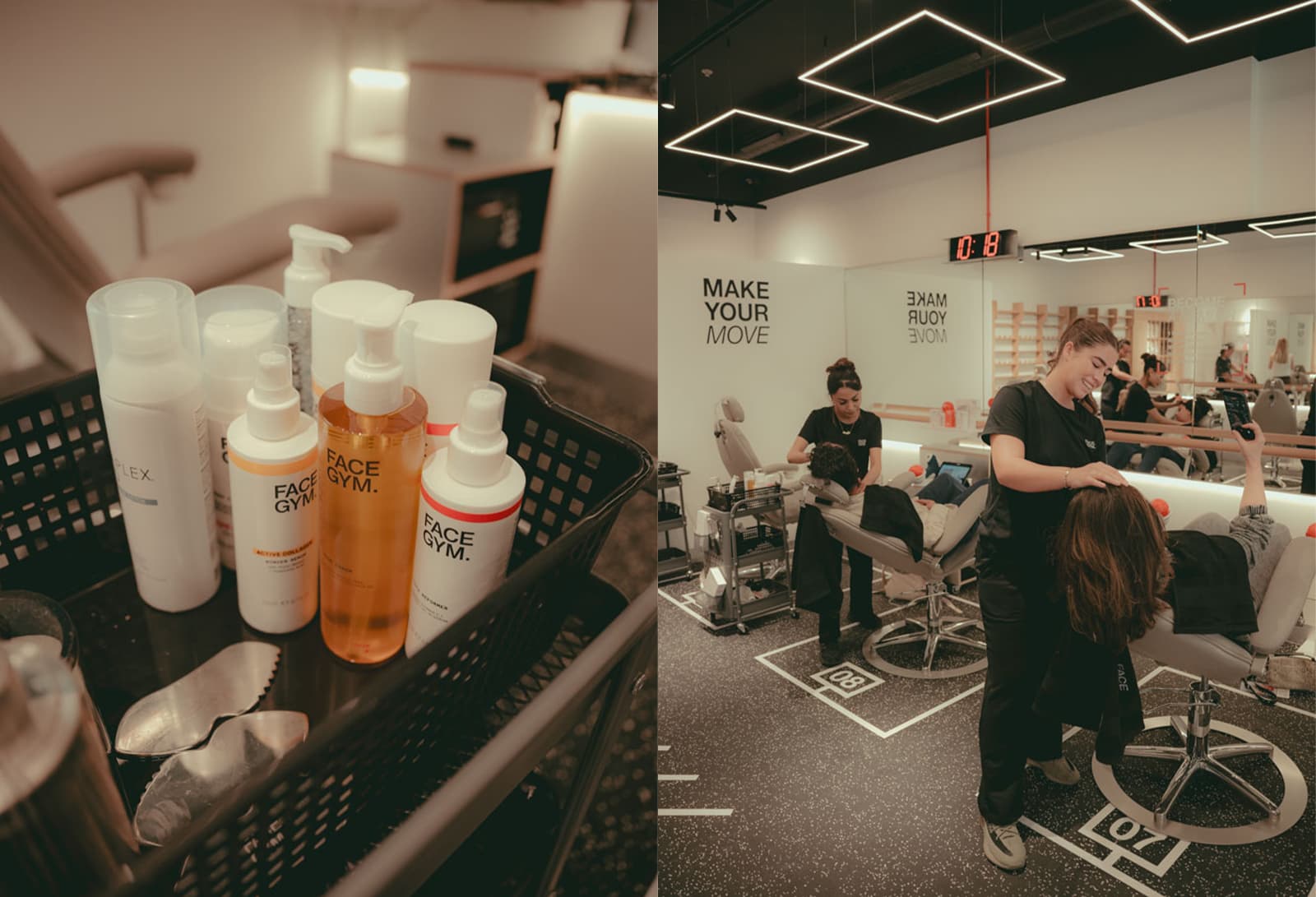
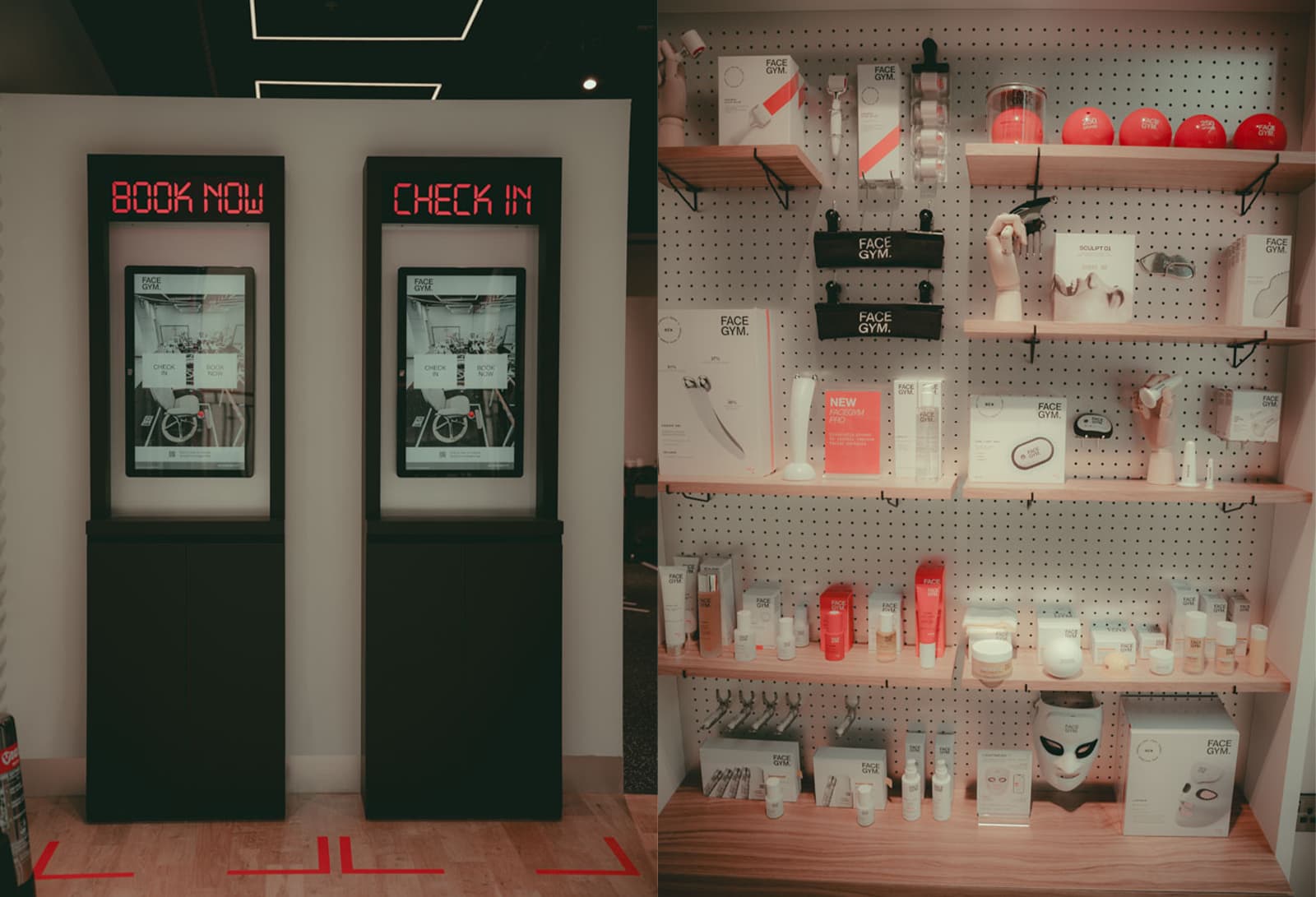
Although in New York alone the company operates on the Upper East Side (stand-alone studio), at Saks Fifth Avenue (shop-in-shop), Nordstrom NYC (retail partnership), and Zero Bond (private members’ club partnership), the timing of the UK-only expansion is not accidental. According to Castello, the business is operating from a significantly stronger foundation than it was five years ago. “The economics of our model are the strongest they have ever been,” he said. And he’s right. Industry data suggests that Europe’s facial aesthetics market is expanding into the tens of billions, forecast to grow from $3.89 billion (2025) to $14.27 billion (2034), driven by noninvasive treatments and preventive aesthetics.
While FaceGym does not disclose revenue figures, several factors have improved the economics of opening new locations. The first is consumer demand. Wellness spending has increased significantly since the pandemic, particularly around preventive care and noninvasive treatments. “The UK market has evolved significantly over the past five years,” Castello said. “Consumers are much more invested in wellness, preventive care, and noninvasive treatments than they were pre-pandemic.” According to Market Data Forecast, a projected $14.27 billion of the European facial aesthetics market is driven by a demand for noninvasive procedures.
The second factor is retail behavior. As e-commerce matures, consumers seek experiences that cannot be replicated online. FaceGym’s treatment model benefits directly from that shift. “Customers are increasingly looking for brands that offer human connection, expertise, and ritual,” Castello said.
The third factor is diversification. Historically, beauty service businesses have depended heavily on appointment revenue. The brand’s model now extends beyond treatments into skincare and devices, creating multiple revenue streams. “The real strength of the model is the combination of all three rather than one stand-alone pillar,” said Castello. “Treatments are incredibly important because they create discovery, loyalty, and emotional connection with the brand.” Retail and devices, meanwhile, help increase customer lifetime value.
FaceGym’s move into franchising comes at a time when beauty and wellness brands are increasingly embracing asset-light expansion models. However, the strategy has produced mixed results across the sector. While concepts such as Drybar, Massage Envy, and The NOW Massage have used franchising to achieve rapid geographic scale, maintaining operational consistency, service quality, and unit economics has proved more challenging than simply replicating a store footprint.
Perhaps the most significant aspect of the announcement is not necessarily the new studios themselves, but the operating model behind them. The company’s franchise strategy brings together operators with substantial experience managing multisite businesses.
Manchester franchise partners Minesh and Hoosein have previously scaled the EE and Costa Coffee mobile/broadband and coffee franchises, collectively overseeing more than 25 locations. Liverpool Street partner Acca Group operates a portfolio of more than 100 sites across franchising and property development. Cambridge partner Today Forever is positioning itself around health and wellness–focused franchise investments.
The caliber of operators appears deliberate. “What is critical for us is partnering with operators who not only bring strong knowledge of the local market, but who truly understand and believe in the FaceGym methodology,” Castello said. For FaceGym, franchising solves a fundamental challenge: how to expand rapidly without compromising standards.
The company’s growth ambitions depend heavily on consistency. “One of the biggest things we had to unlearn was the idea that disruption alone is enough,” Castello said. “As you scale, operational excellence becomes just as important as creativity.” That means focusing on what many founder-led beauty brands often overlook. “Consistency, training, unit economics, and retail discipline become critical.”
For the brand, the long-term vision is not a traditional high-street rollout, nor an ultra-exclusive luxury network. “I would describe it as a premium lifestyle network rather than a traditional high street rollout or an ultra-exclusive destination model,” Castello said.
The ambition extends well beyond the UK. Following its expansion into India and the launch of its franchise platform, FaceGym is increasingly positioning itself as a global facial fitness company. “The long-term vision is to become the global leader in facial fitness, with a global footprint,” Castello concluded.
Whether FaceGym succeeds will ultimately depend on its ability to do something few beauty service businesses have achieved: scale internationally while maintaining the consistency, expertise, and experiential qualities that made the brand distinctive in the first place.
For now, the company is betting that facial fitness has evolved from a treatment category into a lifestyle behavior. If that assumption proves correct, the 28-site rollout may be remembered less as an expansion plan and more as the moment FaceGym began building a global wellness platform.