For more than 175 years, Harrods has defined the apex of British luxury retail. Yet, as the beauty landscape rapidly evolves, with the dominance of department stores eroding and experiential retail becoming both an expectation and a differentiator, the retailer has moved decisively to translate its authority beyond the walls of Knightsbridge. Enter H beauty, a standalone concept launched in 2020, designed to deliver the essence of Harrods’ beauty proposition to a broader domestic audience across the UK.
Launched from an intentional insight into shifting market dynamics, H beauty reflects Harrods’ conviction that luxury beauty retail must evolve from a transactional model into one centered on education, service, and long-term value creation for both consumers and brands, in order to remain relevant and survive multiple retail closures. Categories like complexion are a standout growth area, with foundation and concealer sales up +57% year over year, led by iconic franchises such as Armani Luminous Silk, Estée Lauder Double Wear, Clarins Double Serum Foundation, and Charlotte Tilbury Concealer.
“At that time, the UK beauty market was very much dominated by department stores,” Mia Collins, Buying Director for Beauty at Harrods, told BeautyMatter. The resulting market shift created a significant opportunity gap. “We really felt that via our expertise at Harrods, we had a pretty unique position from which to deliver that to those consumers at large,” Collins said. “H beauty is a concept that brings the essence of beauty at Harrods and makes that accessible to a far broader domestic audience across the UK.”
For Harrods, the challenge was never about geographic expansion but about translating an experience historically tied to a flagship environment into a format capable of resonating across regional markets. The store has seven locations spread across strategic cities in England, including Bristol, Edinburgh, Lakeside, Metrocentre, Milton Keynes, Silverburn, and Chester.
Collins described H beauty as a distillation of the retailer’s core strengths. “All of those amazing things that hopefully are in front of mind when customers think about beauty at Harrods—that amazing customer service, second-to-none brand curation, very enriching customer experience and proposition, are important to us.”
Rather than replicating the scale of Knightsbridge, H beauty focuses on distilling its essence. While Harrods’ flagship carries more than 300 beauty brands, H beauty locations typically feature around 90, reflecting both spatial realities and strategic localization. “Oftentimes, the assortment does look a bit different in H beauty so that it is perfectly and ideally tailored to our H beauty client,” Collins noted.
The brand and product proposition across the respective H beauty stores also differ so that it is regionally relevant to its space and face. The objective is not uniformity but relevance, ensuring each location reflects the nuances of its surrounding community while maintaining Harrods’ core identity.
Central to H beauty’s proposition is the belief that future retail value lies in experience rather than inventory alone. Collins emphasized that the concept was built to create deeper engagement with beauty as a category. “We really see presenting beauty in a way that allows it to transcend a transaction,” she said. “Even if customers don’t spend a single penny, they will leave H beauty having had an enriching experience, getting fantastic tips and tricks, and amazing educational expert advice.”
Services form a core pillar of this approach. Across skincare, makeup, and fragrance, treatment rooms and consultation spaces are designed to offer brand-neutral expertise and hands-on discovery. “All of our stores have a space where customers can have beauty treatments across every single category,” Collins explained. “They will truly get a recommendation that is brand agnostic, completely objective, based upon what it is that you have prescribed as your priorities and your needs.”
This neutrality is increasingly significant in a category where consumer trust is shaped by transparency and education as much as brand prestige. The experiential model also extends to programming, including masterclasses, founder appearances, and brand-led educational events designed to foster deeper product understanding.
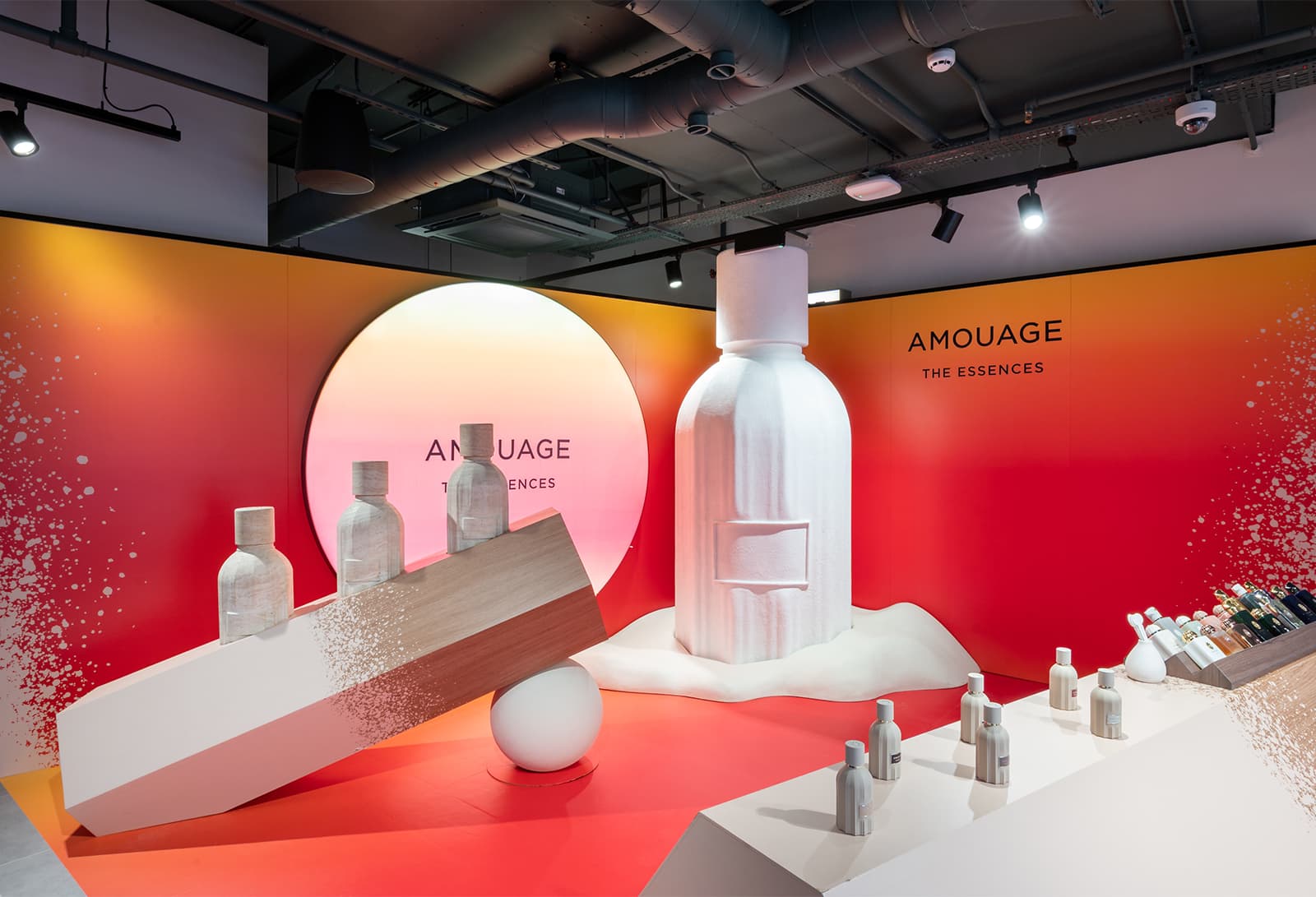
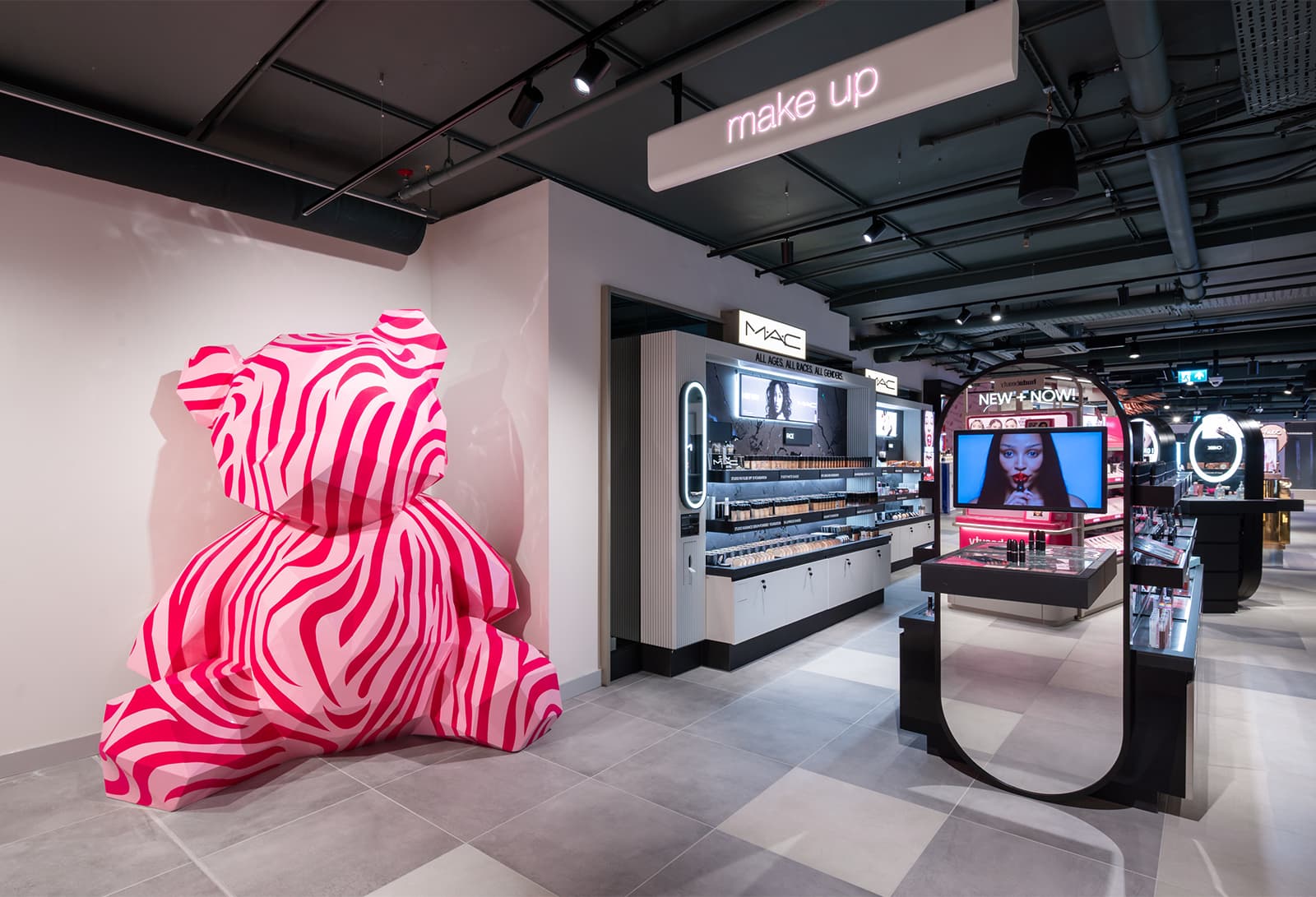
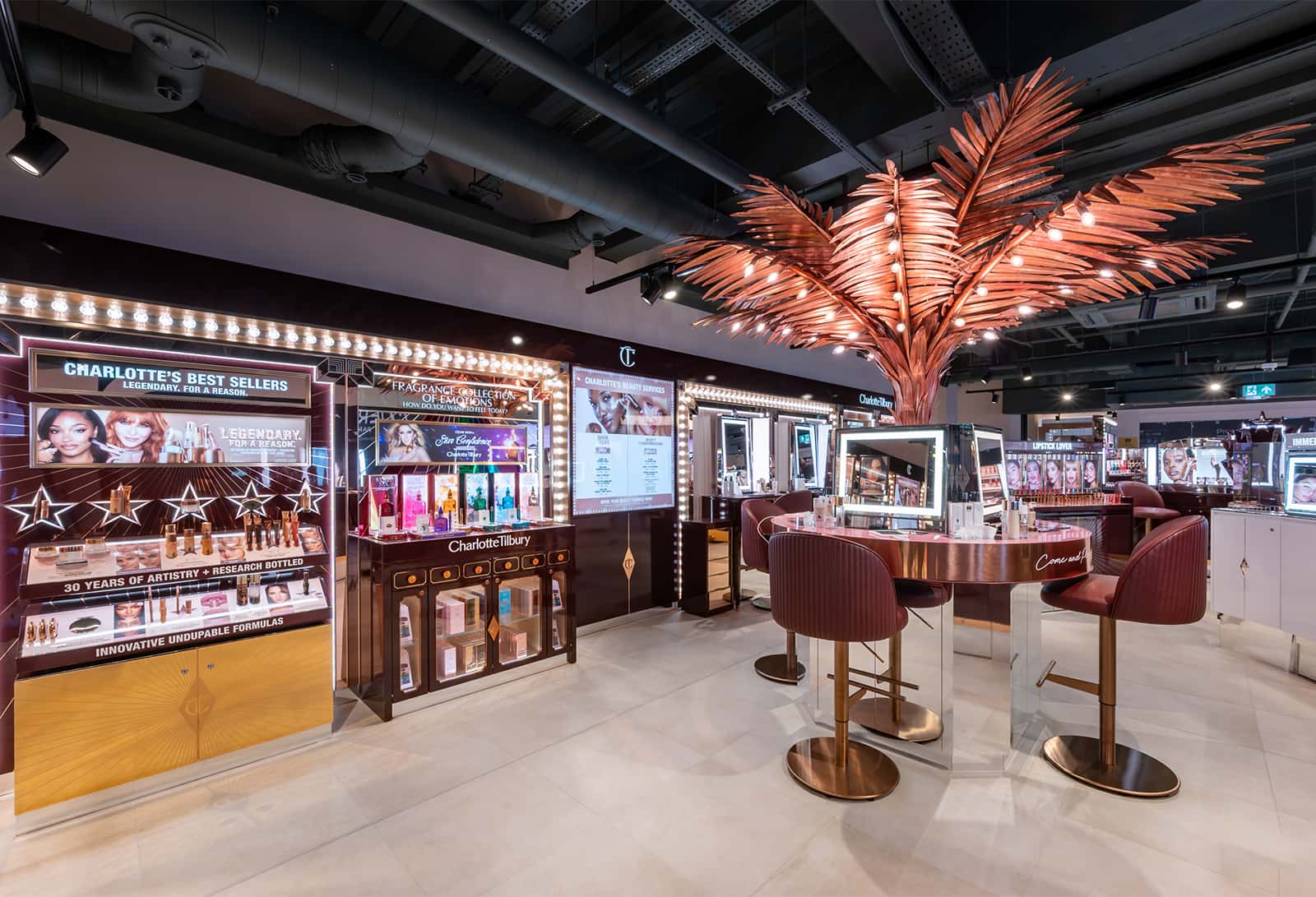
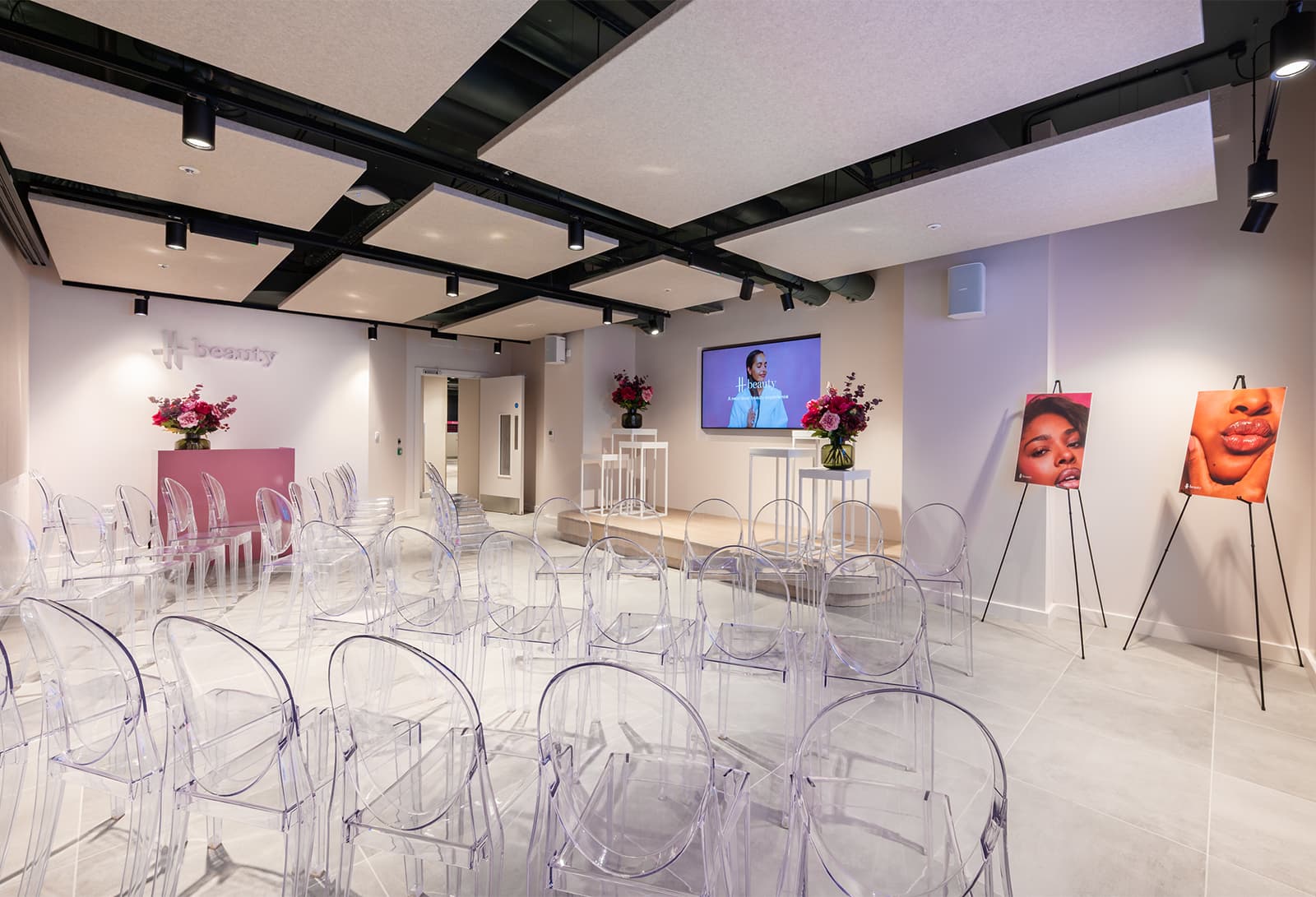
Harrods’ approach to brand curation mirrors a broader emphasis on long-term strategic alignment rather than short-term novelty. According to Collins, brand partnerships are evaluated through the lens of shared purpose. “We spend a lot of time thinking about how we as a retailer can play an accretive role to the industry and to consumers,” she said. “This isn’t just a question of asking people to buy more stuff. This is accretive, enriching, and adding more than just more stuff.”
Both emerging and established brands are considered through the same evaluation framework, with performance benchmarks informed by decades of category expertise. “We have a very extensive and well-formed benchmark,” Collins explained. “We know what a great hyaluronic serum feels and does.” The retailer takes a proactive role in sourcing partnerships, often initiating conversations directly when alignment is identified.
“We aren’t shy about spamming people. We will reach out on LinkedIn and slide into someone’s DMs,” Collins said. “We only embark on new partnerships with absolute longevity in mind.” The goal is sustained performance rather than short-lived launches. “We want the fanfare and the fireworks when we launch, but we want the fanfare and fireworks every day thereafter as well.”
A key challenge for legacy retailers entering new market formats is maintaining trust across increasingly diverse brand mixes. Collins emphasized that Harrods’ selection process remains consistent regardless of brand maturity or price positioning. “If you’ve been around for 20 years or if you’ve only been around for 20 days, everything has been passed through the same funnel and under the same lens,” she said.
By applying uniform standards across heritage and emerging brands alike, Harrods aims to ensure credibility remains intact as the assortment evolves. “It doesn’t serve anyone to have a client stop buying the vitamin C serum that they’ve previously been jumping into and then simply diverting them into another one,” Collins said. “What we want to do is give the client the benefit of being able to tackle more of their concerns and needs via products that, at the moment, they haven’t had access to.”
Since launch, Collins says customer response has validated the concept’s foundational assumptions. “We had a dream. We painted a picture of what that would look like, and that is what we have found,” she said. “All of those things that we felt we were uniquely delivering is exactly what those communities were looking for.”
While Harrods’ global brand recognition naturally invites questions around international rollout, the immediate focus remains domestic optimization. “Expansion plans are still very much focused on the UK,” Collins confirmed. “Harrods is a store that enjoys an exceptionally international client base, but right now our priority is to really nail the UK.”
Underlying H beauty’s expansion is a broader philosophical shift in how value is defined within luxury retail. “We would encourage everyone to seek value via means that are most meaningful,” Collins said. “The things that stay with people for the long term are things that transcend transaction and transcend consumption.”
In a market increasingly shaped by digital discovery but still reliant on physical experience for conversion and loyalty, Harrods’ approach shows a recalibration of what beauty retail can offer. By extending its authority beyond Knightsbridge while maintaining a focus on education, expertise, and experiential engagement, H beauty positions itself as both a store network and an infrastructure for long-term consumer relationship building. As Collins puts it, the ambition is simple: “to continue to deliver that to customers now across the entire UK as much as in London.”