





Creating a profitable beauty brand is no easy feat, and growing it to $10 million in sales from a single product seems nearly impossible. And yet, NY-based skincare brand Bonjout Beauty has done just that.
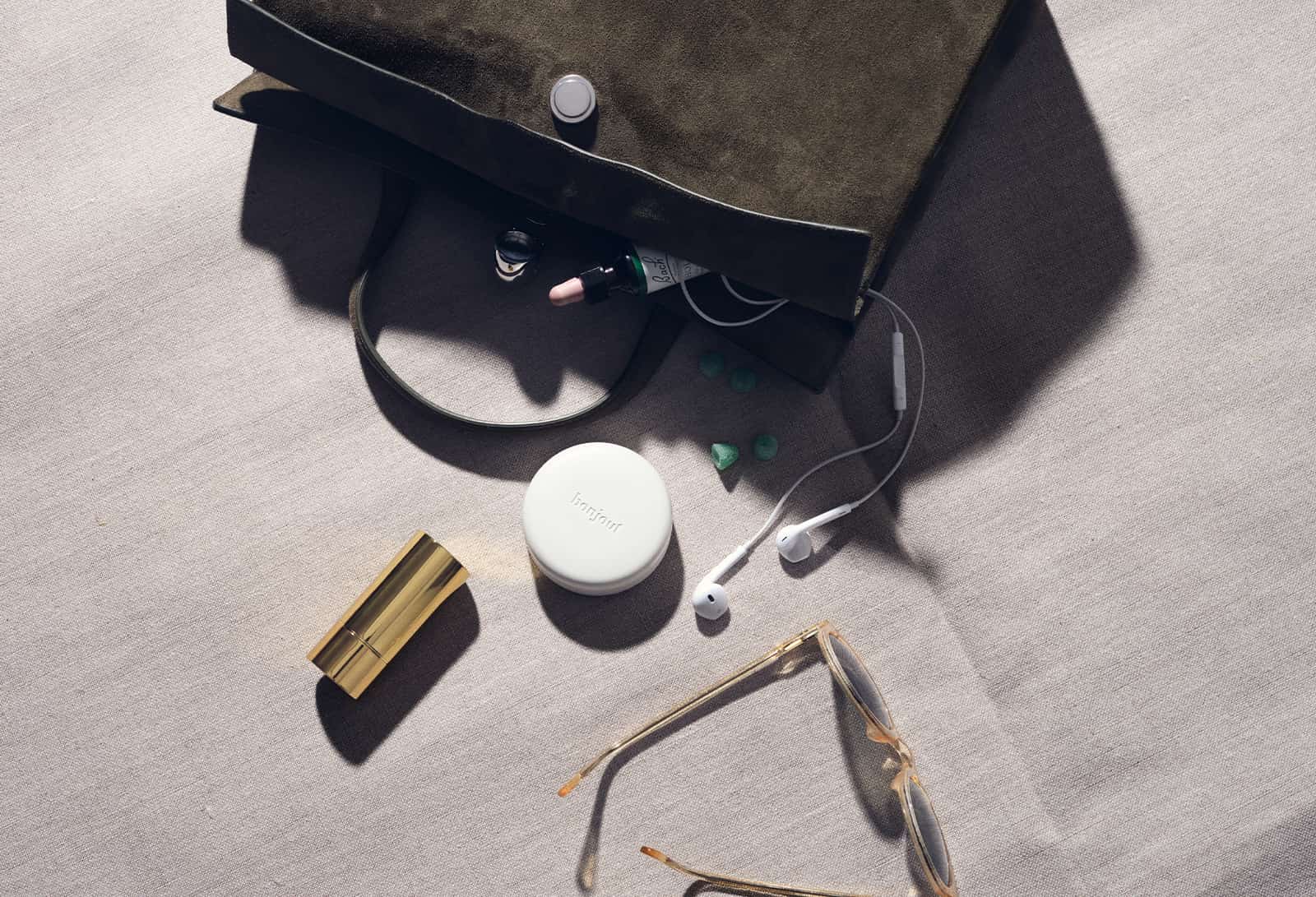
Until April, the three-year-old brand sold only one product, a waterless solid serum called Le Balm, that purports to replace multiple products, such as a primer, eye cream, and lip care, thanks to its 68 active ingredients and barrier-repairing properties. Sold in a neutral, macaron-looking package with a sienna-orange outer box, Le Balm and Bonjout are steadily becoming instantly recognizable. Its newly launched second product, La Cream, is an additional moisturizer focused on skin longevity.
Founder Natacha Bonjout, a pharmacist by training, credits having only one product with allowing the brand to scale to $10 million, because the product and brand messaging would be diluted for a newly launched brand trying to establish itself in the market. She raised $3 million from friends and family and one angel investor across two different fundraising rounds in 2022 and 2024, but is not planning to pursue additional funding. The brand became profitable in June 2025 and has five full-time employees, covering operations, finances, paid social media, creative assets, and customer service.
Bonjout's core demographic is women aged 40 to 55, but this was not the goal or brand positioning at the outset. Dr. Bonjout said that although she was eager to create a product that reduced the number of steps in a person’s routine, it wasn’t until her personal network of women 40+ provided positive feedback that she saw the opportunity to focus on older women.
Gen X and older millennial (also known as “Xennial”) beauty brands, as they are often referred to, tend to focus on the needs of women experiencing skin changes due to menopause or perimenopause. Often, these skin issues include increased sensitivity and dryness because of hormonal fluctuations. A host of brands have risen to the occasion to serve this customer, including Sarah Creal Beauty (which refers to itself as “expertly crafted for babes 40+”), Laura Geller Beauty, and Jones Road Beauty.
These customer segments also represent a powerful sales opportunity, thanks to their highly motivated purchasing decisions, higher disposable income, and brand loyalty. In a Gen X Factor report put together by NielsenIQ, World Data Lab, and Spate, the consumer base reportedly spends $279 billion per year on beauty and is expected to grow to $430 billion in the next 10 years.

“Prior to launching, you haven’t received cold customer feedback yet, so you don’t really know what about your product or brand resonates the most,” said Sabrina Castenfelt, venture partner at Creator Ventures and co-founder of Brunel Beauty, via email. “Your marketing will feed your sales engine, and whether it’s through social algorithms or identifying customer pain points, there’s a benefit of having even a few months in the market to learn, iterate, and finesse that communication.”
Bonjout has found success in its social media marketing, which is concentrated via videos on Instagram and Facebook, thanks to Dr. Bonjout’s role as the key spokesperson.
In its more successful ads, Dr. Bonjout wears a white lab coat against the backdrop of the French Riviera. In videos ranging from one to two minutes, she speaks about the product, how other brands invest more in marketing than in product development, and how Le Balm can replace multiple products thanks to its 68 active ingredients. Dr. Bonjout jokes that people have recognized her on the street and on airplanes as a result of the ads.
Overall, e-commerce accounts for approximately 95% of brand sales, with the remaining 5% split among retailers like Credo Beauty and Goop, she said.
But with the debut of a second product, Bonjout has to walk a fine line between its claim to reduce the number of products or steps a person needs and the expansion of its product portfolio that customers should buy into.
Before the development of La Cream, Dr. Bonjout ran a focus group of 2,400 customers and found that although they routinely used Le Balm, they still used other products like retinols, anti-aging actives, vitamin C, or an additional moisturizer when they felt Le Balm was not nourishing enough. With that, Dr. Bonjout wanted to create a product that customers could layer on top of Le Balm to provide targeted anti-aging benefits and increased hydration.
“Inside the company, a consumer product business growing from the $10 to $100 million sales phase will often require new product, geographic, and/or retail expansion,” said Castenfelt. “The CEO [has to decide] which resources and capabilities to prioritize, developing them efficiently, while still not losing the secret sauce that made the company successful in the first place.”
Roughly 50% of Bonjout’s e-commerce sales come from Meta advertising, with the other 50% from email marketing to 90,000 subscribers.
Bonjout’s email marketing was particularly handy for the April launch of La Cream. The launch email alone generated $300,000 in sales, said Dr. Bonjout, and La Cream has yet to be featured in online ads as of this reporting. Typically, Bonjout sends two emails a week, with at least one that incorporates Dr. Bonjout’s skincare advice and mentions other brands and products, such as cleansers and SPF, that Le Balm or La Cream can’t replace.
“I am the one writing those emails and try to [write them] as a friend would. I try to get very close to my customers and give them the best advice, and the kind of advice I would give to my friends,” she said.
As the brand scales, one of its next hires is notably a full-time copywriter, she said.
She added that the brand would not launch another product before the end of next year, but already has several product ideas that would not dilute the brand’s message of a simplified routine.