For years, Olive Young has stood at the center of South Korea’s beauty ecosystem, shaping what consumers buy and how they discover beauty altogether. Operated by CJ Olive Young, the retailer has grown into a cultural and commercial powerhouse, blending trend forecasting, retail curation, and consumer engagement into a model that has helped propel K-beauty onto the global stage. Now, the company, in collaboration with Sephora, is preparing for its most ambitious expansion yet: the United States.
Expected to open its first US location in Pasadena, California, on May 29, Olive Young’s arrival comes at a pivotal moment for the beauty industry. Consumers are increasingly prioritizing discovery-led shopping, ingredient literacy, and experiential retail, while traditional beauty retailers face growing pressure to evolve beyond prestige branding and transactional commerce. For Olive Young, the US market is not only about geographic expansion, but also an opportunity to redefine what modern beauty retail can look like.
“The US is not only the world’s largest beauty market, but also one of the most influential in shaping global beauty trends, content, and consumer behavior,” Priscilla Myungji Kang, Merchandising Team Lead at CJ Olive Young USA, told BeautyMatter. “For Olive Young, it was a natural and strategic next step in our global expansion.”
However, the retailer is not simply exporting a Korean retail model abroad. Instead, it is positioning itself as a broader beauty discovery platform that merges K-beauty culture, wellness, and omnichannel shopping into what it calls a “beauty playground.” If successful, the launch could signal a shift in how beauty is merchandised, experienced, and consumed in the West.
While many global retailers are approaching international expansion cautiously amid softer consumer spending and increased market consolidation, Olive Young sees the US as an especially timely opportunity. According to Kang, the company’s decision was reinforced by strong consumer demand already visible through Olive Young’s global online business.
“A significant portion of Olive Young Global’s sales already comes from the US,” she said. “In the first half of 2025, more than half of our global sales were generated by US customers, who also accounted for over 40% of total sales growth during the same period.”
That level of engagement is proof of how K-beauty has become mainstream among American consumers, particularly through TikTok, creator content, and social commerce. “American consumers are already discovering K-beauty organically through TikTok and social media, and we believe K-beauty is now evolving beyond a niche category into a true mainstream beauty movement,” Kang said.
Yet Olive Young’s ambitions extend beyond capitalizing on the popularity of Korean skincare. The company increasingly views itself as a global beauty platform rather than a regional specialty retailer. “As the industry shifts toward stronger omnichannel experiences, we see an opportunity to connect online discovery with in-store exploration,” Kang said. “More than replicating our Korean stores, our US expansion reflects an evolved retail vision.”
That positioning is particularly significant given the increasingly blurred boundaries between beauty retail, entertainment, and community. Olive Young already operates at the intersection of all three, using data, digital engagement, and rapid merchandising cycles to respond to emerging consumer behaviors.
The retailer also appears to be leveraging a unique advantage: its ability to observe global shopping patterns in real time. “We are already engaging with customers around the world through our global online platform, and in Korea, several Olive Young stores see foreign visitors account for as much as 80% of total traffic,” Kang said.
However, Olive Young’s US debut is already being met with scrutiny from highly engaged online beauty consumers, particularly around pricing and product formulation. Across Reddit, TikTok, and Instagram, longtime K-beauty shoppers have expressed concern that Olive Young’s American retail model could significantly increase prices in the US compared to the Korean market and its current global e-commerce platform.
The conversation intensified after Olive Young acknowledged that US pricing would differ due to “factors such as local operating costs, importation, and distribution,” prompting debate among consumers accustomed to purchasing Korean beauty products at comparatively lower prices through cross-border e-commerce.
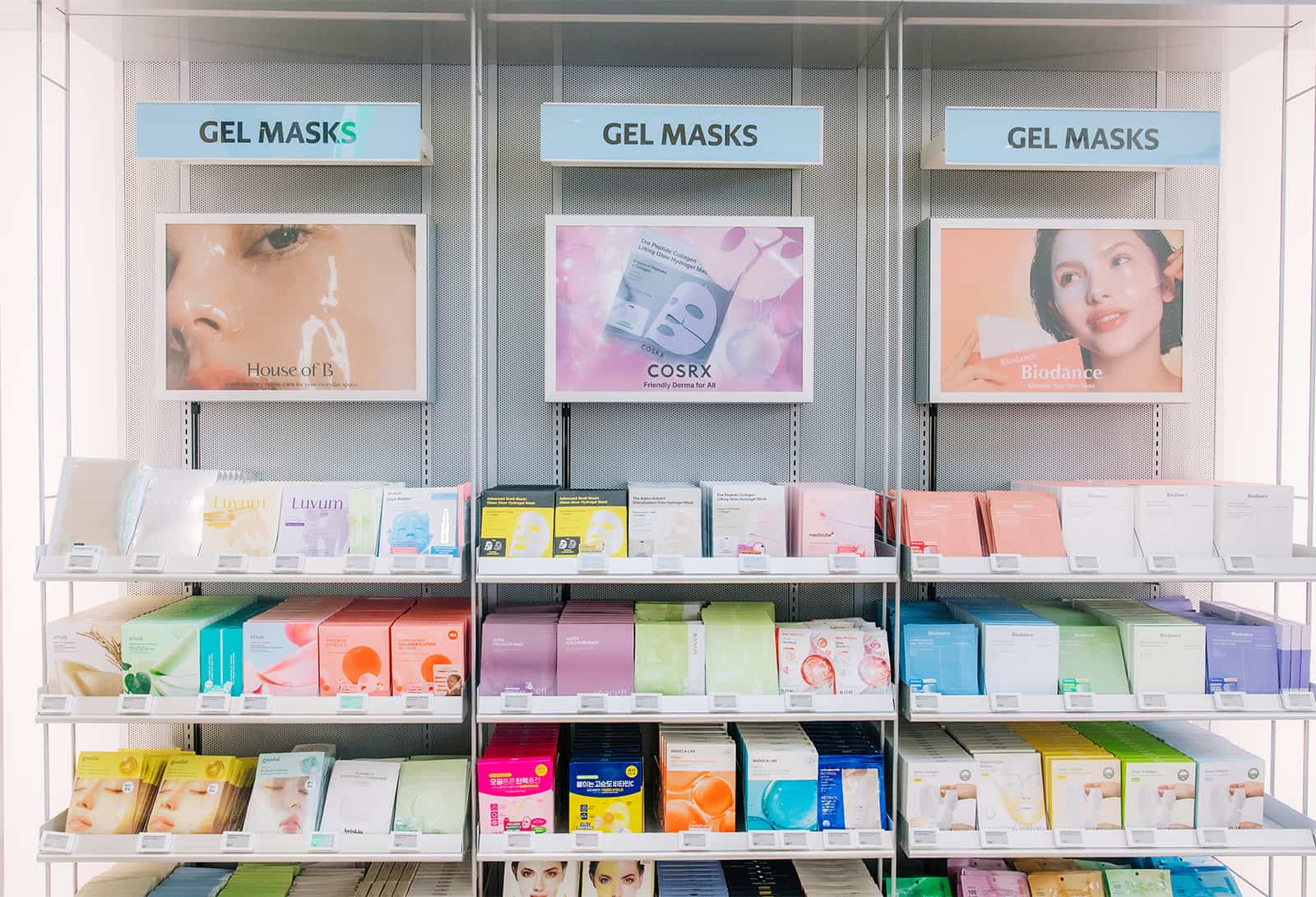
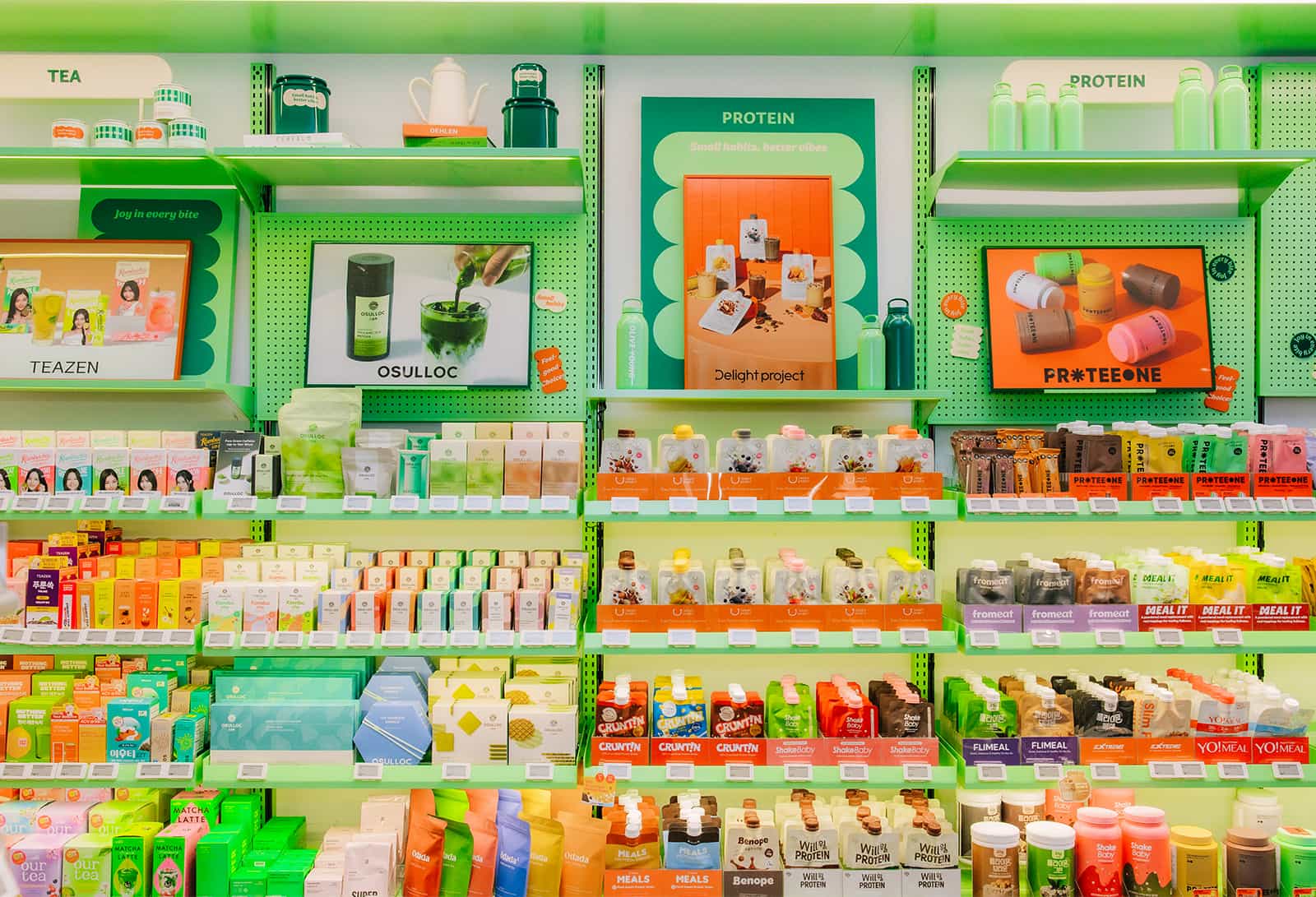
Central to Olive Young’s US strategy is the idea that beauty retail should feel exploratory rather than transactional. “Olive Young is defined by discovery rather than traditional retailing,” Kang said. “In Korea, our stores operate as a ‘beauty playground’ where customers visit to browse, test, and discover new products rather than just cross items off a shopping list.”
That philosophy represents a meaningful departure from the traditional prestige beauty retail model dominant in the United States, where shopping is often organized around brand loyalty and recognizable labels.
Instead, Olive Young plans to merchandise products according to skin concerns, routines, ingredients, and textures. Categories such as barrier repair, double cleansing, toner pads, cooling skincare, and suncare will sit at the center of the customer experience. “Instead of relying on familiar brand names, customers are empowered to explore specific concerns, trending ingredients, or unique textures,” Kang explained.
The retailer believes this routine-first approach shows the evolving sophistication of American beauty consumers, particularly as K-beauty routines become increasingly normalized. “Currently, skincare is the category resonating most strongly with US consumers,” Kang said. Interestingly, Olive Young has also identified significant overlap between what Korean consumers buy domestically and what international visitors purchase while shopping in Korea.
“One particularly interesting insight is that approximately 70% of the top-purchased items among global visitors shopping in Korea overlap with those purchased by Korean consumers themselves,” Kang said. “This suggests that US consumers are increasingly interested not just in individual products, but in experiencing authentic, real K-beauty routines.”
That emphasis on immersion and participation will extend throughout Olive Young’s physical stores. “Our stores are designed as intentional, category-specific spaces where every detail serves to elevate the journey of discovery, moving beyond simple retail into a curated environment tailored to each customer’s needs,” Kang said.
The company plans to include experiential touchpoints such as water basins for cleanser testing, dedicated zones for toner pads and sunscreen, as well as personalized skin and scalp analysis. “We also provide personalized services to help customers truly understand their unique requirements as they begin crafting their own beauty routines,” Kang added.
At the same time, Olive Young is deliberately avoiding positioning itself as an exclusively Korean beauty destination. Instead, the company wants to blend Korean and Western brands within a single discovery-focused environment. The US assortment will therefore include globally recognized brands such as Urban Decay, Supergoop!, and Touchland alongside Korean beauty labels.
“Instead of traditional, brand-segregated aisles, we offer a dynamic ‘beauty playground,’” Kang said. “By organizing the space around skin concerns, textures, and wellness trends, we make it easy for consumers to discover new products and build personalized daily routines.”
At the same time, Olive Young’s US expansion also highlights one of the biggest regulatory tensions surrounding K-beauty’s globalization: sunscreen formulations. Unlike South Korea, where sunscreen is regulated as a cosmetic, the US classifies sunscreen as an over-the-counter drug. As a result, many newer-generation UV filters commonly used in Korean formulations, including Tinosorb S and Uvinul A Plus, cannot legally be sold in the US market.
That distinction is already creating confusion among consumers online, many of whom are concerned that the sunscreens eventually sold through Olive Young’s US stores and dedicated US platform may differ from the original Korean formulations they have become accustomed to purchasing internationally.
The company acknowledges that the US market differs significantly from Korea, particularly in terms of consumer diversity and shopping behaviors. “We’ve observed that Korean consumers are highly trend driven and exceptionally fast to adopt new innovations, often moving collectively within a deeply connected market,” Kang said. “Conversely, the US market thrives on its incredible diversity across regions, ethnicities, and lifestyles, which naturally creates a wider variety of specialized consumer preferences.”
Still, Olive Young believes both markets are moving toward a similar model of beauty discovery driven by creators, communities, and digital influence. “Both markets share a very strong alignment: a shift toward discovery-driven shopping that is heavily inspired by social media, peer communities, and creator content,” Kang noted.
That alignment may ultimately become one of Olive Young’s greatest competitive advantages. As beauty consumers increasingly seek novelty, authenticity, and personalization, the retailer’s discovery-first approach could resonate strongly with younger shoppers already accustomed to discovering products through TikTok and online communities.
Importantly, Olive Young insists that its American success will not be measured solely by store count or immediate sales performance. “At this stage, Olive Young USA is not primarily focused on short-term sales targets,” Kang said. “Instead, the key objective is to build brand awareness and deliver a strong customer experience.”
“The goal is for customers to enjoy discovery, explore products hands-on, and find their own personalized beauty routines,” she continued. “In the long term, we aim to build loyalty and deepen engagement with US consumers.”
If Olive Young succeeds, its influence could extend far beyond K-beauty. The retailer’s arrival may help accelerate a transformation within Western beauty retail—one where routine-building, wellness, experimentation, and community-driven shopping take precedence over traditional prestige merchandising.
Five years from now, Kang hopes Olive Young will be viewed not merely as a successful retailer, but as a company that fundamentally changed how beauty is experienced. “We hope industry insiders will see Olive Young as a platform that helps redefine how consumers experience beauty discovery globally,” she said.
“At the heart of Olive Young is the philosophy of ‘All Live Young,’ the idea that beauty shopping should feel fun, inspiring, dynamic, and accessible,” Kang continued. “Through our ‘beauty playground’ approach, we want to create spaces where consumers can freely explore trends, experiment with routines, and discover products that genuinely fit their lifestyles and identities.”