The leaves have hardly begun to fall. The calendar has flipped from August to September. You can still wear a T-shirt on your commute without fear of catching a chill, and following record-high temperatures, SPF still needs to be slathered on as the sun shines overhead. But no one’s drinking a refreshing lemonade or iced tea. Why would they, when the ultimate indicator of fall has landed back at Starbucks and in the beauty aisle? The Pumpkin Spiced Latte (PSL) is back. Though the weather may say otherwise, the marketing calendar has overruled it—fall is here.
At some point in the past ten years, pumpkin spice stopped simply being a flavor and became a seasonal cue. “Like the first cool day of autumn or the changing of the leaves, pumpkin has become a cultural signal that fall has arrived,” Jenine Guerriero, Head of Marketing and Consumer Insights at Givaudan, told BeautyMatter.
Beauty has become part of this ritual. Pumpkin spice now appears across fragrance, bodycare, deodorant, haircare, home scent, and increasingly unexpected corners of the personal care aisle. This year, Spate recorded a 17.3 million year-over-year (YoY) increase in pumpkin spice’s Popularity Index, its proprietary measure combining consumer interest across Google Search, TikTok, and Instagram, driven by an additional 14.5 million TikTok views. Meanwhile, at Givaudan, consumer awareness of pumpkin sits at 87%, while searches for pumpkin are up 25% YoY.
Starbucks launched the Pumpkin Spice Latte in 2003 as a hot coffee drink. During the Tumbler era of the 2010s, the drink gained more traction, becoming the drink of fall. While trends tend to lose cultural capital once they reach mass adoption, this one seems to have staying power. After over two decades of pumpkin-spiced goodness, beauty brands are still finding new products, formats, and scent interpretations to sell around it. Pumpkin spice is no longer a fall trend. It’s a fall tradition, and beauty has learned to monetize accordingly.
NEST New York has sold its Pumpkin Chai candle for 17 years, giving it a lifespan that predates much of beauty’s current gourmand boom. “Pumpkin spice is a great example of how a fragrance trend can evolve into something much bigger and more lasting,” Erwan Le Berrigaud, CMO of NEST New York, told BeautyMatter. “What started as a seasonal trend has become a ritual that consumers actively look forward to because it brings together familiarity, comfort, and nostalgia.”
Le Berrigaud attributes that longevity to the associations consumers have formed with the scent. “People aren’t just responding to the notes themselves; they’re responding to the feeling and the memories they associate with them.”
The commercial power of pumpkin spice increasingly lies in its predictability. Unlike a viral fragrance note that brands must race to capitalize on before consumer attention moves elsewhere, pumpkin arrives with a built-in reset, because its temporary disappearance is part of its appeal. The global pumpkin spice market was valued at $1.1 billion in 2023 and is projected to reach $2.4 billion by 2031, according to data from market research firm Coherent Market Insights. Though much of that reset is rooted in food and beverage, beauty is increasingly extending the established consumption cycle beyond what consumers eat and drink.
Products with “‘pumpkin spice”’ in their names generated an estimated $66.5 million in sales during the 12 months through August 2026, up 17% YoY, according to retail intelligence platform Perpetua Prism data provided by Front Row. During the first three weeks of the 2026 pumpkin spice season, from August 30 through September 19, sales reached approximately $6.5 million, up 14% from the same period last year.
Traditionally, Amazon sales begin accelerating during the final week of August, peak across September and October, and decline in November, a pattern that remained largely unchanged in both 2024 and 2025. Grocery and home products account for most of the volume, led by coffee and tea, followed by protein products and air fresheners among the ten highest-selling pumpkin spice products.
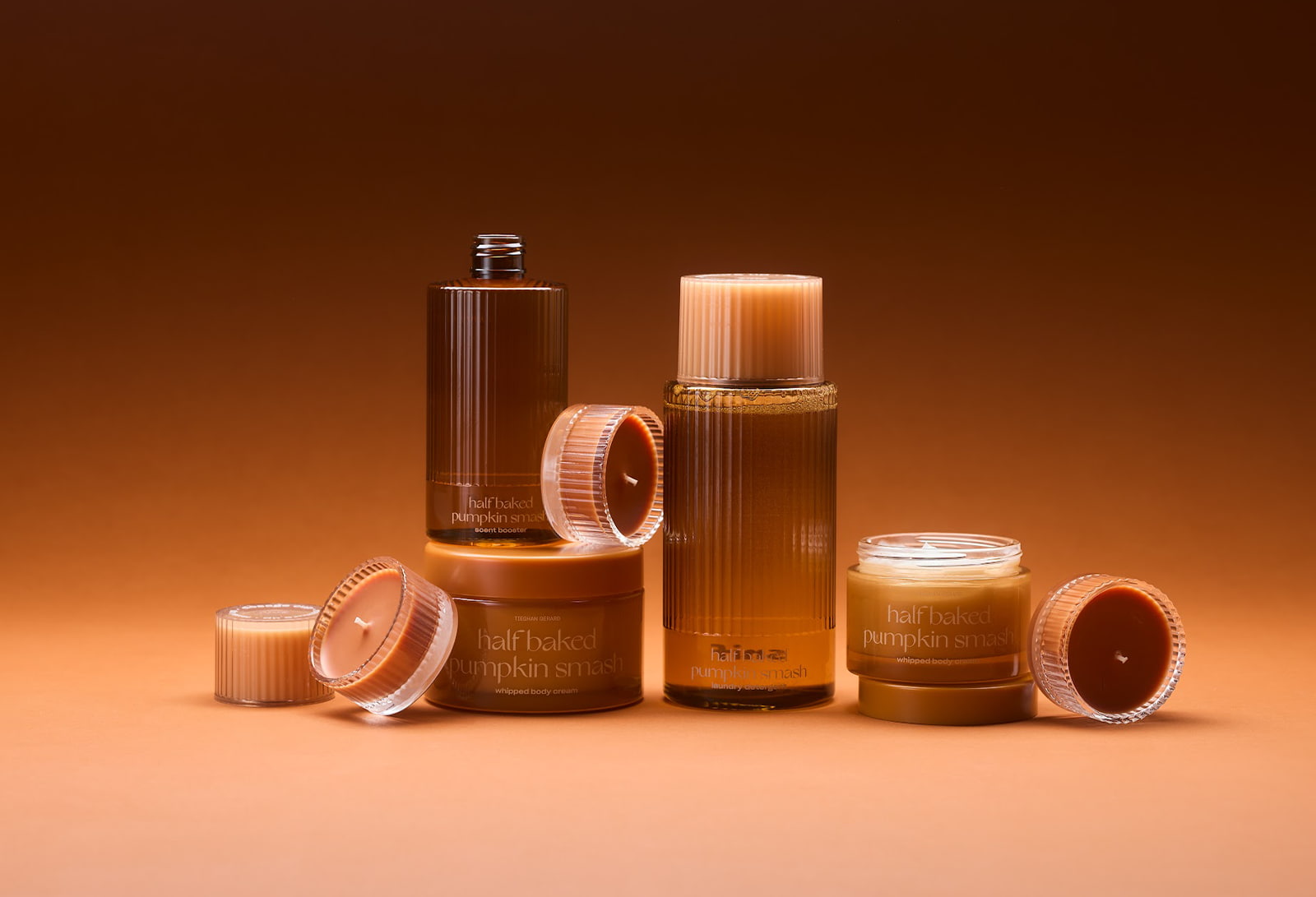
Kara Kowalski, Head of Product and Scent Development at Snif, sees that cycle of attraction play out each year with its candle Pumpkin Smash, which remains one of the brand’s bestsellers on Amazon and one of the strongest performers in its fall collection.
“That limited window [of the scent’s return] creates anticipation. By the time fall comes around, you’ve had an entire year to miss it, so returning to pumpkin feels less like revisiting a trend and more like returning to a tradition.”
Spate’s data points to pumpkin spice spilling far beyond its established stronghold in candles and home fragrance. Consumers expect to see it within bodycare and fragrances. Searches for pumpkin spice deodorant increased more than 1,000% month over month, and body wipes increased 924.1%, with launches from Old Spice, DUDE Wipes, and Dove contributing to category growth. Body wash was up 64.1%, while perfume increased 547.1% on TikTok. Even pumpkin spice hair color, although still low in overall popularity, registered more than 1,000% week-over-week growth on TikTok.
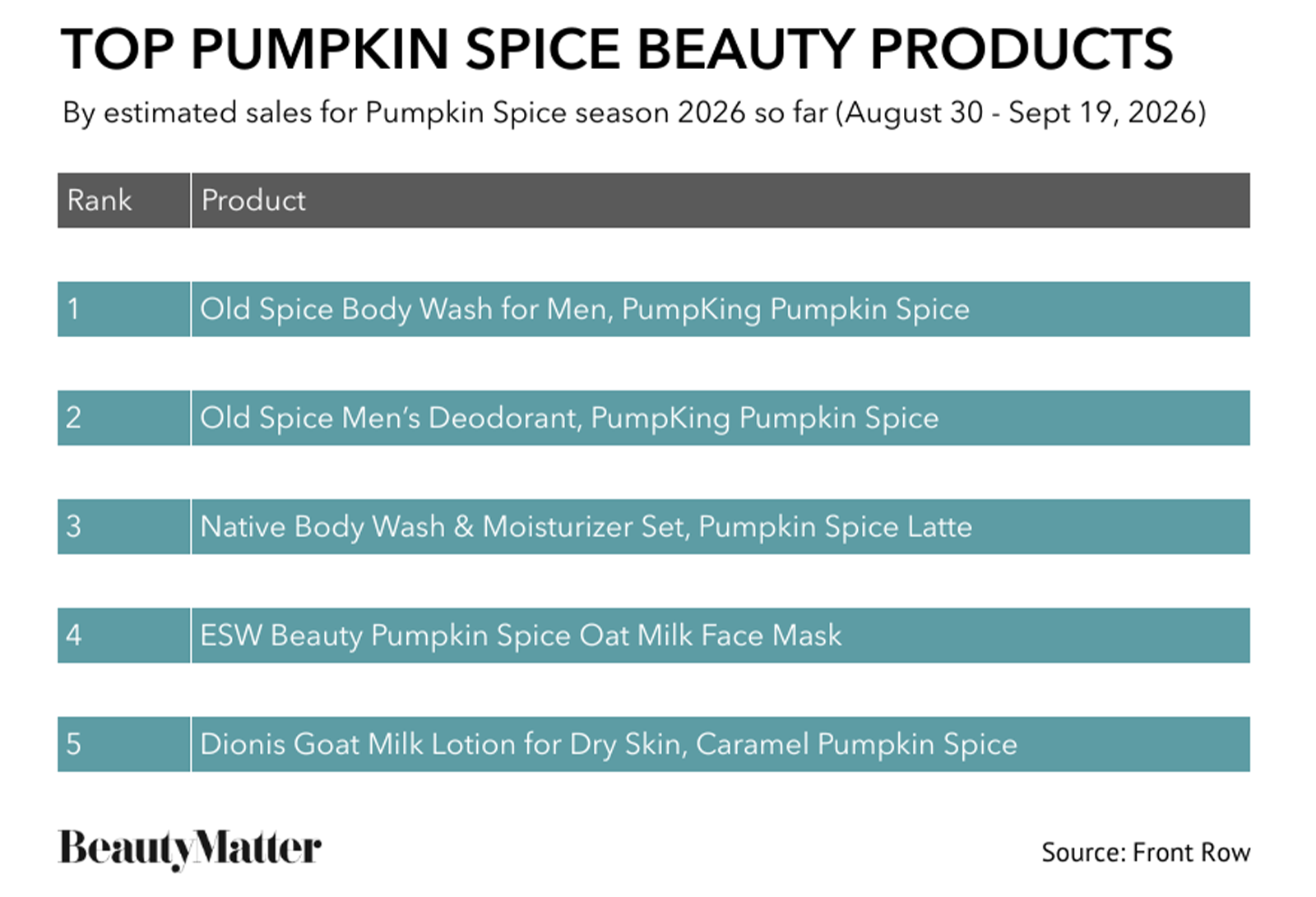
Beauty and personal care products containing “pumpkin spice” in their Amazon titles generated an estimated $2.1 million during the 12 months through August 2026, down 31% YoY, according to Front Row. But the category has started the current season considerably stronger: Between August 30 and September 19, estimated sales reached $435,000, up 17% YoY.
Bodycare is leading that early-season demand. Old Spice’s PumpKing Pumpkin Spice Body Wash and Deodorant were the two highest-selling pumpkin spice beauty products on Amazon during the period.
After establishing Pumpkin Smash as a candle, Snif expanded the scent into a laundry detergent. “Consumers are increasingly looking at fragrance as something that can live throughout their entire routine instead of only something that they wear on their skin or burn in their homes,” Kowalski told BeautyMatter.
The scent of laundry becomes part of an existing seasonal behavior: taking sweaters and blankets out of storage, changing bedding, and resetting the home as temperatures fall— “A seasonal scent doesn’t have to live within one product category anymore—it can become part of how you experience that season altogether,” Kowalski added.
Dionis Goat Milk Skincare has built multiple interpretations of pumpkin into its 2026 assortment, with a Caramel Pumpkin Spice flavor offered across Goat Milk Body Lotion and Hand Cream, and a Pumpkin Latte flavor appearing in its Goat Milk Lip Balm and Lip Mask.
The brand's President, Karen Minsky, told BeautyMatter that limited-edition fall products have engagement among existing customers while bringing new consumers into the brand. Minsky said its fall collection continues to see “strong demand and consistent growth,” with pumpkin-inspired products among its most anticipated seasonal launches.
But if consumers already have pumpkin spice products from last year’s slew of launches, how do you convince them they need another version of it?
The answer may lie in expanding what pumpkin spice smells like.
The familiar pumpkin spice formula has historically centered on cinnamon, nutmeg, clove, ginger, vanilla, and sweet bakery accords. According to Givaudan, perfumers are now pushing beyond that construction, combining pumpkin with woods, smoke, seeds, apple, chai, pecan, and cider-inspired notes. Even the spice cabinet is widening, with cardamom, coriander, pink pepper, and saffron introducing different textures to the familiar fall profile.
The industry is now riffing on the spice blend rather than recreating pumpkin pie. Consumers are driving momentum behind those adjacent notes. Givaudan’s proprietary ingredient studies show consumer sentiment around apple cider rising 548%, pecan 415%, chai 130%, cocoa 61%, and cinnamon 55%. The resulting combinations include warm spice with crisp apple, like Bath & Body Works’ Pumpkin Apple Cider. Other gourmand scents included chai with textured musks, like Prada Infusion de Santal Chai, retaining the familiarity of fall while giving brands something ostensibly new to sell.
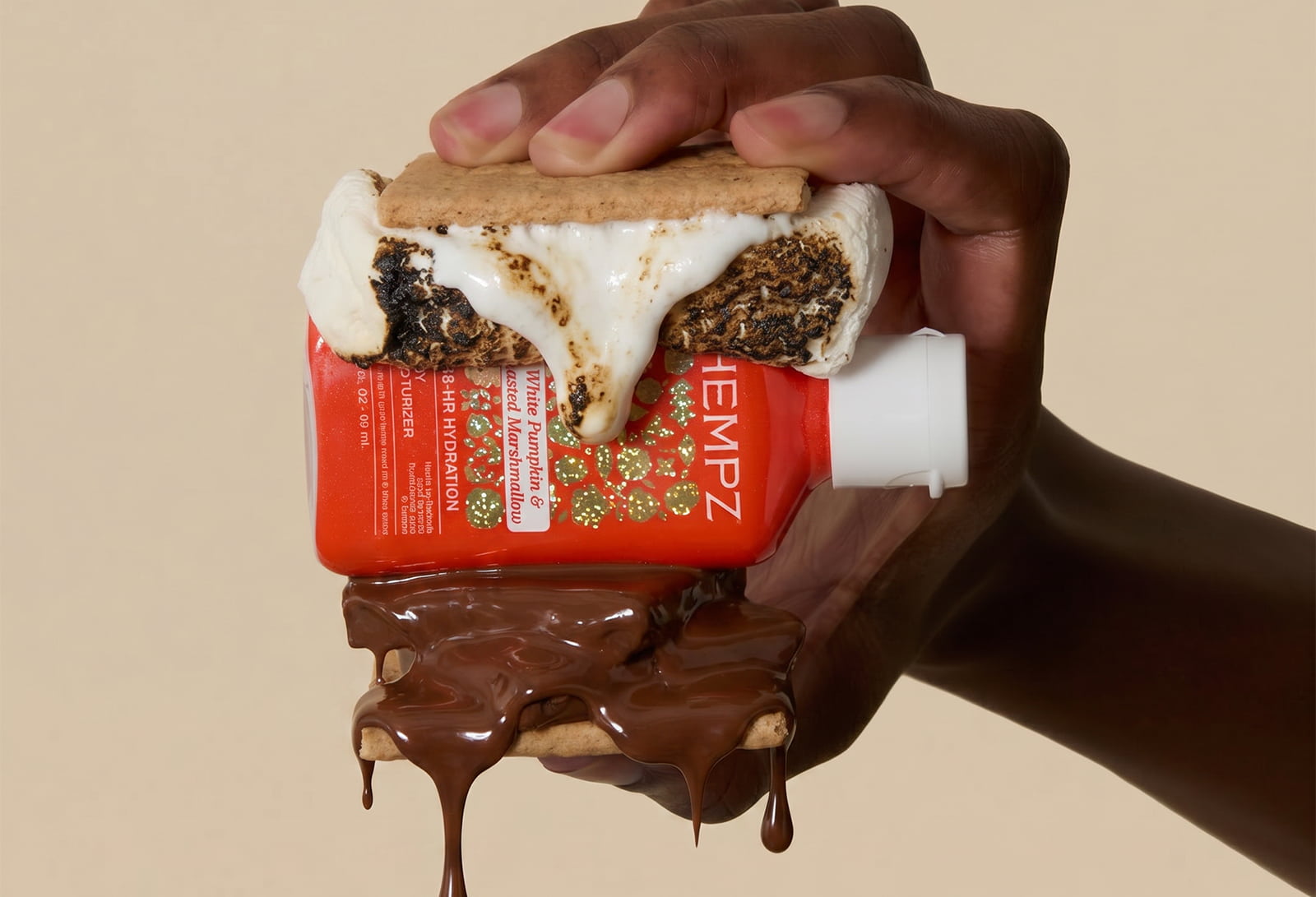
Hempz, for example, has applied the opportunity of consumers’ evolving scent desires to bodycare. Pumpkin has been a long-standing part of the brand’s seasonal assortment, but this year, the brand moved away from the traditional spice-heavy profile with White Pumpkin & Toasted Marshmallow, a limited-edition body moisturizer sold at Ulta Beauty. The new scent pairs pumpkin with toasted marshmallow, vanilla bean, caramel, and sandalwood.
“This year, we saw a clear shift toward toasted, creamy gourmands and warm, sophisticated spice profiles in fragrance, with trends spanning toasted nuts, caramelized notes, amber woods, vanilla, and orchid fruits,” a representative for Hempz told BeautyMatter. “That inspired White Pumpkin & Toasted Marshmallow, moving pumpkin away from the traditional pumpkin spice profile and into a softer, creamier, and more indulgent profile.”
At Le Monde Gourmand, that experimentation has helped take pumpkin into fine fragrance. Pumpkin Crème, which combines pumpkin with frothed milk and spices, has continued to grow since debuting in 2022. According to Chief Brand Officer Ann Colville Somma, the fragrance became the brand's number-one product on TikTok Shop when it returned on August 25 and has also ranked number one for the brand at Sephora in the EU this season.
“Pumpkin is a great example of a food ingredient that might not seem obvious as a fine fragrance scent, but when we wrapped it in a latte story, with notes of frothed milk and spices, it became highly wearable, even sensual,” Colville Somma said.
Pumpkin sits within a much larger expansion of the gourmand pantry. Banana, tomato, sticky rice, matcha, and Coca-Cola are among the less conventional food references consumers are becoming interested in in fragrance. “The ‘pantry’ keeps expanding,” she added.
However, there is a distinction between wanting to smell like pumpkin and wanting to smell like fall.
Instead of a sickly sweet pumpkin patch in a bottle, the fragrance industry is extracting the spice consumers have learned to associate with pumpkin spice and leaving the gourd behind. A push towards toasted nuts, baked fruits, milky notes, black tea, roasted woods, and brown butter can communicate autumn while offering an alternative fragrance to putting in a shift as a Starbucks barista. In that sense, pumpkin spice’s influence on fragrance may be considerably larger than just the bottles with pumpkin written on the label.
Spate’s data supports that broader appetite. Searches for “fall perfume” were up 551.6% month over month, with TikTok interest beginning to accelerate during the week of July 6 to 12. Alongside pumpkin spice, consumers were showing rising interest in santal and warm vanilla, while hair perfume paired with fall perfume was up more than 1,000% month over month. Chai perfume is up 230.2% YoY, and cinnamon perfume is up 224.6%.
According to Givaudan, nearly six in ten fragrance users now wear fine fragrance daily, with consumers building fragrance wardrobes around mood, occasion, and season. For an industry increasingly dependent on persuading consumers to own more than one scent, the normalization of fragrance wardrobes creates obvious commercial potential.
That also means the PSL no longer has to remain unchanged to remain recognizable. The pumpkin can become creamier, smokier, or more sophisticated: It can move from candle to body moisturizer, perfume, or even laundry detergent.
There will inevitably be newer gourmands, unexpected pantry notes, and another fragrance dominating TikTok by next autumn, but pumpkin spice doesn’t need to compete with them for novelty. Its advantage remains—even before the leaves have started falling, when the weather hasn’t quite caught up with the calendar, consumers will start looking for it anyway.
Trends depend on novelty. Traditions depend on return. Pumpkin Spice clearly can do both.