





The global wigs and extensions market has long occupied a paradoxical position within beauty. It is culturally influential, commercially resilient, and deeply embedded in the everyday lives of millions of consumers, yet it remains one of the industry’s most underestimated categories. Market analysts project the sector could surpass $31.13 billion by 2033, but founders operating within the space argue those figures barely scratch the surface once informal commerce, medical hair loss, and protective styling are fully accounted for.
For decades, much of the market has functioned through fragmented supply chains, underregulated manufacturing systems, and informal resale networks that rarely fit neatly into traditional beauty retail structures. This is the landscape Ruka Hair is attempting to transform. Co-founded by Tendai Moyo, the London-based startup has evolved from a textured hair extensions brand into what investors increasingly describe as a beauty biotech company.
The company recently secured an additional $4.5 million in funding led by Henkel Ventures and Freedom Trail Capital, bringing total funding close to $10 million and signaling growing investor confidence in hair technology as a legitimate frontier within beauty innovation. At the center of Ruka’s expansion is a larger ambition: to modernize the global hair industry through material science, ethical sourcing, and patent-pending fiber innovation.
Moyo often compares her ambitions for Ruka to Apple’s approach to consumer technology. “I love the way Apple makes life easy,” she told BeautyMatter.
For Moyo, the same logic applies to hair. Before founding Ruka Hair, she experienced firsthand how complicated and inaccessible the wigs and extensions category could feel. During lockdown, she ordered a £600 ($804.50) wig that ultimately did not fit properly and could not be returned. “The stylist said that it was my head that was too big,” she recalled. “The whole thing just didn’t make any sense.”
That frustration became the foundation for Ruka Hair’s launch in 2021. The company generated £16,000 ($21,543) in sales in its first month and quickly developed a following by designing products specifically for consumers with textured hair, particularly those with 4B and 4C curl patterns, historically underserved by mainstream hair brands.
But the larger opportunity, according to Moyo, extends beyond aesthetics. “The hair extensions and wig market is significantly undervalued,” she explained. “A lot of it doesn’t exist in the official economy. If you have someone flying to China, buying hair, selling it through WhatsApp, and they’re doing it as a side hustle, those people aren’t being captured in terms of their value.”
That informality has historically limited innovation within the sector. Moyo argued that much of the industry is still controlled by manufacturers and distributors with little understanding of textured hair itself. “They haven’t studied coily hair. They haven’t studied traction alopecia. They haven’t studied how our hair blends, how it absorbs water,” she said.
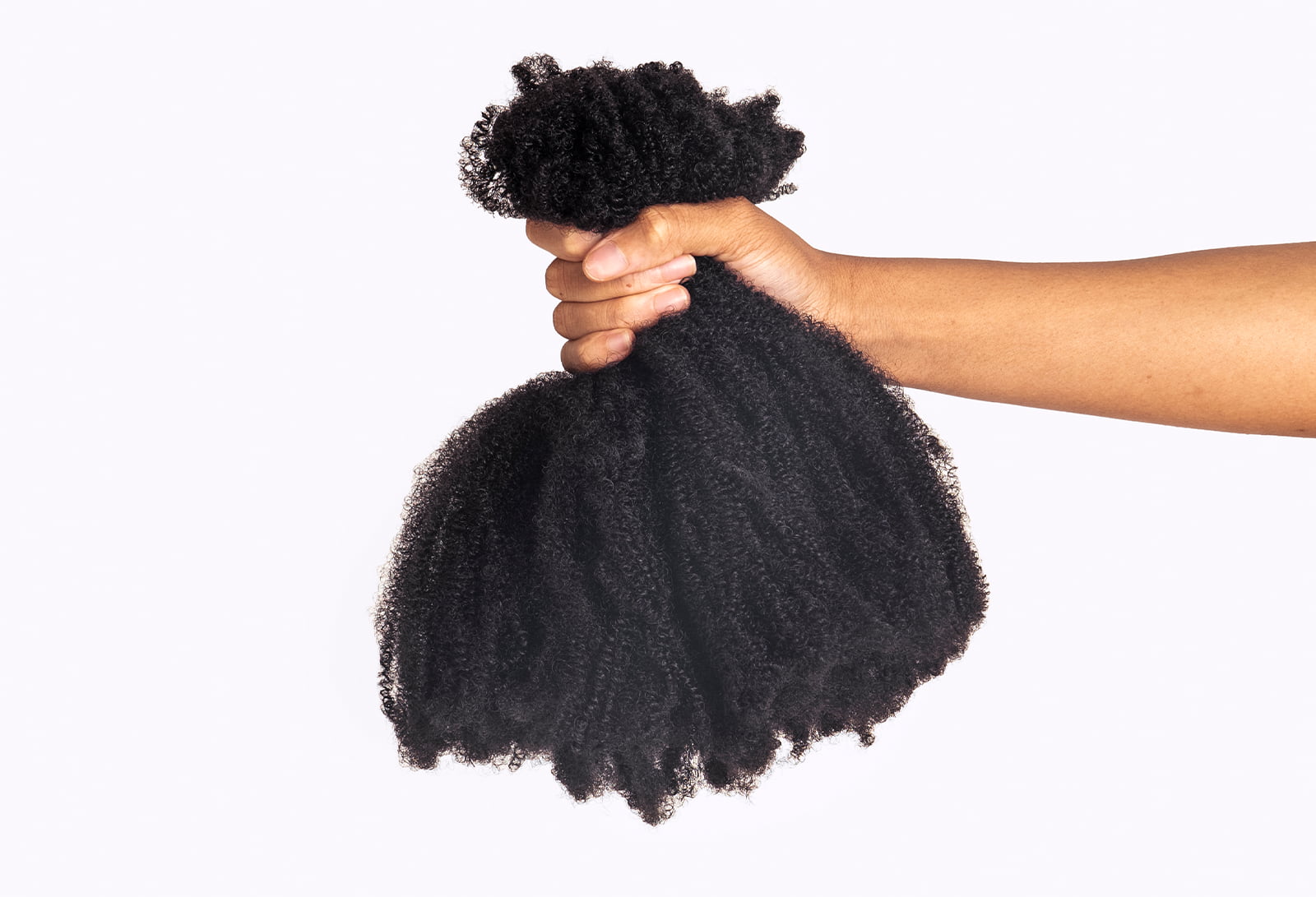
Ruka Hair’s response has been to position itself less like a traditional extensions brand and more like a research-driven beauty company. The startup worked with trichologists to engineer curl patterns capable of closely matching natural textured hair dimensions, leading to the development of its “Think Kink” range, which has since become one of its strongest-performing product categories. “It was always my vision as a Black woman. I want to be able to walk into Selfridges and find hair that looks like mine, but longer,” Moyo said.
As far as distribution goes, it uses an omnichannel model. “We sell directly to consumers via our own website, and through a growing retail footprint. Selfridges was our first major retail partner in the UK, and we are excited to be announcing a major new US retail partnership later this year,” Moyo continued. The brand’s current sales projection see the US expansion as a major growth driver. “We are forecasting 101% year-on-year revenue growth by April 2027,” Moyo revealed.
The company’s recent funding round shows investors believe in what has become Ruka’s defining differentiator: biomaterial innovation. “Ruka has developed a strong brand with a clear focus on its target consumer and a thoughtful approach to product development,” said Tobias Botenwerfer, Investment Principal at Henkel Ventures. While synthetic braiding hair has existed for decades, most mainstream options are petroleum-based plastics that are neither biodegradable nor particularly safe for long-term use. Recent consumer investigations found carcinogenic chemicals, including lead, present in several synthetic hair products commonly used in the market.
“If we now know that plastic synthetics are harmful, we need to innovate,” said Moyo. That realization led Ruka Hair into fiber engineering. Over the last several years, the company has quietly developed its proprietary Synths platform: collagen-based alternative fibers designed to replicate the performance of human hair while eliminating many of the environmental and health concerns associated with traditional synthetic products.
The first generation, Synths 1, introduced biodegradable, hypoallergenic, heat-resistant fibers. Earlier this year, Ruka Hair commercially launched Synths 2, an upgraded iteration designed to feel more like human hair while maintaining durability and styling flexibility. The material is now central to the company’s positioning as a beauty biotech startup rather than simply a beauty brand. “We wanted to make a fiber that was really powerful,” Moyo said. “When there is a safe alternative to the plastic that’s coated in carcinogens, people will buy that alternative.”
The brand’s TextureMatch product range has been commercially available since launch. “Our Synths 2 range, which includes our biodegradable protein-based fiber, is in active commercialization, with development rooted in several years of research and biomimicry innovation,” said Moyo.
The company’s next development could prove even more disruptive. Ruka Hair has now filed a patent for Synths 3, a fiber technology featuring what Moyo described as “shape memory,” the ability for the material to revert back to its original curl pattern when exposed to water, similar to natural human hair behavior.
“Human hair has something we call shape memory,” she explained. “It allows you to straighten it, but when it gets wet, it reverts to its original texture. It is the defining property of human hair.” If successfully scaled, the technology could significantly reduce the industry’s dependence on human hair sourcing while establishing Ruka as one of the first companies to bring proprietary biomaterials into the extensions market at scale.
Ruka’s push into biotechnology is also a response to mounting ethical pressures surrounding human hair sourcing. Human hair remains the most desirable material within the extensions market, but the global supply chain has increasingly faced scrutiny over exploitation, labor abuse, and lack of transparency. In 2020, U.S. Customs seized more than $1 million worth of human hair linked to alleged forced labor operations in China.
“There is more demand than there is supply,” said Moyo. “Hair takes a long time to grow, and there is no other market where the product comes from a human body.” Rather than relying solely on existing sourcing systems, Ruka Hair worked with third-party auditing companies to vet manufacturers and trace sourcing processes across China and Vietnam before eventually conducting its own factory visits. The company’s long-term strategy, however, appears increasingly focused on reducing reliance on human hair altogether through lab-engineered alternatives.
At the same time, the company has been deliberate about changing how textured hair products are positioned within retail environments. Historically, wigs and extensions have largely been sold through informal beauty supply stores rather than prestige retail channels. Moyo wanted something different. “As a darker-skinned individual, you deserve to be in those luxury spaces as well,” she argued. That ambition culminated in Ruka Hair securing retail placement with Selfridges after months of pitching and product demonstrations. The partnership gave the brand not only visibility but legitimacy within luxury beauty retail.
The company’s marketing approach has similarly prioritized community over excessive performance spending. Rather than relying heavily on paid influencers, Ruka Hair has focused on organic advocacy, community events, and experiential activations. Celebrities and creators including Tems and Serena Williams have worn the brand, while collaborations like a curly-girl run club with Gymshark have helped deepen community engagement.
“We’ve seen a lot of beauty brands close down because there isn’t a lot of cash swimming around,” Moyo said. “You have to be very smart about how you create long-running campaigns.”
As Ruka prepares for further retail expansion and a planned US growth push, the company increasingly sits at the intersection of several of beauty’s fastest-growing priorities: sustainability, personalization, biotech, and ethical sourcing. But perhaps more importantly, it is helping formalize a category that has historically operated outside the structures of mainstream beauty altogether.
For Moyo, that broader transformation remains the real objective. “There are so many amazing Black women I meet all the time who have these amazing ideas,” she concluded. “If someone would just fund [their ideas], [they’d] bring something incredible into the ecosystem.”