





At a time when many early-2000s beauty brands have faded into irrelevance, Maria Hatzistefanis has done something increasingly rare. She has sustained and scaled two distinct skincare brands across opposite ends of the pricing spectrum without collapsing their identities. Her brands, Rodial and Nip + Fab, both London-based, operate with fundamentally different consumer propositions, yet are underpinned by a shared philosophy: performance-first skincare that delivers visible results.
“I’ve always been very clear that Rodial and Nip + Fab are two completely different conversations with the consumer,” she explained to BeautyMatter. “Rodial is performance-led, high-efficacy skincare with a luxury positioning. Nip + Fab is about accessibility and instant results at a more democratic price point.” For the fiscal year ending March 31, 2026, Rodial Group reported $47.9M in revenue, up +31% YoY. Additionally, according to the founder, their web sales surged +74.7%.
In an industry where lines often blur into their parent brands, Hatzistefanis has taken a disciplined approach to separation. While both brands benefit from shared scientific insights, their executions are intentionally divergent. “We avoid dilution by never blurring those roles. The innovation pipeline can be shared at a scientific level, but the expression is entirely different. Rodial is about elevation; Nip + Fab is about immediacy,” she said.
That distinction extends operationally. “While we share our London headquarters, the teams are separate, and NPD is developed independently for each brand.” Crucially, Nip + Fab was not conceived as a secondary line but as a strategic response. “It came from a very real gap I saw—customers who wanted results but couldn’t always access premium price points. If you don’t serve that customer, someone else will.”
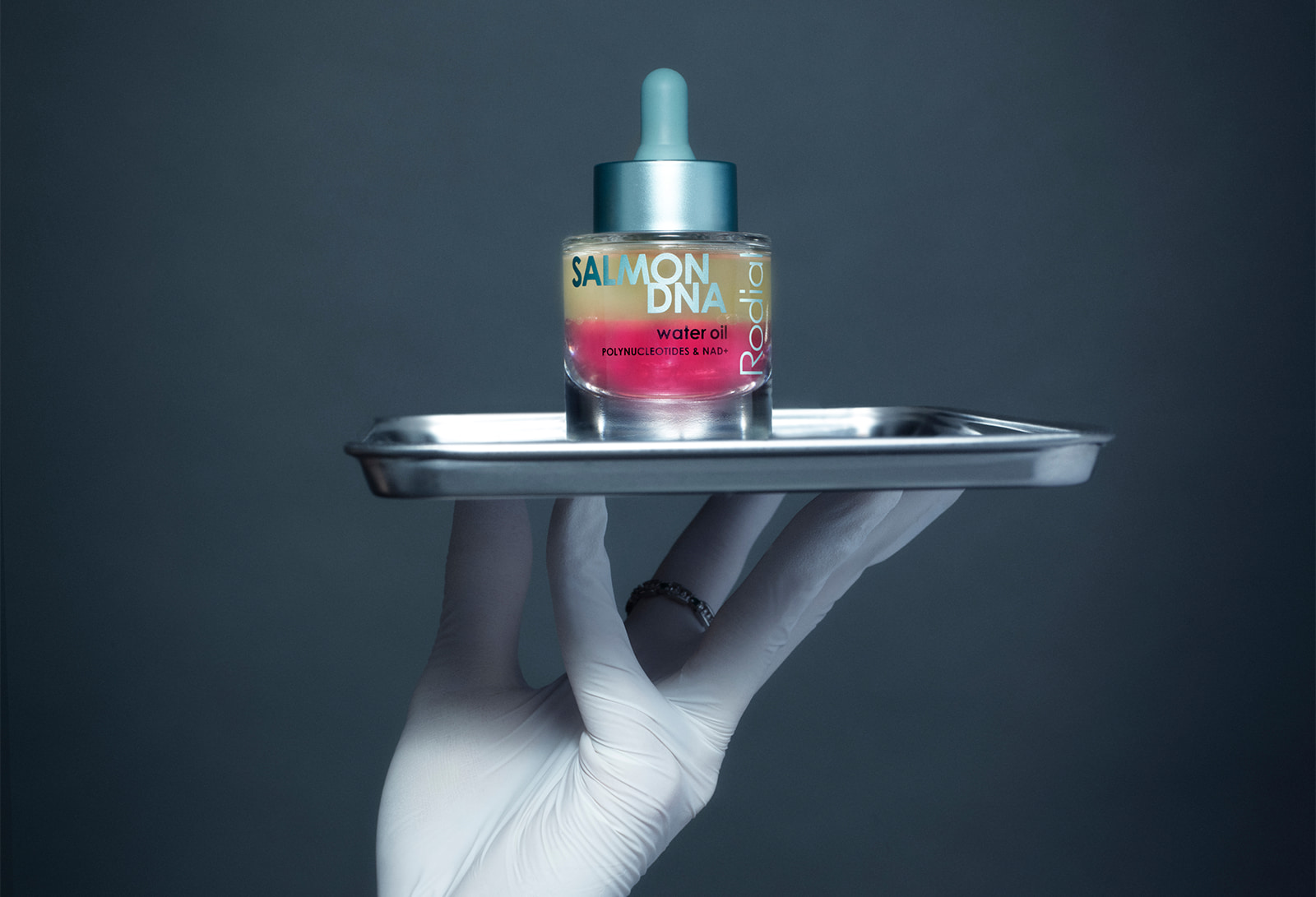
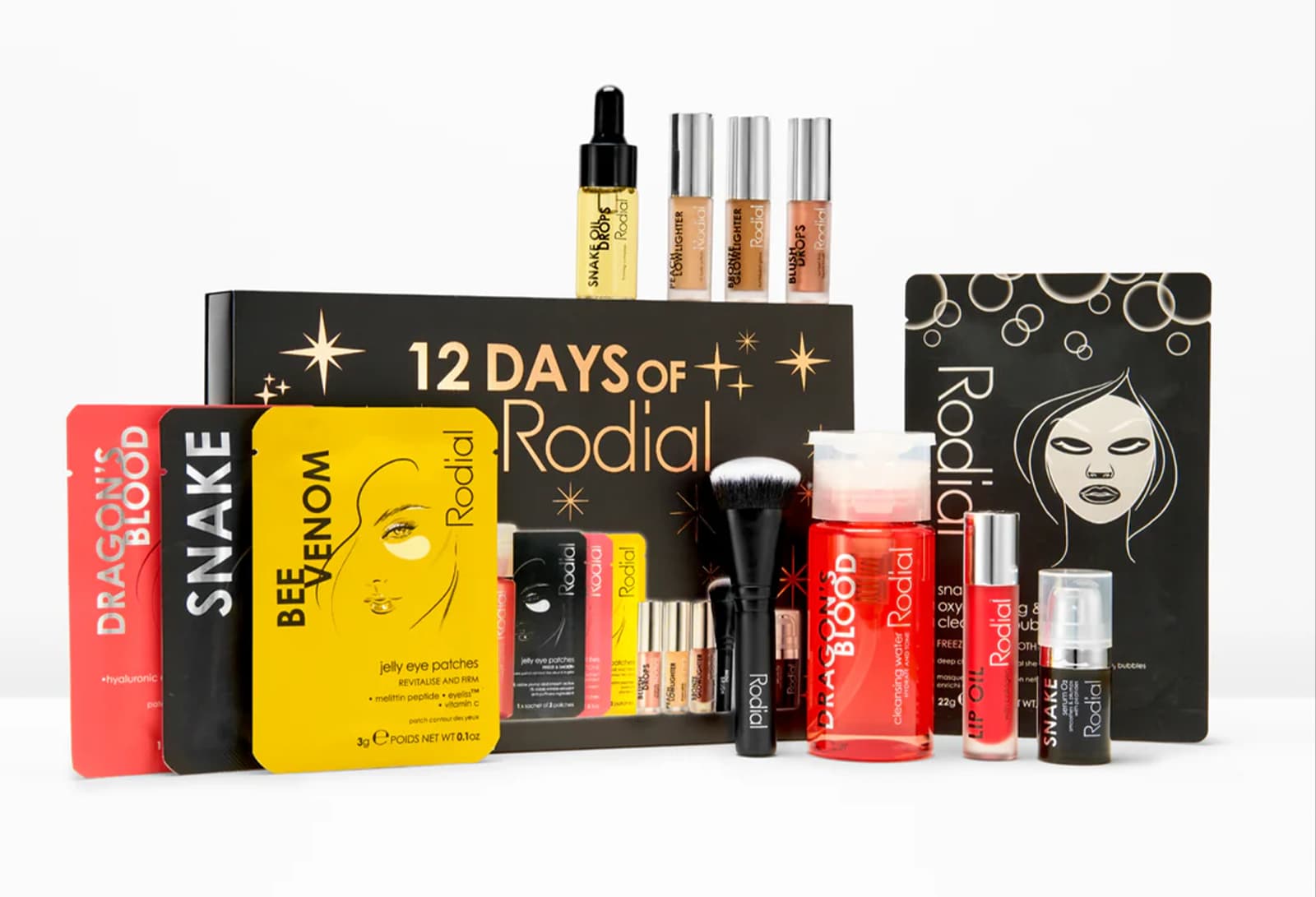
Rodial built its early identity on bold, often provocative product naming. Think Dragon’s Blood and Bee Venom, designed to capture attention in the crowded luxury landscape. Today, however, the rules of engagement have shifted. “Provocation still works, but now it has to be backed up,” Hatzistefanis said. “In the early days, you could lead with a bold name and let intrigue do the work. Today’s consumer is far more educated; they’ll Google the ingredient before they even click ‘add to cart.’”
The evolution of Rodial and Nip + Fab’s marketing strategies is a stark representation of the broader transformation of the beauty industry. “At the beginning, marketing was about visibility in the right rooms—editors, celebrities, key retailers. It was very top-down and relationship-driven,” Hatzistefanis said.
Rodial leveraged red carpet proximity, placing products in Oscar party gift bags and into the routines of high-profile celebrities. Nip + Fab, meanwhile, was an early mover in influencer partnerships, collaborating with Kylie Jenner in 2015, before the celebrity beauty boom took hold. “That still matters. But today, it’s layered with performance. We look at everything: ROAS, conversion, AOV, and daily trading.”
Despite the shift in channels, the underlying objective for the two brands remains the same. “What hasn’t changed is the core principle: you have to create desire. Whether it’s a magazine cover 15 years ago or a TikTok today, the job is the same—make people want it now,” she continued. Today’s strategy is defined by speed and iteration. “We test more, iterate faster, and combine that with real-world touchpoints, including events, community, and brand moments.”
Retail strategy is another area where the brands diverge sharply. “Rodial and Nip + Fab play very different games at retail,” Hatzistefanis explained. Rodial is positioned within curated, prestige environments. “Rodial thrives in premium environments—Bluemercury, Bloomingdale’s, Neiman Marcus—where storytelling, innovation, and price point can be fully expressed. It’s selective and brand-led,” she said.
Nip + Fab, by contrast, is built for mass. “Nip + Fab is about scale. It performs in mass and high-street environments like Boots, where accessibility and repeat purchase drive the business.” Its direct-to-consumer channel reached 40% of sales (up from 27%) in 2025, reflecting a meaningful shift toward owned channels. Today, Rodial spans 35 countries, with the UK and US as its core markets, while Nip + Fab is focused on strengthening its UK presence and accelerating direct-to-consumer growth.
Longevity in beauty is often elusive, particularly for brands born in earlier industry cycles. For Hatzistefanis, the key to endurance lies in a refusal to remain stationary. “Most brands become static, that’s where they lose relevance,” she said. “We’ve stayed relevant by constantly evolving—whether that’s ingredients, messaging, or channels. I’m not sentimental about what worked in the past.”
Her continued proximity to the business is central to that agility. “Being founder-led is a huge advantage. I’m very close to the product, the marketing, and the numbers. That allows us to move quickly, make decisions fast, and stay agile.” Ultimately, she sees relevance as a function of motion. “Relevance comes from momentum, and we maintain that.”
Looking ahead, the strategy for both brands is focused and deliberate. “The next phase is about precision,” Hatzistefanis said. “We’ll expand into new categories, but only where we can lead.” This will include deeper investment in high-performance skincare and science-led storytelling, alongside continued expansion in direct-to-consumer channels globally. The US, in particular, remains a priority, especially as a cultural battleground.
Reflecting on what she would do differently if launching today, her answer is unequivocal: build community earlier and lean harder into content and founder visibility from day one. What she wouldn’t change, however, is the decision to remain independent. “Backing myself and staying independent … that’s allowed us to build two brands on our own terms—and that’s where the real value is,” she concluded.