





Key Takeaways:
The supplements market, proving to be one of beauty’s most dynamic markets, is experiencing a new shift. Consumers are increasingly migrating away from traditional pill and gummy-based routines, and toward formats perceived as more efficient, more convenient, and more aligned with modern wellness behaviors. Part of these emerging delivery systems are transdermal wellness patches that have rapidly captured industry attention.
Several converging forces are driving this interest in wellness patches. First, there was the rise of pimple patches, and even estrogen patches as a primer. Also, consumers are showing clear signs of fatigue toward complex ingestible regimens. Simultaneously, the normalization of “visible wellness” like athleisure as uniforms, eye patches as cultural status signals, and device-driven self-optimization has expanded consumer acceptance for wearable formats. There is also a broader focus on bioavailability. That is, as scientific literacy increases, consumers question whether their supplements are truly being absorbed, motivating companies to differentiate through delivery innovation.
Yet despite the accelerating commercial momentum (market size was valued at $13.97 billion in 2023, is projected to reach $40.32 billion by 2032, and grow at a CAGR of 12.5% from 2024-2032), the category is technically constrained and scientifically nuanced. Transdermal absorption is not universal, and the skin’s barrier function limits which molecules can cross it in meaningful amounts. Only brands investing in medically informed manufacturing, credible delivery technologies, and accurate consumer education are positioned to maintain long-term viability.
A Bitter Pill to Swallow
The supplements category has long struggled with consumer compliance and lack of regulation, which breeds consumer mistrust. It’s treated like a food rather than a drug, so the FDA leaves it up to the manufacturer to test. Kelly Gilbert, founder of The What Supp Co., contextualized this as both a behavioral and market inefficiency. “We all have pots of pills sitting in our cupboards hurtling to their expiry date,” she explained to BeautyMatter. “We don’t finish them, despite our best intentions.”
This compliance gap is economically significant. Think how low adherence depresses repurchase rates and undermines consumer trust in the category. Gilbert argued that the pain point is not the actives themselves, but the delivery method. “The issue is simple; swallowing a pill isn’t really very pleasant, is it? It feels like treating illness and it makes us gag.”
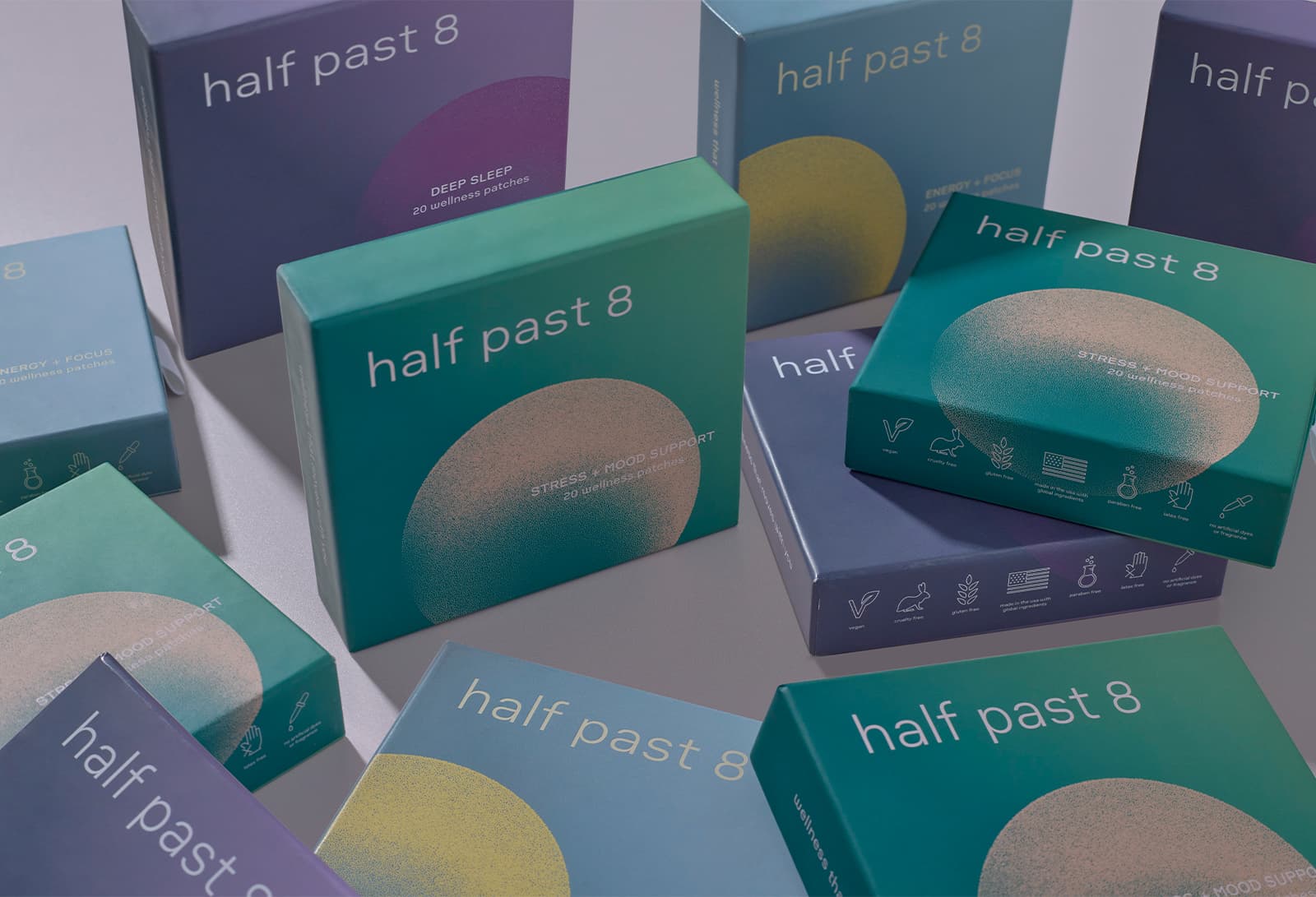
Half Past 8 co-founder Kyle Pierce pointed to another dimension shaping the shift, and that is complexity fatigue. “Between pill fatigue, endless powders, and supplement stacks that feel like a full-time job, people are craving simplicity without compromising efficacy.” From a business perspective, patches tackle both problems simultaneously. They remove friction and reduce cognitive load, allowing consumers to maintain routines without integrating additional steps into daily life.
The commercial rise of patches hinges on whether transdermal delivery provides genuine functional advantages. Gilbert outlined the common industry argument. “Direct bloodstream absorption [into the capillaries] ensures the body can grab what it needs without recruiting enzymatic stomach processes or needing to recruit first-pass liver metabolism. Transdermal delivery often means higher bioavailability, lower required dose and more consistent levels.”
Pierce echoed this, noting that patches allow “a slow, steady release over time instead of the quick spike you get from pills.”
However, scientific nuance is essential for a business audience evaluating long-term viability. Board-certified internist and longevity specialist Dr. Amanda Kahn emphasized that transdermal absorption is highly specific and not universally applicable. “Transdermal absorption can be very meaningful when the molecule and delivery systems are appropriately matched. The skin is the body’s primary barrier, so transdermal delivery is also the most technically constrained route.” She mentioned that the stratum corneum, a dense brick-like layer designed to keep large molecules out, remains a significant physiologic obstacle.
As a safeguard against ineffective formulations, brands like The What’s Up Co. adhere to the 500-Dalton rule, and that is, ingredients with a molecular weight of more than 500 daltons will struggle to pass through the skin barrier. This threshold effectively limits the universe of ingredients that can be credibly delivered transdermally, a critical consideration for new entrants and investors evaluating product white spaces.

Transdermal Delivery: Scientific Advantage or Overstated Promise?
For brands, differentiation increasingly depends on the delivery architecture, not the concept of patches themselves. Half Past 8 relies on a matrix delivery system combined with penetration enhancers. “The actives are infused directly into the adhesive layer, allowing them to diffuse steadily over time.” The What Supp Co. opts for medical-grade standards and avoids lower-cost fabric patches. “Fabric wellness patches might be cheaper, but they cannot hold the ingredients safe or ‘push’ them effectively into the skin.”
For future product innovation, Dr. Kahn pointed to more advanced platforms, many still borrowed from medical transdermal systems. “The most robust mechanisms currently used in wellness patches are microneedle platforms, prescription-grade iontophoretic/electrode-assisted patches, and classic reservoir or matrix patches paired with validated permeation enhancers.”
These technologies expand what patches can deliver, but they also raise the capital requirements and technical expertise needed to enter the category. However, despite the rapid adoption of patches on social channels, consumer understanding is still immature. Gilbert stated sincerely and bluntly, “No, I don’t think [some consumers] do know a lot. The lines are blurred.”
Pierce observed the same gap. “We view part of our job to educate them on the benefits and simplicity of this form of wellness.” This knowledge gap is commercially relevant because without clear consumer education, patches risk being mispositioned as topical stickers or beauty accessories, undermining their efficacy narrative.
The business viability of patches also depends on safety and tolerability. Both brands use medical-grade adhesives, with Gilbert noting that “It is important to adjust where you place your patch as contact irritation can sometimes occur with repeated, prolonged use.”
Dr. Kahn outlined a more foundational constraint: Many popular beauty actives simply do not translate into systemic transdermal delivery. “Retinoids are excellent locally for skin signaling but are limited for patch-based systemic use. Most peptides are too large to cross intact skin in meaningful systemic amounts unless delivered via microneedles or electrode assistance.” This means that while patches may diversify the supplements category, they are not a universal solution, and realistic positioning is crucial.
A Growing but Selective Market Opportunity
Data from Nutraceuticals World and the Nutrition Business Journal cited by Gilbert illustrated structural momentum. “Non-traditional vitamin formats aren’t a fad. The market data confirms the shift. Non-pill formats make up 61.8% of the supplements market today.”
However, longevity will depend on product integrity, not novelty. Pierce framed Half Past 8’s approach as deliberately built for durability. “Trends fade when they’re built on aesthetics instead of integrity. From the beginning, we’ve built Half Past 8 to last by grounding it in science, community building, and real consumer benefit.”
This signals a broader market trend. The category is separating into two tiers. One, brands with medical-grade manufacturing and research partnerships, and two, brands using patches primarily as trend-driven formats. Over time, only the former is likely to remain competitive.
Transdermal patches occupy an emerging space between beauty, ingestibles, and health tech. Their commercial success shows a convergence of efficiency, compliance, and aesthetic visibility, but their long-term viability rests on scientific rigor and clear regulatory framing.
Currently, the category’s most realistic use case is not deficiency correction, but behavioral reinforcement and steady-state supplementation. As Gilbert noted, “A patch has its limitations, but patches are a great safety net to keep levels topped up on any given day.”
For beauty and wellness businesses evaluating the space, the opportunity doesn’t lie only in the format but also in its precision formulation, manufacturing integrity, and education-led brand building. It’s important to note that patches are not replacing supplements, but they are reshaping how consumers interact with them. That shift has meaningful commercial implications for the next generation of wellness delivery systems.