The US Open had an influencer problem this year, but where did that leave beauty?
During Naomi Osaka’s first-round match against Anastasia Zakharova at Arthur Ashe Stadium, play was interrupted after spectators in a luxury suite began moving around and filming a TikTok in the stands. Chair umpire Kader Nouni publicly asked the group to sit down. Clips circulated online, feeding a wider debate about whether the influx of creators, content, and brand entertainment surrounding the tournament was beginning to interfere with the reason people were there in the first place: tennis.
The incident was not isolated from a broader shift happening around the tournament. The US Tennis Association nearly doubled the number of media credentials issued to content creators this year, from around 50 to roughly 100, as digital personalities became increasingly visible at the event. Importantly, the spectators involved in the Osaka incident were not among those officially credentialed creators. But online, that distinction did little to stop the episode from becoming symbolic of a much bigger tension around the US Open: How much room should content creation occupy at a live sporting event?
Amid these shifts, beauty had one of its biggest US Open moments yet, with 1,144,562 total activation attendees this year, a 9% increase over 2024. Across New York, beauty companies built pop-ups, product experiences, social content, creator events, and partnerships around the tournament. Some were designed to engage the tens of thousands of consumers coming through the grounds. Others extended the US Open into highly visual, socially shareable experiences that have become central to modern beauty marketing. And in at least some cases, creators were explicitly part of the guest list.
In the wake of the US Open's influencer dilemma, London’s Wimbledon issued an official announcement regarding social media influencers at the event. While Wimbledon already prohibits technology to limit distractions, officials took it a step further by denying media accreditation to influencers for its 2027 tournament. This demonstrates the scale of the issue, as content creators are key players in beauty marketing but also a source of tension for tennis fans trying to enjoy the sport.
The contradiction is difficult to ignore. While some tennis fans questioned whether creators had become too central to the US Open experience, beauty companies continued to bet on their ability to turn that experience into content.
Dove returned for its second year as the Official Underarm Sponsor of the US Open with its “Don’t Sweat It. Make A Racket.” campaign, which extended significantly beyond traditional tournament signage.
Its Re[set] Club offered visitors a place on the grounds to cool down, touch up with deodorant, and take part in interactive photo opportunities. Dove estimated 130K samples were distributed to the more than 20K people who visited the booth. The brand also commissioned photographers Tyrell Hampton and Johnny Criollo to document US Open style through “Don’t Sweat Your Fit,” while comedian Carly Aquilino hosted its “Racquet Report” social content series interviewing fans around the tournament.
The activation was consumer facing, but its structure showed how blurred the distinction between experiential marketing and content creation has become. Beauty pop-ups are no longer just about sampling products. The activation itself was built to be photographed, filmed, shared, and amplified far beyond those in attendance.
The social media FOMO was also real. With average entry prices up about 13% year over year and some grounds passes reselling for $300 to $400, not everyone who hoped to attend could secure a spot in the stands, prompting brands to create spaces to involve non-attendees and generate more US Open content beyond the physical grounds.
eos went further into the creator ecosystem through its partnership with former NCAA doubles champion Ayan Broomfield. The brand hosted a creator brunch in Manhattan, bringing together Broomfield’s network of influencers, athletes, and friends, and the following day, 100 women of color participated in tennis clinics as part of Broomfield’s Ayan’s Aces initiative. There were 113 total participants in the Creator Brunch and Ayan’s Aces Tennis Clinics; creator brunch attendees received eos’ new Dewy Lip Shine Collection, and the tennis clinic players were gifted Vanilla Cashmere Shea Better Whipped Oil Butter, Vanilla Cashmere Body Lotion, Vanilla Cashmere Body Oil, Vanilla Cashmere Body Wash, Vanilla Cashmere Body Mist, Vanilla Cashmere Lip Butter, Crème de Pistachio Cashmere Lip Butter, and Strawberry Dream Cashmere Lip Butter.
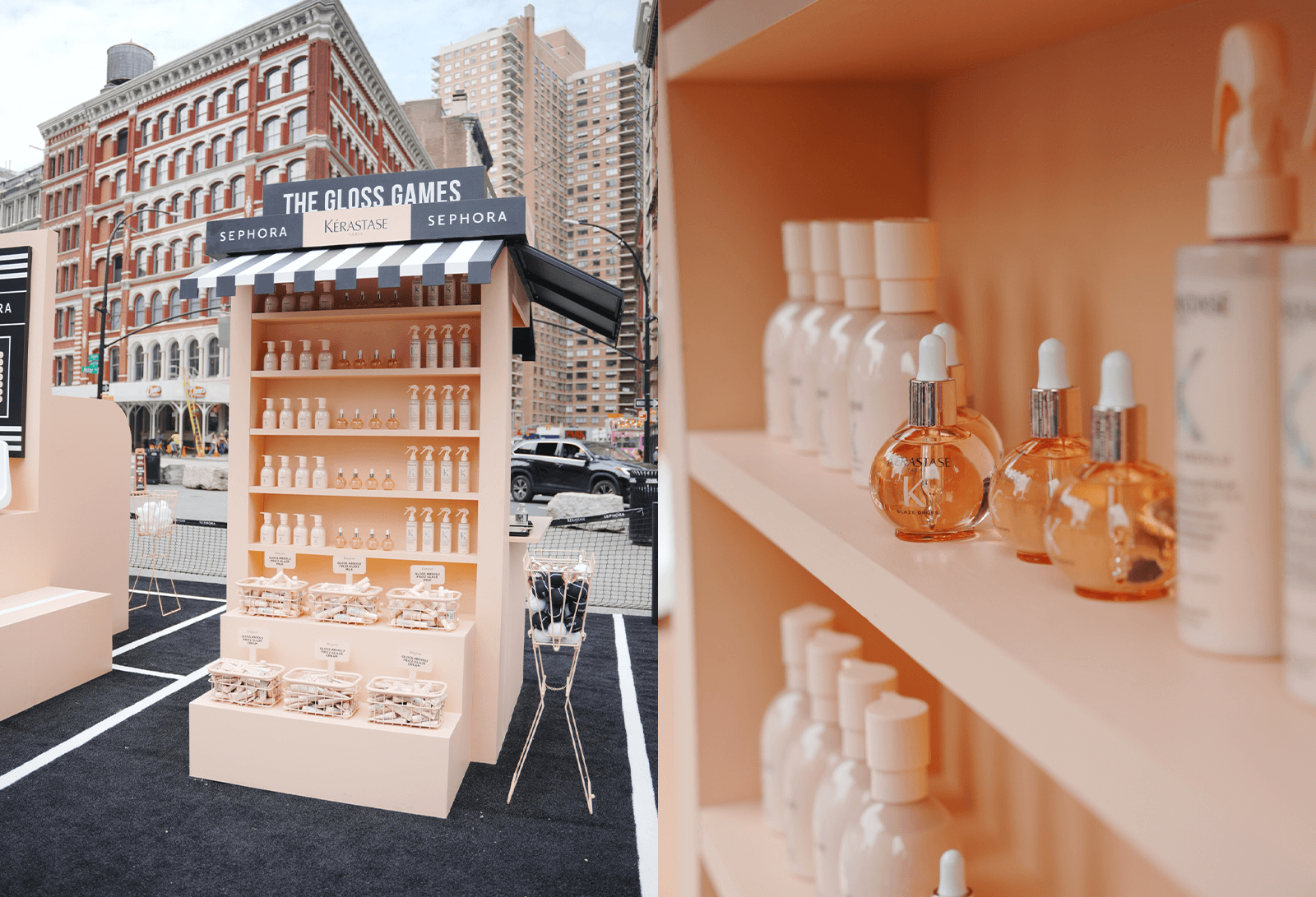
Elsewhere in Manhattan, Kérastase and Sephora turned the retailer’s new Astor Place store into the “Gloss Games,” a tennis-themed experience centered on Kérastase’s Gloss Absolu collection, complete with samples, giveaways, and highly visual installations built around the tournament's cultural momentum. The event drew over 700 consumers.
To bring social buzz, TV personality Angie Katsanevas, tennis pro Madison Appel, and influencers Barbarah William and Christina Elezaj posted content of the event, generating over 22 million impressions online.
Paralympic swimmer Ali Truwit partnered with Benefit Cosmetics as a brand ambassador for their long-running "Raising Brows Since 1976" campaign. This included content of Truwit using Benefit products both before swim practice and getting ready for the US Open.
Sephora became the US Open’s first official Beauty Retail Partner, bringing an activation to the tournament’s final weekend where consumers could interact with products and receive shade matching from brands including Haus Labs, Merit, and Armani Beauty. The experience reached over 2,000 consumers, pairing guests with selections from the more than 7,000 shades available across Sephora’s assortment.
Individually, these are familiar experiential marketing tactics. Together, they show how valuable the US Open has become to beauty as a content environment. Beauty brands were not simply buying proximity to tennis. They were buying proximity to the entire ecosystem: the outfits, celebrity sightings, beauty looks, viral food moments, creator posts, and millions of social impressions that can turn a sporting tournament into a content engine.
That raises an increasingly important question for brands: Were these experiences primarily built for the person standing in front of them, or for everyone who would eventually see them through a phone screen?
For the US Open, creators' appeal is relatively straightforward. They help translate tennis to audiences that may never watch a full match, turning everything from player outfits to stadium food into content.
The potential problem arises when content creation begins to compete with the live experience, and this tension exposes a challenge beauty marketers will increasingly have to navigate.
For more than a decade, creators have offered beauty brands something traditional advertising struggled to replicate: intimacy, relatability, and access to highly engaged communities. Pop-ups and events consequently evolved around them. Brands invite creators, build photo opportunities, encourage social posting, and treat physical experiences as content engines.
But the US Open showed what happens when that model enters a space with its own rules, traditions, and existing fanbase. A beauty event can encourage someone to take out their phone, while a tennis match often requires them to put it away. For brands investing in both worlds at once, understanding that difference matters.
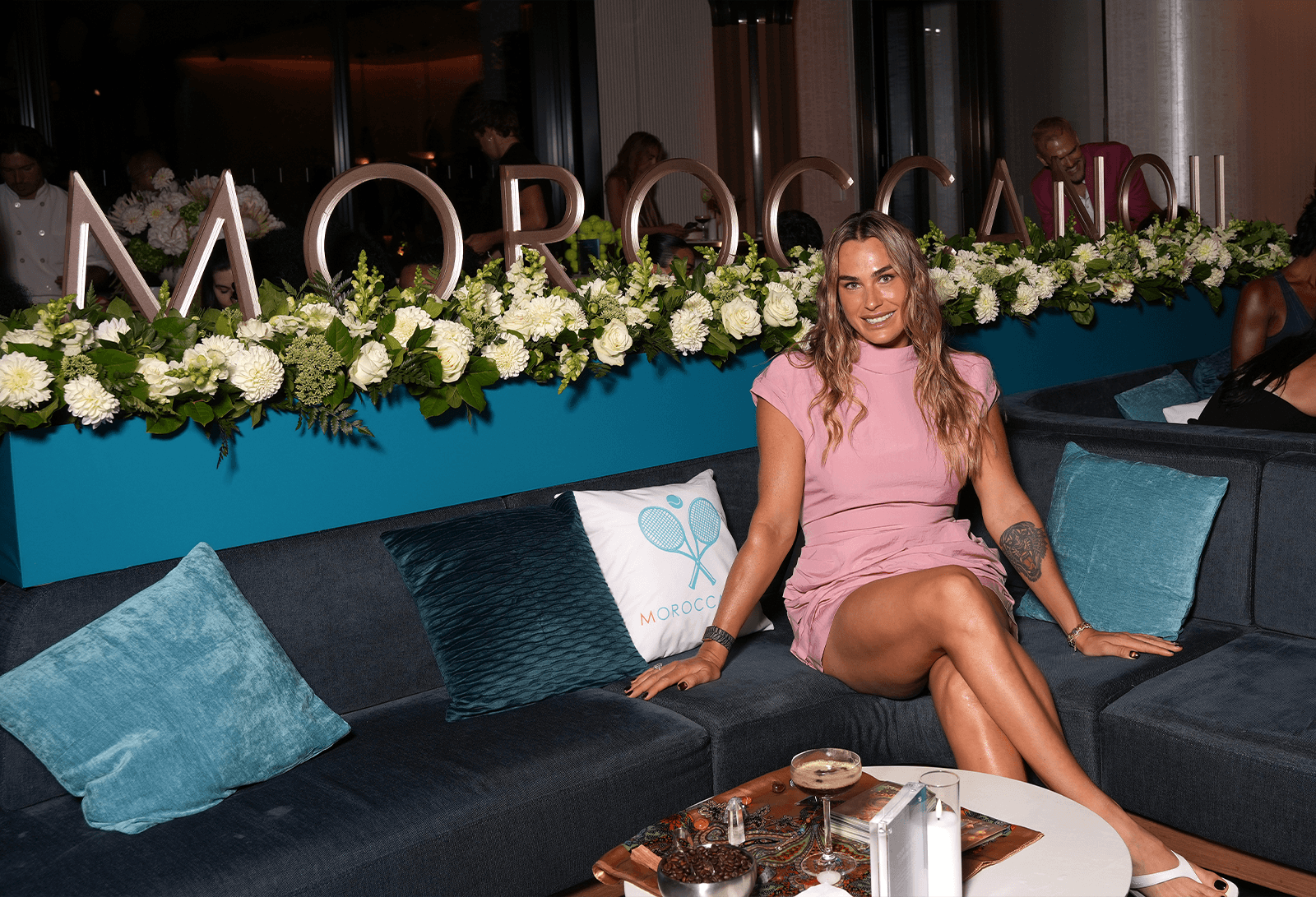
That may also explain why athletes themselves are becoming increasingly attractive beauty partners. Moroccanoil announced Aryna Sabalenka as its new Global Brand Ambassador, while Tatcha announced Naomi Osaka as theirs. Unlike a creator attending the tournament to produce content, the players are the reason the audience is there.
Marina Kirschner, Senior Vice President of Global Marketing at Moroccanoil, told BeautyMatter that these partnerships are becoming particularly relevant because of the “incredible intersection of sport, fashion, beauty, and culture” now surrounding tennis.
For brands, athletes also offer something especially valuable in the current beauty market: visible product performance. “Tennis is a real test for your hair,” Kirshner said. “You have heat, humidity, sweat, travel, you spend hours on the court, and then you expect it to look and feel beautiful afterward.” That transforms the match itself into a demonstration.
“If a product performs on an athlete and the circumstances, consumers are going to think it will probably work on them as well,” she added.
This aligns with what Sam Bennett, Senior Vice President of Brand, Creative, Experience Insights at Sephora, described to BeautyMatter as a “show me, don’t tell me” era of beauty. “You want to see it, feel it, do it, touch it,” Bennett said of consumers attending the tournament.
That desire for proof does not mean influencer marketing is disappearing. Beauty brands’ activity around the US Open suggests almost the opposite. Creators remain powerful enough that brands still build events, guest lists, and social strategies around them, even amid significant public criticism.
But what the tournament exposed is that reach alone is no longer enough.
The most interesting aspect of beauty’s presence at the US Open this year wasn't simply how many brands showed up. It was the environment they showed up in.
Beauty companies invested in experiential marketing designed to generate social attention as the tournament confronted the consequences of becoming an increasingly social-first cultural event. The same behavior brands routinely encourage—photographing, filming, and posting—was being questioned when it crossed from activation space into the stands.
That does not make creator marketing at sporting events ineffective. If anything, the US Open showed why brands remain so interested: the sheer amount of conversation it sparked. Tennis now sits at the intersection of sport, fashion, celebrity, and beauty, giving companies access to audiences far beyond traditional tennis fans. But it also makes context more important.
Consumers may happily watch an influencer tour a beauty pop-up, test products, or show what they wore to the US Open. They may be considerably less enthusiastic when content creation appears to take precedence over the event itself.
For beauty brands, the opportunity is therefore not to abandon creators, but to understand where their influence adds to an experience rather than overtaking it.
And at a US Open where creators became almost as much a subject of conversation as the marketing surrounding them, that distinction became particularly difficult to miss.