Key Takeaways:
At Paris Fashion Week, luxury South African fashion house Maxhosa Africa partnered with Ghanaian fragrance company Scent of Africa to integrate scent into its runway presentation, positioning fragrance as both a commercial category and a signaling tool for African luxury.
While fashion–fragrance adjacencies are standard within European luxury conglomerates, the MaXhosa x Scent of Africa collaboration is proof that African brands are increasingly building intracontinental partnerships that allow them to control narrative, intellectual property, and value creation across multiple categories.
From Raw Material Supplier to Brand Author
Africa’s role in global perfumery has historically been tied to ingredient sourcing rather than brand ownership. Resins, botanicals, and aromatic materials from across the continent have shaped the olfactory signatures of some of the world’s most recognizable fragrances, yet the commercial and cultural value associated with finished products has largely been captured elsewhere.
“Africa’s contribution to global perfumery has always been real: the ingredients, the raw materials, the olfactory DNA running through some of the most celebrated fragrances in the world,” Tanal Ghandour, founder of Scent of Africa, said to BeautyMatter. “What has been less visible is Africa as the author of the finished story. The value of naming, branding, and positioning has historically been created elsewhere,” he continued.
Scent of Africa’s operating model directly addresses this imbalance by developing fragrances on the continent (Ghana precisely) while building brand narratives grounded in cultural specificity rather than ingredient provenance alone. “What we are working toward is changing that equation. We want to build narratives genuinely rooted in the continent, not borrowed from it,” Ghandour explained.
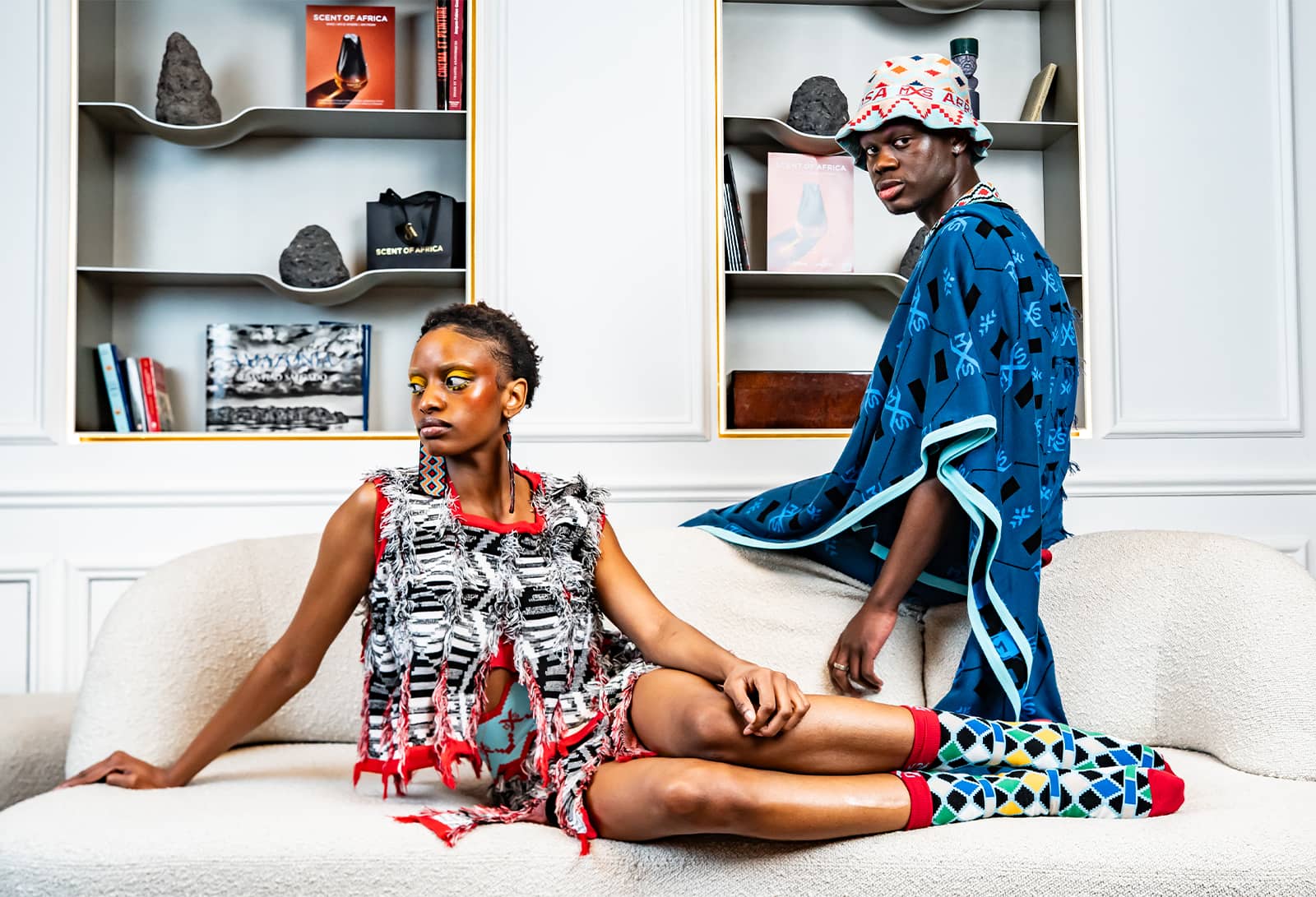
The partnership with MaXhosa positions fragrance within an existing luxury framework, reinforcing the role of cross-category collaboration in accelerating brand legitimacy on the global stage. “The collaboration with Maxhosa was a natural extension of that thinking. They are the only Africa-based brand on the FHCM's [Fédération de la Haute Couture et de la Mode] official Paris Fashion Week calendar, earned entirely on their own creative terms. It shows what is possible when African luxury brands invest in their own authorship,” said Ghandour.
At the same time, the partnership shows confidence in the growth trajectory of African luxury consumers, even as reliable market data remains limited. “Africa is a growing luxury market. You can feel it and see it on the ground, Ghandour noted. “The appetite is there and it is expanding. The honest challenge is that the data hasn't caught up yet.”
Rather than positioning African fragrance as a rejection of the status quo, the company frames its strategy as an expansion of the category’s geographic and cultural authorship. “We are not trying to dismantle existing structures; we are contributing to a broader model, one where Africa is not just a source of raw material but a source of vision, craft, and finished luxury.”
Collaboration as Ecosystem Strategy
The partnership was facilitated by creative agency The Colors, whose co-founder, Ammin Youssouf, framed the collaboration as part of a broader effort to create sustainable frameworks for African creative exchange. “What made this collaboration compelling is that it was never conceived as a simple brand activation. From the beginning, it was about creating a meaningful dialogue between two creative worlds rooted in African cultures,” Youssouf said to BeautyMatter.
Rather than functioning as a symbolic partnership, the collaboration was structured to ensure both brands retained creative authorship. “For us, the starting point is very simple: the brands involved must remain the authors of their own story,” he explained. “In this collaboration, Maxhosa and Scent of Africa are not being interpreted or reframed through an external perspective. They are engaging with each other directly, from within their own cultural and creative frameworks.”
The emphasis on process rather than symbolism shows the increasing sophistication in how African brands approach collaboration as a long-term strategy rather than a short-term visibility exercise. “It is not about referencing symbols or aesthetics, but about working with what they truly represent, whether it is craftsmanship, material knowledge, or ways of storytelling that are deeply rooted,” Youssouf noted.
Retail stakeholders are responding positively to this clarity of positioning. “Buyers and retailers are increasingly sensitive to authenticity and depth,” he added. “They respond to the clarity of the creative vision and the coherence between the story and the product.” For the wider African creative economy, collaborations like this can function as reference points that reinforce the viability of intracontinental partnerships.
Expanding the Sensory Dimensions of African Luxury
For MaXhosa founder and creative director Laduma Ngxokolo, fragrance offered an opportunity to extend the brand’s narrative beyond visual identity into a multisensory environment. “We are incredibly grateful to Scent of Africa for their partnership, and to the Colors team for connecting us so meaningfully,” Ngxokolo told BeautyMatter. “From our first engagement with Ammin, there was a clear alignment and a willingness to support us beyond expectation, from sharing opportunities to helping secure a prestigious venue in Paris.”
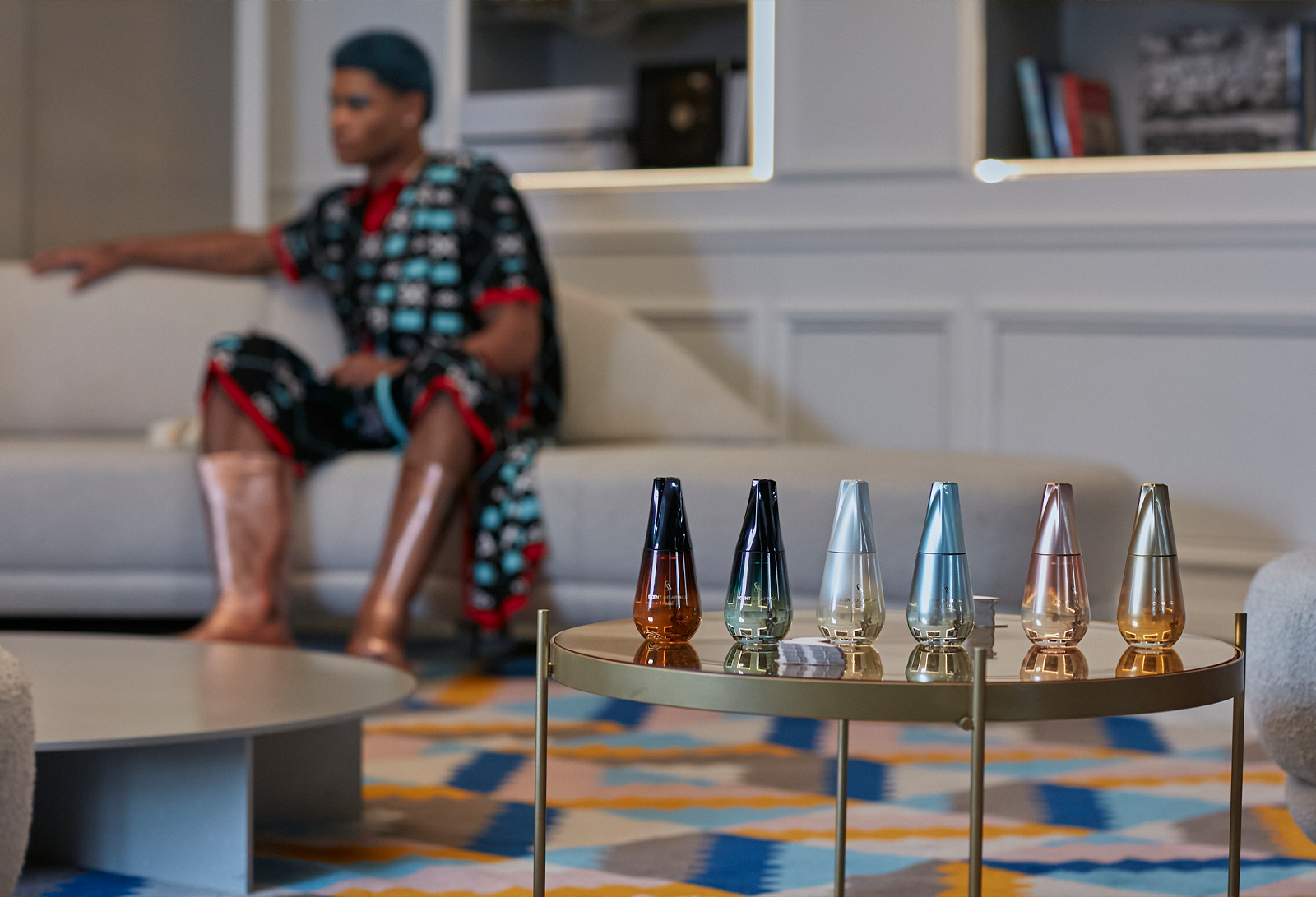
The integration of scent enhanced the experiential dimension of the runway presentation. “Working with Scent of Africa brought a new and exciting dimension to our showcase. The fragrances added a sensory layer that elevated the entire experience, from the models backstage to the audience, and it was seamlessly executed,” Ngxokolo explained. He also added that the attention to detail—from the beautifully packaged gifting to the overall presentation—truly resonated with their guests, many of whom are still speaking about the scents.
As African brands continue to expand internationally, collaborations between fashion and beauty companies are increasingly functioning as mechanisms for building interconnected systems capable of supporting long-term brand equity. By combining fashion’s visibility infrastructure with fragrance’s commercial scalability, partnerships such as MaXhosa and Scent of Africa illustrate how African luxury brands are moving beyond aesthetic recognition toward structural participation in the global beauty industry. It also illustrates how fragrance can function simultaneously as a product category, cultural medium, and strategic infrastructure.