
Asia’s fast-growing niche fragrance market is giving gourmand perfumery a new vocabulary and an opportunity to turn cultural familiarity into commercial differentiation.
From roasted sweet potato to rice milk to matcha to pandan, a new generation of Asian fragrance houses is moving gourmand beyond the vanilla, caramel, and chocolate accords that have long defined the category. Instead, they are mining regional food cultures for scents that are bitter, grainy, fermented, roasted, savory, and deliberately restrained.
The shift comes as demand for niche fragrance accelerates across the region. In China, niche fragrance’s share of the market rose from 25% in 2024 to 38% in 2025, according to data presented by Eternal Group, a leading Chinese fragrance distribution group, at Esxence 2026, the world’s leading artistic and niche perfumery fair in Milan. Eternal noted this growth is five times faster than that of the mass prestige fragrance segment.
In Southeast Asia, distributor Luxasia expects niche fragrance sales to grow 8%-10% annually through 2030, outpacing designer fragrance. Luxasia estimates the combined luxury and niche fragrance market across Singapore, Malaysia, Thailand, Vietnam, Indonesia, and the Philippines to be valued at more than $1 billion.
For emerging Asian perfume houses, that growth is creating an opening: familiar ingredients and everyday rituals can become distinctive brand assets, translating local memory and identity into products capable of traveling internationally.
“Asian cuisines offer a broader and more nuanced palette for gourmand perfumery than the traditional idea of gourmand as being primarily sweet,’’ said Maxime Exler, fine fragrance perfumer at Mane, a leading French flavor and fragrance house. “The ingredients themselves are important, but so are the textures, contrasts, and sensations associated with them.”
Sarah Pae, “perfume tailor” at Scent By, a South Korean fragrance consulting and creative group, describes this emerging direction in Asian perfumery as “nouveau gourmand.” “It combines nostalgia and cultural familiarity with a desire for experimentation—rediscovering something we already know, but experiencing it in an unexpected and contemporary way,” she said.
Mintel reports that gourmand fragrance launches rose by seven percentage points between 2022 and 2024, while TikTok’s #GourmandPerfume reached 142 million views, up 69%. The trend is translating into sales, too: US TikTok Shop revenue from vanilla fragrances rose from around $4.3 million to $25.9 million per quarter between 2024 and 2025, according to data analyst Charm.io.
Asian consumers’ interest in gourmand fragrances, though, is driven as much by global trends as by renewed fascination with cultural heritage and its creative reinterpretation through contemporary lenses.
“Although the influence of the West has pushed classic gourmand notes in Southeast Asia, there have been different trends that evolved from this, such as ‘gourmand with a twist’ kind of notes, including cherry notes with tobacco, vanilla balanced with spices,’’ said Héloïse Lefebvre du Prey, Senior Project Manager for South Asia at Paris-based consultancy Asia Cosme Lab.
“There is also a local gourmand interpretation inspired by local foods and drinks, such as pandan desserts, bubble tea, Thai milk tea, Vietnamese coffee, etc.”
Indonesian brand Mykonos, for example, has created a Pandan Sticky Rice scent reminiscent of local desserts, mixing pandan with white florals, rice, amber, and almond notes. Vietnamese perfume house d’Annam launched its Mango Sticky Rice fragrance, blending notes of ripe mango, sticky rice, and coconut milk.
Also in Indonesia, House of Dappers' scent Lost in Bangkok was inspired by Thai milk tea, which is popular in various regional variations across Southeast Asia.
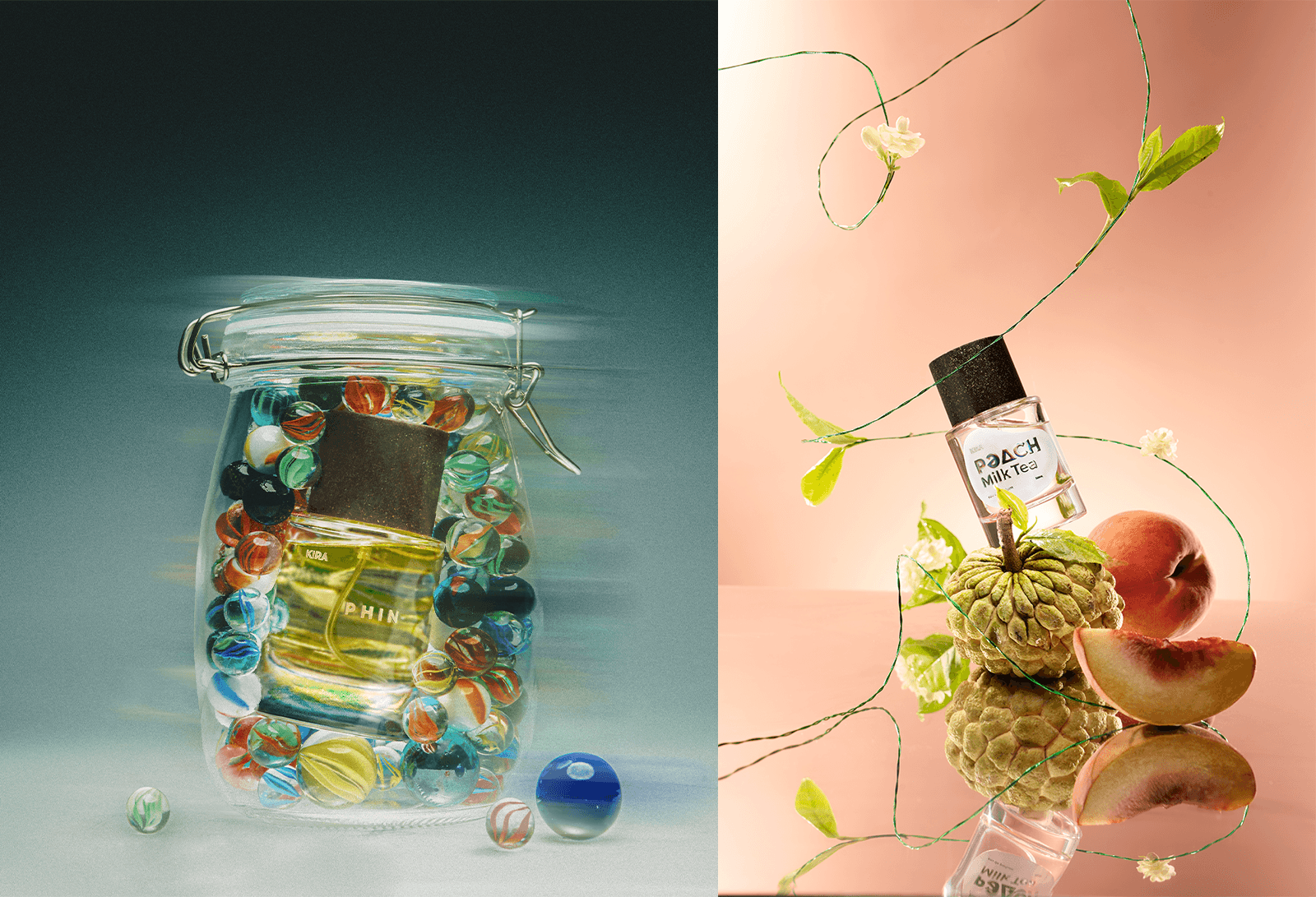
“Western gourmand opened an extraordinary door by showing us that perfume could smell edible,” Keira Do, founder of Kira Parfums, said to BeautyMatter. “Now that more cultures are beginning to walk through that door, gourmand can become much larger than dessert. It can become an expression of how different cultures have learned to experience pleasure itself.”
Rice Milk has become one of KIRA's most successful fragrances, and yet rice is arguably one of the most ordinary and deeply familiar ingredients in Vietnamese and Asian life. It has shown the brand that they don’t necessarily need to look elsewhere for something extraordinary.
According to Keira, Rice Milk has resonated strongly not only in Vietnam but also internationally, with enthusiastic responses in the US market. Consumers who may not share the same cultural memories of rice can still connect with its softness, creaminess, intimacy, and comforting texture. “The cultural reference is specific, but the pleasure it creates can be universal,” she said.
For the perfumer, this means looking beyond the central gourmand ingredient and considering how to express all the surrounding sensations. A successful fragrance might need to feel fluffy, creamy, roasted, airy, or even slightly salty, depending on the concept.
Mane’s fragrance collection, A Sweet Spot Elsewhere, created by Exler, was inspired by Korean street food traditions and features a sweet-potato inflection.
From Northern China to Japan to Korea, the delectable roasted sweet potato is a nostalgic winter street food classic that speaks of childhood and home. “They [the consumers] do not simply appreciate the fragrance as a pleasant scent; they recognize a part of their environment and personal memories within it,” Exler adds.

Korean brand UNVANISH’s take on modern gourmands isn't about simply replicating the smell of food; it focuses on “temperature and skin scent.”
“We take classic gourmand notes like rum, vanilla, and pistachio, but intertwine them with clean white musk to transform them into UNVANISH's signature sensual mood,” said co-founder and CEO YeaEun Park. “Instead of offering a specific Asian interpretation, we chose to focus on the memories our brand speaks to. Our goal isn't just to create a sweet, delicious smell, but to translate the temperature, atmosphere, and emotions that rush back when recalling a specific moment in time.”
While cultural familiarity with local flavors is a definite emotional trigger and a purchasing driver of novel gourmand fragrances, this is not the whole story, argues Lefebvre du Prey. Asian perfume brands are also responding to a regional rise in consumers’ demand for niche fragrances that express cultural identity.
“I think for countries where ‘fine’ perfumery was not really part of the culture for a long time, or just by dominance of international brands, it’s also a re-appropriation of local pride,” she said.
In China, cultural pride has inspired the most recent launches of Soulvent’s fragrance collection of traditional Chinese desserts, To Summer’s highly celebrated home fragrance line, the Chinese Sweet Series, and niche perfume brand Zhufu’s gourmand scents, among others.
Guangzhou-based Soulvent’s scents feature creations like Taro Whispers (古厝往事), inspired by traditional steamed taro desserts, and Ong Lai (旺来), evoking the scent of traditional pineapple-filled shortbread pastries.
To Summer, one of China’s most innovative fragrance houses, recreates five distinct regional dessert profiles, from Beijing’s beloved Tanghulu (糖葫芦), or candied hawthorn sticks, to street-roasted sugar chestnuts and traditional loquat preserves.
China occupies a special place in Asia's gourmand fragrance innovation, as its culinary culture eschews intense sweetness. The pinnacle of culinary virtuosity in China is the harmony of “five tastes,” or Wu Wei (五味), which mirrors the balance and harmony of the ‘’five elements’’, or Wu Xing (五行). Rather than being an abstract philosophical concept, this alignment is a foundational framework for both Chinese culinary arts and holistic health.
“Any perfumer aiming to create a gourmand fragrance for the Chinese market has a real challenge,” admitted Bobber Wang, founder or Zhufu. “‘Not sweet’ is Chinese consumers’ ultimate nod of approval for any desserts or sweet treats.”
Chinese consumers have famously forced foreign brands operating in the market, from Nabisco to Starbucks to Häagen-Dazs, to drastically reduce or adapt the sweetness of their products to satisfy Chinese palates.
Yet according to China’s Xiaohongshu’s 2025 Perfume & Fragrance Industry Trend Inspiration Report, gourmand fragrance is showing measurable momentum among Chinese consumers: searches for 美食调 (gourmand) fragrances grew 46% year-over-year in 2024, while the platform’s broader food-inspired scent category—including notes such as chocolate, matcha, chestnut, and biscuit—recorded a 78% year-over-year increase in searches and a 108% increase in content views between March 2024 and March 2025.
Some emerging gourmand notes grew even faster: Searches related to chestnut and biscuit scents rose 214%, with content views up 247%. The data suggests that China’s gourmand trend is expanding beyond conventional vanilla-led profiles towards food references with greater local and cultural resonance.
While Mintel’s Future of Fragrance 2025 report has linked the resurgence in sweet gourmand scents to increased GLP-1 weight-loss medication use among consumers in the West, in Asia experts see little evidence of this.
“In China, the growing appeal of gourmand fragrances is driven by emotional comfort. As there is growing daily stress, more young people opt for emotional scents that enhance mood and boost well-being,” said Jamie Lin, China project manager at Asia Cosme Lab. “Chinese gourmand notes are less overtly sweet and less ‘calorie-heavy’ than those in Western markets. The scents are more delicate, subtle, and wearable, incorporating notes such as tea, nuts, matcha, and even cocktails.”
Asian perfumers are not the first to discover the olfactory possibilities of ingredients such as matcha, rice, and mango. Western niche houses have already brought them into contemporary fine fragrance: Le Labo built Thé Matcha 26 around a matcha tea accord, and Maison Margiela explored its bitter and creamy facets in Matcha Meditation. Diptyque uses rice steam to create the soft, textural quality of L’Eau Papier, while Vilhelm Parfumerie has turned ripe mango into the centerpiece of Mango Skin.
What Asian brands are adding is cultural context.
The Mango Ambrosia tropical fruity fragrance launched this spring by Zhufu is a modern olfactive interpretation of the classic Chinese mango pomelo sago dessert, yangzhi ganlu (杨枝甘露), literally “the sweet dew of the willow branch.” Beyond its flavor, yangzhi carries a deeper cultural reference: it alludes to the willow branch held in the vase of Guanyin, symbolizing blessing, serenity, and compassion.
“What fascinated us most is how closely this dessert mirrors the structure of perfumery itself,” said Wang. “If you truly experience yangzhi ganlu, you’ll notice it unfolds in layers—bright, juicy top notes, a rich and textured heart, and a soft, lingering base. It is, in many ways, already a “fragrance” in edible form.”
“Since the launch, we’ve seen not only strong sales growth, but also something far more telling—people often describe the scent simply as “happiness.”
Turning a familiar culinary memory into a private, alluring scent is why so many people are drawn to this new style of gourmand fragrances today, according to YeaEun Park of UNVANISH. “It is playful gastronomy that reads entirely differently depending on culture and memory,” she sums up.
This creates both an opportunity and a challenge for international fragrance brands seeking to capitalize on the growth of gourmand perfumery in Asia. While the diversity of scent profiles means that a gourmand fragrance in Asia can be anything from classical gourmand to fougere and chypre profiles, offering a richer olfactive vocabulary to work with, it is the local cultural resonance that translates it into sustainable sales.


