The Top 25 Beauty & Personal Care products for Q1 2026 were led by Medicube Toner Pads Zero Pore Pad 2.0 (#1), marking the first time the product has taken the top position since debuting on the list in Q1 2025. It is followed by Eos Shea Better Vanilla Cashmere Body Lotion (#2) and Hero Cosmetics Mighty Patch (#3), rounding out a trio of high-frequency, routine-driven products.
Treatment-led products and daily-use staples dominated the highest positions, with Neutrogena Makeup Remover Wipes at #4 and Maybelline Lash Sensational Sky High Mascara at #5. The remainder of the Top 10 further reinforces this replenishable mix, with Biodance Bio-Collagen Real Deep Mask (#6), Amazon Basics Hypoallergenic Cotton Rounds (#7), The Ordinary Glycolic Acid 7% Exfoliating Toner (#8), Clean Skin Club Clean Towels XL (#9), and Nizoral Anti-Dandruff Shampoo (#10) rounding out the list.
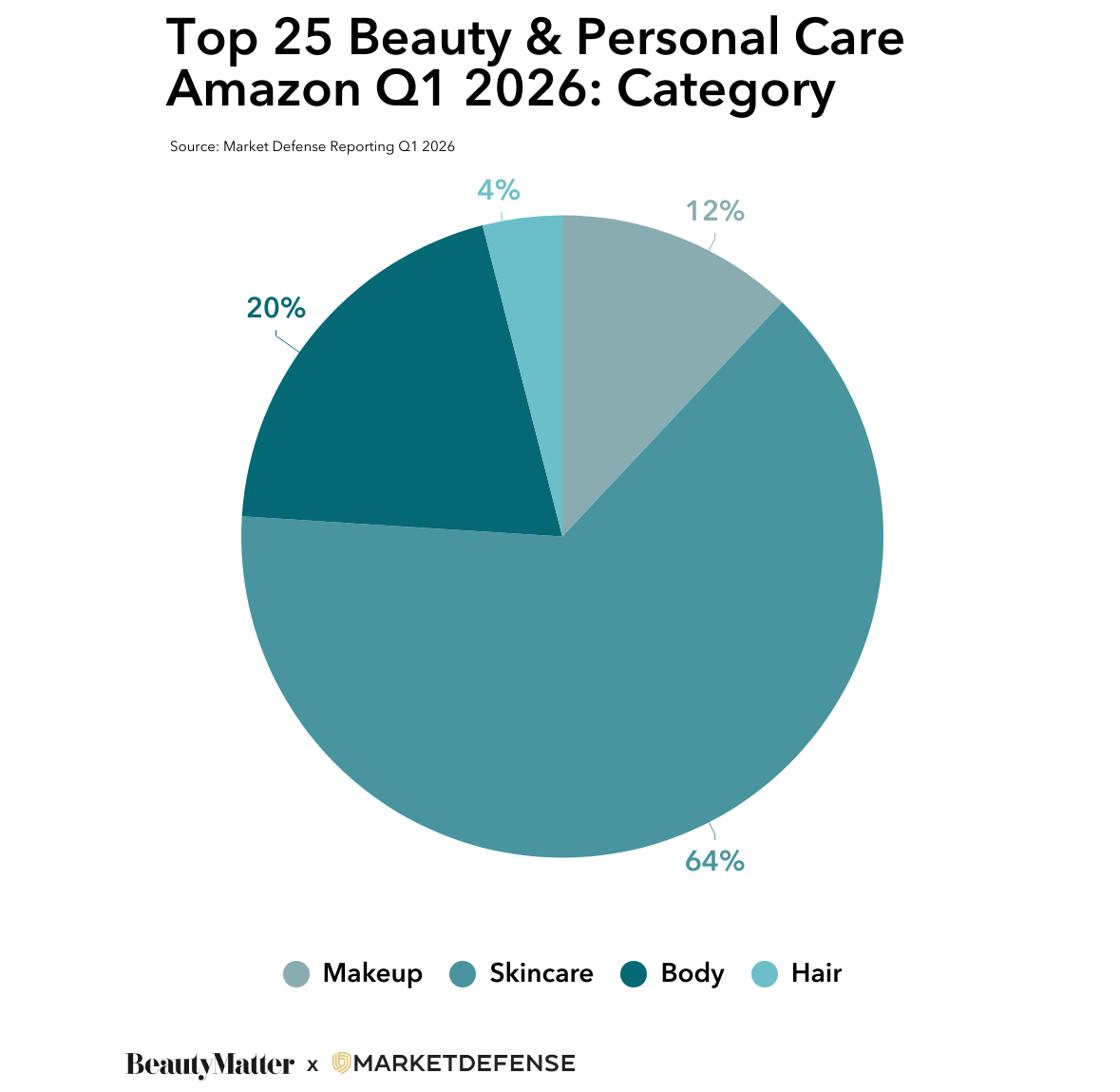
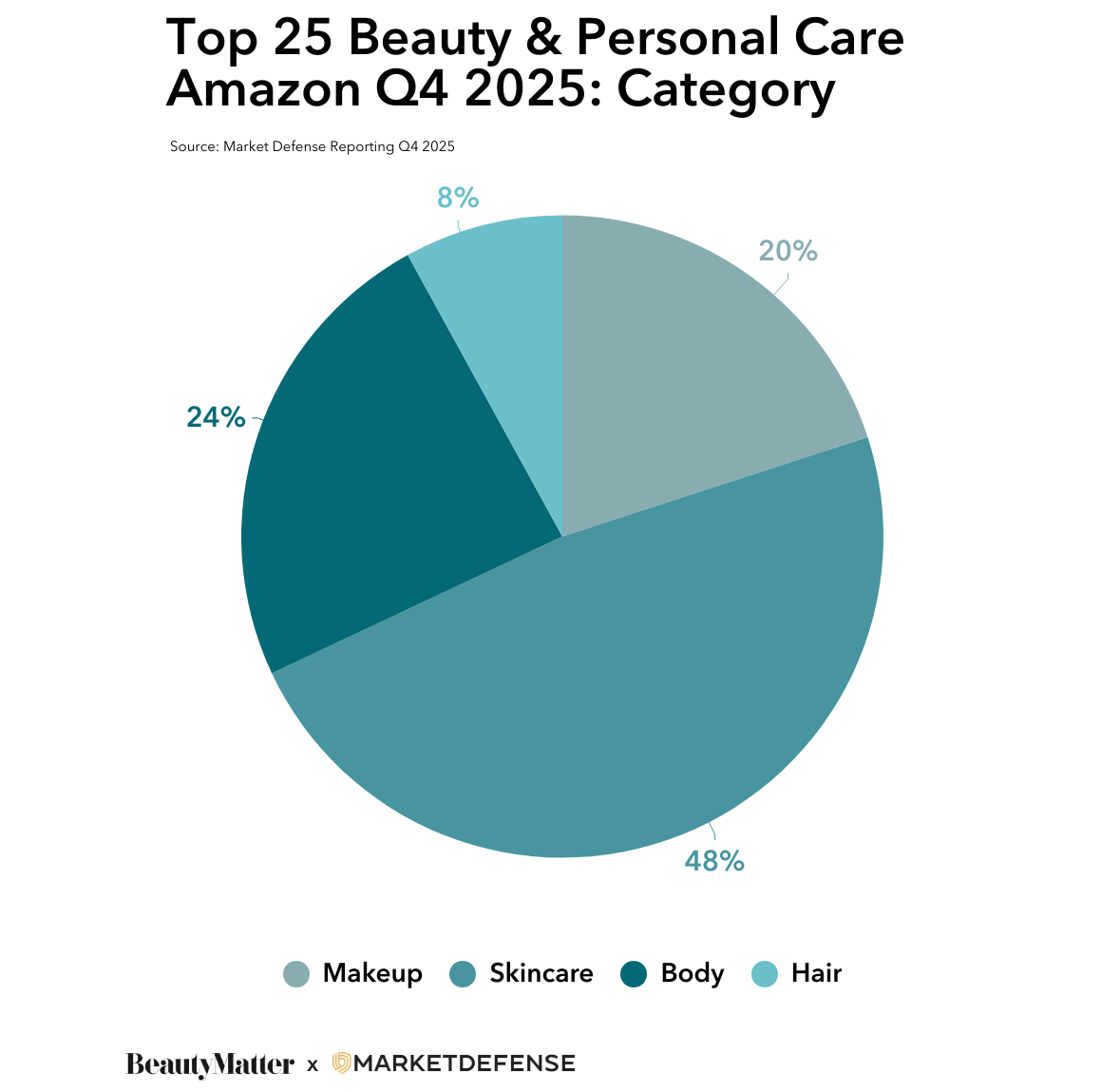
The Top 25 Bestsellers reflect a consumer increasingly anchored in skincare routines. Sixteen of the Top 25 products were skincare, up from 12 in Q4 2025, while makeup declined to just three SKUs, down from five last quarter. The list also marked the return of sunscreen, with EltaMD UV Clear Tinted Face Sunscreen SPF 46 (#22) appearing for the first time since Q2 of last year.
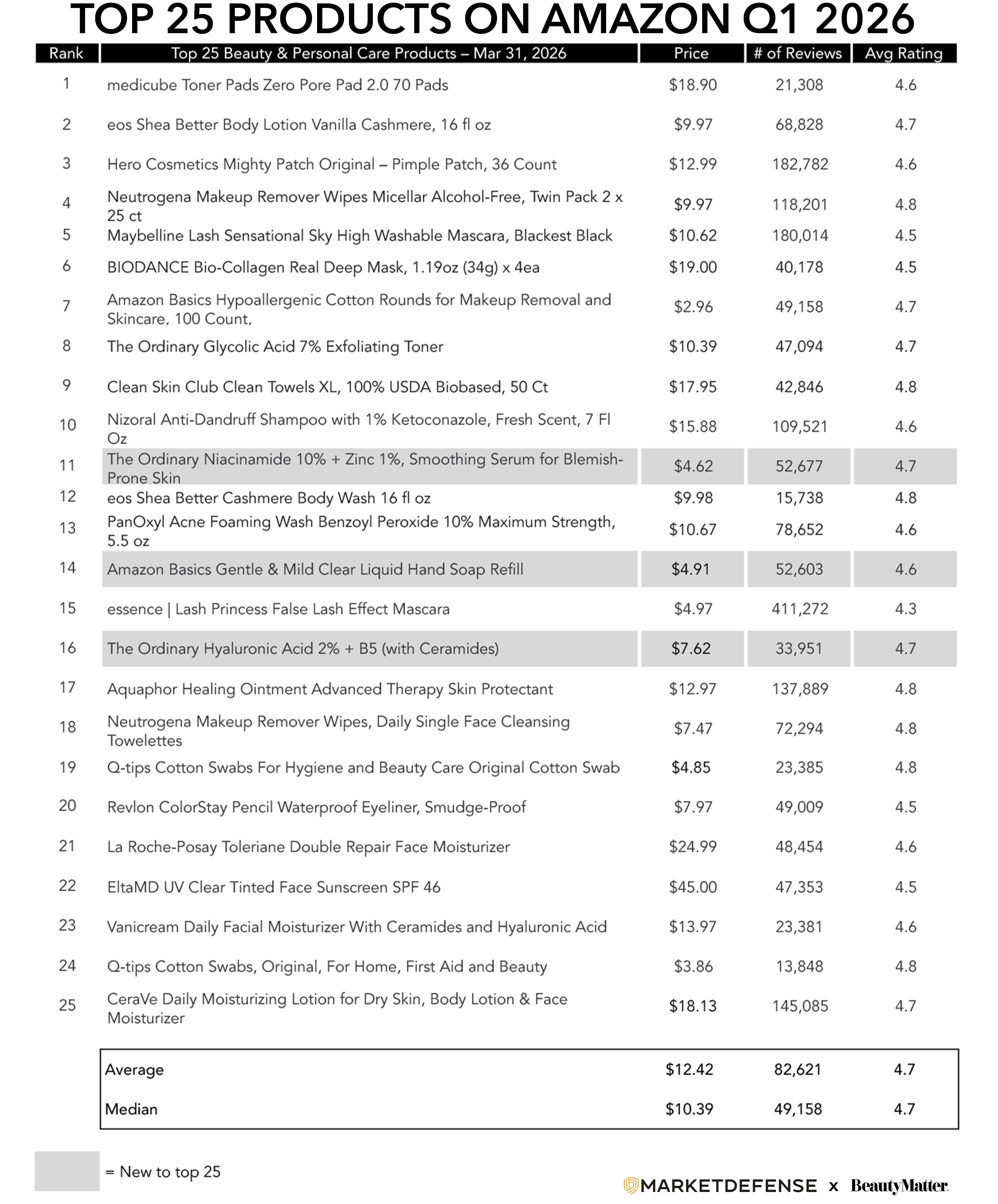
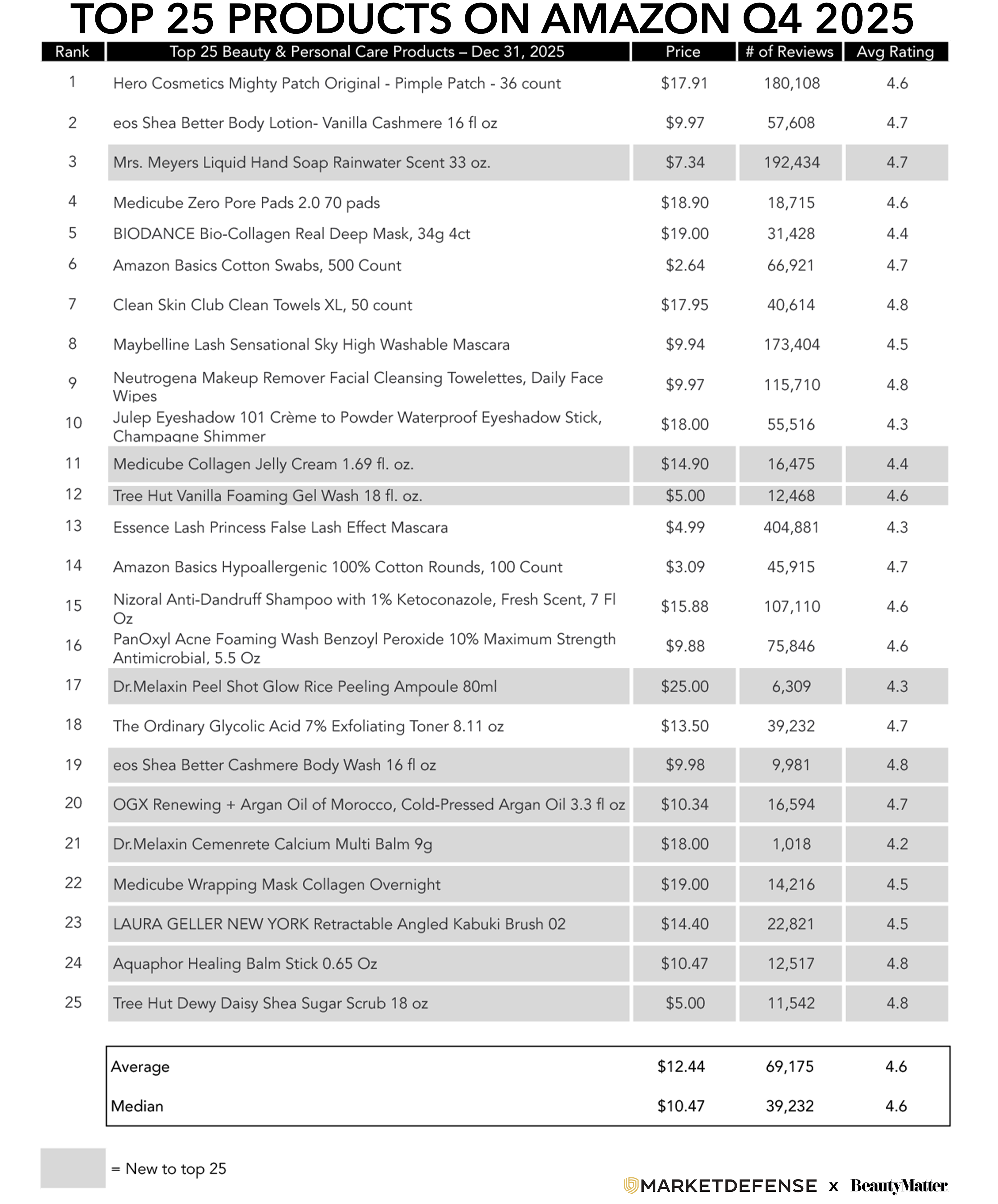
The Ordinary held the most placements in the Top 25 with three products—The Ordinary Glycolic Acid 7% Exfoliating Toner (#8), The Ordinary Niacinamide 10% + Zinc 1% Smoothing Serum for Blemish-Prone Skin (#11), and The Ordinary Hyaluronic Acid 2% + B5 (with Ceramides) (#16)—overtaking Medicube, which had three SKUs on the list last quarter but held a single position at #1 this quarter. Two of these—Niacinamide 10% + Zinc (#11) and Hyaluronic Acid 2% + B5 (#16)—were new to the Top 25 this quarter.
The average review count reached 82,621, up from 69,175 last quarter, driven by a stronger concentration of established, high-volume products that have been selling over a number of years. This was further reinforced by the presence of long-standing staples such as Aquaphor Healing Ointment Advanced Therapy Skin Protectant (#17, 137,889 reviews) and CeraVe Daily Moisturizing Lotion for Dry Skin, Body Lotion & Face Moisturizer (#25, 145,085 reviews), which both climbed back onto the list after being absent since 2025.
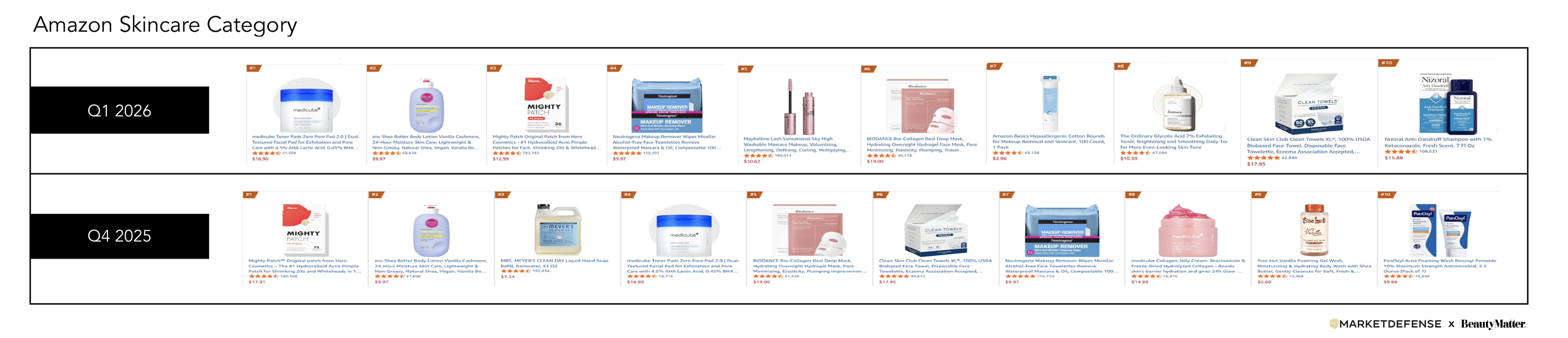
The Skincare Top 10
The average price point of the Skincare Top 10 was $12.86, down 1.7% from last quarter.
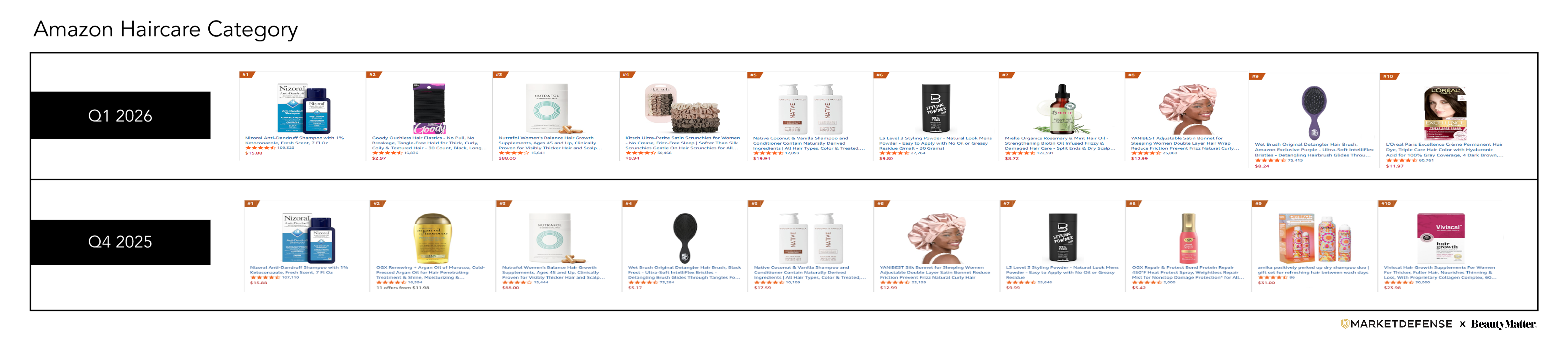
The Haircare Top 10
The average price point of the Haircare Top 10 was $18.85, down 15.1% from last quarter.
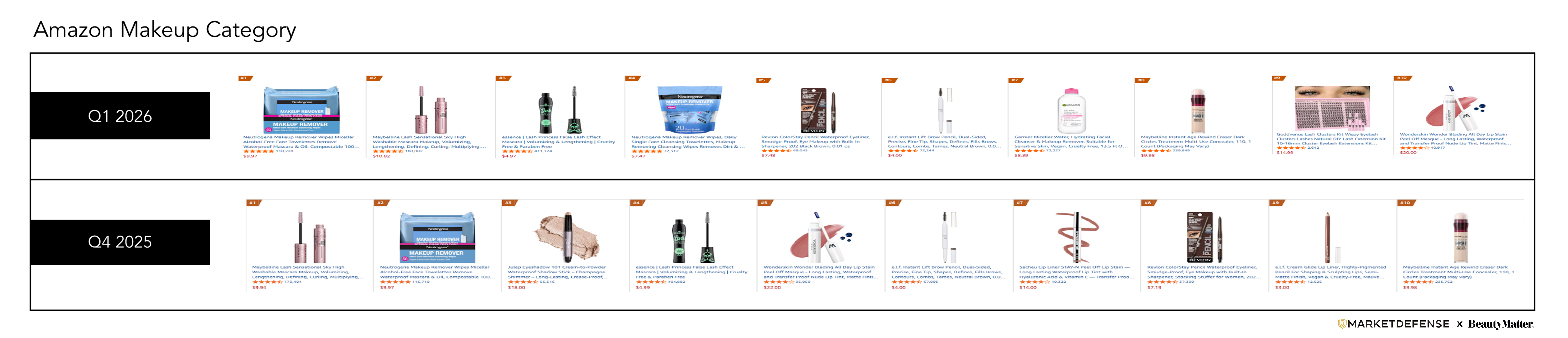
The Makeup Top 10
The average price point of the Makeup Top 10 was $9.90, down 4.9% from last quarter.
What’s Missing
Just as important as the return of value-priced favorites to the list was what was no longer present. Premium brands such as Nutrafol, Sol de Janeiro, and Color Wow, which appeared in Top 25 rankings throughout 2024 and 2025, were absent this quarter. This shift contributed to a lower overall price ceiling, with the average price at $12.74, down from $15.39 at this time last year. The absence of these higher-priced brands, combined with the lack of newness and the concentration of mass and mid-tier skincare, reflects a mix increasingly weighted toward accessible, proven products. Rather than rapid disruption, the list was shaped by products that have built sustained demand over time, supported by strong review counts and loyalty tools like Subscribe & Save.
Big Spring Sale: A Different Set of Winners
Capping off Q1, Amazon’s Big Spring Sale ran March 25 to 31, and the Top 10 selling beauty products during the event looked very different from the quarter’s overall Top 25. The event was led by new launches from K-beauty brands, with Medicube once again at the top. The brand placed five products in the Top 10 selling beauty products of the Big Spring Sale across pads, masks, creams, serums, and cleansers, with Zero Pore Pads 2.0 taking the #1 position and the Collagen Night Wrapping Mask following at #2.
How did newly launched products with relatively low review counts—like Medicube Capsule Cleansing Foam (1,792 reviews), Anua PDRN Collagen Glow Facial Serum Spray (783 reviews), and Illiyoon Ceramide Ato Concentrate Cream (5,119 reviews)—rise so quickly in the rankings during a high-volume competitive event like the Big Spring Sale? As an agency that plans, executes, and optimizes across Amazon, TikTok Shop, retail media, and influencer partnerships, Market Defense is seeing this shift play out in real time.
“We are seeing a massive shift in how the A10 algorithm weighs trust signals,” said Dave Karlsven, SVP of Growth Strategy at Market Defense. “Historically, you needed a ‘review moat’ of hundreds or even thousands of 4 & 5-star ratings to rank. Today, sales velocity driven from external traffic is the new currency. If a brand drives high-converting, brand search traffic and sales on Amazon from a TikTok influencer campaign that converts at 12%–15% (double the category average of non-brand search traffic), then Amazon validates and prioritizes that product almost instantly in the algorithm, without the need for years of review accumulation.”
Demand-Led Growth Drives What Scales
The beauty brands scaling the fastest in 2026 are not relying on Amazon alone to build demand. They are operating within a cross-channel growth model, where discovery, education, and conversion are happening across multiple touchpoints, supported by high-intent traffic and strong conversion rates. Amazon is rewarding clarity of demand.
Medicube’s success isn't magic. It's systematic execution of a demand-led product strategy with Amazon as the conversion engine. “Medicube’s Amazon growth is a direct reflection of how brands are scaling today,” said Vanessa Kuykendall, Chief Engagement Officer at Market Defense. “They’re building demand across channelsTikTok, Meta, paid media—and then converting that demand on Amazon. Once that first purchase is made, that customer continues to shop across DTC and retail. Amazon has become the most efficient conversion engine in the ecosystem, but it’s part of a much larger journey. The brands pulling ahead are the ones that understand that and build their strategy accordingly.”
This shift reflects a broader change in consumer behavior. It now takes 13 touchpoints to convert a beauty customer, and brands that connect those touchpoints are seeing measurable impact. Harvard Business Review found that omnichannel customers deliver roughly 30% higher lifetime value, while omnichannel shoppers spend 3x more than single-channel shoppers in beauty. Integrated omnichannel systems drive purchase rates up to 287% higher. “The brands that treat every channel as part of the same conversation are the ones we see scaling the fastest,” said Kuykendall. “The omnichannel model helps brands connect the dots across the customer journey.”
For professional beauty brands, the omnichannel equation includes a dimension that sits outside the typical agency playbook: the communication between distributors, the professional hairdresser, and the esthetician. Market Defense integrates this layer alongside marketplace, media, and retail strategy.
“What excites me most right now is how quickly beauty brands can go from discovery on TikTok to conversion on Amazon when the strategy is truly connected,” said Amy Rudgard, SVP of Client Delivery at Market Defense. “The gap between inspiration and purchase has never been smaller. Like we outlined in our recent thinking on the topic, the brands that win are the ones that build demand across channels and convert it where it’s strongest.”
Previous Reports:
Q4 2025 Amazon Top 25 Beauty & Personal Care
Q3 2025 Amazon Top 25 Beauty & Personal Care
Q2 2025 Amazon Top 25 Beauty & Personal Care
Q1 2025 Amazon Top 25 Beauty & Personal Care